“Getting and spending, we lay waste our powers.”
A long time ago, when I worked in a corporation, I kept this William Wordsworth quote on my cubicle wall to remind me of what I knew—that my life was about more than producing and consuming.
Now I see that this statement doesn’t go far enough. Not only does endless productivity and consumerism crush our personal power, it destroys our planet.
Witness the fires devastating the Amazon. Deliberately set, left to burn until God knows what point of no return. Why is Brazil’s rainforest burning? In part, to feed consumer demand for paper, lumber, soy, and beef. (That’s not even taking into account the impact of mining minerals like copper, tin, gold, iron ore.)
We could blame the people who set the fires, but the more we buy into capitalism, the more complicit we are. Not to say that we don’t need to hold companies and governments responsible for the greedy policies that encourage slash-and-burn deforestation. But when something “out there” disturbs me, I try to to look within to see what is being reflected back to me.
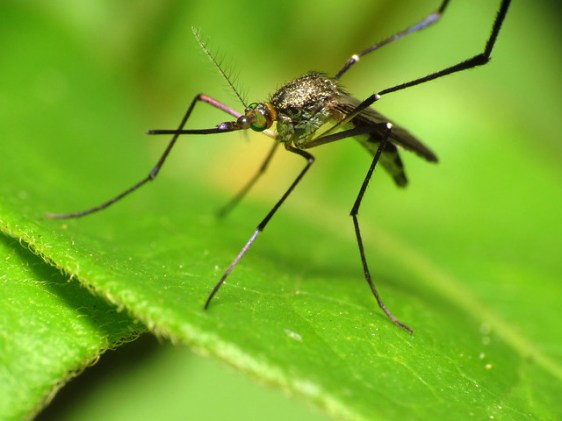
Photo by Katja Schulz, via Flickr Commons “If you think you are too small to make a difference, try sleeping with a mosquito.” —The Dalai Lama
Curiously, I started this blog post wanting to talk about doing nothing. In her new book, How to Do Nothing: Resisting the Attention Economy, Jenny Odell reframes doing nothing as a potent form of resistance.
I have yet to read the book, but a review of it in Yes magazine piqued my interest. It is not a call to passivity, but an invitation to true transformation.
Odell writes that our constant activity and stimulus-addiction keep us from imagining the bold action that would truly change the world.
If we keep trying to feed a bottomless hole with products or busyness or information, we just heat the globe more. But if we step back and get quiet, allow ourselves to feel, we might get in touch with radically different possibilities. Like undoing capitalism.
The master’s tools will never bring down the master’s house, as Audre Lorde put it decades ago. We’ve got to make new tools, and to do that, we’ve got to dive deep.
What of the need for urgent action, to fight the powers that be? Charles Eisenstein has suggested that our urgent scurrying from problem to problem (along with our shame-and-blame culture) are symptomatic of a bigger cultural story driving the intertwined problems of our age. Not only symptomatic, but propping up that story, which is one of alienation, separateness.
We are part of this world. By getting quiet, concentrating ourselves, choosing to stop doing from time to time, we heal a little corner of it. We don’t always know the extent of that healing’s reverberation, but it’s real.
Now, if I stop there, I could use this truth as an excuse to never make a move that feels scary. Worse, as license to let injustices ride and exploitation continue unabated.
Without some measure of self-awareness—and a willingness to act when needed—“doing nothing” becomes self-indulgent. But sitting still, without input from screens or other media—isn’t that the cradle of self-awareness and compassion, a place that can spur inspired action?
A friend posted this quote yesterday along with her rainforest-inspired commitment to a vegan diet: “If you think you are too small to make a difference, try sleeping with a mosquito.” —The Dalai Lama
Where does it arise from, the deeply committed, maybe-small-but-world-changing action? From a spacious, quiet place, in touch with the deep pain of our time, and in touch with infinite possibility.
How to help the situation in Brazil: This Newsweek article lists some action items and organizations to support.

 Shawndra Miller