To Live Passionately

A writer friend and I were talking this morning about our goals for the new year. She said she had but one resolution for 2014: “Forget fear.” Except she used another, shall we say, more pithy F-word for her intention around fear.

Later, scanning through my notebook from the past few months, I came across this passage from Nov. 7, which followed a week of extreme doldrums:

Tired of being unconscious, but scared to wake up! Yet that fear seems foolish in light of the many ways we could bite the dust—globally/regionally/personally, calamitously/suddenly/slowly—oh so many options for becoming vapor, energy, disembodied once more. [I was thinking of the Oct. 25 earthquake off Japan’s coast near Fukushima, among other things.]

FukushimaIsHere-Sticker_1So keeping that in mind, how do I live? I want to live passionately.

Did you hear about the child for whom Make-a-Wish is transforming San Francisco into Gotham City, so he can be Batkid?

Photo by Bhautik Joshi, via flickr Commons

Photo by Bhautik Joshi, via flickr Commons

You see where I’m going with this. In our dying we become superheroes.

Thinking of the Buddhist injunction to remember the unalterable fact of our own death, I ended up musing: What do we have to lose?—the exact phrase my friend used this morning.

It seems ridiculous to dither about in fear and worry when we could be gone at any moment. And meanwhile all of life is calling us to be a force for good.

So how about it? Shall we create a passionate, conscious, fearless, superheroic 2014?

Reflection

Though we gathered with a few friends the night of the Solstice to welcome the return of the light, the days don’t seem measurably longer yet, and the clouds are hanging low this  afternoon.

As the Irish blogger Bridget put it in her post on the longest night, “We need this period of darkness to recoup our energies…spend time with friends and family…to just be. Soon enough we will feel the need to get our hands in the soil and once again plant the seeds and tend the crops.”

This time of year is tailor-made for reflection and dreaming. The deep darkness, the cold and drear outside, the ending of one cycle and the beginning of another. In the midst of holiday bustle, all I’ve wanted to do is pull a blanket up around my chin and stare out the window with a pen in my hand. Or a book. Or just a cup of tea.

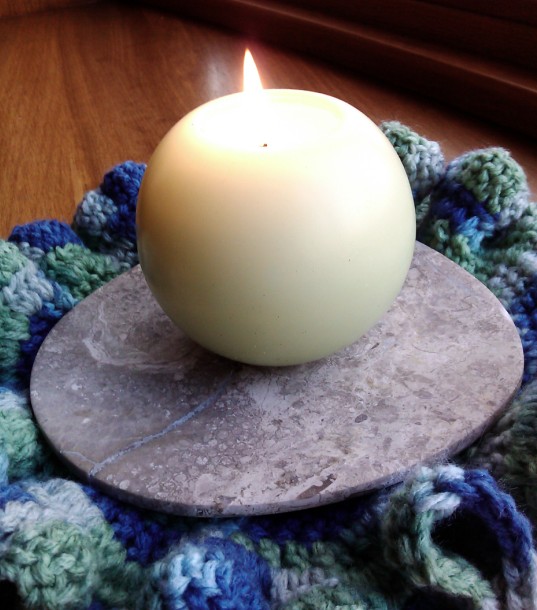
candleOver and over, I find my awareness turning to the heaviness of the physical body and the fact that it really isn’t solid. Neurofeedback researcher Les Fehmi taught me that we are actually just clouds of particles floating in and permeated by a vast space.

And my pen idles. Sometimes more words are not what is needed.

We Are the Same

Not long ago I had conversations with two different poet friends, both about the connective power of the written word.

Shari Wagner said she sees her poems as vehicles for connecting human to nature, living to dead, young to old. Here’s a lovely example of this, her poem about young Orville and Will Wright, and their dream of flight.

Later that same day, Shannon Siegel spoke of writing as a way of “feeling with” someone, as in a Buddhist meditation. She had read a book called The Golden Theme by Brian McDonald. McDonald asserts that the writer’s essential task is to show our commonalities.
By Mike DelGaudio, via Wikimedia Commons

By Mike DelGaudio, via Wikimedia Commons

Shannon sent me this passage from the book:

“Stories are the collective wisdom of everyone who has ever lived. Your job as a storyteller is not simply to entertain…Your job is to let people know that everyone shares their feelings—and that these feelings bind us. Your job is a healing art, and like all healers, you have a responsibility.

Let people know that they are not alone. You must make people understand that we are all the same.”

In a time when our focus is constantly nudged toward what divides us, it is a tonic to understand that yes, everyone on earth has experienced every single emotion that has ever swept through us.

By Kahuroa at en.wikipedia [Public domain], from Wikimedia Commons

By Kahuroa at en.wikipedia [Public domain], from Wikimedia Commons

Here’s Shannon’s poem, stretched out to you. Do you feel it?
oceans within

Sounds of water…sounds of water…sounds of water…
The Long Way, Moitessier

Memories lock selves
in place, deep within
the cells, those
inner chambers.
Recall rises up
like magic, aroused,
liberated in an instant,
a rush, an echo,
a ripple through time,
a feeling, just a feeling,
something I felt once,
something I felt before,
I feel again, I now feel again.
A swell crashes the shore,
then recedes. Waves
ebb, then flow, an ocean
of promise and possibility
rushing through my veins, life
unfolds with a touch,
a whisper perhaps, a word
spoken, a gaze, a persistent
recurrence of what was,
is now is, again, somehow.
Deflecting logic, defying reason,
this heart sings a joyous
song, thrums love’s lyric,
hums a tender entreaty:
Come with me. This
way. Look for me.
Find me.

—Shannon Siegel, (c) 2013

Eve Ensler on Reconnecting, Re-conjuring and Re-conceiving

A friend recommended Krista Tippett’s recent On Being interview with playwright/performer/social activist Eve Ensler. Last week while preparing food for our Thanksgiving meal, I listened to the unedited podcast. (The interview is full of insights, but I’ve pulled out a few highlights for you here.)

Photo of Eve Ensler by Justin Hoch, via Wikimedia Commons

Photo of Eve Ensler by Justin Hoch, via Wikimedia Commons

Ensler is the genius behind the iconoclastic play “The Vagina Monologues.” Her focus on female physicality and power has led her to some phenomenal projects. For example, in the Congo she helped create a refuge for women and girls surviving gender violence. It’s called City of Joy.

Congolese_woman

Congolese rape survivor. By L. Werchick, via Wikimedia Commons

She’s a much-needed voice for a heart-centered, embodied ethic. I love what she says about the power of reconnecting with our physical selves and each other:

“The more people get plugged back into their bodies, each other, the more impossible it will for us to be dominated and occupied.”

She speaks of being both playful and careful as we begin to reconnect. Most of us are not used to this level of caring for our fellow humans.

“In the same way that we don’t see trees, we don’t see each other. We don’t see how traumatized people are, tender people are. I think sometimes if one were fully awake, one would do nothing in one’s day except stop on the road, on the people you meet, because you would see their pain…We walk past everyone. Sometimes it just crushes my heart.”

When Tippett responds that we don’t stop because we can’t bear letting in that much pain, Ensler notes that others’ pain is part of us already. We can’t avoid it, because we are all one. “So that when you stop to actually acknowledge it, you’re actually allowing it to move as opposed to be frozen in you.”

This reminded me of my energy healer friend Merry Henn-Lecordier, who showed me how to welcome uncomfortable feelings in order to allow their release.

Merry Henn-Lecordier is a trailblazer in the field of energy medicine.

Merry Henn-Lecordier is a trailblazer in the field of energy medicine.

Merry taught me the importance of regularly clearing stuck emotion by speaking directly to it, in love and compassion. For example, I might say something like: Anger, I see you. I feel you. I love you. I understand. I welcome you, anger. I approve of you, and I approve of the circumstances that caused you to be stuck in my energy field. You are welcome here. And I’m ready to move you now. (I modeled this blessing after phrases Merry herself uses.)

Then, again following Merry’s example, I ask for help moving the anger (or overwhelm or despair or anxiety or what-have-you) from my energy field, releasing it and transmuting it into love.

It’s remarkably transformative to do this simple ritual, intending compassion for all my emotional states. The lightness I feel in its wake gives me hope that Ensler could be right when she calls us “people of the second wind.”

“This could be (humanity’s) second wind, but it requires a radical re-conjuring and re-conceiving of the story…And I absolutely believe it’s possible, but enough people have to believe it’s possible and be willing to kind of move with this wind that is trying to come in, trying to pass through us right now.

Ensler’s latest memoir, In the Body of the World, depicting her journey with cancer, is high on my reading list.

Jerry Needleman: Seeking the Questions

Third in a Series on my Mesa Refuge Cohorts

It is a rare privilege to have sustained contact with a deeply reflective person, someone capable of nurturing reflection in others. Today I am remembering this feeling of spaciousness as I hold a book called An Unknown World: Notes on the Meaning of the Earth, given to me by the author at Mesa Refuge. A philosopher and educator, Jacob Needleman (Jerry, he prefers to be called) enriched my time at the residency enormously.

Jacob (Jerry) Needleman

Jacob (Jerry) Needleman

Jerry was there to work on his next book, and he’s written many. In fact, An Unknown World was penned during an earlier Mesa Refuge residency. I enjoyed getting to know the man behind the bibliography, finding him to be engagingly kind, curious, and funny.

As our senior resident, he occupied a place of honor at our dinner table. I think he enjoyed being the only man among four women who doted on him (and sometimes ribbed him as well).

Jerry’s brand of philosophy is practical, compassionate, accessible, incisive—and quite applicable to the times we are living. Instead of right answers, he seeks the right questions, a refreshing tactic.

In one of our many thought-provoking conversations, he invited us to live the question only we ourselves can answer, which is: “Who am I?” He said that when caught up in a destructive habit, it’s helpful to ask, “Who is the person doing that? Who am I?”

“This question is like a companion throughout your life; it becomes an energy,” he said.

I first opened An Unknown World in my writing shed, with water birds swimming the wind over the marshy expanse outside my window. Jerry had read aloud from this book the previous night—and what he read, his normally quiet voice turning sonorous, riveted me. That passage suggested that humans are channels for “higher influences” that need to be expressed on earth. That without our evolution, “Earth herself could not evolve toward her own greater possibility.”

Photo by Heikenwaelder Hugo, via Wikimedia Commons

Photo by Heikenwaelder Hugo, via Wikimedia Commons

And so I read more, hungrily:

“What we and our Mother Earth need, and what has been needed since Man first appeared, is the energy of awakened and awakening men and women…”

“We can hardly imagine what the Earth will offer us in return for its being seen and understood by the whole being of Man. Earth and Nature need this from us more than anything else. And only from this inner transformation of the mind can right action toward nature and the Earth be pursued without ultimately resulting in ‘the same old story’—that is, division, conflict, and violence.”

After I finished this illuminating book, I asked Jerry which of his works to read next, and he suggested Time and the Soul. I asked Bookmamas to order a copy for me. I’m looking forward to diving in. It’s about allowing time to “breathe” in our lives. (Jerry was right in divining that I need to learn this!)

I feel so blessed to have met Jerry. I probably wouldn’t have encountered his work if not for our time together at Mesa Refuge.

Gail Needleman: We Are Not Monads

Second in a Series on my Mesa Refuge Cohorts

Gail Needleman came to Mesa Refuge to sort through years of notes.

Photo by Brandon Geisbrecht, via flickr Commons

Photo by Brandon Geisbrecht, via flickr Commons

A pianist and university professor, Gail was working on a book based on her musings and observations about music. Music not as some optional add-on, or the product of a professional, but absolutely essential to our souls. She sequestered herself in the upper room and got to it.

I have to say I was itching to be a mouse in her pocket, because I love sorting through tidbits and insights.

Her advice to writers: Do not make notes in tiny notebooks; you will regret it later. (She teasingly scolded me for my habit of scribbling in a little notebook, but I love my wee notebooks!)

An interview she gave to Works and Conversations magazine is called Music is Something You Do. In it she mourns the trend toward music as performance instead of communal expression—effectively cutting us off from the healing power of our own voices.

She says it’s quite a modern idea to experience the self as a “monad,” a self-contained unit, separate from others. “And music, the most communal of human activities or arts, becomes those billboards with the person with the iPod dancing to music that no one else can hear.”

Photo by Thomas Neilsen, via flickr Commons

Photo by Thomas Nielsen, via flickr Commons

I love her story of the children’s game “Lemonade,” a call and response song-game. It includes the line “Give us some—don’t be afraid” before the child in the middle pretends to pour lemonade, and the others gather around and hold up their cups. Gail thinks this is about breaking the barrier between individual and group.

“It was just a very simple example of how in making music together, the barriers between people go down…We’re armored most of the time, even to ourselves, but certainly to others.”

Gail brought a dry wit and down-to-earth sensibility to our dinner table conversations. Her warmth and wisdom made me treasure her presence. One evening she advised us younger women, all prone to burnout from taking on too much, that “just because you can do something, doesn’t mean you must.” She told of a time when she was in charge of an event and had many demands on her. The line she used, which I intend to borrow, was “Is this a question only I can answer?”

One night when we gathered by the woodstove, she sang a beautiful song that had us all mesmerized, especially her smitten husband.

Jerry and Gail Needleman on our last evening as Mesa Refuge residents

Jerry and Gail Needleman on our last evening as Mesa Refuge residents

It’s almost impossible to write about Gail without mentioning husband Jerry (philosophy professor Jacob Needleman, also in residence), and vice versa. The two are so clearly and completely meant for each other. It’s beautiful to see the love and trust between them—not to mention their lively sense of fun. Each seems to be the other’s biggest fan.

On the last evening she read from her work in progress, which she had been so reticent about discussing, and again held us spellbound. Her handwritten pages were pure poetry. I can’t wait for her book.
Julia Butterfly Hill: What our Hearts Know

Belated postcard from Hopland, CA: It was a thrill to hear Julia Butterfly Hill speak at the Building Resilient Communities Convergence. This is the woman who spent most of 1998 and 1999 living in the canopy of an ancient redwood tree named Luna. Her extended protest brought attention to the plight of ancient forests and resulted in a three-acre buffer zone around Luna.

Julia Butterfly Hill in 2005, via flickr Creative Commons, by Scott Schumacher

Julia Butterfly Hill in 2005, via flickr Creative Commons, by Scott Schumacher

Now she calls herself a wholistic healthcare practitioner instead of an activist, because she is working on the “disease of disconnect.” What struck me about Julia is how much she embodied a heart-centered ethic. She began by expressing a commitment to affirming “what our hearts know: That we are all one.”

There’s little in our culture that supports the kind of inner transformation needed now. Julia called this era a time of spiritual crisis. “That place inside ourselves that is just ancient and knows only connection is in crisis.”

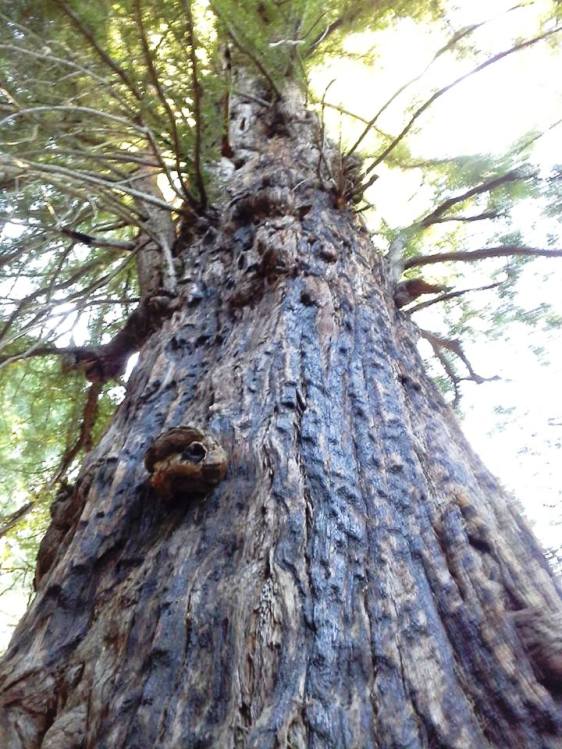
Methuselah, an 1800-year-old redwood in Woodside, CA

Methuselah, an 1800-year-old redwood in Woodside, CA

“What is it going to take to rebirth ourselves in this world where we are?” was her central question. She said it is a courageous act to keep our hearts open, because it means being open to the suffering of beloved creatures, communities, and ecosystems.

I appreciated that she called us to stay aware of our own tendency to rigidity, cautioning: “Any time we are passionate about anything, we are one breath away from being a fundamentalist.”

She invited us to “live so fully and presently in love that there is no room for anything else to exist.” To ask, What would love do in this space? What would love say in this room?

She said we need to bring all our integrity to bear in modeling a positive vision for the world. “We are so good at defining what we are against that what we are against begins to define us.” But it is also crucial to stand firm against wrongdoing. Even the campaigns that failed, she said, she would go back and do again.

It’s a matter of offering ourselves “in loving and joyous service to our world.”

Truly a transformative figure.

Respite

I’m back from Mesa Refuge,* where I had 10 days to write, read, reflect, and draw inward. It was heavenly to leave the smartphone in a drawer for most of that time, and to let my social media accounts languish.

It was a time of exploration. I explored through my writing every day, starting early in the morning and working late into the night in my private writing shed. From this window I spied deer, quail, rabbits, hummingbirds, juncos, redtailed hawks, vultures, egrets, white pelicans, and many other waterbirds and songbirds I couldn’t identify.

My writing shed  overlooked a Tomales Bay tidal estuary, where San Andreas fault lies.

The shed overlooks a Tomales Bay tidal estuary. San Andreas fault runs through this wetland. Mesa Refuge is “a place for writing on the edge”–and this shed is situated on the edge of the North American Plate, looking across to the Pacific Plate.

I explored the nearby town of Point Reyes Station. Not one but two yoga studios serve the tiny populace, and the farmers market brings everyone out each Saturday.

Point Reyes Station Farmers Market

Point Reyes Station Farmers Market

And once I ventured out in a borrowed pickup truck to one of the many wild places near the refuge.

Path to Abbott's Lagoon, Point Reyes National Seashore

Path to Abbott’s Lagoon, Point Reyes National Seashore

This was one of my favorite days.

Abbott's Lagoon

Abbott’s Lagoon

I relished the solitude and quiet that are so rare in workaday life. It felt like a privilege.

Beyond Abbott's Lagoon: The Pacific.

Beyond Abbott’s Lagoon: The Pacific.

But there was conviviality along with the solitude. I spent many of the evenings in conversation with the brilliant writers who were in residence with me. In coming weeks I plan to feature each of these writers and their crucial work.

I also decided to spend some time sitting in nature each day, now that I’m home. Here in my city, the hummingbirds are long gone and there are no dramatic cliffs or hypnotic ocean waves, but the leaves are turning and the songbirds are still as vociferous as ever. Heartland beauty may be subtler than West Coast beauty, but it still fills me.

*Are you a nonfiction writer whose work touches on nature, economics, and social justice? I would encourage you to apply for a residency at Mesa Refuge. It is a phenomenal place to write.

Protection

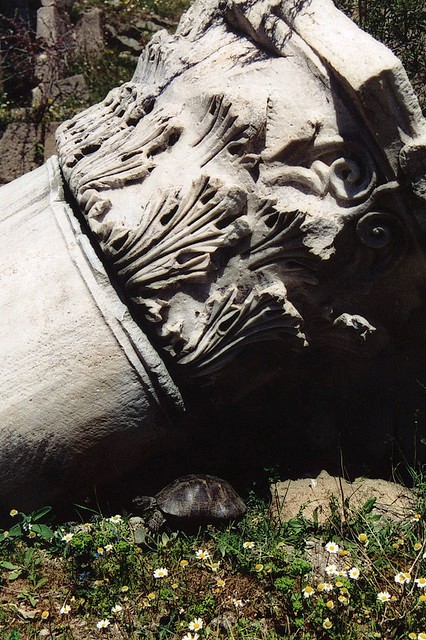
 A turtle among the Roman ruins at Pergamon, Turkey. Photo by Nick Leonard, via flickr Commons


A turtle among the Roman ruins at Pergamon, Turkey. Photo by Nick Leonard, via flickr Commons

Nothing protects us but our constant awareness and rededication to embody our values as much as we possibly can, and to be gentle with ourselves and others when we fail in this.

Michael Lerner