Looking Down

For a short month during my horse-crazy girlhood, I took horseback riding lessons. I remember riding around an indoor arena. I remember not being allowed to choose the same horse each week, because “you’re learning to ride horses, not a horse.” Beyond that, I don’t remember much.

Other than the instructor telling me repeatedly, “Look where you want the horse to  go.”

Weirdly, I couldn’t seem to do it. Down and to the side, that’s where my eyes went, to the churned-up wood chips on the floor.

Looking back, I think I was rattled by the stimulating environment and the scary thrill of being high on a horse’s back. All I could see was the ground.

I sort of thought I was looking forward, and I was even more rattled by the frustrated instructor’s repeated injunction to “stop looking down.” I may have managed to glance at the horse’s ears a few times, if not actually through them to where I wanted the horse to go. (On the other hand, where was there to really go in that small arena?)

Did I mention I was a myopic and dreamy child? When I later started driving, on rainy days I found myself absorbed by the raindrops hitting the windshield of the vehicle, vs. the street I was driving down.

But about the riding lesson, two things come to mind. 1) It’s hard to learn something new while overstimulated or scared, and no amount of clear instruction will change that; and 2) Looking where you want to go, while good policy, may require some preliminary work.

I was reminded of this episode by Martha Beck’s video, Thriving in Turbulent Times. In it, she talks about being mindful of your focus, and training it toward where you want to go—looking between the horse’s ears, say, or kicking into a goalie’s net. Or moving toward a future defined by resilience, justice, and mutuality.

I absolutely love this idea, and it makes total sense, and I have sought out evidence the positive side of humanity, wanting to put my focus there. I live for the kind of good news that can somewhat counterbalance the hard stuff (see Resource of the Day below).

And I also know that for me, sometimes there’s a crucial first step before I can reclaim my focus from where I don’t want to go.

I must first find a way to hear the parts of me that may not be on board with positivity in the moment. I need to find a way to calm my nervous system. I need to be extra extra gentle with myself for falling into an unwanted pattern.

(Martha Beck is also down with this, by the way, so I’m not dissing her work in any way.)

This week I went to ground a bit. John Prine died, the refrigerator broke, I had to wear a mask to the drug store for the first time. Everything piled up and seemed sad and scary and hard. I couldn’t sleep. I found myself sinking into despair and anxiety, overloading my nervous system, ending up shaky and overwhelmed—then making it worse by shaming myself for going there.

Enough already. A good cry is as necessary as a good nap, in my book. Why do we have tear ducts, if not to use them?

If I let myself look down, or allow full absorption in the raindrops instead of the street ahead, it can be a relief. It’s honest. Right now, my body says (from the floor, curled up in a sobfest), this is where I need to be. Time enough later for windshield wiping and plotting a course.
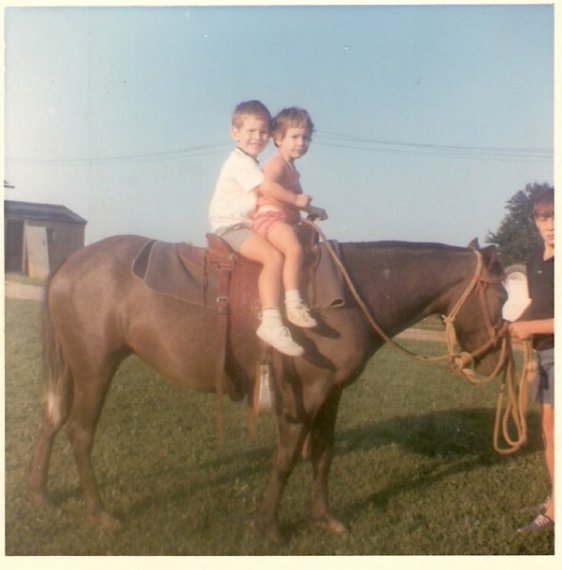
horse

Me and my brother and one of our cousins, long before the lessons.

Gratitude: One thing that has really sustained me, and given incentive to continue this project, is all the feedback I’ve received, even third-hand. In addition to this blog, I sent out an e-newsletter called How Will We Choose to Live? that received more responses than any in recent memory. Thank you to everyone who takes time to read these words. I know how much content is out there to wade through, and I’m honored.

Tip of the Day: A double-edged one today. Writing this series has helped me, and has given me a sustaining project, an outlet. Friends are going deep into gardening, or rediscovering crocheting, or learning languages, or making masks. Maybe there’s a project that can help you through this time.

But maybe it’s also, conversely: Don’t try too hard to get shit done. Maybe don’t try out a new skill or join another online lecture. There might be some inner tending that needs to happen before new learning can happen. Do we really need to take a free Yale course on well-being right now? Maybe the highest of higher education is found down deep within.

Resource of the Day: In the good-cry department, here is John Krasinski’s “Some Good News” episode 2. I love everything about this DIY online news show, which gave me a fine place to land while surfacing from my funk. Around minute 9 is where it really kicks up a notch, at least for Hamilton fans.


Touching in the Time of…

Strange days indeed. When a hug or handshake could be, I guess, lethal? When what human comfort we long to give, we must give via pixels?

In this time of COVID-19, when “social distancing” has become our norm, I wonder what is being ingrained into the minds and energy-bodies of today’s children. Everything is a potential threat, particularly the hands of others. Any surface we touch could potentially be contaminated. We must be on high-alert at all time.

20200314_104355 (765x1024)

Sign at the entrance of my father-in-law’s funeral.

This is starting to be ingrained in me as well. How strange it is that now, when I see people interacting on a TV show, I’m conscious of how close their faces are? Back up, I find myself thinking. Droplet alert!

I don’t know what to think about all this. But it makes me sad. Isolation is not a healthy state for any human, and I can’t imagine living alone right now (or living without furry companions).

What I do know is that there are more ways to touch than through the physical realm. When a friend was barred from seeing her dying mother because the nursing home closed to visitors, I texted, “I believe that you can contact your mother by getting quiet and reaching for her in your mind and heart.”

Maybe this time of physical distancing will shorten our learning curve (as a species) for connecting through other means. I don’t mean Zoom or FaceTime, though those are a godsend.

I mean: Think of someone, put them in your heart, and part of you is with that person in that moment.

I mean: Connect by touching the same earth, reaching for the same sky (as a recent EmbodieDance class explored).

I mean: Feel how we are each more than our molecules, bigger than our bodies, part of the All in All. Meet me there.

20200303_213900 (1024x767)

Gratitude: A snuggly nap with my cat, Edgar (Eddie).

Tip of the Day: See if it’s possible to replace worry with a heart-connection, or prayer, or spiritual delegation. Send the object of your concern a lighter energy than worry. (But don’t be hard on yourself if you do worry. Lord knows these are worrisome times.)

Resource of the Day: Meditation teacher Tara Brach is offering a free online mindfulness class to improve sleep and address anxiety. It is free until March 30, so check it out soon. You can download it and take the course later.

Wishing you expanded awareness during this contracted time!

“Creating Beauty in the World We Find”

Last week I listened to a podcast with author Terry Tempest Williams, in which she says that one job of writing is to make other people feel less alone.

I started this series partially for that reason (as well as for my own sanity) and I’ve gotten a few notes from readers affirming that they do feel less alone. Because we’re all feeling it: The uncertainty and pain of everything we know being upended, the sorrow of losses (ours and those we empathize with), the loneliness of isolation, the fear and dread of what may come, the anger too.

These are things we have to breathe through. The only way out is through.

Terry Tempest Williams also talks about staying in the present:

“If you are present, then there is no past, as you well know. And there is no future. You are there. And whether it is being with a family member who is dying, you are present with them. You are breathing. And in that breathing there is this commitment and communion to that breath. Presence. And you don’t look away…I think when you are present, fear is still there, but you are moving with it. You are breathing with it.”

Seeking pathways to stay in the present: That is one of my top priorities now, when thinking too far ahead can completely derail me. My hope is that this blog series can contribute to some grounding for others, even as I regain my own footing over and over after being knocked off balance.

There’s this idea that “If we’re not all OK, none of us are,” and I feel like we are being shown its truth in real-time. If I have something to contribute to that OKness, it isn’t medical care. (That is the role of my nurse spouse, bless her, and other healthcare workers all over the world, who all need our support and light.)

One thing I can do is send these words out, in case they are a comfort, because “…finding beauty in a broken world is creating beauty in the world we find.” —TTW

I’m not used to sending words out without first parsing every single syllable. But these are different times. And even though I often write these missives in the evening when my brain is tired, and I don’t remember all the insights I planned to share, I feel like this is an evolving conversation. There’s time to explore.

Gratitude: The sun peeked out today while I walked Opal. Also, I got to see my mom (we sat on her back patio, 6 feet apart). Plus: online dance and yoga classes  saved my patoot during a tense day when my beloved was pulling a long shift at the hospital.

20200324_113423

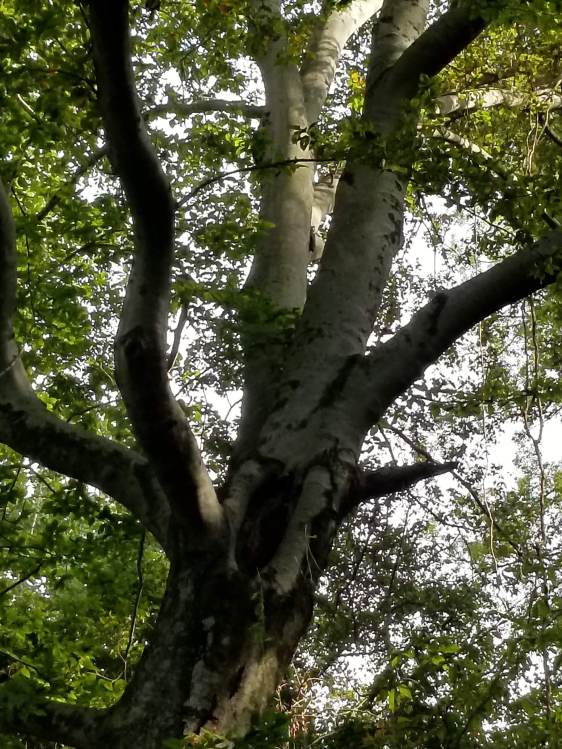
If a sycamore sees its shadow, how many more weeks/months of pandemic will persist?

Tip of the Day: From Lani Weissbach, who teaches EmbodieDance, here’s a good way to ground yourself if you feel off-balance. Put your hands firmly on/around your upper leg and draw down with strong pressure, all the way to the foot. Do this several times for each leg. Good for rocky times such as these.

Resource of the Day: The body and breath can lead us back to the present moment. See the links above for good mindbody options, and also find Sanctuary Community Yoga here with many more offerings. My adored neighborhood studio, Irvington Wellness Center, has gone completely online, and you can find the full schedule here. The classes are free to all for the next 30 days and include t’ai chi, yoga, self-care, meditation and more. You can click the class name and then “More Details” in the lower left corner of the pop-up to find a Zoom link. More info on the studio here.

Steady on, beautiful people!

Routines, Supports, New Delights

How are you finding comfort and stability in this wild new world we find ourselves in? Are there humble routines that bring you some sense of normalcy? Support systems in place to bolster you? Surprising new delights of any kind?

Just now the dryer is spinning my sheets dry, the supper dishes are in the drainer, and my sweetie and I are super-relaxed from a restorative yoga class offered via Zoom. My yoga studio has taken its offerings online, and I’m so grateful. Even in life pre-COVID, my nervous system benefited from the regular reset of a good yoga class. I would say it was a nonnegotiable before, and about a hundredfold more so now.

I can practice at home, and have restarted that this week, but there’s something about communal practice that takes me deeper. Even when the community is remote, it’s still very nourishing to be in a virtual “room” together.

As far as new delights, let’s talk about another kind of community. I have never seen so many people out walking the neighborhood. I have never taken so much time to stop and chat while I’m out walking Opal. I always had to hurry home to get my shit done.

I still have plenty of that drivenness, which is a blog post for later. But it seems so important to stop and smile and chat with strangers, and catch up with neighbors.

It does feel like this collective experience is already turning everything upside down—what we thought was so important…is maybe not.

Gratitude: See above. Plus: a hint of sunlight this morning!

20200320_100931

Some blue sky this morning.

Tip of the Day: This one is courtesy of Gaynell, who taught yoga last night (thanks for the good night’s sleep, Gaynell!) A practicing Buddhist, Gaynell reminded us of the transitory nature of… well, everything. Observing what is occurring—giving it space—allows connection with the wider awareness that everything is impermanent. So this is the big tip: Instead of thinking “I am anxious,” (as I sometimes do), try: “What is it like, this experience I call anxiety?” Then notice, allow, bring compassion. An excellent and timely reminder. We may feel fear or anger or confusion or grief, but we don’t have to turn it into an identity.

Resource of the Day: This is a spiritual resource. I love Nichola Torbertt’s conversation with redwoods about coronavirus. “What if this virus brings you to your knees so that you have to admit that you don’t really know how to move forward? And then what if you started reconsidering how you’ve been living? And then reaching out to each other—especially to those most at risk—and talking about what you long for and noticing the redwoods and the daffodils and talking to us, too? What if?”

See the whole post, it’s worth a read, and the photo is gorgeous.

Wings

I couldn’t sleep last night, so I got up and looked through my growing collection of COVID-19-related resources, and discovered that a likeminded friend was also up at an ungodly hour curating her own list. (See Anna’s new Facebook group,Community Connections, for “creative responses to hunkering down.”)

On my list was Rebecca Solnit’s nightly live fairy tale reading. Since I was up, I decided to watch the replay. I don’t usually have the patience to watch long videos, but I was glad I stuck with it to the end (and what did I have better to do anyway?). For one, it filled my heart to hear her naming folks who were watching live from all over the world. With that black swan behind her, she was mesmerizing.

And the fairy tale itself–The Wild Swans–was well told, magically interwoven with this mysterious moment: Our current time resembling a fairy tale, a challenge of mythic proportions that no one could have dreamt up while moving through our daily routines and distractions.

But the very best thing: At the end, she told a story about an imprisoned friend named Jarvis. One day in the prison yard, Jarvis spotted another inmate throwing rocks at a bird. “Hey, don’t throw rocks at that bird!”

The rock-thrower challenged him, “Why shouldn’t I?”

Quick-thinking Jarvis said, “That bird has my wings.”

20190924_163013

It’s hard to spot, but there is a Pileated woodpecker in this photo, right about dead center. I took the picture last summer on one of my many creek outings with my dog. Big poodle nearby, feet in creek, eyes on beech tree/bird: That’s pretty much heaven for me.

We may be restricted in our movements–some more than others, some for reasons that predate this COVID-19 wackadoodle world–but birds still fly, and maybe they have our wings, along with Jarvis’s.

20191017_065107

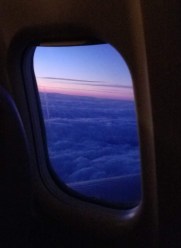
Sunrise from the airplane that flew me to a conference last fall, courtesy of my workplace. Wings…

Gratitude: I am so grateful for my job at Central Indiana Land Trust right now. Not just that it allows me to work from home and keep my income. I serve a mission that fills me with a sense of purpose and perspective. Yesterday I helped to draft and send this “Nature is Not Closed” letter from our executive director, speaking of the solace we can find in nature (even as we have to cancel upcoming events).

Today, in a telephone meeting about our nature preserves, I learned how 85-foot bluffs along the White River were formed: They are massive outwash deposits left by the meltwaters of receding glaciers, 12,000 years ago. The river itself would have been a massive gushing thing. The land was malleable, with great gouges and piles of sediment being formed in real time.

Isn’t that a thing to contemplate just now?

Tip of the Day: Sleepless in Shreveport or wherever you are? Think of me, awake at all hours too. If in distress, take a tip from Jen Louden (who may have adapted it from Tara Brach)… Hand on heart, breathe, notice: Can anything eat me right now? Am I safe in this moment? Then consider: Many people feel the very same way as you, right this very minute. Send them your love and care, and feel that love and care in yourself. We are all in this together.

Resource of the Day: Weekend’s coming. So many options for planning some fun. Check out this evolving calendar of livestreamed concerts--Indigo Girls starts in a minute here! You can watch a Broadway play (not sure how many are free though). Have a movie night with friends while staying in your own homes. Do check out Community Connections if you’re a Facebooker, for more ideas and support.

Above all, may the 50,000-foot perspective, the geologic timescale, the wings of birds, bring you some freedom.

Hacks for the Holidaze

If you, like me, are a sensitive sort prone to getting off-kilter this time of year (whether that’s about year-end goals, consumption of food/drink/stuff/media, family drama, past losses, expectations on the part of yourself/family/others, or any other cluster)… I give you five hard-won holiday hacks. These are good in any stressful time but especially useful this time of year.

319693504_bd75a21dfa_o

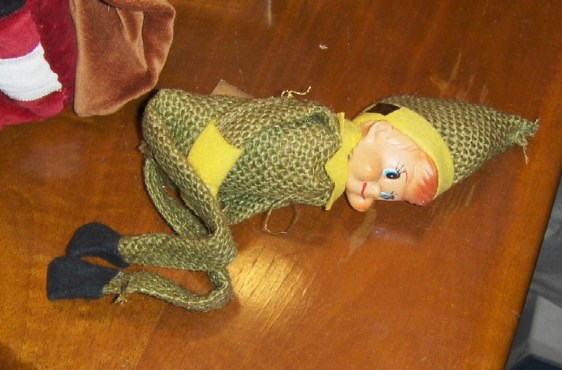
“Stress Elf” Photo by Dylan Tweney, via Flickr Creative Commons

  1. Switch off the sirens. Your nervous system is most likely on alarm overload, like a firetruck siren that keeps on shrieking long after the six-alarm fire is out. In the modern world, this is a widespread issue that leads to adrenal burnout—and that’s why it’s so important to develop calming practices. This video shows some calming practices derived from the energy medicine tools of Donna Eden, but you can also simply take deep slow breaths, note your surroundings and safety, come into your senses, place your hand on your heart/belly/cheek and send your nervous system some love. Especially helpful: Leaning against a tree while doing any combination of these.
  2. Strenuously commit to missing out. I skip holiday parties if my body says “no.” I tune out most media, and turn down the noise of social media in particular. I know I miss out on certain things. Whole categories of pop culture and current events pass me by. I enjoy airplane mode from time to time, even when not inflight. I figure I can take a little trip to the insides of me. This tends to give me more energy than endlessly scrolling, which is what can happen if I’m tired.
  3. Reframe your emo-pictures. This tip comes by way of creativity coach Jen Louden, who suggests renaming unwanted feeling states. The goal is not to bypass the uncomfortable emotions, but to experiment with widening out in possibility. I tried it and found that I could reframe my anxiety as alertness, my sadness as soulfulness, and my judgment (sometimes) as clarity about my boundaries. An interesting tool to play with!
  4. Give yourself a big gift. Do what you want, only and exactly what you want, for a few hours. If you worry that this is selfish, your family will hate you, etc., consider the findings of Adam Grant, a generosity researcher: People give more over the long term when they keep their own goals sacrosanct. To my mind, if I avoid burnout by giving myself this gift…I’ll be more resilient, more loving, more present, and more generous over the long haul.
  5. Watch the birdie(s). By this I basically mean: watch your emotions and sensations come and go. (We just got a bird feeder and I’ve been watching the birds come and go, like my internal states.) I’ve also heard this skill taught in terms of identifying with sky vs. weather or (Jen Louden again) observing fish in an imaginary aquarium without getting in the tank.

However we can, as soon as we remember, the idea is to separate identity from emotional state. A friend who intensively practices mindfulness will say to herself, “sadness is present in my awareness,” to put distance between her essential self and the emotion. Isn’t that so much lighter than “I am depressed” or “my life is miserable”? It’s a ninja move designed to decrease reactivity. Bottom line: The more we can observe ourselves with compassion and curiosity, the more we are able to pause in the presence of strife, confusion, or (in my case) that fudgy brownie that will jack up the nervous system for sure.

Bonus hacker tip: Look for the nourishment. When deciding what to give (yourself or others) or how to spend your time or what to consume, discern with your body what feels truly nourishing to you.

My earlier post, Tips for the Anxiety-Prone, may help too. What about you—what hacks do you have to share for holiday time?

A Safe Space

When someone says all is lost, do you agree? Do you match her intensity of lament with your own, amping up the despair?

Or do you try to talk her out of her fear and angst, knee-jerkily attempting to cheer her up so you don’t have to hear her pain?

Or do you make a safe space for her to express what she needs to express, without agreeing or negating, so she can hear herself and move the lostness and pain out of her body and mind?

I do all three, though I aspire to the latter. Depending on my own emotional state of the moment, I may or may not be able to offer that spaciousness. Sometimes I turn away from another’s declaration of lostness. My own fears get triggered, and I shut down. Or try to shut the other person down. “Don’t catastrophize,” I snapped once when a friend told me of her overwhelming fears. Not my finest moment.

Sometime earlier this week the streetlights on my block mysteriously went out. I am sure someone is following up with the city, keeping the neighbors informed on Facebook, monitoring when they will be turned back on. In the meantime it seems more important than ever that our porch lights stay on and illuminate the street. (I’m adjusting the timer on ours today to match the shorter day length of this season. Happy fall, though it feels like endless summer around here, just another disquieting “new normal.”)

But you get what I’m saying, about the lights, right?

Last night in yoga class our teacher guided us through an experience of mutual support that could be felt in our very bones. We stood four and five across in the small studio space, and each took a tree pose (balancing on one foot with the other pressed into ankle or thigh) while pressing palms into our neighbors’ palms. Some worried they would destabilize those around them and trigger a domino effect of falling tree-bodies.

But that didn’t happen. We stood separately yet connected, a grove of human trees. No one toppled, and if we wobbled a little, the contact with another’s hand steadied us.

I was in the back row and got to glimpse this roomful of interlinked trees, like life-sized paper doll chains.

3546734689_b79f63e69f_c

Photo by The Real Estreya, via Flickr Creative Commons

Balancing in mutual support felt effortless—even when Gaynell next had us reach one leg backwards and bend forward into Warrior Three, this time with our arms outstretched and resting straight across the arms of our neighbors.

What a pleasure to bend forward in synchrony with my yogini friends. I felt that we could sail across an ice rink as one! Simultaneously holding and being held.

When times seem dark, we have this to count on. In the press of each other’s hands, we are stronger and steadier than we could ever imagine.

Getting and Spending

“Getting and spending, we lay waste our powers.”

A long time ago, when I worked in a corporation, I kept this William Wordsworth quote on my cubicle wall to remind me of what I knew—that my life was about more than producing and consuming.

Now I see that this statement doesn’t go far enough. Not only does endless productivity and consumerism crush our personal power, it destroys our planet.

Witness the fires devastating the Amazon. Deliberately set, left to burn until God knows what point of no return. Why is Brazil’s rainforest burning? In part, to feed consumer demand for paper, lumber, soy, and beef. (That’s not even taking into account the impact of mining minerals like copper, tin, gold, iron ore.)

We could blame the people who set the fires, but the more we buy into capitalism, the more complicit we are. Not to say that we don’t need to hold companies and governments responsible for the greedy policies that encourage slash-and-burn deforestation. But when something “out there” disturbs me, I try to to look within to see what is being reflected back to me. 

7469978464_6ebe7c0c7c_z

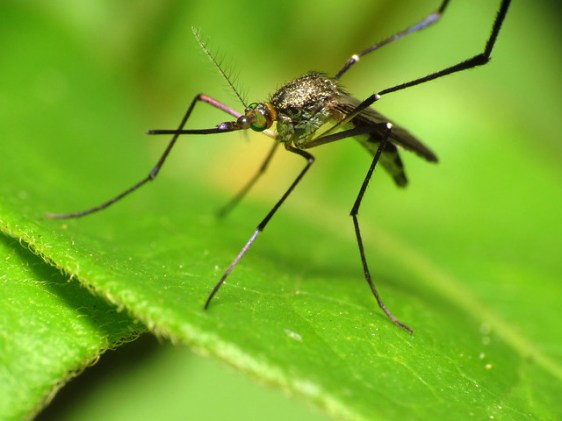
Photo by Katja Schulz, via Flickr Commons “If you think you are too small to make a difference, try sleeping with a mosquito.” —The Dalai Lama

Curiously, I started this blog post wanting to talk about doing nothing. In her new book, How to Do Nothing: Resisting the Attention Economy, Jenny Odell reframes doing nothing as a potent form of resistance.

I have yet to read the book, but a review of it in Yes magazine piqued my interest. It is not a call to passivity, but an invitation to true transformation.

Odell writes that our constant activity and stimulus-addiction keep us from imagining the bold action that would truly change the world.

If we keep trying to feed a bottomless hole with products or busyness or information, we just heat the globe more. But if we step back and get quiet, allow ourselves to feel, we might get in touch with radically different possibilities. Like undoing capitalism.

The master’s tools will never bring down the master’s house, as Audre Lorde put it decades ago. We’ve got to make new tools, and to do that, we’ve got to dive deep.

What of the need for urgent action, to fight the powers that be? Charles Eisenstein has suggested that our urgent scurrying from problem to problem (along with our shame-and-blame culture) are symptomatic of a bigger cultural story driving the intertwined problems of our age. Not only symptomatic, but propping up that story, which is one of alienation, separateness.

We are part of this world. By getting quiet, concentrating ourselves, choosing to stop doing from time to time, we heal a little corner of it. We don’t always know the extent of that healing’s reverberation, but it’s real.

Now, if I stop there, I could use this truth as an excuse to never make a move that feels scary. Worse, as license to let injustices ride and exploitation continue unabated.

Without some measure of self-awareness—and a willingness to act when needed—“doing nothing” becomes self-indulgent. But sitting still, without input from screens or other media—isn’t that the cradle of self-awareness and compassion, a place that can spur inspired action?

A friend posted this quote yesterday along with her rainforest-inspired commitment to a vegan diet: “If you think you are too small to make a difference, try sleeping with a mosquito.” —The Dalai Lama

Where does it arise from, the deeply committed, maybe-small-but-world-changing action? From a spacious, quiet place, in touch with the deep pain of our time, and in touch with infinite possibility.

How to help the situation in Brazil: This Newsweek article lists some action items and organizations to support.

Morning Incantation

I scribbled out this prayer/wish/invocation in slightly messier form a while ago in my journal. It was early in the morning after a week or two of insomniac nights, and I wrote what I needed, in no particular order and with little forethought. I’m posting it today in case it is of use. 

20190621_064805

May it rain today, enough so we don’t need to water the garden, enough to loosen weeds.

May my workday go gently, with breaks to close eyes, take a walk, widen focus, breathe a yogic breath.

May I be nourished by my food choices.

May the morning walk be sustenance for both me and Opal.

May Judy feel restored by the night that was so fraught for me.

May I enjoy my writing time, exploration time. May I lower the pressure level yet stay committed. May I submit my work to places that will receive me well.

May I be brave and gentle. May I be fueled from unseen sources, sourced by underground streams. May I source others from inexhaustible Source. May I be a light even in my own dark times.

BodyMindSpiritEarth

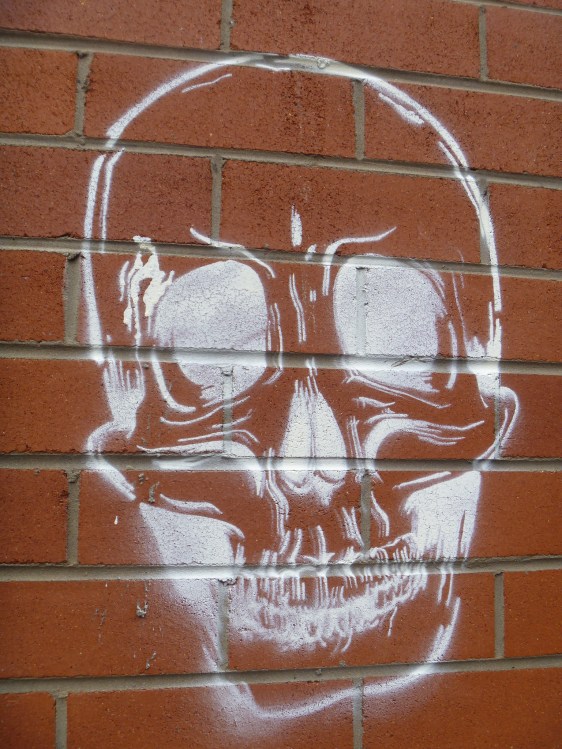
I had a realization at the close of yoga class, while resting in savasana (corpse pose), eyes falling back into their sockets, head heavy on the mat. It’s just this: I have a skull.

Oh I knew that of course. In theory. But it’s weird to think of this thing—used as symbol for poison, or to provoke ghoulish fright, the bony remains of a human—being embedded under my skin RIGHT NOW.

6951289607_08961b1d10_k

Photo by Kate Bunker, via Flicker Creative Commons

Maybe this is not so revelatory for you. Well, I’m the girl who recently discovered, to my amazement, that the bones of my pelvis start way higher at my sides than I had previously pictured. When I thought “pelvis,” I thought “sex organs.” I thought “hips.” I didn’t think “bony parts at my waist just a few inches below my ribcage.”

In this level of bodily cluelessness, I may be unusual, but I think not. Do we really know what goes on under our skin? Do we key into the intelligence of our organs all working together, our blood flowing, our skeletons? Do we connect to the slime and gore of our insides, cached away under the outer layer that meets the world?

It’s easy to forget all that stuff, in an age where we think a whole lot. We can end up experiencing ourselves as brains on a stick, using the body to move the big brain from here to there. This brain that will save the day! (That’s working great for humanity so far, as our “progress” continues to wipe out species and their habitat at unprecedented rates.)

On the other hand, in spiritual development circles, we experience ourselves as bigger-than-brain, as soul or Higher Self, and we know that we go on beyond the body and the body is just dust and ashes.

I submit that this laudable idea can be just as alienating, even dangerous, as the big brain idea.

Of course we are our intellectual capacity; humanity makes incredible use (and misuse) of our curiosity, our capacity for logic, and our problem-solving prowess.

Of course we are our souls; that bigger perspective feeds many a spiritual seeker, including myself.

But the bones, the blood, the viscera—they have their own story to tell, and they don’t just exist to tote us from problem-solving puzzle to enlightened insight. Divorced from the body, the mind is imbalanced, the soul unmoored.

The energy within the body IS us. The blood moves, heart beats, bones/muscles/organs support each other in an integrated system that boggles the mind AND spirit.

3899138849_da1564857b_b

Photo by Marco De Stabile, via Flickr Creative Commons

I am not a mind. I am not a spirit. Not only these. I am a bodymindspirit. I come to practices like yoga and qi gong because I want to experience myself as all three, integrated and invincible.

Like most of us I’m good at neglecting this body. I push it past fatigue, I feed it poor fuel, I ask it to digest too much too fast, I wish it would just sit down and shut up so I can do my real work, but what if my real work is…a dance? A prayer-in-motion?

What if my real work is to sink back into this body that is part of the earth, that needs me to care for it in a deep and loving way?

shedding

What if, by disowning the body’s “ugly” innards, and ignoring its whispers and clues and shouts and cries, I’m only contributing to the disregard of our precious earth’s wisdom?

That’s the bigger picture: bodymindspiritearth. Could I experience myself as all four integrated, and what would that look like?

What dance would I offer then?