Placemaking in the City

It’s hard to imagine right now, with a spring storm threatening to deposit up to 10 inches of snow on us, but in a few weeks my neighborhood will come together for an annual spring cleanup. Volunteers will fan out to pick up a winter’s worth of litter, with the support of Keep Indianapolis Beautiful.

I love my neighborhood for many reasons–one of which is the dedicated cadre of people who work tirelessly to pull us together for the greater good. It’s amazing what this group can pull off: tree plantings, rain gardens, murals, pocket parks, public art projects, greenspaces galore.

A local artist paints a traffic signal box as part of a public art project. Photo by Heidi Unger.

A local artist paints a traffic signal box as part of a public art project.

Working together on projects has meant lots of neighbor-to-neighbor bonding time. When you’re trying to see past your poncho hood to pull soggy candy wrappers from a ditch, the person standing in the rain with you to hold a trash bag open becomes a good pal.

There’s a sense of solidarity and shared ownership, and civic pride out the wazoo. That leads to more ambitious community endeavors, like painting local artists’ designs on all the major intersections’ traffic signal boxes.

Similarly, in my book research I’ve learned of a group called City Repair, out of Portland, OR. This group works to reclaim urban spaces through placemaking. Rather than waiting for someone in charge to come along and “fix” a neighborhood, City Repair takes a DIY approach (or really DIWO – do it with others!).

Placemaking is all about creating gathering spots, or areas that support other community functions–composting, bike parking, safety, resource sharing, etc.  Examples in Portland:

  • public squares
  • meeting houses
  • community kiosks/benches
  • “solar-powered and artistic innovations”

With its emphasis on ecological and artistic transformations, City Repair is an inspiration. Their site offers placemaking resources. Check them out, and let me know what kinds of community endeavors are happening in your neck of the woods.

Postscript: Just as I was finishing this post, I found this great story of transforming a vacant lot into a public space – simply by adding seating.

Toward a More Mindful and Resilient Country

A friend recommended the book A Mindful Nation, by U.S. Congressman Tim Ryan, and I’ve just begun to browse through it. As a student of mindfulness practices, I’m curious how a politician applies these precepts to our national life. Here’s a powerful passage from the first chapter:

Let’s get rid of the phony concept of an America based on materialism, consumerism, and looking out for number one, where financial chicanery is our proudest accomplishment to show the world…

There is no dignity in the idea that anything worthwhile has to be purchased.

It shouldn’t be all that difficult to get us to move beyond this ethos, given how unhappy Americans have become.

If we slow down and find some space away from the daily chatter that tells us how to think, who to be, and what to buy, we can discover our capacity for resilience.

Ryan equates resilience with values like:

  • self-reliance
  • diligence
  • frugality
  • pragmatism
  • hard work
  • innovation
  • community
Pioneer Days. Photo from US National Archives

Pioneer Days. Photo from US National Archives

He calls these, somewhat nostalgically, “the values that made this country great.”

I tend to think more in terms of global citizenry myself, but I think his patriotic slant will have wide appeal, and he does have a point about the hollowness of much of our current national character. Why, he asks, do we collectively rise to the occasion of caring and compassion only in moments of great crisis, such as during and immediately after 9/11? Can we bring this generosity of spirit to our everyday lives?

Ryan believes that a good starting point lies in each of us addressing our personal fears and doubts through the simple practice of paying attention.

I’m curious about this. So let me ask: What place does mindfulness have in your life and work? What place should it have in our national life? And do you think individually bringing kindness to the present moment can change a nation for the better?

What is Community Resilience?

So what do we mean by community resilience, anyway? There are several ways of looking at it.

© Egidijus Mika | Dreamstime Stock Photos

© Egidijus Mika | Dreamstime Stock Photos

1. Community resilience means taking a do-it-with-others (DIWO) response to these threats:

  • global warming
  • food insecurity
  • the end of cheap oil, or “peak oil”
  • economic distress

2. Community resilience is the ability to:

3. Community resilience requires:

4. Resilience differs from sustainability because it presupposes:

5. Resilience and resourcefulness are Siamese twins. The question to ask is, “How do you turn yourself into the resource you need at all times?” –Diop Adisa from KI EcoCenter

6. (Joke) Resilience is code for “we’re screwed.” —Apocadoc Jim Poyser, editor of Indiana Living Green*

*This is actually the PG-rated version of Jim’s definition.

What is your preferred definition of community resilience? And how does your community stack up?

Solar Cooking, the Cookprint, and You

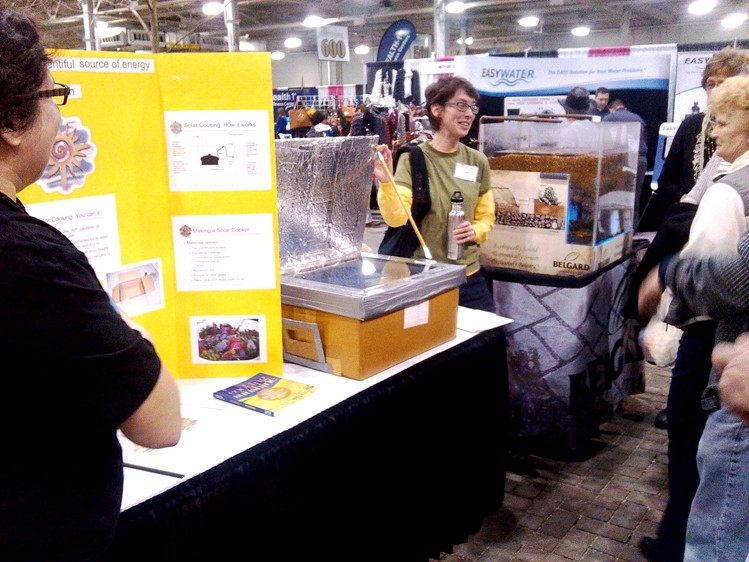
Solar cooker demo at the Flower and Patio Show

Solar cooker demo, Flower and Patio Show

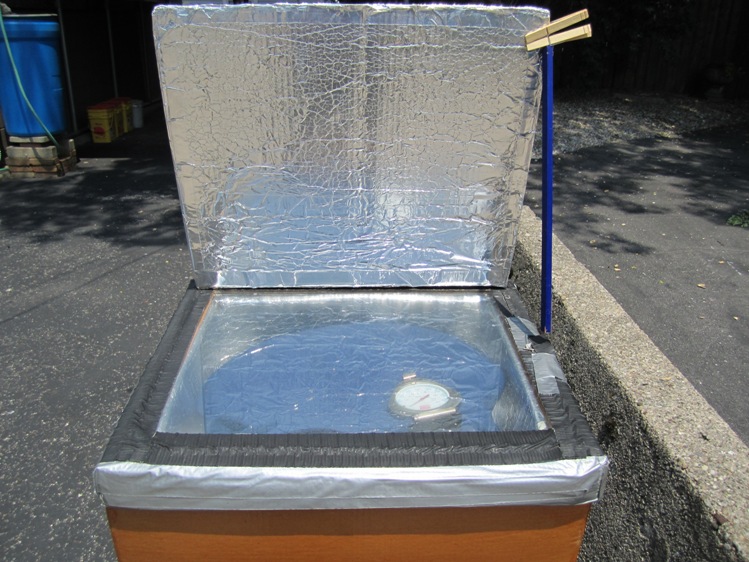
Yesterday I had the chance to bring my well-loved handmade solar cooker to the Urban Homestead exhibit at the Indiana Flower and Patio Show.* I was a little worried that my cooker, made of cardboard, duct tape and aluminum foil, would feel self-conscious in the company of all those gleaming new grills and such. But: We rocked it.

No one seemed to care that the glass has a nice “patina,” as a friend christened the smudges I could not seem to remove with vinegar water. They were too busy peering into it and asking questions about how it works and how it’s made.

This will be my fifth summer of solar cooking. It was a thrill to spend part of a snowy day sharing my cooker with gardener types, a few of whom seemed ready to go right home and make one.

My solar cooker at work

My solar cooker at work

Not only is solar cooking crazy fun, it means we drastically reduce our natural gas use from May to September. And the fact that we can make something so useful from (nearly) all salvaged materials and make it last five years and counting? Well, it kind of feels like getting away with something sneaky.

I’m even prouder of my solar cooker since hearing a radio interview with the author of Cooking Green: Reducing Your Carbon Footprint in the Kitchen, which concerns ways to “shrink your cookprint.”

The local food movement has raised awareness of our “food miles.” But we don’t always consider the impact of another aspect of eating: what we do with the food after we get it home. Anyone who gardens or belongs to a CSA knows that procuring food sustainably is only the first step. Once you have all that produce staring at you, you’ve got to process it. Except for salads, cold soups and the like (raw foodists, holla!), this task generally involves using some form of energy–turning on the burner, heating up the oven, plugging in the crockpot.

I haven’t read the book, so I don’t know if she advocates solar cooking as the ultimate in cookprint reduction. In the interview the author shares tips like this one for pasta-making:

Tip: Bring the water to a boil, then turn the burner off once the pasta is in the covered pot.

gas burnerI imagine pressure cookers are high on her list as well. (Don’t tell my solar cooker, but I’d be lost without my pressure cooker, at least from October through April.)

What about you–have you looked at ways to reduce your “cookprint?” Do you use a solar cooker–or would you like to? Share in the comment section below! (If you’d like more info on solar cooking, contact me for recipes and tips. Find DIY instructions here. You can buy one here–but really, don’t. So easy to make!)

*Still time to check this out if you are in Indy–through March 17. I’m told sheep will be grazing the urban homestead grass at some point in the next few days. Get your coupon here.

Not Your Mother’s Flower Show

Update as of March 8: I’ve added a couple things to this post that I didn’t know about yesterday: additional times to hear about backyard chickens, plus a coupon!

Quick commercial break here for those who live in or near Indianapolis. This year’s Flower and Patio Show, running March 9-17 at the Indiana State Fairgrounds, includes a phenomenal new exhibit called The Urban Homestead. Picture a 10,000 square-foot city lot set up right in the middle of the expo hall, complete with chickens, rain barrels, vegetable gardens, and occasionally even sheep.

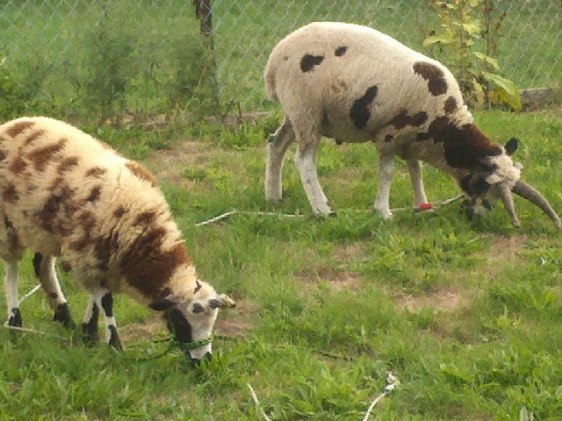
Yep, sheep. “When the grass around the Eco-Cottage grows too tall during the show, sheep from Fruit Loop Acres will be brought in to ‘mow.'”

sheep grazing

Sheep from the Green Shepherd Project, a project of Fruit Loop Acres, graze a city lot. Photo by Sue Spicer.

Other highlights:

Fraudulent Farmgirl Amy Mullen from Spotts Garden Service will present three times:

  • Saturday, March 9: 12:30 p.m. “Food Gardening for Beginners
  • Friday, March 15, 1:00 p.m. “Organic Weed and Pest Control
  • Friday, March 15, 6:00 p.m. “Edible Landscapes
herbs

Herbs growing in a container

Andy Cochran with Circle City Rain Barrels will teach how to build a rain barrel in two sessions:

  • 11:30am Saturday, March 9
  • 11am Sunday, March 10

Nap Town Chickens will be there all week, and there will opportunities to learn how easy it is to keep backyard chickens in three sessions:

  • 1pm Tuesday, March 12 with Andrew Brake of Nap Town Chickens
  • 11am Thursday, March 14 with Maggie Goeglein of Fall Creek Gardens
  • 7pm Saturday, March 16 with Andrew Brake of Nap Town Chickens

All this plus beekeeping, mead making, container gardening, composting, and more. I’m so there!

Oh wait, I have to be there: I signed up to be a presenter. I’ll be talking about solar cooking at 1pm Wednesday, March 13, demonstrating how to harness the most plentiful source of energy on earth to do your summer cooking.

We may have snow on the ground now, but in a few short months, this little puppy will be my best friend again.

solar cooker

Solar cooker and rain barrel on my urban homestead

Here is a coupon for $3 off admission to the Flower and Patio Show. Get there, and then come see us at the Urban Homestead exhibit!

And now back to our regularly scheduled programming.

A New Narrative

Welcome to my blog!

I admit I have had my reservations about jumping (back) into the blogosphere. Do we really need one more blog clamoring at us in this noisy world?

But there are so many overwhelming issues staring us in the face every day: climate change, resource depletion, species loss, overpopulation, economic strife, deforestation, dying oceans, diminishing water, crumbling infrastructures, an insane food system. These seemingly insurmountable problems add up to a runaway freight train of cataclysm. What gets lost in the clamor is stories of people taking meaningful action–just when we most need to hear their voices.

My research on the community resilience movement has shown me that people everywhere are working to make things better. And not only does the wider society need to know about this, but those of us bucking the system desperately need to hear from other people on this road. There’s a deep hunger to connect with the bigger movement.

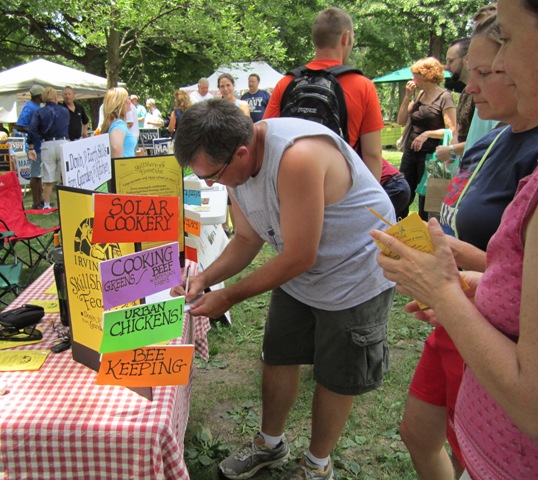
Farmers Market SkillShare

Building community at the Irvington Farmers Market

Speaking for myself, being in community is one key to keeping my spirits up in this age of crisis. I can find that connection with a handful of trusted neighbors gathered at my local brew pub for the Irvington Green Initiative’s monthly Green Hour. I can find it with some 40,000 strangers, marching in the Forward on Climate rally in DC.

It heals me to talk with people who share similar concerns. It energizes me to hear what they are doing to “sweep their little corner” as a friend puts it. It seems natural to put some of this exciting stuff in a public forum for others to enjoy.

It also seems critical to counter the potential futures we are shown in so many books and movies.

The vision of life on a burned out earth drives each of us into fear whether we’re conscious of it or not. On some level we all know that without our life support system—this precious planet—we are doomed. Every movie or novel that shows a dystopian world of hardship reinforces our terror. It’s an emotion that can drive us into walled-up bunkers, whether physical or emotional. Fear shuts down hope and creativity—two things we need in abundance right now.

But there is another focus we can hold: that of cooperation, of compassion, of joining together in a grand and timely mobilization of energies. What if we were to unleash all our creativity, letting go of the need to hold one “right” way? What if we focused on what connects instead of divides? We could leap into this possibility: that together, we can make radical changes that remake the world.

The goal of this site is to show how people are turning their attention to what works, or what might work, instead of focusing on what’s irrevocably broken. There’s no shortage of brilliance in the human spirit—the force that brought us the iPad, the genome map, the Hubble Telecope.

No, there’s no shortage of mental power. Ask anyone who’s stayed up all night worrying about where we might be headed.

What we do lack is vision, a new narrative. That’s where this site comes in. Join me. I hope you’ll feel free to comment on my blog or contact me here with your thoughts and feedback. I hope to hear your stories.