Jerry Needleman: Seeking the Questions

Third in a Series on my Mesa Refuge Cohorts

It is a rare privilege to have sustained contact with a deeply reflective person, someone capable of nurturing reflection in others. Today I am remembering this feeling of spaciousness as I hold a book called An Unknown World: Notes on the Meaning of the Earth, given to me by the author at Mesa Refuge. A philosopher and educator, Jacob Needleman (Jerry, he prefers to be called) enriched my time at the residency enormously.

Jacob (Jerry) Needleman

Jacob (Jerry) Needleman

Jerry was there to work on his next book, and he’s written many. In fact, An Unknown World was penned during an earlier Mesa Refuge residency. I enjoyed getting to know the man behind the bibliography, finding him to be engagingly kind, curious, and funny.

As our senior resident, he occupied a place of honor at our dinner table. I think he enjoyed being the only man among four women who doted on him (and sometimes ribbed him as well).

Jerry’s brand of philosophy is practical, compassionate, accessible, incisive—and quite applicable to the times we are living. Instead of right answers, he seeks the right questions, a refreshing tactic.

In one of our many thought-provoking conversations, he invited us to live the question only we ourselves can answer, which is: “Who am I?” He said that when caught up in a destructive habit, it’s helpful to ask, “Who is the person doing that? Who am I?”

“This question is like a companion throughout your life; it becomes an energy,” he said.

I first opened An Unknown World in my writing shed, with water birds swimming the wind over the marshy expanse outside my window. Jerry had read aloud from this book the previous night—and what he read, his normally quiet voice turning sonorous, riveted me. That passage suggested that humans are channels for “higher influences” that need to be expressed on earth. That without our evolution, “Earth herself could not evolve toward her own greater possibility.”

Photo by Heikenwaelder Hugo, via Wikimedia Commons

Photo by Heikenwaelder Hugo, via Wikimedia Commons

And so I read more, hungrily:

“What we and our Mother Earth need, and what has been needed since Man first appeared, is the energy of awakened and awakening men and women…”

“We can hardly imagine what the Earth will offer us in return for its being seen and understood by the whole being of Man. Earth and Nature need this from us more than anything else. And only from this inner transformation of the mind can right action toward nature and the Earth be pursued without ultimately resulting in ‘the same old story’—that is, division, conflict, and violence.”

After I finished this illuminating book, I asked Jerry which of his works to read next, and he suggested Time and the Soul. I asked Bookmamas to order a copy for me. I’m looking forward to diving in. It’s about allowing time to “breathe” in our lives. (Jerry was right in divining that I need to learn this!)

I feel so blessed to have met Jerry. I probably wouldn’t have encountered his work if not for our time together at Mesa Refuge.

Julia Butterfly Hill: What our Hearts Know

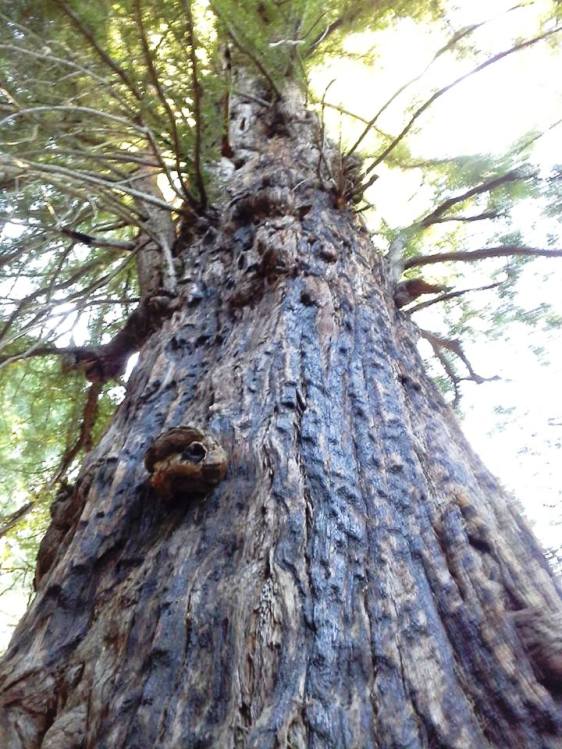
Belated postcard from Hopland, CA: It was a thrill to hear Julia Butterfly Hill speak at the Building Resilient Communities Convergence. This is the woman who spent most of 1998 and 1999 living in the canopy of an ancient redwood tree named Luna. Her extended protest brought attention to the plight of ancient forests and resulted in a three-acre buffer zone around Luna.

Julia Butterfly Hill in 2005, via flickr Creative Commons, by Scott Schumacher

Julia Butterfly Hill in 2005, via flickr Creative Commons, by Scott Schumacher

Now she calls herself a wholistic healthcare practitioner instead of an activist, because she is working on the “disease of disconnect.” What struck me about Julia is how much she embodied a heart-centered ethic. She began by expressing a commitment to affirming “what our hearts know: That we are all one.”

There’s little in our culture that supports the kind of inner transformation needed now. Julia called this era a time of spiritual crisis. “That place inside ourselves that is just ancient and knows only connection is in crisis.”

Methuselah, an 1800-year-old redwood in Woodside, CA

Methuselah, an 1800-year-old redwood in Woodside, CA

“What is it going to take to rebirth ourselves in this world where we are?” was her central question. She said it is a courageous act to keep our hearts open, because it means being open to the suffering of beloved creatures, communities, and ecosystems.

I appreciated that she called us to stay aware of our own tendency to rigidity, cautioning: “Any time we are passionate about anything, we are one breath away from being a fundamentalist.”

She invited us to “live so fully and presently in love that there is no room for anything else to exist.” To ask, What would love do in this space? What would love say in this room?

She said we need to bring all our integrity to bear in modeling a positive vision for the world. “We are so good at defining what we are against that what we are against begins to define us.” But it is also crucial to stand firm against wrongdoing. Even the campaigns that failed, she said, she would go back and do again.

It’s a matter of offering ourselves “in loving and joyous service to our world.”

Truly a transformative figure.

Stealing the Future

Photo credit: Kim Seng, via flickr Commons

Photo credit: Kim Seng, via flickr Commons

At present, we are stealing the future, selling it in the present, and calling it GDP. We can just as easily have a future that is based on healing the future instead of stealing it.

Paul Hawken, Commencement Address, University of Portland, 2009

Drawing the Line

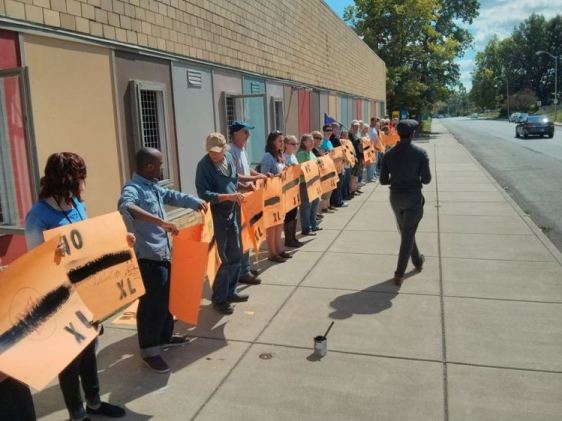
Saturday I took part in a local expression of a nationwide day of action, 350.org’s Draw the Line. About 40 of us came out to demonstrate resistance to the proposed Keystone XL pipeline.

KI EcoCenter hosted the Indy event in partnership with Earth Charter Indiana. These two stellar groups both work at the intersection of environmental, social, and economic concerns.

Photo by KI EcoCenter

Photo by KI EcoCenter

Alvin, one of the organizers, started us off with a wholistic assessment of what we were about: creating a new world, beyond the issue of the pipeline or tar sands or even fossil fuels.

“Keystone XL is a symbol of the past…We’re saying no, we want something different for our world,” Alvin said.

In the ensuing discussion, there was talk of reining in corporate greed, making companies pay the true cost of production, reforming the way election campaigns are financed, and other policy changes.

But many people brought up the need for internal as well as external shifts. How are we making the old reality obsolete by creating a new reality, as Buckminster Fuller advised?

Photo by KI EcoCenter

Photo by KI EcoCenter

Some of the insights:

We need to build a united movement that encompasses social justice, because climate change disproportionately affects the poorest of the poor. —Rosemary

We have to shift away from the value we put on money. Companies value money and profits more than our own lives. We have to focus on the intangible side of life, such as happiness that comes from having a healthy place to live. —Keenan

Photo by KI EcoCenter

Photo by KI EcoCenter

The problem stems from the idea of separation—that we’re separate from each other, separate from the earth, separate from the animals. But we are one. —Marion

We need to change the definition of the good life. —Tom

We need to take responsibility for what we carry within so we don’t pollute the world with negativity. Anything inside us that fears and hates is that which is in common with what is feared. It’s important to notice—because when you notice things, they lose power. —Phoebe

Photo by KI EcoCenter

Photo by KI EcoCenter

At the end of the discussion, we lined up outside the center with signs we had made, and a KI EcoCenter intern drew a black line across to represent our line in the (tar) sands.

Though I much prefer creating the new world to protesting what needs to fall away, I do believe it’s important to stand up and be counted. I’m glad Indy was represented in the movement, however small our number. And we didn’t stand alone. These photos of the line’s reach (into hundreds of cities, drawn by thousands of activists) at 350.org’s flickr stream are inspiring.

Working with Nature to Sustain Life

There’s a fatal flaw in the traditional definition of sustainability—meeting today’s needs without jeopardizing future generations’ ability to meet their own needs.

The problem? This notion leaves out every species besides homo sapiens.

The truth is, “Human beings don’t sustain shit,” sustainability consultant Brandon Pitcher declares. “Nature sustains us. We fool ourselves into thinking we sustain the planet, but it’s the other way around.”

But Fritjof Capra’s view of sustainability is more integrated:

“A sustainable human community is designed in such a manner that its ways of life, technologies, and social institutions honor, support, and cooperate with nature’s inherent ability to sustain life.”

By Alaricmalabry (Own work), via Wikimedia Commons

By Alaricmalabry (Own work), via Wikimedia Commons

Pitcher, a certified practitioner of ZERI (Zero Emissions Research & Initiatives, a global network seeking solutions to world challenges), spoke at the Irvington Green Hour Tuesday night. He gave two scenarios of solutions patterned after nature’s wisdom.

The Power of Shrooms
The first involves using mushrooms to address multiple issues, such as in the case of an invasive species troubling poverty-stricken parts of Zimbabwe. There water hyacinths choke waterways, to the point that people can’t take their boats down the river, jeopardizing their livelihoods in an area already strained by high rates of HIV.

However, once harvested, dried, and sun-sterilized, this invasive species is ideal food for mushrooms. Villagers take the work on, and native mushrooms thrive on this biomass. Reintroducing mushrooms as a food source demonstrates how tasty and nutritious these powerhouses are—and they can provide enough protein to sustain a community in two to three weeks, Pitcher says.

Mushrooms also figure in food security efforts in Colombia, where the coffee plant forms a substrate for edible fungi. Typically 99.8 percent of coffee is thrown away or burned on its way to our morning cuppa. But “waste” is opportunity.

Coffee Plant, by Jo N, via flickr Commons

Coffee Plant, by Jo N, via flickr Commons

The Wisdom of Water
Pitcher’s second example is a natural way to treat wastewater.

In Indiana, 92 cities, including my hometown, have antiquated combined sewer overflows (CSOs).

Combined sewer overflow effects, by Christopher Zurcher, via flickr Commons

Combined sewer overflow effects, by Christopher Zurcher, via flickr Commons

Never heard of a CSO? You’re lucky. Here whenever it rains a fraction of an inch, raw sewage combines with stormwater runoff and runs straight into waterways. So pathogens and toxic chemicals are dumped into my neighborhood’s Pleasant Run and other sweet little streams.

The remediation plan involves drilling enormous pipes deep underground to hold the excess sewage. To Pitcher, this represents a wasted opportunity—and a sad ignorance about the way water naturally purifies.

“Water does not move in a straight line in nature,” he points out. Its natural flow creates vortexes that clean it. “It’s very ignorant of us to think we can move water through pipes in straight lines and think that water’s going to be healthy.”

An integrated system of rain gardens and wetlands harnesses the power of algae to treat wastewater. In Indy, such a system could have resulted in a decentralized network, providing jobs and clean water in perpetuity, Pitcher believes.

For more information, see the ZERI site, or The Blue Economy—or attend Pitcher’s upcoming  sessions at Trade School Indy.

From Dismemberment to Oneness

Rebecca Solnit, on how leprosy numbs the extremities so that sufferers don’t realize when they are damaging their own tissues:

“The disease strangles nerves, kills off feeling, and what you cannot feel you cannot take care of.”

She speaks of a kind of dismemberment, of patients who feel no pain, so they injure themselves, even blind themselves.

She quotes a missionary doctor: “One of the boys said to me, “My hands and feet don’t feel part of me. They are like tools I can use. But they aren’t really me. I can see them, but in my mind they are dead.'”

Reading, it struck me that this statement could also sum up the dominant cultural attitude toward our own earth home. Though we belong to her and she to us, for so long we’ve disowned her, exploiting her riches as just so many dead “resources.”

We’ve been operating under the delusion that we are separate from the biosphere and the myriad life forms that share it—and separate from each other too. The results are catastrophic. If we lack feeling for each other, the soil under our feet, the waters that flow, and the skies above, we won’t consider these worthwhile of care.

"Holding Hands," by Paige Shoemaker, via Flickr Creative Commons

“Holding Hands,” by Paige Shoemaker, via Flickr Creative Commons

But perhaps that’s changing now, bit by bit.

More and more of us are waking up to our empathetic selves. We’re feeling a kinship not just with other humans but with the earth herself. We’re re-membering our entire human family and our deep connection to the planet that holds us.

I think of the empathy displayed by Antoinette Tuff as she disarmed a young mentally ill man bent on violence in her school. In the midst of her fear, this bookkeeper found a way to connect with the young would-be shooter, seeing him as a hurting soul. Her ability to reach him on a human level may have averted a major tragedy.

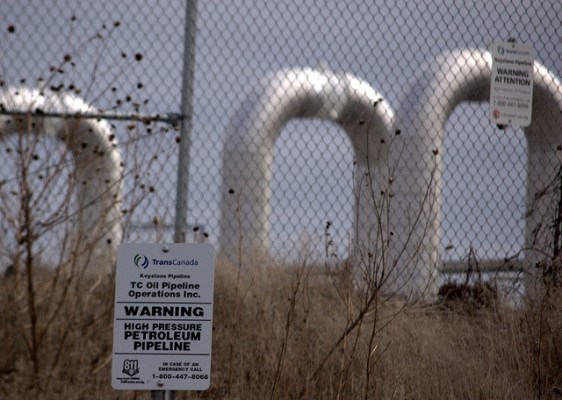
Meanwhile, this summer a group has been tracing the route of the Keystone XL Pipeline in the Great Plains. The pipeline, as I posted in May, would allow the release of enormous levels of carbon—enough to create irreversible climate change.

Trans Canada Keystone Oil Pipeline, by shannonpatrick17, via Flickr Creative Commons

Trans Canada Keystone Oil Pipeline, by shannonpatrick17, via Flickr Creative Commons

Taking both a physical and a spiritual journey through the heart of North America, Compassionate Earth Walk aims to nourish the earth, while inviting all humans to return to oneness in the community of life.

From the story on Resilience.org:

“We walk in response to climate change and in gratitude for the earth which has given freely to us for so long. We walk as an act of healing both symbolic and literal, including healing of the walkers, the land, the communities impacted by the pipeline, and the whole human consciousness of separation.”

No more numbness. No more dismemberment. The pain of our suffering planet and fellow earthlings might be difficult to face, but feeling it means we’re awake. It means we can care.

Book Offers a Vision of the Possible

I’ve had this book out from the library the past few weeks, but after test-driving it, I just emailed Kathleen at Bookmamas to ask her to order it for me. It’s a keeper. Here’s my review:

Wendy Tremayne’s The Good Life Lab: Radical Experiments in Hands-on Living gives a powerful example of a reimagined world in the shape of one couple’s desert homesteading adventures.

Prickly pear, an example of the desert bounty gathered by Tremayne. Photo by Jon Sullivan [Public domain], via Wikimedia Commons

Prickly pear, an example of the desert bounty gathered by Tremayne. Photo by Jon Sullivan [Public domain], via Wikimedia Commons

Many of us work toward self-sufficiency (or better, community-wide resilience, broadening the circle from homestead to neighborhood). But we’re hampered by the need to make money to prop up our lifestyles, cutting into the time we have to learn and practice new skills. Wendy and partner Mikey demonstrate what is possible by leaping into a completely new way of life. They cash out their retirement accounts (a prescient move, before the crash) and transplant themselves into Truth or Consequences, NM to build a new life.

And build they do: using waste materials and nature’s bounty, they craft a beautiful, abundant, interconnected home base that allows them to live their deepest values.

In contrast to some “green lifestyle” books that focus on giving up luxuries for the earth’s sake, this book offers an exuberant romp through the reclamation of life’s biggest gifts: time, beauty, creativity, connection, purpose. More than just a memoir, it is an invitation to adopt the “maker” mindset. Tremayne’s lyrical descriptions of the spiritual aspects of this journey, coupled with the gorgeous, whimsical artwork and photographs, make this an inspirational book.

The author (who founded Swap-O-Rama-Rama, a community-based textile repurposing/skill sharing extravaganza) observes, “When all of life is for sale, it is a revolutionary act to become a maker of things.” She describes “life in the waste stream” as the ultimate freedom.

“By relying on waste, on what nature provides, and on ourselves, we gave the world a chance to demonstrate abundance. By becoming makers of things, we let our creativity become a transformative link between the free materials available to us and the finished goods that made our lives better.”

She notes that mistakes are part of this process, and describes combatting the inevitable “I can’t do that” by simply taking the next step. For those of us who consider ourselves less than handy (ahem), the book offers both challenge and a roadmap. The last section, in fact, provides concrete steps toward reclaiming the building blocks of life, covering food, power generation, fuel, and shelter.

The physical book itself embodies the new world by its very design, in which art and joy and utility are married into a brilliant manifesto.

In short: Stop what you are doing and order one now from your local independent bookstore, people!

(Can’t wait till your book arrives? Hungry for more after reading it? Check out Wendy and Mikey’s blog at Holy Scrap.)

Coal: It’s So Yesterday

I confess that when I was asked to write a story about Indiana’s Beyond Coal movement for Indiana Living Green, part of me was a bit ho-hum at the prospect.

Sure, the two ladies leading the fight (Megan Anderson and Jodi Perras, my two profilees) are amazing specimens of fierce feminine energy, each hailing from a different generation, an interesting duo. And of course, I am totally down with clean energy.

It’s just: I’d rather write about yummy stuff, like food, or farming, or foraging. I am drawn to tales of those remaking the world in intriguing, innovative ways. That new emerging story is what energizes me. And sometimes the hard work of calling a halt to the old story seems so…tired.

By Arnold Paul, via Wikimedia Commons

By Arnold Paul, via Wikimedia Commons

I mean, we all know that coal is bad for the environment and our health. What more is there to say?

So I thought. Then I talked to Megan and Jodi, and got a first-hand glimpse of what’s at stake. I saw that not only are they pushing to retire these decrepit coal plants, they are holding a vision of an Indiana where residents are choosing from an array of clean energy options, even generating their own energy. An Indiana where people have secure jobs that they feel good about, contributing to a cleaner state. An Indiana on the cutting edge.

By Mhassan abdollahi, via Wikimedia Commons

By Mhassan abdollahi, via Wikimedia Commons

Now that’s exciting.

I was moved to hear Jodi talk about the group meditation where she visualized her descendants asking what she did to fix the climate crisis. Isn’t this something we all think about, what kind of world might be next?

I got fired up hearing their passion for righting the injustices wrought by Big Coal. I learned that children who have the misfortune to be born poor are disproportionately impacted by the health effects of coal—resulting in learning disabilities, asthma, autism, and lowered IQs.

How fair is it that poor kids are effectively trapped into a cycle of poverty because of lifelong difficulties linked to our state’s over-reliance on coal?

Then I learned that coal is ever more costly. And it just seems like a no-brainer from there.

Read the piece for the full scoop. You can join the Beyond Coal Indiana movement at the Sierra Club’s website or contact Megan Anderson at megan.anderson@sierraclub.org.

Their Courage Becomes our Courage

As I mentioned in a previous post, I recently devoured Frances Moore Lappe’s brilliant new book EcoMind. I now have a clearer sense of the risk people are taking when they first begin to step off Status Quo Railways and change the way they live.

It’s deeply ingrained in each of us as humans to to look and act like everyone else in our tribe. This has been a matter of survival since Day One of our species: Stay with the pack, or perish!

No wonder so many are hesitant to follow a different drumbeat than the dominant culture’s. Lappe cites experiments showing that subjects went along with the wider group’s opinion–even when it went against what they could see with their own eyes.

It can be quite powerful to join a movement, but what if the movement looks fringy and wrong to the people closest to us? It’s a big risk.

That’s where the power of relationship comes in.

Because those same experiments showed that “all it took was one truth-teller to enable people to be true to themselves.”

“Knowing this,” Lappe writes, “we can choose to seek out those who share our passion, those who encourage us to risk for what we believe in.”

In fact, there are neurological changes that take place when we observe others’ actions. “Mirror neurons” in our brains start firing–as if we ourselves were taking those same actions!

In this way the courage of others becomes our courage.

I have had several such exemplars in my life, people who showed me what it means to live a life of passion and integrity, with the lightest of footprints. Here is a photo of one of them, Keith Johnson of Renaissance Farm.

Keith Johnson, sharing the beauty and abundance of Renaissance Farm

Keith Johnson, sharing the beauty and abundance of Renaissance Farm

Keith and his partner Peter Bane (who gave me my introduction to Permaculture) model a generous, resourceful, earth-sustaining way of life. It’s a way of life that will be ever more essential as we face the uncertainties of the future.

The photo above was taken in May when a friend and I drove down to Bloomington for Renaissance Farm’s plant sale. Though it was raining, Keith delighted in showing us the glories of spring on the suburban farmstead. The unveiling of a fig tree was particularly thrilling. As I recall, Keith insisted we take some of his surplus bok choy harvest, and when I swooned over the taste of chocolate mint, he pulled a clump right out of the ground and gave it to me to plant at home.

People like Peter and Keith give us all more faith in our own ability to heal the earth, to live in such abundance that we just have to share.

They offer me (and others like me) the assurance that Deepak Chopra talks about in this quote:

The famous adage is wrong: The journey of a thousand miles doesn’t begin with the first step. It begins with the assurance that you can take the first step. 

Critical Mass

I was talking with a friend recently about the climate crisis. He’s one of the creators of Apocadocs, every day curating news of the major fix(es) we are in, so he’s understandably gloomy much of the time. But for a moment, his usual despairing tone took a different bent.

“I take comfort in flocking behavior,” he said, stating that a flock of birds doesn’t depend on some alpha male to make a decision about which way everyone will move. No: The flock flies in concert, each bird maintaining alignment with each other as they wheel across the sky.

Chris Upson, via Wikimedia Commons

Chris Upson, via Wikimedia Commons

My friend takes this as a hopeful sign that perhaps humans can make a much-needed shift by simply reaching critical mass. “And maybe it’s just 51 percent of us who need to get it, rather than 80 or 90 percent of us.”

Gaining critical mass at 51 percent certainly sounds possible. And perhaps we’re at 50.99 right now.

I’m further encouraged after reading EcoMind: Changing the Way We Think, to Create the World We Want, by the incomparable Frances Moore Lappe. This intensely inspiring (and mindblowing) book deserves its own post. But for now let me just quote this passage that jumped out at me, as it reinforces my friend’s view:

“While animal-behavior experts used to think that it was the dominant leader who made decisions for the whole herd, they’re discovering that it doesn’t always work that way. For instance, red deer, native to Britain, move only when 60 percent of the adults stand up. Whooper swans of northern Europe ‘vote’ by moving their heads, and African buffalo do so by the direction of the females’ gaze.”

By Stefan Ehrbar (Own work), via Wikimedia Commons

By Stefan Ehrbar (Own work), via Wikimedia Commons

How about it? Which way are we looking?