Their Courage Becomes our Courage

As I mentioned in a previous post, I recently devoured Frances Moore Lappe’s brilliant new book EcoMind. I now have a clearer sense of the risk people are taking when they first begin to step off Status Quo Railways and change the way they live.

It’s deeply ingrained in each of us as humans to to look and act like everyone else in our tribe. This has been a matter of survival since Day One of our species: Stay with the pack, or perish!

No wonder so many are hesitant to follow a different drumbeat than the dominant culture’s. Lappe cites experiments showing that subjects went along with the wider group’s opinion–even when it went against what they could see with their own eyes.

It can be quite powerful to join a movement, but what if the movement looks fringy and wrong to the people closest to us? It’s a big risk.

That’s where the power of relationship comes in.

Because those same experiments showed that “all it took was one truth-teller to enable people to be true to themselves.”

“Knowing this,” Lappe writes, “we can choose to seek out those who share our passion, those who encourage us to risk for what we believe in.”

In fact, there are neurological changes that take place when we observe others’ actions. “Mirror neurons” in our brains start firing–as if we ourselves were taking those same actions!

In this way the courage of others becomes our courage.

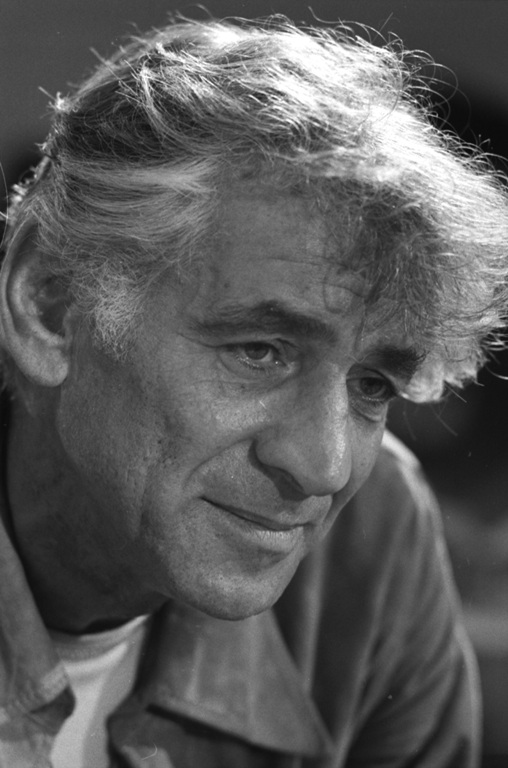
I have had several such exemplars in my life, people who showed me what it means to live a life of passion and integrity, with the lightest of footprints. Here is a photo of one of them, Keith Johnson of Renaissance Farm.

Keith Johnson, sharing the beauty and abundance of Renaissance Farm

Keith Johnson, sharing the beauty and abundance of Renaissance Farm

Keith and his partner Peter Bane (who gave me my introduction to Permaculture) model a generous, resourceful, earth-sustaining way of life. It’s a way of life that will be ever more essential as we face the uncertainties of the future.

The photo above was taken in May when a friend and I drove down to Bloomington for Renaissance Farm’s plant sale. Though it was raining, Keith delighted in showing us the glories of spring on the suburban farmstead. The unveiling of a fig tree was particularly thrilling. As I recall, Keith insisted we take some of his surplus bok choy harvest, and when I swooned over the taste of chocolate mint, he pulled a clump right out of the ground and gave it to me to plant at home.

People like Peter and Keith give us all more faith in our own ability to heal the earth, to live in such abundance that we just have to share.

They offer me (and others like me) the assurance that Deepak Chopra talks about in this quote:

The famous adage is wrong: The journey of a thousand miles doesn’t begin with the first step. It begins with the assurance that you can take the first step. 

Critical Mass

I was talking with a friend recently about the climate crisis. He’s one of the creators of Apocadocs, every day curating news of the major fix(es) we are in, so he’s understandably gloomy much of the time. But for a moment, his usual despairing tone took a different bent.

“I take comfort in flocking behavior,” he said, stating that a flock of birds doesn’t depend on some alpha male to make a decision about which way everyone will move. No: The flock flies in concert, each bird maintaining alignment with each other as they wheel across the sky.

Chris Upson, via Wikimedia Commons

Chris Upson, via Wikimedia Commons

My friend takes this as a hopeful sign that perhaps humans can make a much-needed shift by simply reaching critical mass. “And maybe it’s just 51 percent of us who need to get it, rather than 80 or 90 percent of us.”

Gaining critical mass at 51 percent certainly sounds possible. And perhaps we’re at 50.99 right now.

I’m further encouraged after reading EcoMind: Changing the Way We Think, to Create the World We Want, by the incomparable Frances Moore Lappe. This intensely inspiring (and mindblowing) book deserves its own post. But for now let me just quote this passage that jumped out at me, as it reinforces my friend’s view:

“While animal-behavior experts used to think that it was the dominant leader who made decisions for the whole herd, they’re discovering that it doesn’t always work that way. For instance, red deer, native to Britain, move only when 60 percent of the adults stand up. Whooper swans of northern Europe ‘vote’ by moving their heads, and African buffalo do so by the direction of the females’ gaze.”

By Stefan Ehrbar (Own work), via Wikimedia Commons

By Stefan Ehrbar (Own work), via Wikimedia Commons

How about it? Which way are we looking?

A Precious Gift

Still climbing Staph Hill here, so enjoy a perspective-giving passage from a book called Evolutionary Enlightenment while I recuperate.

“When you think objectively about how much work went into creating your own capacity to have the experience you are having in this very moment—fourteen billion years of hard work—then it might even begin to strike you as immoral to spend too much time sitting around and worrying about the fears and desires of your personal ego.

By ESA/Herschel/PACS/SPIRE/J [Public domain], via Wikimedia Commons

By ESA/Herschel/PACS/SPIRE/J [Public domain], via Wikimedia Commons

Surely the purpose of all that cosmic effort and creativity and positivity—from nothing to energy to light to matter to life to consciousness to you—could not possibly have been just for that.

When you awaken to the evolutionary process and its endless creativity, and you discover how profound and complex the structure of our universe is, you start to recognize and appreciate, at a soul level, what a precious gift it is to be here.

Andrew Cohen

“To Spend my Days Serving”

I’ve been felled by a Brown Recluse spider bite or possibly a boil-gone-bad (staph infection), and no I won’t share a photo of the wound. I wouldn’t inflict that on anyone–except my crazy herbalist, who delights in such things.

Being a little less mobile than usual has given me a chance to catch up on my reading, at least in theory. I have a whole trayful of publications and other reading material I never seem to get to, and on top of the pile was the March-April issue of Branches Magazine. Ironically, it was themed Best Medicine (as is the current issue). The very first piece stopped me cold. I wish I could link to it but the periodical does not maintain online versions of articles.

“The Best Medicine: Joyful Living” is a first-person essay by David Forsell, president of Keep Indianapolis Beautiful, an action-oriented powerhouse here in my hometown. Think tree plantings and neighborhood cleanups, communities given resources and support to beautify their surroundings. My little juneberry tree who lifted my spirits the day after the Boston bombings? It came from that organization.

Forsell has a rare form of cancer that is “slow but relentless,” and he recently recovered from his 13th surgery to remove yet another tumor. He writes of the example of his mother, who had the same illness, and the search for meaning in the midst of physical suffering. Awareness of his mortality, he writes, has spurred him to make the most of his limited and precious time.

And isn’t this something we all might keep in mind–the certainty of our death–to live a more meaningful life?

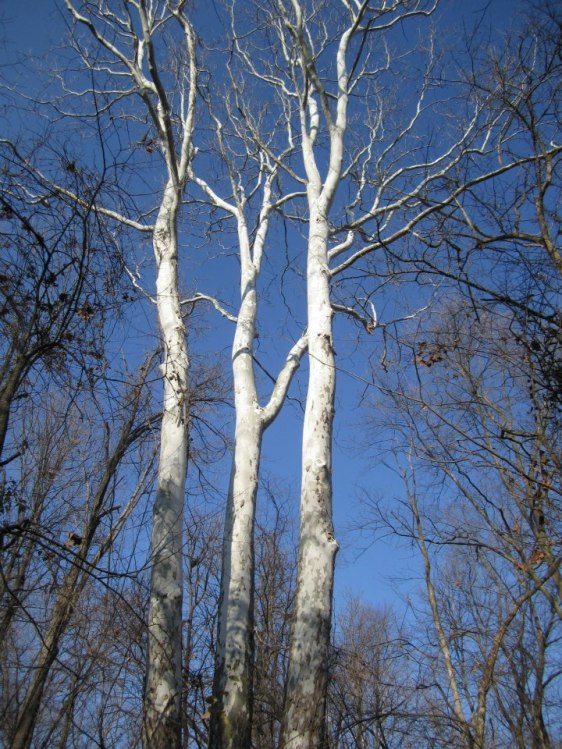
Sycamores in November

Sycamores in November

Forsell came to the Irvington Green Hour last summer to talk about trees with a bunch of us treehugger types, all of us concerned about the impact of the drought. I remember being struck by his authenticity and gentleness.

Here is a quote from this powerful essay:

“In more than two decades marked by surgeries and reminders of my mortality, I have realized I want to spend my days serving: having joy, and hoping I can help others have it too. I want to…heal that which is beautiful but broken or scarred or neglected or compromised in this world….”

He goes on to say that while he may not be able to stop the cancer, it is within his power to help heal the world.

There’s no greater gift than that.

To Shed our Fear

In light of my last post, this quote leapt out at me from the pages of The Blue Sweater, Jacqueline Novogratz’s visionary book. I’ve been a fan of Wangari Maathai since the early 1990s, when I read about her leadership of the Green Belt Movement. This grassroots initiative organizes women in rural Kenya to plant trees, combatting both deforestation and disempowerment.

By Demosh via Wikimedia Commons

The late Wangari Maathai holding a trophy awarded to her by the Kenya National Commission on Human Rights. By Demosh via Wikimedia Commons

“In the course of history, there comes a time
when humanity is called
to shift to a new level of consciousness,
to reach a higher moral ground.

A time when we have to shed our fear and give hope to each other.

That time is now.”

–Kenyan environmental and political activist Wangari Maathai, the first African woman to receive the Nobel Peace Prize

Wake Up the Earth

Way back in 1979, disparate groups in the Boston neighborhood of Jamaica Plain rallied to protest an eight-lane highway extension that would have cut right through the community. The successful campaign made Jamaica Plain the first place in the entire country to stop such an “improvement.”

Since then, every first Saturday in May, the community has come together at Southwest Corridor Park, the location of the thwarted highway, for the Wake Up the Earth Festival and Parade. The event—happening this Saturday—celebrates what’s possible when people of many traditions, cultures, ages, and beliefs unite.

Spontaneous Celebrations organizes the Wake Up the Earth Festival and Parade every year, but the community makes it happen.

Spontaneous Celebrations organizes the Wake Up the Earth Festival and Parade every year, but the community makes it happen.

Organized by Jamaica Plain’s arts and cultural center Spontaneous Celebrations, the May Day celebration is based on English agrarian traditions. The phrase “Wake Up the Earth” originates from ancient beliefs about rousing the earth to ensure a good harvest.

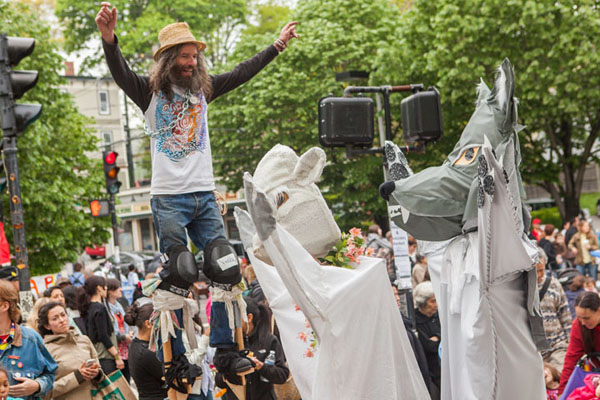
Spontaneous Celebrations’ program director Mark Pelletier described the opening festivities like this: Two processions form before the festival starts, a dual parade symbolizing bringing the two sides of the tracks together. After winding through the streets—separate colorful processions of stilt walkers, giant puppets, musical ensembles, and revelers of all ages—the parade converges at high noon at an intersection at the top of a hill. Everyone marches down toward the park together.

Revelers in the Wake Up the Earth Parade

Revelers in the Wake Up the Earth Parade

There paraders gather in a large circle, and the musicians find a mutual rhythm. The drummers sort out which beat to follow “and it rages along nicely,” Mark told me, “and then there’s everybody standing there facing one another.” I like to picture the various cultural groups in the urban neighborhood all decked out, everyone grinning at each other across the circle.

When the circle dissipates, about 10,000 people will partake of a smorgasbord of participatory fun over the next six hours.

Pageantry and puppetry abound at the Wake Up the Earth Festival

Pageantry and puppetry abound at the Wake Up the Earth Festival

Attendees can play on cardboard slides made from refrigerator boxes, or take part in the all-day drum circle. There’s a “wake up the body” area where people of all ages and shapes practice yoga. There’s an enchanted puppet forest, an amphitheatre with “homegrown circus stuff,” and of course music from every corner (seven stages!). Some 70 crafts vendors offer strictly handcrafted goods, and 25 food vendors sell cuisine from all over the world.

Every nonprofit in the community has a table at the festival, marrying jubilant celebration to civic engagement. It’s a day that brings just about everybody from Jamaica Plain out in a zany, colorful, spectacular celebration of culture and connectedness.

For Dutch-born Femke Rosenbaum, organizer of the very first Wake Up the Earth, this unleashing of imagination is her vision made manifest. “It was always my dream to involve the community in creating the festivals—not to just show up one day, but really to be the creators of it,” she told me.

Co-creation is a beautiful thing, especially in tough times. How does your community come together in celebration?

Images courtesy of Lucie Wicker Photography.

KI EcoCenter Leading in the Green Economy

A local community group near and dear to my heart will be represented at a national event next week. The executive director of Indy’s own KI EcoCenter, also known as Kheprw Institute, will be among the presenters at the Good Jobs, Green Jobs 2013 Conference in Washington, D.C.

About KI: When I first visited, I learned that “Kheprw” is a reference to an Egyptian god represented by a man with a scarab beetle head. The scarab beetle was a symbol of rebirth in ancient Egypt.

It seems a fitting title for this community empowerment center, which works at the intersection of social justice and environmental stewardship in the heart of an economically distressed neighborhood. Here it’s all about nurturing an ecologically sound way of life while creating economic opportunity through community engagement. The programming includes an eco-film series, job creation panels, open mic nights, youth empowerment events, and so much more.

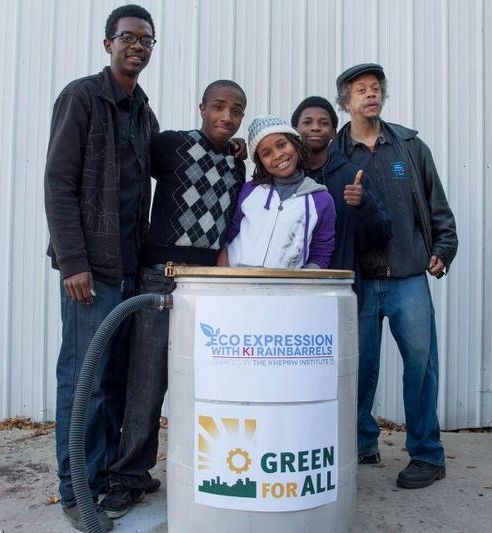
Mat, Rasul, Asli, William, and Imhotep show off an Express Yourself Rainbarrel

Young people in the KI school and mentorship program gain critical thinking skills as they practice social entrepreneurship.

I’ve met many of KI’s children and young adults and they’re not just tomorrow’s leaders—they’re today’s. They know firsthand that with the help of your community, your creativity, and your drive, you can make something from nothing. They’ve built garden beds and aquaponics tanks. They’ve started a paint store, a web services/graphic design enterprise, and a fair trade coffee shop. KI’s work has inculcated in them the confidence and skills they need to navigate the relationship-based economy—whether the goal is a money-maker or a service project or, better yet, both at once.

About the Conference: The theme for the three-day conference is “Let’s Get to Work: Climate Change, Infrastructure and Innovation.” Over 80 workshops will illuminate the possibilities of job creation through green infrastructure. (How refreshing: You mean we don’t have to unleash holy hell in the form of Canadian tar sands in the name of “job creation”?)

KI’s director Imhotep Adisa is a panelist for a workshop highlighting successful sustainable water infrastructure projects. He’ll share KI’s experience in the green economy and its latest social enterprise, Express Yourself Rainbarrels. (I absolutely love this project: The KI crew will customize a rainbarrel with your logo, design, or photograph. I can’t wait to see mine!)

I’ve written a piece for Indiana Living Green about the center that will be out next month. In the meantime, check out this video featuring their work. (Start at minute 3:50 for the segment on KI).

Inspiration from Across the Pond

© Scott Patterson | Dreamstime Stock Photos

© Scott Patterson | Dreamstime Stock Photos

I just found out about a forthcoming book called Stories of the Great Turning, which features first-person accounts of Brits who are transforming their lives in inspiring ways. According to Vala Publishers:

“These are the stories of just a few people who decided to act, in their own lives, in response to the challenges of climate change and environmental degradation, and found their own way to make a difference. They are not stories about celebrities, environmental geeks or gurus but honest accounts from people who…’just got on with it.’

It is a book that takes the question, ‘What can I do?’ and sets out to find some answers using one of our species’ most vital skills: the ability to tell stories in which to spread knowledge, ideas, inspiration and hope.”

Kindred spirits if there ever were. And there’s a foreword by beloved eco-activist Joanna Macy, and I think you know how much I adore her. (“Now is the time to clothe ourselves in our true authority.” –from the Foreword.)

I’m invited to the book launch next month. Exciting! It’s in Bristol, England, so I won’t be there, but still!

The Quiet in the Land Gets Loud

Mom had a dream in which I was kidnapped in South America and she spent her retirement money to find me. When found, I had grown so accustomed to living among the jungle people, I didn’t understand why I should keep my breasts covered.

I asked her, are you worried about me exposing myself, perhaps through this new blog? She didn’t think so.

But it’s a perfectly legitimate concern, one I deal with all the time in my own head as I try to rise to the occasion here. My cultural background is Mennonite, and there are a lot of prohibitions against standing out. My Amish forebears were “the quiet in the land,” the “plain people.”

And though less strict than the Amish, Mennonites are still big on humility. We aren’t supposed to shine too much, or get too high on ourselves, or in general stick our necks out too much. There’s safety in the tribe, in being like everyone else.

Lancaster County Amish 02

By it:Utente:TheCadExpert (GFDL or CC-BY-SA-3.0), via Wikimedia Commons

Of course, being “plain” in the Amish sense means that even while everyone looks the same within the tribe, you stand out against the larger culture in a big way. Your dress, your home, your whole way of life is a rebuke of the world’s fancy-yet-empty ways.

Nonconformism is in fact one of the central tenets of the Anabaptist faith, and I absorbed that ethic as a Mennonite child. To be in the world but not of the world—that was the ideal.

Which may be why I naturally view the dominant culture with a critical eye.

Recently I read Seth Godin’s Tribes: We Need You to Lead Us, and it showed me that we all need to be leaders now. It helped me to take my place as such, to step into this somewhat uncomfortable role. Writing is the gift I have to offer, so I write in service of the world I want to manifest–even if it means going against the ancestral voices that tell me to keep my head down.

Over the last several years I’ve led groups in various successful community endeavors, such as the Irvington SkillShare. So claiming “leadership” shouldn’t be such a stretch, but somehow it still is. (As a teen I heard my peers talk about attending “leadership camp,” and I knew I’d sooner tear my toenails out one by one than do such a thing. Leadership was for kids with confidence. Kids who didn’t mind speechifying. Kids who didn’t need to be humble.)

But there’s an urgency about this time, a sense that we need all hands on deck. We can’t afford to shirk that responsibility out of an ingrained belief that it’s dangerous to stick our necks out. We can’t afford “I’m not enough, I’m just a dumb /fill in the blank/.”

Enough of that. It’s time to get in the game. Let the “quiet in the land” get loud.

What’s your gift, and how are you becoming the leader we need today?