Julia Butterfly Hill: What our Hearts Know

Belated postcard from Hopland, CA: It was a thrill to hear Julia Butterfly Hill speak at the Building Resilient Communities Convergence. This is the woman who spent most of 1998 and 1999 living in the canopy of an ancient redwood tree named Luna. Her extended protest brought attention to the plight of ancient forests and resulted in a three-acre buffer zone around Luna.

Julia Butterfly Hill in 2005, via flickr Creative Commons, by Scott Schumacher

Julia Butterfly Hill in 2005, via flickr Creative Commons, by Scott Schumacher

Now she calls herself a wholistic healthcare practitioner instead of an activist, because she is working on the “disease of disconnect.” What struck me about Julia is how much she embodied a heart-centered ethic. She began by expressing a commitment to affirming “what our hearts know: That we are all one.”

There’s little in our culture that supports the kind of inner transformation needed now. Julia called this era a time of spiritual crisis. “That place inside ourselves that is just ancient and knows only connection is in crisis.”
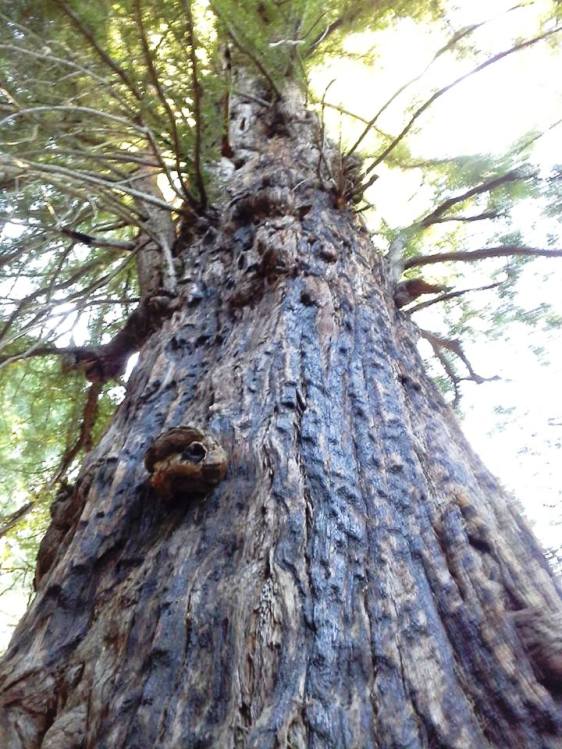
Methuselah, an 1800-year-old redwood in Woodside, CA

Methuselah, an 1800-year-old redwood in Woodside, CA

“What is it going to take to rebirth ourselves in this world where we are?” was her central question. She said it is a courageous act to keep our hearts open, because it means being open to the suffering of beloved creatures, communities, and ecosystems.

I appreciated that she called us to stay aware of our own tendency to rigidity, cautioning: “Any time we are passionate about anything, we are one breath away from being a fundamentalist.”

She invited us to “live so fully and presently in love that there is no room for anything else to exist.” To ask, What would love do in this space? What would love say in this room?

She said we need to bring all our integrity to bear in modeling a positive vision for the world. “We are so good at defining what we are against that what we are against begins to define us.” But it is also crucial to stand firm against wrongdoing. Even the campaigns that failed, she said, she would go back and do again.

It’s a matter of offering ourselves “in loving and joyous service to our world.”

Truly a transformative figure.

Radical Fungi Are My Favorite Teachers

Guest Post by Peter McCoy

When I get asked why I started the Radical Mycology project, I often say that it was to share the lessons that mushrooms have taught me.

Turkey tail logs

Turkey tail logs

Since I started studying mushrooms as a teenager, I have always seen mycology (the study of fungal biology) as an endlessly fascinating and thought-provoking science. Whether I am using them as a nutritious food source or as a potent medicine, I am always honored to taste their wonderful flavors and alluring textures. Hunting mushrooms in the woods, I love to watch them grow, knowing that they are cleaning the forest soil, protecting plants from disease, and turning decaying matter into fresh topsoil so new plants can thrive.

And using them as remediators, I am awed by the mushrooms’ ability to break down and eliminate some of the most toxic industrial compounds in the world.

Grassroots Bioeremediation workshop with Leila Darwish at the Radical Mycology Convergence

Grassroots Bioremediation workshop with Leila Darwish at the Radical Mycology Convergence

Seeing how the densely branched mycelial networks of mushrooms share nutrients among plants, I also find a wonderful example for humans to follow when working to collaborate with their communities. Further, the incredible spore loads that mushrooms drop in the fall are designed to adapt to any given environment, demonstrating the ability to adjust to challenges and remain resilient during hard times.

These same attributes provide a model for how humans can best relate to each other, whether on a personal or societal level. By mimicking mushroom mycelium, cooperative businesses and housing projects work more efficiently by spreading out tasks and networking with affiliated organizations.

Fungi are also highly symbiotic with most organisms on the planet, so we find, yet again, the importance of collaboration among creatures throughout the fungal kingdom. In essence, fungi act in countless ways as grand harmonizers of the Earth, something that humans can aspire toward to live in balance with their surroundings.

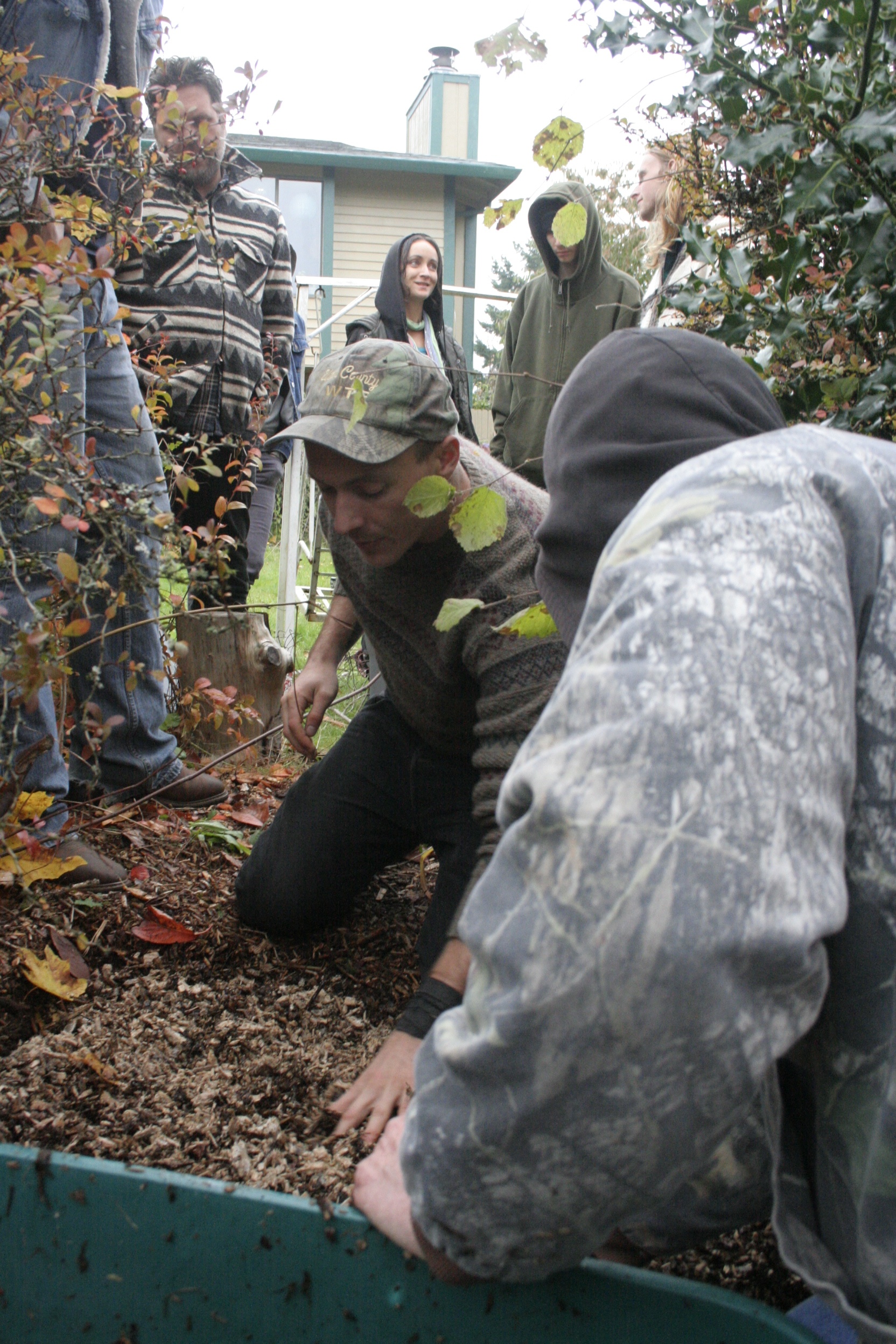
King Stropharia bed installation at Peter's Mushroom Cultivation & Application Course in Olympia, WA

King Stropharia bed installation at Peter’s Mushroom Cultivation & Application Course in Olympia, WA

The Radical Mycology project revolves around just this philosophy: that by studying, working with, and learning from the fungal kingdom, humans can best find solutions to problems of personal, societal, and ecological health. To this end Radical Mycology has put a lot of energy into providing free education to the public on the benefits of fungi.

Our website (radicalmycology.com) is a database of all things mycological. We offer two free publications we have written, Radical Mycology and Mushroom Cultivation For Remediation, as well as instructional videos and protocols for mushroom cultivation.

Nameko Bed installation at Demeter's Permaculture Garden in Olympia, WA

Nameko Bed installation at Demeter’s Permaculture Garden in Olympia, WA

We organize regular multi-day events on mushroom cultivation and its practical applications (the Radical Mycology Convergences), with another being planned for the spring of 2014. And since 2011, two Radical Mycology-inspired volunteer clubs have sprung up in San Francisco, CA and Olympia, WA. These groups teach free workshops about simple and practical mushroom cultivation and community resilience.

The next and biggest project for Radical Mycology is writing a book exploring the theory, practice, and applications of mushrooms for personal, societal, and ecological change. We are currently in the midst of an Indiegogo crowdfunding campaign to fund the book. Our campaign page will soon be up and running. Stop by the Radical Mycology website to learn more about our work.

Update: The Radical Mycology Book fundraiser is underway! This unique book on the uses of mushrooms and other fungi for personal, societal, and ecological wellbeing will be a powerful resource for the geek and do-gooder inside us all and we are excited to bring this dream to the rest of the world.

You can view the live campaign here:

http://bit.ly/radmycogogo

Stealing the Future

Photo credit: Kim Seng, via flickr Commons

Photo credit: Kim Seng, via flickr Commons

At present, we are stealing the future, selling it in the present, and calling it GDP. We can just as easily have a future that is based on healing the future instead of stealing it.

Paul Hawken, Commencement Address, University of Portland, 2009

Protection

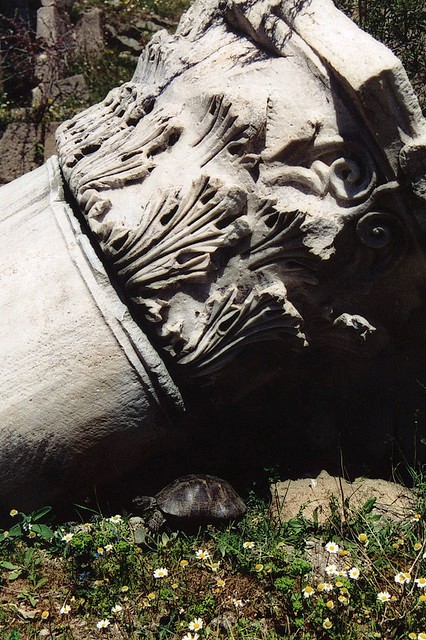
 A turtle among the Roman ruins at Pergamon, Turkey. Photo by Nick Leonard, via flickr Commons


A turtle among the Roman ruins at Pergamon, Turkey. Photo by Nick Leonard, via flickr Commons

Nothing protects us but our constant awareness and rededication to embody our values as much as we possibly can, and to be gentle with ourselves and others when we fail in this.

Michael Lerner

Vacant Lot Becomes Community Space

Guest post by Lisa Boyles

My vision is to give purpose to a vacant lot. Where once stood abandoned houses, there will be a reflection space with a labyrinth and a community art installation.

In June 2013, we brought light to this space on the longest day of the year with a circle gathering and a modified sun salutation series. The children at this gathering helped decorate a stepping stone for the labyrinth entrance.

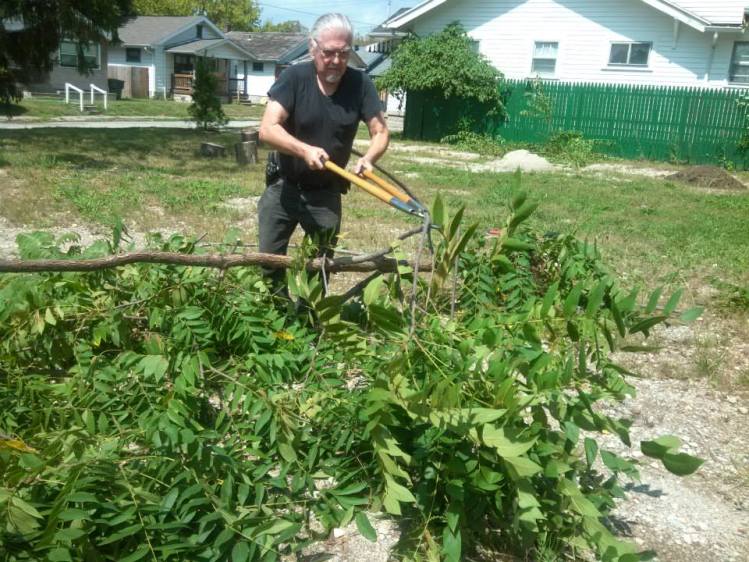
Since the summer, various people have joined me at this lot on the Near Eastside of Indianapolis. We have prepared the ground, moved bricks, unloaded wood, and removed trees. It is enlivening to get in touch with the dirt and have ruddy cheeks from working so hard outside.

Gordon removing an invasive tree.

The transformation from empty lot to Rivoli Park Labyrinth is primarily funded through a community action grant from Peace Learning Center‘s Focus2020 initiative.

The vision of Focus2020 is to create an engaged and inclusive city. I was one of several grant awardees at the beginning of September. The collective effect of these grants will be seen throughout the city over the course of the next year. The Peace Learning Center offers workshops so that more people can become Focus 2020 graduates.

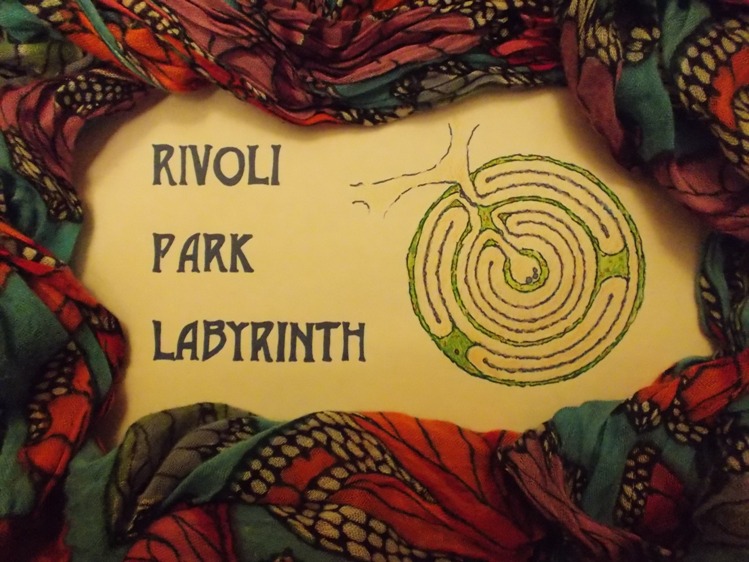
John Ridder of Paxworks: the Labyrinth Shop created the triune focus design of the Rivoli Park Labyrinth.  Logo by Susan Williams Boyles.

John Ridder of Paxworks: the Labyrinth Shop created the triune focus design of the Rivoli Park Labyrinth. Logo by Susan Williams Boyles.

The Rivoli Park Labyrinth project brings the international labyrinth movement to an urban neighborhood setting. Our space will be listed in the worldwide labyrinth locator, putting the eastside of Indianapolis on the labyrinth map.

To offset the often solitary nature of walking a labyrinth, this project also includes a healthy dose of community celebrations. For example, on May 3, 2014, we will celebrate World Labyrinth Day. And workdays at the site include a potluck to celebrate our growing community.

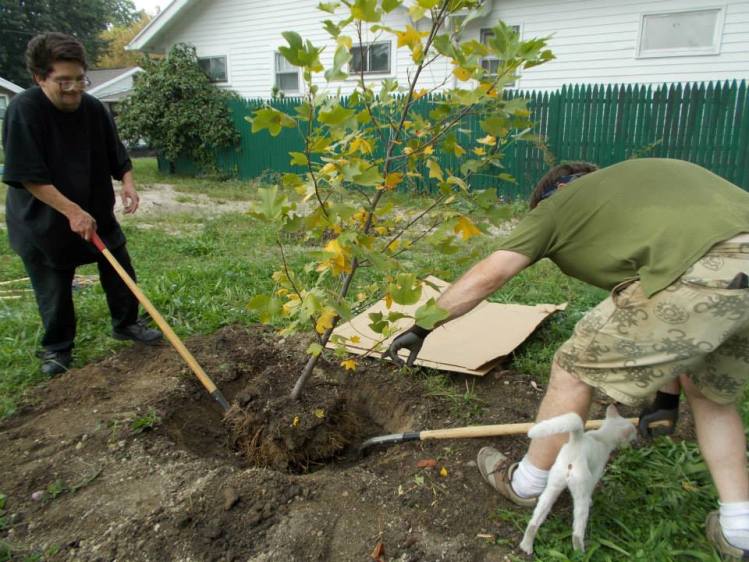
Aaron, James and the neighborhood cat moving a young tree to a new place to make room for the labyrinth.

Aaron, James and the neighborhood cat moving a young tree to make room for the winding path of the labyrinth.

Many partnerships are arising from this effort to give purpose to a vacant lot. One example of that synergy involves the documentation of the upcoming Oct. 10 workday (part of Indy Do Day). A KI EcoCenter videography intern is mentoring another young man that he met through this project. We can’t wait to see their collaborative videography of the workday, when volunteers will place bricks outlining the labyrinth path.

Meanwhile, the soil needs repairing and we plan to use hugelkultur to do it. We’ll mound soil and compost over woody debris and put our plantings on top of that mass. Permaculture designer Katherine Boyles Ogawa says, “Hugelkultur is an ideal method for urban lots where the soils are usually very compacted and often contaminated with heavy metals.”

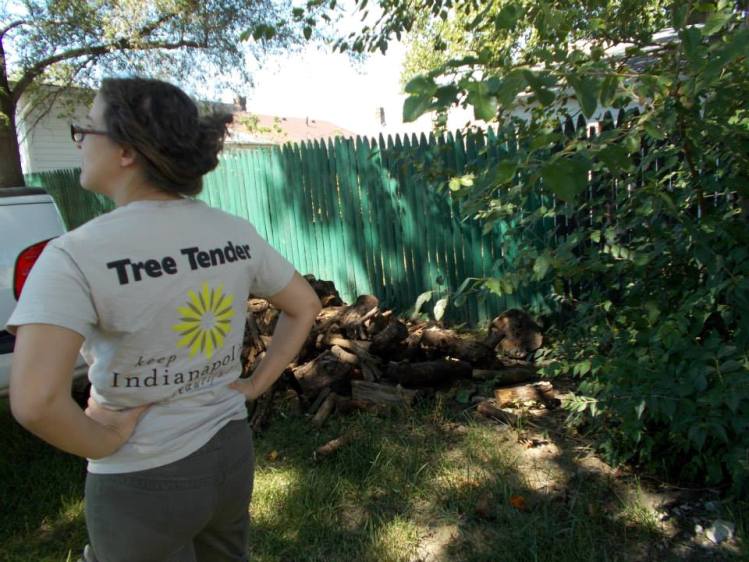
Permaculture designer Katherine supervises unloading of logs for hugelkultur.

Permaculture designer Katherine supervises unloading of logs for hugelkultur.

We hope to eventually make the space into a certified wildlife habitat through the National Wildlife Federation.

Another goal is to display artwork and illustrated quotes along the fence. Panels would be created by special education students at the nearby public school and the art group at Midtown Community Mental Health Center.

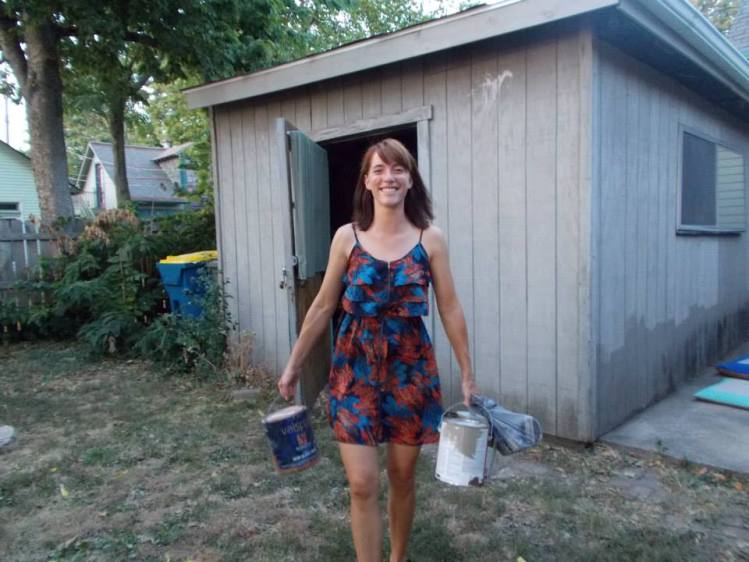
Sarah donating paint for the community art wall

Sarah, a fellow Focus 2020 workshop participant, donating paint for the community art wall.

The community art aspect of the project is being funded through this crowdsourcing site.

We would love to have you join us in celebrating a year of this project coming into being on the summer solstice, June 21, 2014.

Like the Rivoli Park Labyrinth Indianapolis Facebook page to see project news. Join the Rivoli Park Labyrinth community group to collaborate with others and be invited to the annual celebration. We will post monthly featurettes and more detailed updates on our blog.

Drawing the Line

Saturday I took part in a local expression of a nationwide day of action, 350.org’s Draw the Line. About 40 of us came out to demonstrate resistance to the proposed Keystone XL pipeline.

KI EcoCenter hosted the Indy event in partnership with Earth Charter Indiana. These two stellar groups both work at the intersection of environmental, social, and economic concerns.

Photo by KI EcoCenter

Photo by KI EcoCenter

Alvin, one of the organizers, started us off with a wholistic assessment of what we were about: creating a new world, beyond the issue of the pipeline or tar sands or even fossil fuels.

“Keystone XL is a symbol of the past…We’re saying no, we want something different for our world,” Alvin said.

In the ensuing discussion, there was talk of reining in corporate greed, making companies pay the true cost of production, reforming the way election campaigns are financed, and other policy changes.

But many people brought up the need for internal as well as external shifts. How are we making the old reality obsolete by creating a new reality, as Buckminster Fuller advised?

Photo by KI EcoCenter

Photo by KI EcoCenter

Some of the insights:

We need to build a united movement that encompasses social justice, because climate change disproportionately affects the poorest of the poor. —Rosemary

We have to shift away from the value we put on money. Companies value money and profits more than our own lives. We have to focus on the intangible side of life, such as happiness that comes from having a healthy place to live. —Keenan

Photo by KI EcoCenter

Photo by KI EcoCenter

The problem stems from the idea of separation—that we’re separate from each other, separate from the earth, separate from the animals. But we are one. —Marion

We need to change the definition of the good life. —Tom

We need to take responsibility for what we carry within so we don’t pollute the world with negativity. Anything inside us that fears and hates is that which is in common with what is feared. It’s important to notice—because when you notice things, they lose power. —Phoebe

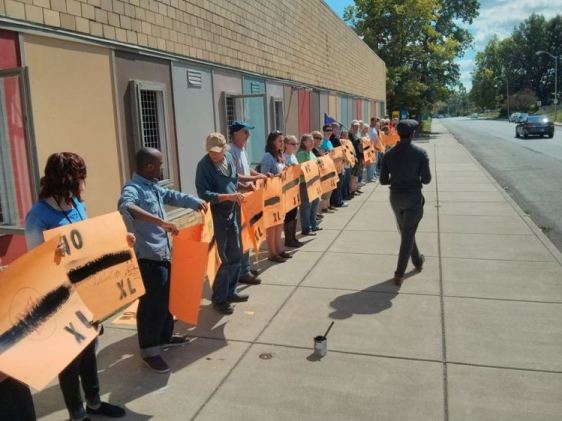
Photo by KI EcoCenter

Photo by KI EcoCenter

At the end of the discussion, we lined up outside the center with signs we had made, and a KI EcoCenter intern drew a black line across to represent our line in the (tar) sands.

Though I much prefer creating the new world to protesting what needs to fall away, I do believe it’s important to stand up and be counted. I’m glad Indy was represented in the movement, however small our number. And we didn’t stand alone. These photos of the line’s reach (into hundreds of cities, drawn by thousands of activists) at 350.org’s flickr stream are inspiring.

Indestructible

Here’s the mother of the modern environmental movement, on the importance of nurturing children’s connection with the natural world.

Boy scout photographing nature at the Edwin B. Forsythe National Wildlife Refuge. Photo credit: USFWS, via flickr Commons

Boy scout photographing nature at the Edwin B. Forsythe National Wildlife Refuge. Photo credit: USFWS, via flickr Commons

“If I had influence with the good fairy who is supposed to preside over the christening of all children

I should ask that her gift to each child in the world

be a sense of wonder so indestructible

that it would last throughout life,

as an unfailing antidote against the boredom and disenchantments of later years,

the sterile preoccupation with things that are artificial,

the alienation

from the sources of our strength.”

—Rachel Carson, The Sense of Wonder, 1956

My Dad, Who Made the World Better, Take 2

ScannedImageRecently I was going through some old files when I found a back issue of the Mennonite Weekly Review, with an article about my dad on the front page. Back in 2003, the periodical had taken notice of a “silent dialogue” he’d started about a controversial subject.

I remember it well. When his sign protesting the war met with surreptitious changes, altering its meaning, his response was characteristic of him as both a mental health worker and a Mennonite. Instead of shutting down, he sought more engagement.

In late winter of 2003, the US-led invasion of Iraq prompted Dad to place a sandwich board sign in the front yard. One side read “The Nations Say No to War” and the other said “The Whole World is Watching.” (Originally he’d worn this placard at a protest march.)

At some point that spring, someone took a pen to these antiwar sentiments, flipping the meaning with the addition of a few letters.

ScannedImage-2Dad didn’t get mad. Instead, he decided to invite passersby to participate in the commentary. He posted a blank sign, attached a permanent marker, and waited. The sign became an anonymous forum for the neighborhood to share a range of deep feelings about war.

Back in the day, at Goshen College, we had the opinion board, where anyone could scribble their random two cents. Entertaining, enlightening, enraging at times, the content was a freewheeling snapshot of campus controversies and dilemmas. Dad’s more targeted opinion board showed the diverse positions among his neighbors: concern for slain children, desire to stand behind both military and government, gratitude for free speech, comparison to Vietnam, prayers for peace, and so on.

The safety of that anonymous pen reminds me a bit of today’s comment threads online, where faceless speakers can quickly turn meanspirited. For the most part in Dad’s case, the discussion was civil, though passions were clearly high. He posted a thank-you note after the white space was full to the edges, and took the sign down.

After he was diagnosed with terminal cancer in 2011, he began to go through decades of accumulated belongings and papers. We searched for the yard signs in the basement, but they didn’t turn up, and I’m not sure there are any photographs. I was happy to find this somewhat crumpled record of his bridge-building efforts.

ScannedImage-3I lost a precious father and friend upon his death, and my family will never be the same. But this clipping reminds me that the wider community is also poorer for his absence.

From Dismemberment to Oneness

Rebecca Solnit, on how leprosy numbs the extremities so that sufferers don’t realize when they are damaging their own tissues:

“The disease strangles nerves, kills off feeling, and what you cannot feel you cannot take care of.”

She speaks of a kind of dismemberment, of patients who feel no pain, so they injure themselves, even blind themselves.

She quotes a missionary doctor: “One of the boys said to me, “My hands and feet don’t feel part of me. They are like tools I can use. But they aren’t really me. I can see them, but in my mind they are dead.'”

Reading, it struck me that this statement could also sum up the dominant cultural attitude toward our own earth home. Though we belong to her and she to us, for so long we’ve disowned her, exploiting her riches as just so many dead “resources.”

We’ve been operating under the delusion that we are separate from the biosphere and the myriad life forms that share it—and separate from each other too. The results are catastrophic. If we lack feeling for each other, the soil under our feet, the waters that flow, and the skies above, we won’t consider these worthwhile of care.

"Holding Hands," by Paige Shoemaker, via Flickr Creative Commons

“Holding Hands,” by Paige Shoemaker, via Flickr Creative Commons

But perhaps that’s changing now, bit by bit.

More and more of us are waking up to our empathetic selves. We’re feeling a kinship not just with other humans but with the earth herself. We’re re-membering our entire human family and our deep connection to the planet that holds us.

I think of the empathy displayed by Antoinette Tuff as she disarmed a young mentally ill man bent on violence in her school. In the midst of her fear, this bookkeeper found a way to connect with the young would-be shooter, seeing him as a hurting soul. Her ability to reach him on a human level may have averted a major tragedy.

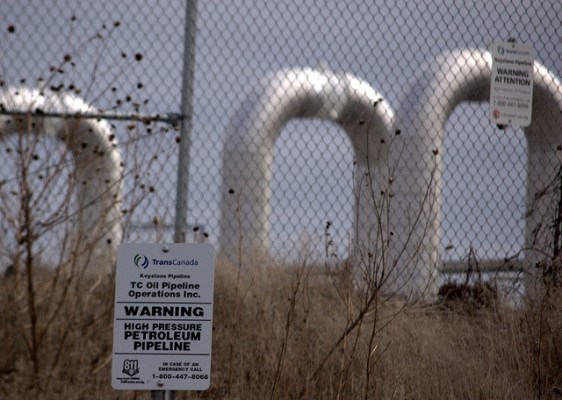
Meanwhile, this summer a group has been tracing the route of the Keystone XL Pipeline in the Great Plains. The pipeline, as I posted in May, would allow the release of enormous levels of carbon—enough to create irreversible climate change.

Trans Canada Keystone Oil Pipeline, by shannonpatrick17, via Flickr Creative Commons

Trans Canada Keystone Oil Pipeline, by shannonpatrick17, via Flickr Creative Commons

Taking both a physical and a spiritual journey through the heart of North America, Compassionate Earth Walk aims to nourish the earth, while inviting all humans to return to oneness in the community of life.

From the story on Resilience.org:

“We walk in response to climate change and in gratitude for the earth which has given freely to us for so long. We walk as an act of healing both symbolic and literal, including healing of the walkers, the land, the communities impacted by the pipeline, and the whole human consciousness of separation.”

No more numbness. No more dismemberment. The pain of our suffering planet and fellow earthlings might be difficult to face, but feeling it means we’re awake. It means we can care.

To Be Hopeful in Bad Times

Howard Zinn, by Jim from Stevens Point, WI, USA, via Wikimedia Commons

Howard Zinn, by Jim from Stevens Point, WI, USA, via Wikimedia Commons

On this Labor Day, here’s a quote from a celebrated historian, the voice of the common people.

“To be hopeful in bad times is not just foolishly romantic. It is based on the fact that human history is a history not only of cruelty but also of compassion, sacrifice, courage, kindness.

What we choose to emphasize in this complex history will determine our lives. If we see only the worst, it destroys our capacity to do something. If we remember those times and places—and there are so many—where people have behaved magnificently, this gives us the energy to act, and at least the possibility of sending this spinning top of a world in a different direction.

And if we do act, in however small a way, we don’t have to wait for some grand utopian future. The future is an infinite succession of presents, and to live now as we think human beings should live, in defiance of all that is bad around us, is itself a marvelous victory.”

—Howard Zinn, from You Can’t Be Neutral On A Moving Train, 1994