Celebrating International Permaculture Day

Today is International Permaculture Day. Guest blogger Thomas Tlusty wrote the following piece exploring his connection to Permaculture, and its power.

Guest Post by Thomas Tlusty, founding partner of The Garden Tower Project

Two years ago, I saw sketches of a device that I felt certain had the potential to revolutionize urban agriculture. I had long been interested in the economics and environmental impact of our food system. So the design piqued my curiosity and unleashed my desire to have a positive impact in my own lifetime.

The Garden Tower is a water-saving, worm-friendly, uber-productive vertical gardening aid.

The Garden Tower is a water-saving, worm-friendly, uber-productive vertical gardening aid.

Since that fateful reveal, my life has been transformed. The Garden Tower Project reignited my passion, and I began rethinking current food production/distribution models. My eyes were opened to the plethora of pioneers, visionaries and everyday folks who are practicing, teaching, and studying Permaculture and sustainable farming/lifestyles.

I am inspired by those who inspire others. I’m thinking of luminaries like Bill Mollison, David Holmgren, and Will Allen. I’m also thinking of many less well-known but still pivotal figures, such as:

  • Community Slow Food Educators
  • Permaculture Design Educators
  • Elementary School Science Educators
  • Organic Gardening Instructors

I am a relative newcomer to this work. Yet I feel a kinship with those who aspire to build community and develop our inherent natural resources in a straightforward manner.

I’m troubled by the unbinding of our culture from its roots. Western civilization is “circling the drain” as we surpass our fragile planet’s carrying capacity (in our current mode of operation).

Permaculture (to me) represents an entirely sane alternative to the path on which we find ourselves today. Permaculture principles contain not only the seeds of hope but a catalyst for change. In practice, these concepts could improve the lives of untold millions and positively influence the course of our future on this planet.

I find hope in people working together in communities, sharing education and experience. And teaching our children well is our first and best hope.
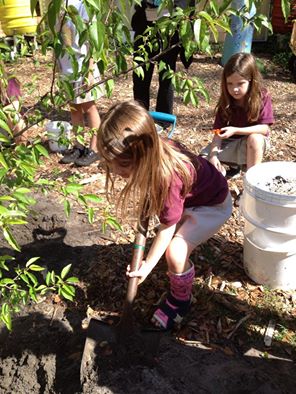
A child at  Learning Gate Community School prepares soil despite the cast on her leg. Thomas captions this photo “Our Hope For Mending a Broken Future.”

Our Hope For Mending a Broken Future: A child at Learning Gate Community School in Lutz, Florida, prepares soil despite the cast on her leg. Instructor: Cissy Brady Stanko

Permaculture engenders ideas and conversations around topics like environmental science, vermiculture, organic gardening, eco-art, and eco-psychology. And connections grounded in Permaculture positively transcend any political, socio-economic, racial, or gender barriers that have been erected in the past or could possibly be constructed in the future.

In my endeavors, I have developed friendships through online Permaculture forums and related Facebook pages. The connections range from the casual and conversational to the inspirational and uplifting. Together they raise me from the deep morass that had grown like a thick moss over my heart’s desire.

I’m now acting on a long-felt wish to accomplish something meaningful and utterly critical: addressing our outdated and increasingly toxic food production/distribution system. Without action and intent, habits will remain the same. Permaculture shows us the way to a very different future.

Thomas Tlusty was raised in Lombard, IL. Thomas was active in social justice and interested in food issues from a young age. In his late teens to early twenties, he worked at the Chicago Board of Trade (in Agricultural Commodities) for a leading grain exporter. The Ellettsville, IN resident has been a practicing Certified Natural Health Professional and is currently an Active Isolated Stretching Therapist in private practice. Thomas is a founding partner in the Garden Tower Project.

No More “Long Hard Slog”

Several readers told me that Tearing up an Ancestral Contract resonated with them. Here’s another inheritance I’m reevaluating: the much-vaunted Protestant work ethic.

Don’t get me wrong—I’m glad I have a strong work ethic. I’m grateful that the folks in my lineage weren’t afraid of hard work, and that I inherited a bit of that spirit. I like to buckle down and get things done.

Saturday my neighbors and I participated in the Great Indy Cleanup. Photo by Heidi Unger.

Saturday my neighbors and I participated in the Great Indy Cleanup. Photo by Heidi Unger.

But sometimes, work isn’t the thing that is needed. Maybe it’s play. Maybe it’s stillness. Maybe it’s receiving. Maybe it’s rest.

I have known this, of course, in my head. But to really bring that knowledge into the body and energy field? That’s a different thing than intellectual understanding.

I completed two big projects a few weeks ago. I’d spent several weeks extremely focused, with most days quite regimented in order to fit everything in. And it felt good to work hard and get to the finish line.

With the deadlines past, I enjoyed a few leisurely days. It was hard not to feel like I was shirking. I worried that I was not getting important work done. I’d grown accustomed to pushing. So if I allowed myself to enjoy a slower pace, a few long walks in the sunshine, something felt “off.”

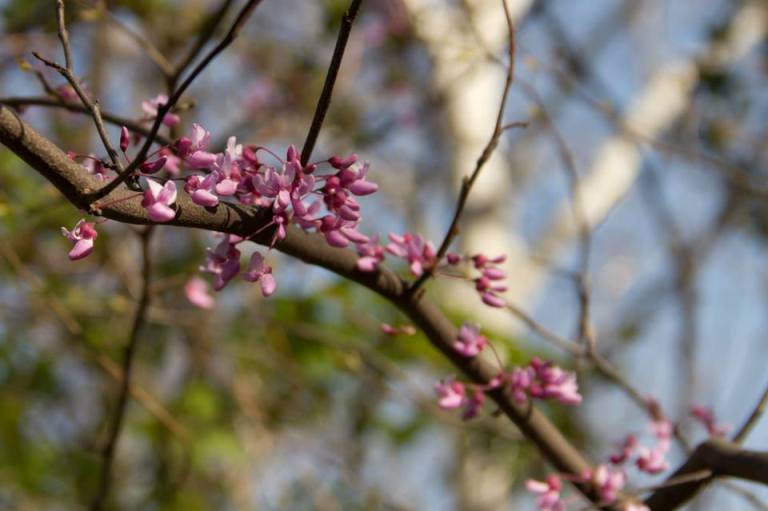
Redbud blossom photo by Heidi Unger.

Redbud blossom photo by Heidi Unger.

But I knew I didn’t want to live the rest of my life constantly driving myself beyond my capacity, as has been my habit lo these many years. I remembered the energetic principles I’ve been learning from energy healer friends like Merry Henn and Dawn Ryan. And I took a look at some core beliefs.

I’ve practiced self-testing my energy field (also known as muscle testing) for several years. At this point the skill is reliable enough to serve me in all kinds of capacities. For example, I can test my resonance with various beliefs.

The residual effect of my inherited work ethic manifests like this:

  • “It is impossible for me to be happy and rested and still meet my commitments.”
  • “I must work to the point of exhaustion in order to get my work done.”
  • “I must push my body to the point of illness to prove my worth.”

All of these statements “tested strong,” meaning my energy body resonated a big YES to each of these unhealthy beliefs. But these beliefs no longer serve me. I wanted to change them at an energetic level.

I used Emotional Freedom Technique (EFT) to quickly shift them, then rechecked: They tested weak. I worked with variations of the statements and did more rounds of EFT. Eventually I came upon:

  • “It is impossible to live in tune with my life purpose and feel happy and rested.”
  • “Aligning with my life purpose is a long, hard slog.”
  • “I must disregard my body’s need for rest if I intend to fulfill my life purpose.”

Well! I shifted these too, until I resonated something completely different. I now equate fulfilling my life purpose with deep joy and ease, a healthy body, connection, flow, and other such deliciousness.

Clowning with invasive garlic mustard. My job at the cleanup was to pull it.

Clowning with invasive garlic mustard. My job at the cleanup was to pull it.

What about you—what contracts and core beliefs are you holding or releasing?

(Interested in learning a simple way to self-test? Check out this video.)

New “Project” in Irvington

We went to check it out a new art gallery in our neighborhood last night.

5547 Project

5547 Project

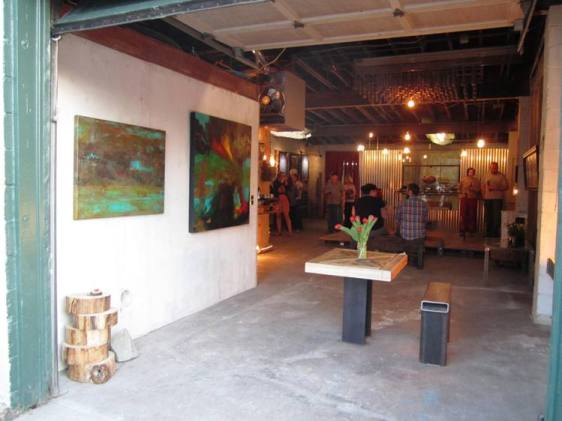
We found that 5547 Project is not just a gallery–it’s a study in the art of reclaiming. The space itself is a repurposed industrial shop. Within are local artists’ works, plus furnishings made from natural and upcycled items.

Table made from railroad ties, with groovy antiques

Table made from railroad ties, with groovy antiques

We met the man behind the project, David Jackson, a retired Marine who wants to make the neighborhood rock even more than it already does.

David Jackson, founder of 5547 Project, with coral fountain and cool wall art

David Jackson, founder of 5547 Project, with coral fountain and cool wall art

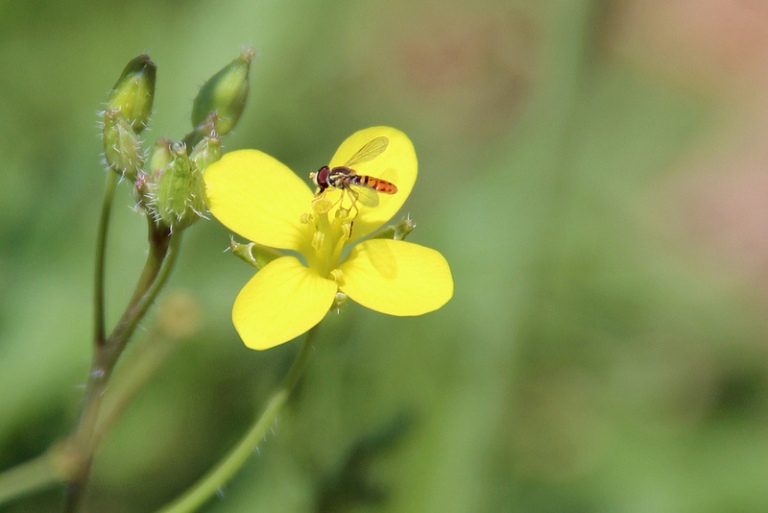
David brings a rotating cast of artists in each month, and every Friday serves local craft beer, wine, and refreshments. Last night’s opening featured Heidi Unger, a gardening buddy and stellar photographer. She’s the one responsible for the beautiful banner photo on this site, and several others you’ve seen around here, like this one:

Photo by Heidi Unger

Photo by Heidi Unger

My oil painter friend Rita Spalding also has her work up.

Some of Rita Spalding's work displayed on reclaimed wood wall

Some of Rita Spalding’s work displayed on reclaimed wood wall

Some of the artists also market handmade goods at the gallery. Cheryl Lorance (check her artwork out!) just moved to the neighborhood from New Mexico. Her line of skincare products is called Mount Sapos.

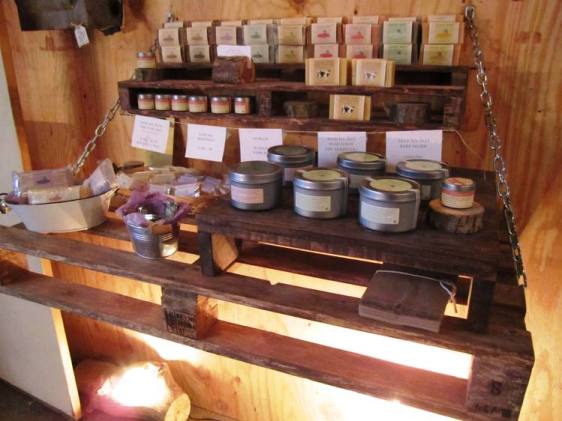
Sculptor Cheryl Lorance makes bathsalts, body butters, and soaps (local Traders Point Creamery milk is a key ingredient!) Displayed here on upcycled pallets.

Sculptor Cheryl Lorance makes bathsalts, body butters, and soaps (local Traders Point Creamery milk is a key ingredient!) Displayed here on upcycled pallets.

David mentioned the possibility of opening weekdays with simple coffeeshop fare. I so hope he decides to do that. I can imagine this becoming a real neighborhood gathering place.

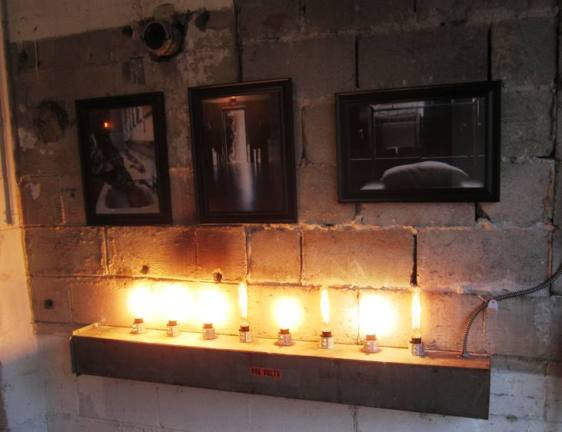
cool light fixtue

If you’re in the neighborhood, stop and check out 5547 Project!


Like to Eat? Thank a Bee.

Kate Franzman, beekeeper and urban farmer

Kate Franzman, beekeeper and urban farmer

Kate Franzman is one of many fabulous people who keep the “indie” in Indianapolis. Concerned about the die-off of honeybees, she started Bee Public with a goal of increasing the number of honeybees in our city. The organization has placed hives at several urban farms, including one right in my neighborhood.

She’s a writer too, and her first-person story is featured in the current issue of Indianapolis Monthly. I generally don’t shrink from bees myself, but her description of capturing a swarm as a novice beekeeper is truly impressive.

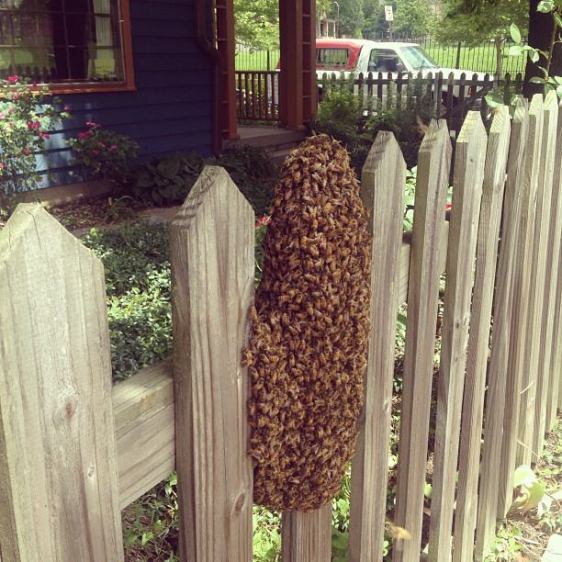
Swarm on a fence post in summer 2013. Kate scooped them by (gloved) hand into a box before transporting them to their new home at South Circle Farm.

Swarm on a fence post in summer 2013. Kate scooped them by (gloved) hand into a box before transporting them to their new home at South Circle Farm.

Her passion for these pollinators leads her to give talks and workshops emphasizing their importance. “Since 2006, we’ve lost more than one-third of our honeybee colonies nationwide, due in major part to Colony Collapse Disorder, an alarming phenomenon that occurs when the bees mysteriously desert their hive and die,” she writes.

“One out of every three bites of food we eat was made possible by a bee. So no bees, no food.”

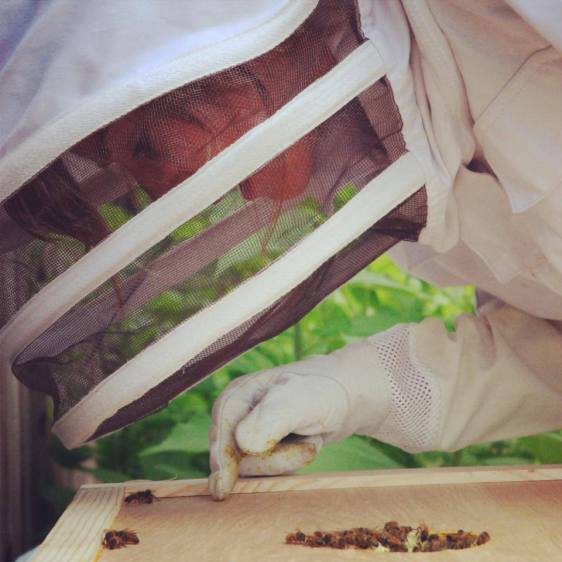
Kate and a few of the creatures on whom our lives depend

Kate and a few of the creatures on whom our lives depend

The unusually harsh winter killed all the bees in Bee Public’s hives, so Kate initiated a crowdfunding campaign to raise money to replace the honeybees. The response has been one of “unprecedented generosity,” prompting her to pledge to purchase replacement bees for other urban farmers and expand the network of hives.

On May 10 at Pogue’s Run Grocer, Kate will present Bees 101, an overview of how to create a bee-friendly backyard. And if you want to take it further, Bee Public offers consulting and hive setup for local restaurants, community gardens, and urban farms. There’s even a sponsorship option for people not in a position to have a hive. Check out Bee Public’s site and Facebook page!

All photos courtesy of Bee Public.

The Face of Resilience

Guest post by Anna Welch

Anna Welch is a farmer in Rush County, Indiana. With her husband and business partner, she owns Fields of Agape, growing organic grain, beans, and seed. Now she’s working to establish a cooperative mill in Carthage that would allow many more organic and transitional farmers to bring their products to niche markets. After we had a conversation about some of the barriers she’s faced, she sent me this reflection.

I think of the many times I wanted to quit, that it felt impossible to go forward with the limited resources and lack of support around me. I’ve been through periods of deep depression, anger, hopelessness, and resentment. I’ve been humbled many times over since committing my life to stewardship of the land and its fruit.

Anna Welch with friends at the entrance of the Carthage Mill. The historic Tweedy Lumber Mill is now the site of a sustainable ag business incubator.

Anna Welch with friends at the entrance of the Carthage Mill. The historic Tweedy Lumber Mill is now the site of a sustainable ag business incubator.

I had two choices: quit and return to the workforce, or retreat to a place of rest, and pray, reflect, journal, and wait to see who or what changed around me. Someone spoke words of encouragement, or a visitor stopped by the Carthage Mill and said how this place is necessary and will come to pass.

One of my greatest encouragers here at Carthage was my friend Allen, who came daily with his dog Rusty. The first day he stopped by, I was cleaning golden flax seed. He heard the machine and the gate was open, so he stopped. I’m so glad he did.

Allen had Lou Gehrig’s disease, but every day he drove his wheelchair on a route around Carthage, observing bean and corn fields, enjoying wildlife, and stopping by the mill, his favorite place. He worked the Alaskan pipeline in his younger years and lived in a teepee in Montana. He loved the mill, and he encouraged me to keep doing what I was doing.

I realized that if Allen could be in the state he was in and encourage me, then I needed to think outside of myself and look at what I could do to make a difference. Allen died this past October, and I officially formed The Carthage Mill, LLC with help from Hoosier Organic Marketing Education. I know he is pleased.

Regardless of the negative circumstances that we may be facing, there is always hope, always a divine purpose awaiting each of us—if we can turn our focus away from self and focus on those around us, on what needs exist, then determine what gifts and resources we have to overcome the challenge, or to serve someone. Nothing can stop us from fulfilling our purpose if we are on the right path.

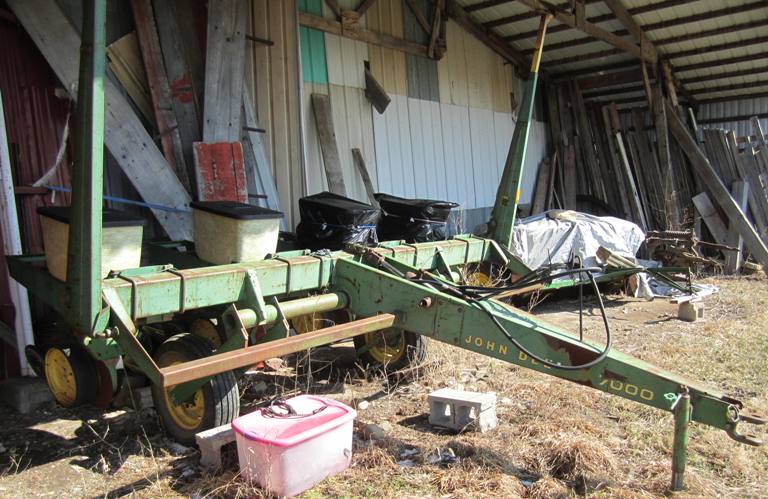
Equipment used to plant Fields of Agape grain and beans.

Equipment used to plant Fields of Agape grain and beans.

I have found that the success in life is how we learn to handle adversity and challenges. If we can grasp how to press on through adversity with humility and unconditional love for others (regardless of how they treat us), we will find our way.

When we find like-minded people whose passion is a good fit with our own, whose hearts are for others, then within that group each person can reach their potential quicker.

Encouragement, sharing of resources, being driven by the passion to serve rather than by personal gain—all of this brings about magnificent changes in communities large and small.

I’m never going to stop believing that it can happen.

Small Respite

Final in a series

Author Rebecca Solnit writes about how we have changed in the last 20 years, mainly due to online connectivity. We have shorter attention spans. Our time is chopped into bits. We indulge our need for constant updates and check-ins.

She wrote that all this makes deep thinking and reading very difficult to sustain.

And often the habit of seeking external input subverts our inner knowing.

With that in mind, I conducted an experiment in the last weeks of 2013. I took a break from Facebook. I found it instructive—not always comfortable, but interesting.

I find that a quality of inner silence arises when I’m not hooked into an external source of connection. I’m not distracting myself through the random bits of pathos, trivia, deep thoughts, outrage, and silliness that constitute my Facebook feed—so I can face more easily the stuff that needs to be addressed, whether a stuck emotion or a dreaded task.

Back to my conversation with my friend Kate Boyd: She told me she had seen the film Inside Llewyn Davis and was struck by the pace of life pre-Internet. The breathing space of that age.

I had the same experience, and a sadness at what is lost, when I read The Guernsey Literary and Potato Peel Pie Society, which takes place post-World War II. The story unfolds in letters. I mourn the loss of letters.

Photo by Cas, via Flickr Commons

Photo by Cas, via Flickr Commons

Much of the story happens on an island, and the main character has long spacious hours in nature. I mourn the loss of time unfettered, disconnected from constant inputs.

There’s no going back, of course. But it helps me to put rules around my Facebooking, even bendable ones: No checking after 9pm. No checking before I get some work done. One day a week cold turkey.

Each Sunday I strive for an Internet-free day, but one day really isn’t enough to touch that sense of quiet. During my self-imposed “FaceBreak” and also during last October’s writing residency at Mesa Refuge, I came closer.

The hours at Mesa Refuge were largely Internet-free. There was no expectation to track anything other than my own thoughts and the work of my cohorts. The main questions were: “Did you break through that block you had last night, did you write your scene, did you get to the place you need to be?”

My writing shed at Mesa Refuge

My writing shed at Mesa Refuge

My time there was about ideas and creativity—and connection to something slower and sweeter than the latest argument or article posted online. Something, dare I say, eternal.

I’m looking forward to two writing retreats this summer that I hope will offer the same sense of spaciousness. And in the meantime, I manage as best I can—carving out Screen-free Sunday as a small respite, bringing some awareness into the mix when I remember to.

I hope this keeps me from having to file “social bankruptcy,” as in this very funny Portlandia clip (that a friend shared on Facebook).

What about you: Do you have techniques that help you deal with information overload? Have you ever taken a break from social media, by choice or necessity? Tell us about it in the comments!

Of Facebook and Firehoses

Part 2 in a series

My friend Kate Boyd and I were recently discussing smartphones and other addictions. Her weakness is checking email on her smartphone. And the little blinking light on my phone does hook me, but my real weakness is distracting myself with Facebook during my workday.

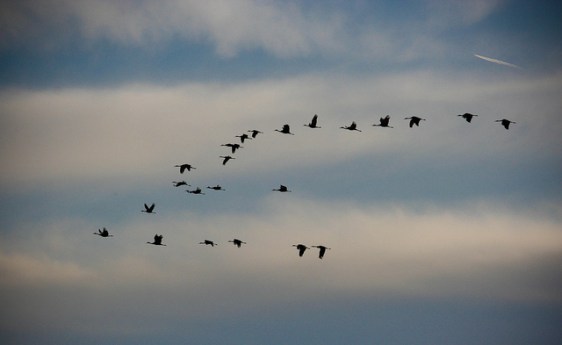
Say I log on to share something cool, like how I just saw some sandhill cranes flying low over my neighborhood.

Photo of sandhill cranes in flight by Jessica Lamirand, via Flickr Commons

Photo of sandhill cranes in flight by Jessica Lamirand, via Flickr Commons

If I’m not vigilant, I’ll spend a half hour reading other people’s posts before I even remember what I came there to say. Once I do post, I have to keep checking back every 10 minutes.

Did anyone comment? Did anyone even “like”? Shall I post an interesting article or quote I’ve come across, or repost someone else’s content, or “like” someone else’s, perhaps post a comment? Then: did anyone else comment on my comments?

Was I witty, was I urbane, did someone love what I said, does anyone out there love me? Am I loveable?

Yes, it pretty much comes down to that, as embarrassing as that is.

Kate reminded me that it’s brain chemistry, not a personal failing, that’s behind the constant reaching for external input. That hit of dopamine. It’s a recipe for addiction.

By John Karakatsanis, via Wikimedia Commons

By John Karakatsanis, via Wikimedia Commons

So, are we just wired to get hooked on Facebook, or whatever our personal weakness might be? Are we strong enough to override the habit, even once in a while?

Kate and I met years ago in a mindfulness class, so we share a common foundation. That training is useful in bringing awareness to habitual (mindless) behavior.

Lately I strive to notice when the itch arises. What am I thinking; what am I feeling? What precipitates the need to find a friendly word online? Often there’s some sense of lack, some uncomfortable feeling, or a wish to delay a task.

My hope is to bring more mindfulness into my relationship with online connectivity. To choose it, deliberately. I read a suggestion somewhere: Take three breaths before engaging in social media. (And I actually thought, Three breaths? I don’t have time for that!)

Wisdom 2.0 author Soren Gordhamer says the key to mindful engagement online is to first take a moment to remember that we are already connected. To really feel this truest connection, one that is not dependent on a touchscreen or a mouse click. Then log on.

Photo by Matthew Montgomery, via Flickr Commons

Photo by Matthew Montgomery, via Flickr Commons

Fair enough. If I remembered to breathe and/or connect to All That Is, it might shift the vibe significantly. (Perhaps the lovability question would be solved once and for all?)

I would still be confronted with major Information Overload once I’m there, however. Not to mention the complaints, tirades, and reports of all that’s wrong with the world.

Then again, the feed could show nothing but sweetness and light, and it would still pose a problem: The sheer volume of input is draining in itself. I find myself skimming everything, flitting from one shiny thing to the next.

We all drink from the firehose now. Facebook or no Facebook, modern life is a firehose. But for me, social media is the breaking point.

I’ve found that there’s no respite unless I carve one out.

Next up: Finding a respite

The Other Face of Facebook

Part 1 in a series

A few months ago I blogged about how fantastic social media can be during an extreme weather event. The Facebook group for my neighborhood was a much-needed source of information, entertainment, and connection during a snowbound week.

It’s true that Facebook enriches my life. My Facebook feed has brought me wisdom, creative expression, long lost friends, writing jobs, amusement, and fascinating news stories, local and global.

But then there’s the other face of Facebook. Take the aforementioned neighbors’ page, which can be quite helpful, not just in a crisis. We’ve returned lost dogs to their owners, rallied to raise money to protect our public art, and urged each other to support small businesses during a grueling winter.

All good. And why is it that seemingly every other day, there’s arguing and accusation and drama all over that page? Why do so many discussions devolve into a pissing contest?

The nutty thing is how compelling it can be, like some kind of reality TV show that’s simultaneously grotesque and addictive. Even though I rarely engage, it’s hard to look away. With Herculean strength I resist the urge to read every argumentative comment thread.

The joke’s on us. I can’t remember where I saw it (probably on Facebook), but someone wondered what a person from the past would think if the smartphone had been foreseen: “Someday, we’ll have a device in our pocket that gives us access to the sum total of human knowledge. We’ll be able to connect instantaneously with anyone, anywhere. And we’ll use it to watch kitty videos and pick fights with strangers.”

Kitty

Obligatory Cute Kitty

(I have friends on the neighbors’ page, but many of the participants are relative strangers, except through their repeated appearance in that forum. Come to think of it, what’s crazier than arguing with strangers? Lurking among the arguing strangers.)

I blame the physiological response that accompanies a “hit” online. There’s a corresponding hit of dopamine. That spells addiction.

Photo by Michael Schlinge, via Flickr Commons

Photo by Michael Schlinge, via Flickr Commons

Still, my energy healer friend Merry Henn has found the Internet to be a partner in healing. “Through Facebook I have found that what I am feeling on a particular day is often being experienced by many others. The Internet is our energetic connection made manifest. It has a collective consciousness, and often the exact resources we need will appear before we even ask for them. Just be aware that prolonged computer exposure scrambles your energies.”

Perhaps it’s all about the intention we set, or the mindfulness with which we seek. Clicking around mindlessly, I sometimes seem more likely to encounter collective fear/unconsciousness than than collective wisdom. Before I know it my energy is in a downward spiral.

But then I’ll see something redemptive, some kindness or insight. Example: musician friend Sean Flora recently pointed out that whenever someone “spouts some godawful crap…there is some kind of hurt behind it.” He noted that in online interaction, it’s harder to remember that a hurt little child is driving the diatribes. He spoke of finding a path to connection and compassion—while recognizing how our own hurts might affect others.

A good thing to remember in both online and face-to-face conversations.

What about you: How do you experience social media forums like Facebook?

Next up: More on social media addiction, and strategies.

A Lifesized Lego Set for Farmers and Makers

I was invited to visit the Indiana Small Farm Conference this past weekend, and was I ever glad I went. I got to reconnect with some farmer friends and make new connections. I learned about the challenges facing the people who grow our food on a small scale. And of course lunch was delicious, as well it should be with food supplied from local farms and prepared by the stellar whole-foods caterer known as The Juniper Spoon.

But the highlight was a session with a representative from Open Source Ecology. This is a group I’ve had my eye on for a while because of the radical way they are working to take back the building blocks of modern life. The goal is nothing less than a modular, low-cost, DIY “Global Village Construction Set” of 50 machines that would meet the major needs of civilization.

The best part? The plans are all open source, allowing anyone, anywhere, to try them out and make improvements.

The 50 machines, from tractor to 3D printer to wind turbine.

The 50 machines, from tractor to 3D printer to wind turbine.

OSE Construction Manager Chris Reinhart, it turns out, lives just an hour away from me. He calls himself a tinkerer and maker, and holds an architecture degree from Ball State. He is developing plans for a micro-house that could be built by a small group of people in a handful of days, using equipment from the GVCS.

He posts his plans on Facebook and logs his work online for all to see. As a writer I shudder at the prospect of having so many eyes on a work-in-progress, but transparency is the name of the game here. Reinhart says the idea is to “tap the hive mind” and constantly iterate improvements.

Another goal is to standardize workflows. Reinhart explained that a group of 16-20 people could break into smaller teams, each take a module (there’s one for plumbing, one for windows, etc.), and work separately until time to put the construction together. He likened the system to a life-sized Lego set that can be snapped together.

The above TED talk by OSE’s founder, Marcin Jakubowski, talks about how lowering the barriers to farming, building, and manufacturing can unleash human potential. An entrepreneur who wants to start a construction company can jump right in. A household can add a DIY wind turbine and sell energy back to the grid. Farmers can be less dependent on manufacturers.

Think of it: That irritating built-in limitation of purchased gadgets, planned obsolescence, would become a thing of the past as people discover how to build and fix their own machines.

“This is a different model, economically and socially,” Reinhart says. In contrast to a top-down command and control ethos, this bottom-up model empowers many people on the ground, all making and innovating and selling to each other. I love the collaborative “do-it-with-others” spirit of these guys. Go DIWO!

OSE is planning an intensive workshop series to teach people to build six of the 16 machines that have been prototyped so far. For more information, check out this Crash Course on OSE.

Correction: The original blog post indicated that six machines have been prototyped; in actual fact 16 are in prototype phase, and the workshops are being offered on the six most mature designs.

Nonviolent Communication

Sometimes you hear about a thing over and over, until it seems mandatory to follow up. So it was with Nonviolent Communication (NVC), a process created by Marshall Rosenberg in the 1960s. First I learned that a yoga center offered NVC training sessions. Then I heard of a book group studying Rosenberg’s Nonviolent Communication: A Language of Life. Then a nonprofit’s director told me everyone in her organization is committed to NVC principles.

And this weekend, Trade School Indy offered an NVC class. All I needed to trade was a bundle of dried sage, which we have aplenty. That plus two hours on a Sunday afternoon seemed a reasonable investment. Off I went to finally check it out.

I learned that NVC is more than a nonthreatening communication style. It’s also a way of taking responsibility for yourself. As I practiced the formula (Observe, Feel, Need, Request) while role-playing a conflict, I sensed I was standing on solid ground. I hate confrontation, but NVC makes me view conflict as an opportunity to deepen relationships.

Communication Art Prize, by Fellowship of the Rich, via Flickr Commons

Communication Art, by Fellowship of the Rich, via Flickr Commons

Rather than asserting control over others through demands, manipulation, or bargaining, NVC is all about building connection over time. The idea is that we all have universal basic needs. Our feelings indicate whether these needs are met or unmet.

NVC “has been used between warring tribes and in war-torn countries; in schools, prisons, and corporations, in healthcare, social change, and government institutions; and in intimate personal relationships.” (Is there hope for the Central African Republic, where Muslims are fleeing “ethno-religious cleansing?”)

Mosque and church, by Jonathan Gill, via Flickr Commons

Mosque and church, by Jonathan Gill, via Flickr Commons

I may not be able to do anything about religious wars and other horrors, but I can create more peace in my daily interactions. Here is a (totally hypothetical) confrontation following NVC’s formula:

Observe: I notice there’s a used QTip on the back of the sofa. (Note the passive voice, a writer’s anathema! But useful in this instance, to neutralize the tone.)

Feel: I feel annoyed and disgusted. (Claiming my own feelings instead of the judgmental,“This is a gross habit. You are so inconsiderate!”)

Need: I need a clean environment, and I need consideration. (I’m struggling with how to state this. So much more satisfying to say, “I need you to not leave your medical waste out for me to find!” Any NVC ninjas in the house? Please coach me.)

Request: Would you be willing to throw your QTip away when you’re done?

In NVC’s highest expression, we request connection instead of a behavior change. “Could you tell me how you feel about this?” or “Would you be willing to spend a few minutes talking this through?” But I’ve cut to the chase above, while still (hopefully) avoiding triggering defensiveness in the hypothetical second party.

One of the women in the class called the method “disarming,” at least in role play. I’m curious to try it in real life. It seems to take a lot of hard thinking, even in the simplest of conflicts.

What about you: What tools have you found beneficial in creating peace and building connection?