My Garden Tower, One Month Later

It’s been about a month since Judy and I planted our Garden Tower. I last posted about it the day we picked it up from the Good Earth. Time for a post showing the progression.

After some discussion we sited the barrel just outside our back door. We had to sacrifice a few cabbage and collard plants to clear out the space, but it’s the best spot for it. The light color of the siding will reflect light for the plants growing on the back side (though one friend insists we need to innovate some sort of lazy susan apparatus to be able to spin the whole barrel around!)

Filling the Barrel

Filling the Barrel

One of the things I love most about the Garden Tower is its built-in worm composting. I could hardly wait to put saved-up kitchen scraps in there. We also added some semi-decomposed stuff from the compost pile to jump start it.
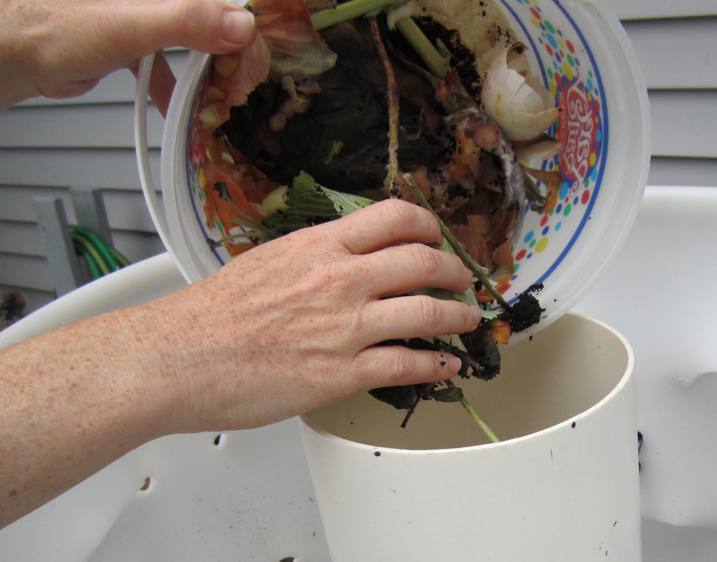
Adding vegetable matter to the center tube

Adding vegetable matter to the center tube

I bought red wigglers at a feed-and-seed shop, and there were also worms in the soil mix since we used some of our own sifted compost.

Just a handful of worms is enough: they reproduce rapidly.

Just a handful of worms is enough: they reproduce rapidly.

I had soaked seeds in water overnight to give them a head start. It was great fun poking them into the soil.

Planting Little Marvel peas on the more shaded side.

Planting Little Marvel peas on the more shaded side.

Plants scavenged from friends and a local nursery helped round it out.

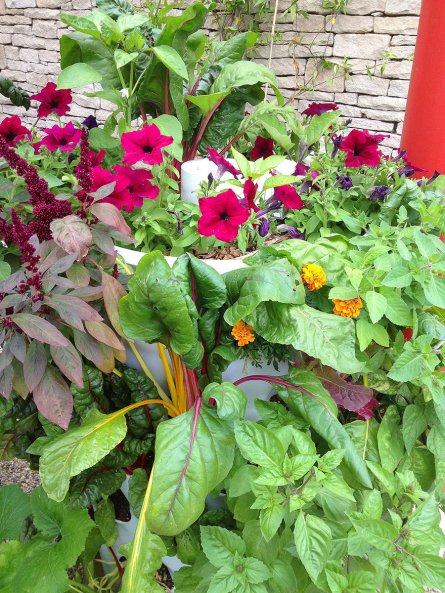
I bought a couple of bell pepper plants that looked like they might survive, and this gorgeous Genovese basil. I also planted parsley starts around the back and a tomato sucker that a gardener friend rooted.

I bought a couple of bell pepper plants that looked like they might survive, and this gorgeous Genovese basil. I also planted parsley starts around the back and a tomato sucker that a gardener friend rooted.

Soon the seeds started to sprout.
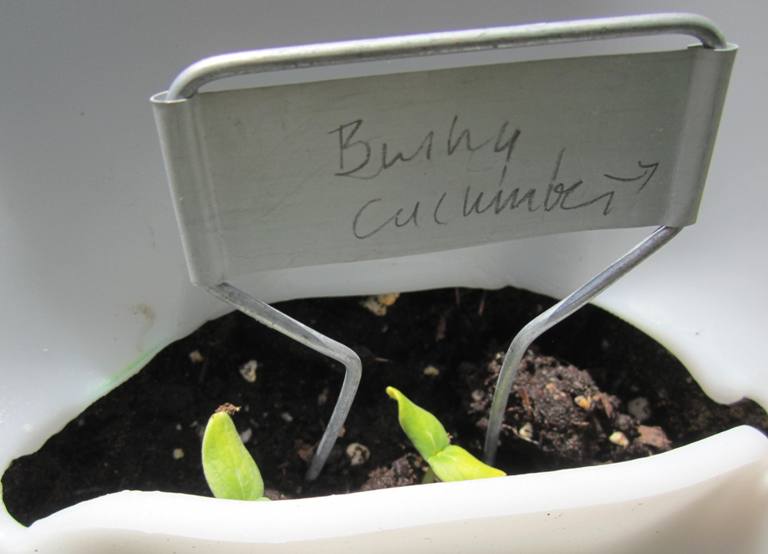
Cucumbers were first to sprout. I don't know if I'll get any cukes having planted them late in the season, but it's fun trying.

Cucumbers were first to sprout. I don’t know if I’ll get any cukes having planted them late in the season, but it’s fun trying.

It was like springtime in July.
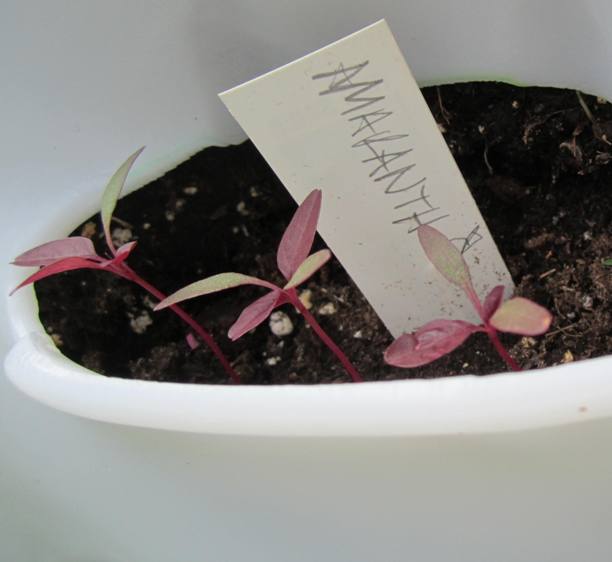
Really excited about the amaranth!

Really excited about the amaranth!

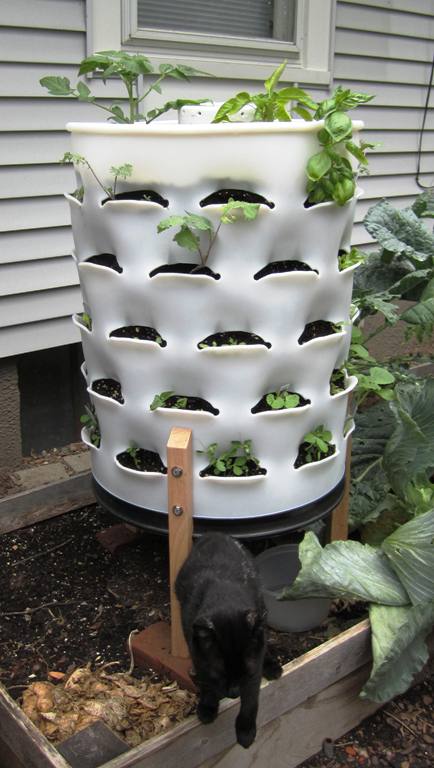
After a couple weeks it looked like this. (The cat loves hanging out in the cool shade underneath the tower.)
About 2 weeks after planting.

About 2 weeks after planting.

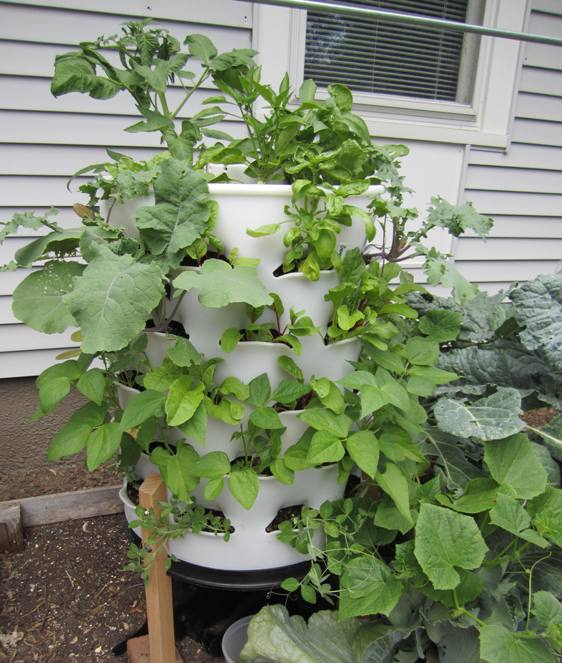
Today it looks like this!
Check out the cucumber vines, lower right. (And yes that is a cat under there.)

Check out the cucumber vines, lower right. (And yes that is a cat under there.)

The tomato “sucker” has suckers of its own now, and soon I’ll have to stake it. I’ve harvested basil, parsley, and a few thinnings of the greens. The worms have been chewing through their food, so in a few months I’ll have a different kind of harvest—worm castings.

We’re thinking of rigging up some sort of covering to extend the season. I hope we can keep snipping kale and chard into the winter.

I love my Garden Tower. Of course, it is not necessary to purchase this product to have a similar vertical garden. “You just need a blow torch and a two-by-four,” says one plucky friend. That seems a little more than I want to do, but this Garden Sack design looks to be a good DIY alternative.
Sharing Summer’s Abundance and Summer’s Work

You never know what might result from posting a request on Facebook. The other day I asked our neighborhood Facebook gardeners’ group if anyone would take my zucchini in exchange for peppers. Because really, how many zukes does one household need? This led to the idea of a veggie swap ‘n share. So I invited any interested gardeners to bring their surplus over yesterday for some trading.

Only a couple folks showed up, but it was just right, and no doubt more will come in the future.

Summer's abundance shared at the veggie swap.

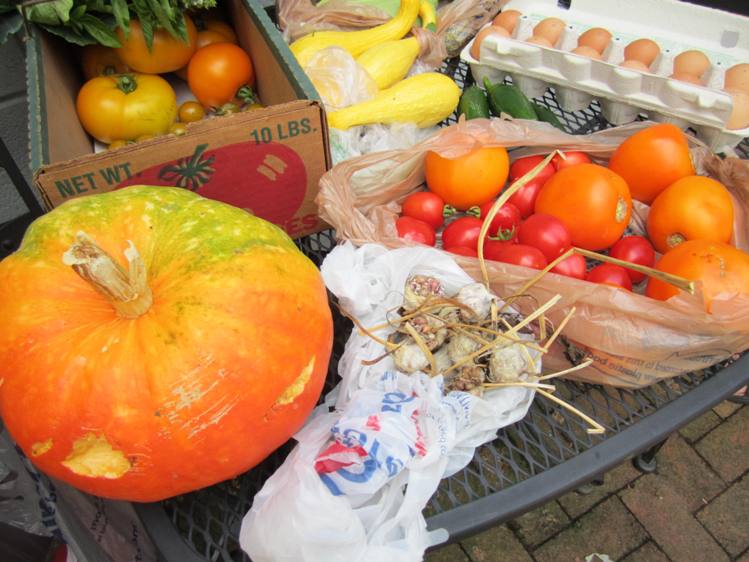
Summer’s abundance shared at the veggie swap. (The eggs are a side deal.)

Julie brought heirloom tomatoes, the only thing she grows. I was thrilled to take some off her hands, since mine are ripening ever so slowly after initially falling prey to blossom end rot. Her cherry tomato variety is called Doctor and rivals my beloved Sungold for sweetness.

As the most ambitious gardener among us, Laura brought a slightly squirrel-chewed pumpkin that needed to be harvested because of an issue with the vine. She had also just picked yellow squash, collards, basil, and more lovely heirloom tomatoes, including a variety called Principe Borghese, reputed to be great for drying. (I’m happy to say these are in my dehydrator as we speak.)

Collards and basil straight from the garden.

Collards and basil straight from the garden.

I offered the aforementioned Zucchini Explosion, specifically a variety called Cordello, as well as some jalapenos and various herbs. Laura went home with catnip for her kitties (sorry Kitley and Maggie!), sage, and rosemary.

Funny how these things all work out and people go away happy to try something new. I think swapping could be habit-forming.

Clowning with Cabbage

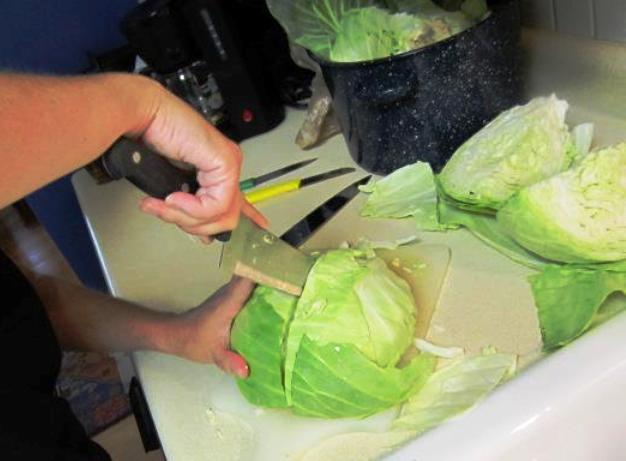
Clowning with cabbage at last year’s kraut party

On a related note, last summer our kitchen was home base for group preserving efforts, loosely connected to our community garden. With polka music on Pandora, we shredded up several heads of cabbage and packed them in crocks at the Kraut Party.

Kraut Party Action

Kraut Party Action

Later in the season we switched the sound track to the Three Tenors and Andrea Bocelli at the Pesto Party.

And a couple of us got together to make a gazillion varieties of salsa as well, to share with the community at a Salsa Party.

When you try to cook and preserve seasonal produce, summer can be a crazy time, especially if some of the produce comes from your own garden. Most of us don’t live in the kind of multigenerational households that were the rule back in the day. So we don’t have the built-in helpers that our foremothers did. It can get lonesome, toiling away in your kitchen on your own.

So it’s been great fun to turn some of that work into social events.

There’s talk of another Pesto Party, and maybe even a group effort to “put up sweet corn,” as my people say. We can get a boatload of sweet corn from one of our many local growers and just go to town.

Hm. What musical genre would work for a Corn Party?

Building Resilience One Vertical Garden at a Time

At FoodCon I met two of the people behind the innovative Bloomington-based Garden Tower Project. Check out their garden-in-a-barrel design with built-in worm composting. Up to 50 plants can be planted in this unique vertical garden.

Garden Tower on Planting Day

Garden Tower on Planting Day

The center tube is perforated down the entire length, allowing red wiggler worms to travel between the compost tube and the soil. Kitchen waste goes into the center tube and turns into compost and worm castings. Bonus: The protection of the soil in the barrel means the worms can survive through the winter.

How genius is that–worm composting right in your container garden?
Finished compost, with happy worms

Finished compost, with happy worms

From the website:

“In an era of rapidly rising food prices and industrial farming practices that strip our food of nutrients essential for good health, we believe the Garden Tower is one small step in empowering people towards their own food security.”
The company hopes to nurture a community of growers. They’ll soon launch GrowingCircles.org as a space for networking and collaboration among those with an interest in the Garden Tower Project’s mission. The goal is expanding food self-sufficiency, promoting homegrown vegetables and herbs that are:
  • organic
  • non-GMO
  • low-input
  • ecologically sustainable

Tom Tlusty tells me that the Garden Tower’s unique design capitalizes on “evaporative cooling and a large thermal mass”–making it possible to plant in hot temperatures normally prohibitive in a traditional garden plot.

So… it’s not too late to start gardening this season!

Top view of the Garden Tower.

Top view of the Garden Tower.

I’m so excited about this design that I ordered my own Garden Tower, and I’m picking it up from the Good Earth later today. I’m psyched to sow some crops I didn’t have room for, like beans and carrots. I’ll also scour local garden centers for leftover seedlings (probably quite sad and stressed by now, but maybe a little TLC would bring them along).

It’s nearly time to start fall crops, like kale, lettuce, peas, and spinach. That’s something I always intend to do and never seem to manage in the thick of late summer. But this is the year, with my sweet new protected microclimate as incentive.

Plus I’ll finally have livestock on my homestead, if only in the form of worms. I’m in heaven!

Time to harvest from the Garden Tower

Time to harvest from the Garden Tower

The only drawback I can see is the need for potting soil to ensure that the growing medium is not compacted in the barrel. I hate buying bagged soil for so many reasons. I’ve seen recipes for homemade potting soil. But being eager to jump in, I probably will break down and purchase. (If you’ve found a good peat-free variety available on the market, please leave it in the comments.)

The inventors believe their design will allow people of all abilities to garden in any clime. According to Garden Tower users in the arid Grand Canyon region, this model results in immense water savings. Tom says they used ten times less water with the Garden Tower than their traditional plot or raised bed.

Really can’t wait to dig in!

All photos courtesy of The Garden Tower Project.

Why Forage?

Trout lily was one of the first wild plants I learned to harvest from the greenspace across the street from my house. There’s a thriving colony that appears in a rough circle at the base of a redbud tree for a month or so before fading back into the earth as ephemerals do.

By Jason Hollinger (Dimpled Trout Lily  Uploaded by Amada44), via Wikimedia Commons

By Jason Hollinger (Dimpled Trout Lily Uploaded by Amada44), via Wikimedia Commons

Sometimes I feel quite fringy bending down in early spring to pick the tender leaves before moving on to check the basswood tree and other faves. Even in my groovy neighborhood, it’s somewhat marginal behavior to pick salad leaves off the ground in a public space.

Then I read something like this:

“Some people think that it’s silly to go for an invigorating walk on a May morning and come home with a lush heap of delicious gourmet vegetables when it would only take slightly longer to drive to the grocery store and spend hard-earned cash to get weeks-old inferior produce with half the nutritional value, doused with deadly chemicals.

I see their point, but I’m sticking with wild food just because it’s a lot more fun.”

–Samuel Thayer, in Nature’s Garden: A Guide to Identifying, Harvesting, and Preparing Edible Wild Plants

Reading on, I find that not only trout lily leaves but bulbs are edible–and are in fact tastier than the leaves.

Hello shovel, goodbye self-consciousness. (I would make sure not to decimate the colony of course. Thayer says responsible harvest practices allow trout lily colonies to thrive.)

What about you: What’s your favorite gourmet wild vegetable to forage, or have you tried any yet?

Postcard from FoodCon

Friday’s FoodCon was a thrill. I haven’t heard the final tally of attendees, but there was a steady stream of bright-eyed folks. I met so many people with interesting stories about foraging (which, as I explained to one non-native English speaker, is like hunting, only for plants).

Swapping foraging stories with a foodcon attendee

Swapping foraging stories with a foodcon attendee

People spoke of making elderberry syrup for winter colds and congestion, of becoming more accustomed to the taste of bitter greens to the point of craving them, and of eating oxalis as kids.

One little girl said she likes to eat clover petals, which brought back my own flower-eating past: My friends and I used to pick the blooms off my dad’s tall phlox and suck the nectar, pretending it was a special elixir.

Most of my exhibit consisted of weeds picked that morning. All are available in the typical urban yard or garden. “If you can’t beat ‘em, eat ‘em,” was my line.

Trees are a source of unexpected nutrition too: Even seasoned foragers were surprised to learn that basswood tree leaves are great in salads.

Trees are a source of unexpected nutrition too: Even seasoned foragers were surprised to learn that basswood tree leaves are great in salads.

I told the uninitiated to start by topping a salad with the tangy, tender oxalis, which is prevalent in urban yards. Then see if, like me, they don’t get completely hooked on picking stuff from their yards to bring in to the dinner table.

Wet tablecloth

My tablecloth got all wet after an early gust of wind blew a few cups over. But it didn’t matter: check that wilty salad!

Japanese wineberries (at the right edge of the above photo) were the star of the show. Though one website calls this bramble fruit a “bio-bully” for being invasive, the berries are dazzling little gems that are sweeter than should be legal. (Last year I learned the identity of this mysterious bramble I’d found just as the buds were forming. I was anticipating some happy picking, then they perished in the drought. This year: bountiful harvest.)

Some were amazed that you can actually eat mulberries, asking incredulously, “What do you do with them?” while others were right there with me on the “nature’s candy” point.

A friend and I had biked around the neighborhood questing for these berries.

A friend and I had biked around the neighborhood questing for these berries.

Things I learned: There’s a “Poke Salad Annie” song, and you can eat milkweed flowers, and four hours of talking makes one hoarse.

The solar cooker got lots of interest too, though generally more as a novelty from what I could gather (my partner Judy fielded most of those questions, bless her).

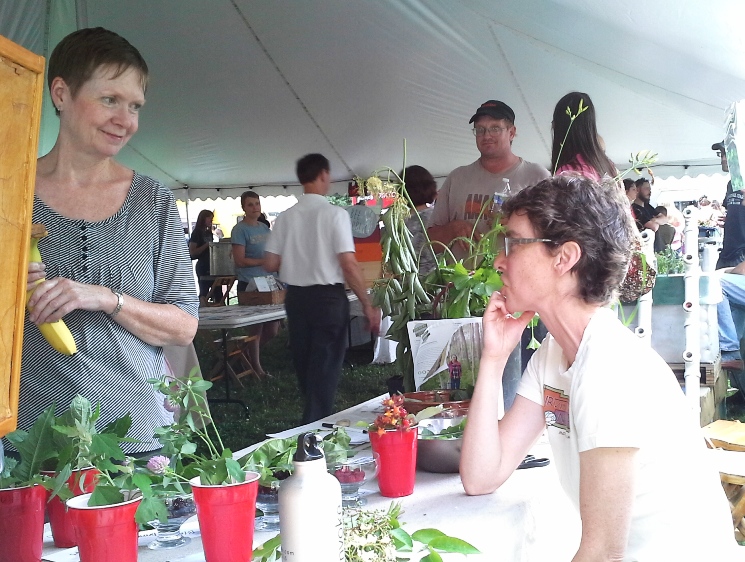
As far as the other exhibitors, I was able to make a quick circuit late in the evening and talk to the folks from Wolf-Beach Farm, as well as friends at the “dumpster diving/dumpster dining” booth and the “making easy meals in 5 minutes” table. (These were all people I had referred to the organizer.)

I also found a couple standouts in the resilience arena. I’ll report on them in an upcoming post. Some great innovators there, helping people break their dependence on a shaky centralized food system that is wreaking havoc on both planetary and personal health.

Forage Ahead!

Today I joined my friend Greg Monzel of Monzel Herbs on one of his terrific plant walks. The rain held off as we tramped the lanes and fields of Distelrath Farms, an urban farm and the source of my weekly CSA allotment.

As an herbalist, Greg focuses these guided tours on both edible and medicinal plants. After you’ve hung around with him for a little while, you get a new appreciation for the things people normally dig out of their gardens. It seems that everywhere under our feet, there’s nourishment and healing.

Greg teaches us about plantain and its many uses

Greg teaches us about plantain and its many uses

Plaintain, for example, is good for eczema, wounds, and other skin issues, while its seeds are a “poor man’s psyllium.” I doubt I have the patience to collect its seeds, but I like the idea of whipping up a bunch of leaves in the blender with olive oil to make an infusion. I have some off-and-on rashy stuff on my hands, so I might try that.

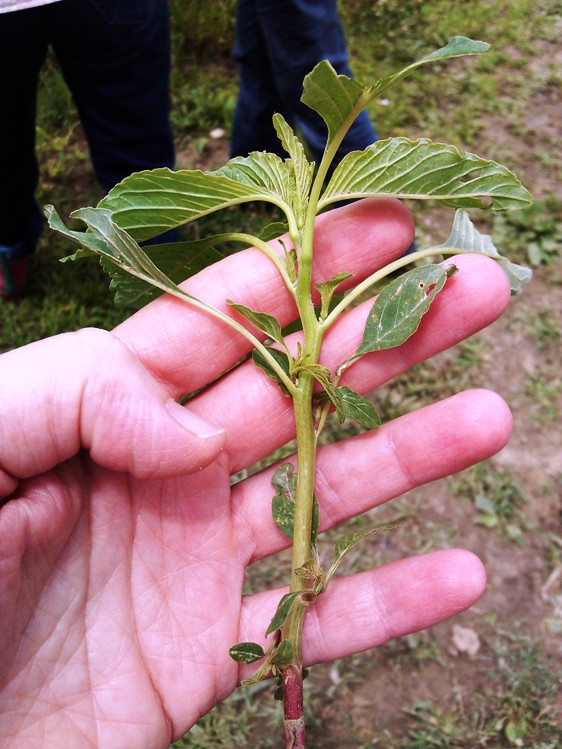
Amaranth, drought-tolerant and tasty

Amaranth, drought-tolerant and tasty

More tasty than the bitter plantain is amaranth. It is an amazingly hardy summer salad green as well as a source of protein-rich “grain” (actually the seeds).

I’ve never collected the seeds, but I adore amaranth as a green. My partner was introduced to it in Tanzania years ago. There it was called red root and sauteed in a dish called Sukuma Weeki.

When the drought hit us last year, amaranth didn’t even notice. So this year I bought amaranth seeds to plant for a steady and convenient supply. As soon as my lettuce is done–any day now–I’m sowing amaranth in preparation for a dryer, hotter July and August. I can almost taste that late summer salad of amaranth and purslane, a heat-loving succulent high in omega-3 fatty acids. Most people pull both as a weed.

Greg, by the way, says weeds are a state of mind. Many of the things we consider noxious weeds were actually brought here because of their usefulness. Now they populate areas where the soil has been disturbed, working as “succession plants” that naturally build soil fertility.

Knotweed, AKA smartweed

Knotweed, AKA smartweed

Here’s knotweed, for example, also known as smartweed. I remember seeing this pretty little bloom in my dad’s raspberry patch and wondering what it was. I learned today that it is in the buckwheat family. Its leaves and seeds are edible and loaded with resveratrol, a potent antioxidant.

And did you know that you can harvest the seeds of the ubiquitous clover and save them in a jar, for indoor sprouting at some later, leaner date? It’s mind-boggling to realize there is free food all around us, even in the city, that could potentially nourish us in good times and bad.

I’ve learned so much from Greg, starting when I interviewed him for an Edible Indy story on gathering wild foods. Though I’m not nearly as experienced as he is, next Friday, July 5, I’ll have a table on foraging at FoodCon IV, a fabulous event that attracts a thousand or more people every year. I’m beyond excited to be part of it.

On Being Rooted

A summer memory: The question my dad asked me when he got home from work, if it had rained earlier in the day. “Did it rain hard enough to get wet under the trees?”

Always, the answer was a shrug. I didn’t have much patience for Dad’s concerns. Watering wilty plants, pulling weeds, noticing—those were his purview, not mine.

Now I find myself checking, whenever it rains, whether the earth is wet under the trees.

ChivesAnd when I come home from a week away, my eye is immediately drawn to what’s changed in the landscape. “Oh, the daylilies are blooming,” I might be heard to say, slowing to see orange blossoms in a neighbor’s flower bed. It’s the kind of comment that would have made roll my eyes in my youth.

It is different as an adult, living in one place for a long time. You come to feel an ownership not just of your yard but your entire street, the tree canopy above the neighborhood, the pavement, the dirt itself. Even if you don’t know all your neighbors, you smile at the faces you know, and regard warily those you don’t. You want the best for your little corner, so you pick up litter and throw it in the nearest receptacle, you pick up after your dog, you try to keep the storm drains free of debris.

At least that’s how it is with me and my neighborhood.

And my partner and I love where we live. We don’t plan to leave; we’ve settled in more and more each year. It’s true our yard has its limitations: We can’t keep ducks. We have only so much sunlight for our garden beds. We have no room to try hugelkultur.

But over the years, the source of our sustenance has expanded to include the broader community.

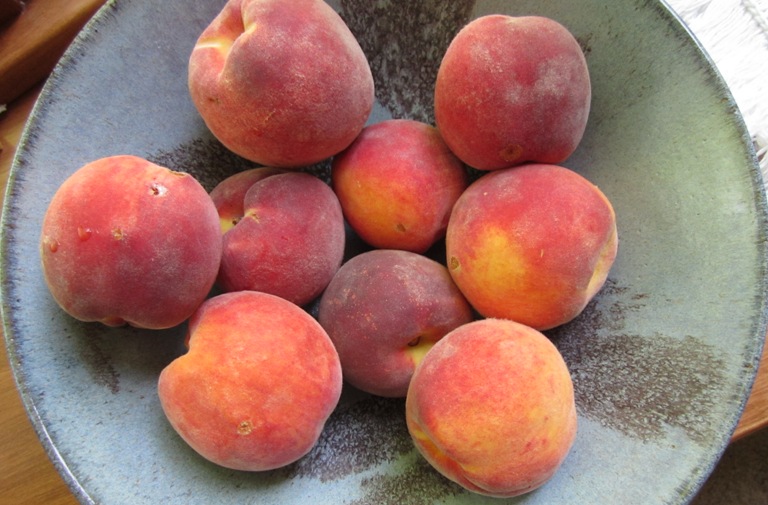
PeachesI buy eggs each week from a chicken-keeping neighbor, who also shares fruit from her orchard. Last year we tended a community garden, and this year we’re experimenting with straw bale gardening on a friend’s property. And one of my favorite activities is to forage for food along my street. I bring home salad greens and berries by the bucketful. (“Nature’s candy,” I hear my Dad’s voice saying, and sometimes say myself, gobbling mulberries.)

There’s a lovely rootedness to this life. I guess it’s possible to live for years in one place and never meet the neighbors, never put a hand into the soil, never sit outside. People drive into an attached garage and disappear into a house that serves as…what? a haven for the inner circle? a locus of entertainment? a fortress against the world?

That seems so sad to me, a kind of disembodiment—though I too appreciate a haven, crave entertainment, and need security. But to live only inside the house sounds like a terribly constrained existence, no matter what kind of diverting electronics are humming within its walls.

Dad used to spend every long summer evening outdoors puttering. It was a mystery what he did out there. As an adult I understand. He was tending, noticing, relating. Getting rooted.

Real Simple

Still wobbling through Staphland. So here is a bit I dusted off from the archives of Shawndra ravings, for your reading pleasure. Back to the couch.

Some years back this magazine Real Simple caught my eye in the checkout lane at Kroger. Its thickness approximated that of the phone book of the small town where I went to college. It was unlike me to put it in my cart, but I  was attracted by the silky cover, I suppose.

By Jim Clark, via Wikimedia Commons

By Jim Clark, via Wikimedia Commons

Because I remember that cover to this day. It was a tableau of succulent blueberries. Inside were “real simple” ideas for augmenting someone’s perfect life: Make blueberry tea cakes the size of dolly dishes for your brunch guests! Weave a wreath from wheat purchased at such-and-such online store! Festoon it with dried wildflowers you’ve sprayed with hairspray, for colors that last! And so on.

Not one project within those pages would do anything but complicate life. The crafts were Martha Stewart-level hard, the recipes were full of fussy ingredients, and the whole magazine was a waste of $4.95.

Hmph, I thought, I’ll show you real simple.

Call me crazy, but say “real simple” to me and I don’t think of spending oodles of time piping mint icing onto chocolate chip cupcakes. I don’t envision sewing clunky wooden beads onto the placket of my earth-toned Nehru shirt. I don’t have time for fussiness.

But I realize that what I do in the name of the simple life may seem a bit on the fussy side, to people with different priorities. I operate on the premise that the less money I need to live on, the wealthier I am. This leads me down some curious roads.

Here I am leaning way into a wild bramble, getting all scratched up to reach one more black raspberry for my little bucketful.

Or here I am washing onion skins and celery tops to save in a big Ziploc bag in the freezer, for a future stock-making escapade.

Or here I am standing over the stove on a 90-degree August day, stirring sugar into grape pulp—having picked the grapes from my neighbors’ fence—and waiting for the precise moment when it turns to jam, seemingly many sweaty hours later.

There are times I feel rather smug about my gardening and homesteading efforts. Like when homegrown produce turns into a meal made a soleil “for mere pennies!”

Other times, I just feel like a chump. Lugging buckets of water from here to there in 100-degree heat, for example, while my neighbors up the street lounge by their in-ground pool.

Remember that TV show featuring two famous-for-being-rich-and-famous young women who attempted to live among farm folk? It was called The Simple Life. The opener showed the starlets in overalls, with straw in their hair and dirt on their faces, looking aggrieved.

I guess the fun was in watching the high-class duo learn that the simple life ain’t easy. So true, even on my own modest homestead here in town.

Still.

Wouldn’t trade it for a slick magazine.

Learning to Learn

Third in a series on education
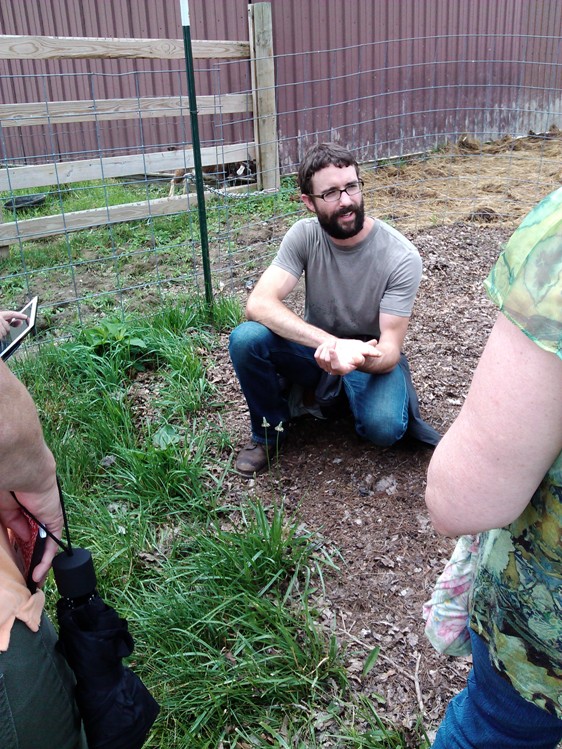
Recently I spent a day with a Bloomington, IN homeschooling cooperative. Two families work together on homesteading projects on each others’ land. This allows their four children, ages 8 to 12, to learn by doing—while increasing their confidence and skills.

Projects range from seed saving to bike maintenance to creation of a family almanac. They’ve gone mushroom hunting, practiced knot skills, and (on rainy days) learned knitting and mending. They’re working on a fire pit and hoping to build a treehouse.

Reading and quizzing each other from a book called Moving Heavy Things

Reading and quizzing each other from a book called Moving Heavy Things

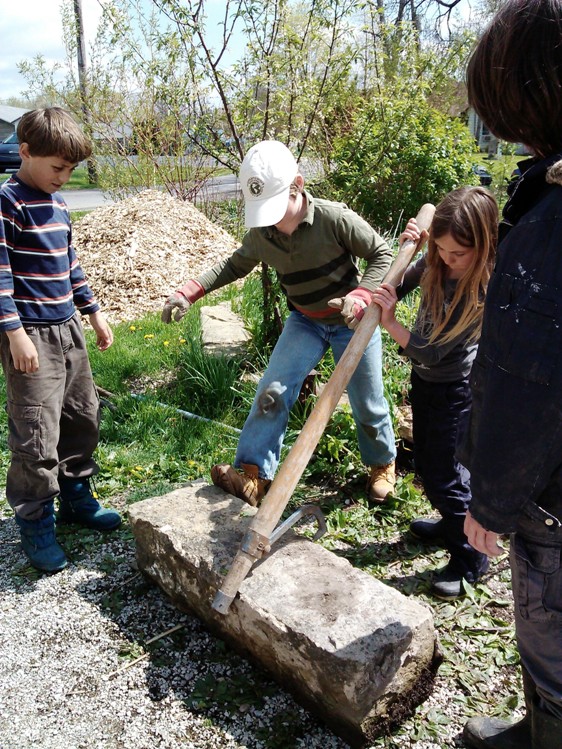
The day I was there, the students were studying how to move a heavy sandstone block down a sloping driveway from the front yard to the back. They were to place it into a rectangular hole in the dirt, forming part of an herb garden’s perimeter. The emphasis was on problem solving, collaborative effort, and applying their study of friction and levers.

Sawing PVC pipe to roll the plywood with the block on top (note that is just a practice stone, not the super-heavy one they were charged with moving)

Sawing PVC pipe to roll the plywood with the block on top (note that is just a practice stone, not the super-heavy one they were charged with moving)

This was no small task and involved an array of tools, including something I’d never heard of called a cant hook. The mom/teachers, Stacey and Dani, encouraged them to try out every idea and see what worked best. The kids worked by experimentation, reasoning, puzzling, trying, and talking—displaying remarkable tenacity through the whole process.

Using a cant hook to move the sandstone block

Using a cant hook to move the sandstone block

There was not one temper tantrum. I could see that the communication skills these kids develop through group projects will go a long way toward smoothing their way in the world—while also contributing to the healing of that same world.

Stacey says she’s motivated by a belief that children can be the instigators of deep change. “I try to not spend a lot of time in a fear/worry place (even though it is hard sometimes), and in doing this mentor joy, hope, the power we have, and that change is possible.  When children/adults have trust in themselves, self-empowerment and understanding of the world, beautiful things happen!”

“I think they are continually seeing how they make a difference and create change.”

Picking violets for our lunch salad

Picking violets for our lunch salad

By the end of my visit, the children had moved one monstrously heavy block into place in the back yard, where it will begin the delineation of an herb spiral. There was great cheering when the block was finally nestled into place.

As results-oriented as we are these days, this may not seem like much for several hours’ work. But in the process, they learned to learn, to cooperate, and to not fear failure.

Watching them, I wondered how my life would be different if I had had these sorts of experiences in my own childhood. I might consider myself in a different light now. I might be handy, of all things. At the very least I would be braver, less fearful of being wrong.

This concludes the education series, at least for now. (I could share much more about both the KI school and these homeschoolers, but that’s where the book comes in.)

Solar Cooking Season at Last

Taking a break from the education series for a little joyous yippee-skip, because today? I busted out the solar cooker!

Yep, on this cool, breezy day I solar cooked for the first time this year. It makes me so happy to usher in the season this way. Despite the chill, the sun is high and bright, the sky bluest blue, and in the solar cooker the oven thermometer registered 275 degrees.

I was having so much fun, I neglected to take any photos of my handmade cooker doing its thing.

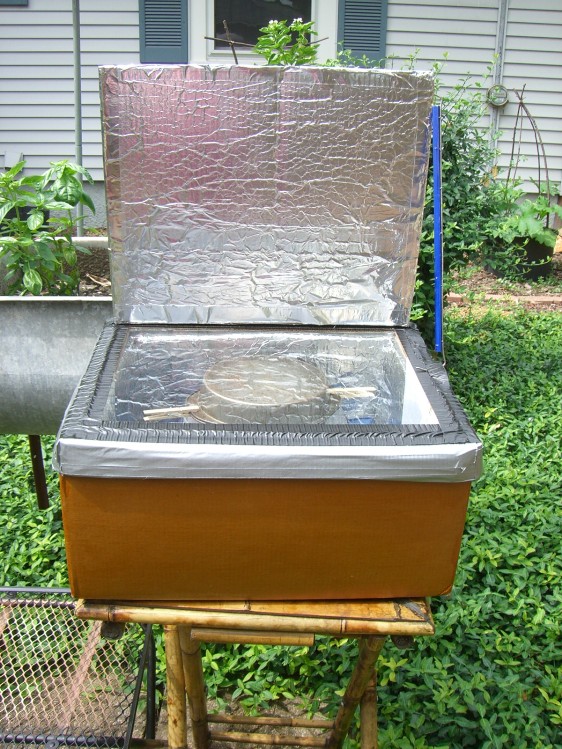
Solar Cooker

This is not a photo from today, but from my very first summer of solar cooking, 5 years ago. Nowadays I know enough to put a dark cloth over my cookware. And I don’t use clothespins anymore, at least not inside the cooker. But you get the idea.

OK this isn’t a food blog… but here is what went into the soup that is just now steaming in my mug after simmering out there all day:

  • leeks from my CSA (community-supported agriculture, a weekly allotment of locally grown vegies, yum)
  • baby carrots, also from the CSA
  • sage and dill, ditto
  • parsley I dried at some point, can’t remember the origin, possibly the back yard
  • corn my partner and I bought at the farmers market and froze during the summer
  • a dried Aleppo pepper from the community garden, given to me by my friend Heidi
  • potatoes purchased at the food co-op
  • celery that really really needed to be used up
  • frozen chicken stock I made during the winter from an Amish-raised chicken
  • salt, pepper, and love, baby!

Tell you what, it hits the spot.

Also from that first year. But I did toast pumpkin seeds today on top of the soup.

Also from that first year. But I did toast pumpkin seeds today in a tray on top of the soup. I’ll put them in my salads this week.

I love cobbling together a dish like that, using produce from the garden or market or CSA, or whatever needs to be used up to make room for fresher stuff. (Time to get that corn all eaten up before it shows up in the markets again.)

I’m so looking forward to another long summer of solar cooking. I can almost taste the plum cobbler now.

There’s more about my solar cooker and how you can make one here.