Inner Transition As Key to Collective Work

First in a series of three

In my last post I suggested that an internal shift is as critical as the external changes we so desperately need. I’d like to explore that idea further in this series.

While in California last fall I had a conversation with Julia Bystrova, who was developing a series of “inner transition” tools with Transition US.

The Transition movement is a worldwide push to bring communities into a relocalized post-oil economy. The idea is to reduce consumption and embrace local energy, while building food security and resilience.

Transition Linithgow. Photo by John Lord, via Flickr Commons.

Transition Linithgow. Photo by John Lord, via Flickr Commons.

Julia told me that this movement suffers from a particular conflict: Some people want to jump right in and work on projects, while others prioritize the internal transformation process. The first camp gets impatient with the second, which has often been marginalized. Working groups often struggle to collaborate effectively, caught up in conflicts and divisions.

The solution is to give “inner tools” their due, Julia says. Both external output and internal process are valid. And as Julia says, the external is a mirror of the internal. “There needs to be group process that accepts both in a way that is complementary, because we need both.”

Mapping the Transition. Photo by Chris Hill

Mapping the Transition. Photo by Chris Hill, via Flickr Commons.

I tend to agree, having been involved in some groups that struggle to find cohesiveness. Group dynamics are tricky. To my mind, conflict is likely to persist until we each are willing to be present to our own emotional states.

If we walk through life largely unconscious of what triggers our pain, we’ll always be in a reactive mode. People push our buttons, we react, and conflicts escalate, all because we can’t take look honestly at the storms raging within us.

And it’s crucial that we find a way to work together.

Julia Bystrova and author Mary Pipher both say that we are all doing important work now. Even if we think we’re removed from the front lines, we’re not. Because the central task of our time is just that: working toward a healthier ecosystem and a just economy.

Julia believes that societal transformation can happen fast. She envisions a cascade effect that will be breathtaking in its global reach.

She told me that a certain threshold of consciousness is already on its way. With each of us lighting the spark of countless others, Julia believes we will see the world transformed.
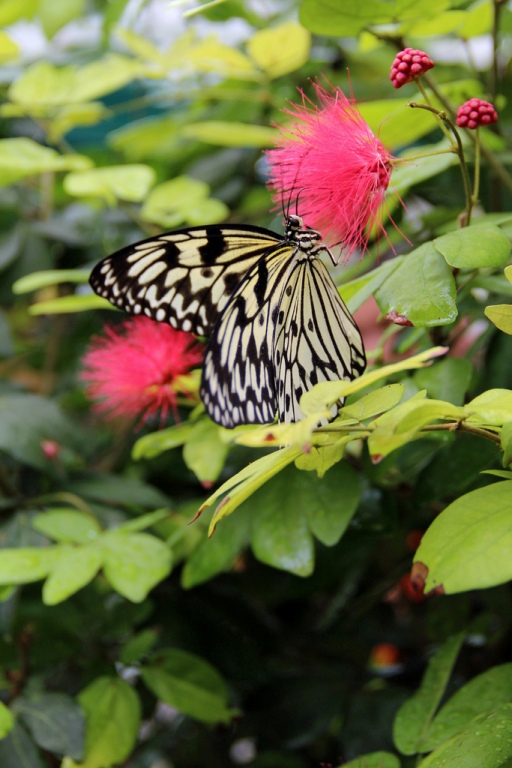
Swallowtail. Photo by Heidi Unger.

Swallowtail. Photo by Heidi Unger.

Mary Pipher also expects widespread transformation. As people open to their deepest feelings about the state of the world, she says a shift in consciousness is inevitable. All those awakening hearts will simply mandate deep change.

So much of the news we hear is bad. In some parts of the world, it’s possible for a woman to be stoned to death, or for schoolgirls to be abducted en masse, while here at home mass shootings no longer arouse outrage. Meanwhile an island nation is projected to be entirely underwater by 2020 as Antarctic shrinks. Monarch butterflies are reaching Mexico in drastically reduced numbers—part of “the sixth extinction.

Stories like these can swamp me in despair. But these women’s vision of transformation holds the antidote to hopelessness.

Next: Confronting the shadow.

Yoga: Leading with the Heart

I’ve practiced yoga for many years, starting in my 20s. My practice fell off in my 30s, around the time my health went wonky. For a long stretch, whenever I attended a class or practiced at home, the result was exhaustion and pain.

But in the last several years I’ve come back to yoga as I’ve rebuilt my health. Now I see my weekly Irvington Wellness Center class with Gaynell Collier-Magar as one of the pillars of my spiritual and physical self-care regimen.

Photo by Lyn Talley, via flickr Commons

Not a picture from our class. Photo by Lyn Talley, via flickr Commons

In Gaynell’s classes, you won’t find that punctilious solemnity that infects some yoga classes. She teaches with a lightness and authenticity that nourishes all comers. And she brings her whole self to teaching. I love that she doesn’t take herself too seriously. Nor does she shy away from the spiritual underpinnings of yogic practice.

Week after week, she nudges us to experience the support of unseen energies around us, to feel into our physical bodies and the air around them.

As we move into a standing posture, Gaynell might say something like, “Lead with your heart; allow your heart to move toward the wall…and now [a smile in her voice], loosening the grip with which you normally hold your life, raise your arms overhead.” Which makes us laugh in self-recognition while carefully forming our bodies into the shape she models.

Photo by Ariane, via flickr Commons

Not a picture of our class or anyone I know. Photo by Ariane, via flickr Commons.

Sometimes it takes stillness to open us to the love that’s all around us. It happened in last week’s class when I found myself holding a posture called the Half Pigeon. This pose has us fold the torso over a bent knee while stretched out face-down on the mat.

Gaynell queues up her play lists with care, and for this extended hold of Half Pigeon, she played a song celebrating the Divine Mother. The vocalist sang her tribute with piercing simplicity. With my forehead pressed to the mat, I felt tears well up from deep inside.

In previous years I might have cried in yoga classes out of grief, out of frustration, out of anger at my body (or at the instructor). Sometimes I cried from plain old weariness and physical pain.

But my heart is full now, and my body and spirit feel replete. My tears are not expressions of hurt. I weep because I feel steeped in love and gratitude.

Photo by Nicolas L., via flickr Commons

Photo by Nicolas L., via flickr Commons

Have you felt that—that opening in your heart center like a flower’s petals unfurling? I hope you have. I wish it for everyone.

I used to believe (or part of me shouted loudly enough to make me think I should believe) that an open heart was less essential than, say, large dramatic projects. It was the outer stuff that would change the world, not the inner.

Now I tend to think that this infusion of love is foundational to any external work, and that any worldchanging shift must manifest on both an internal and an external level.

Gaynell’s own writing will take a turn on this blog in coming weeks. Stay tuned to learn her perspective on how yoga supports resilient communities.

No More “Long Hard Slog”

Several readers told me that Tearing up an Ancestral Contract resonated with them. Here’s another inheritance I’m reevaluating: the much-vaunted Protestant work ethic.

Don’t get me wrong—I’m glad I have a strong work ethic. I’m grateful that the folks in my lineage weren’t afraid of hard work, and that I inherited a bit of that spirit. I like to buckle down and get things done.

Saturday my neighbors and I participated in the Great Indy Cleanup. Photo by Heidi Unger.

Saturday my neighbors and I participated in the Great Indy Cleanup. Photo by Heidi Unger.

But sometimes, work isn’t the thing that is needed. Maybe it’s play. Maybe it’s stillness. Maybe it’s receiving. Maybe it’s rest.

I have known this, of course, in my head. But to really bring that knowledge into the body and energy field? That’s a different thing than intellectual understanding.

I completed two big projects a few weeks ago. I’d spent several weeks extremely focused, with most days quite regimented in order to fit everything in. And it felt good to work hard and get to the finish line.

With the deadlines past, I enjoyed a few leisurely days. It was hard not to feel like I was shirking. I worried that I was not getting important work done. I’d grown accustomed to pushing. So if I allowed myself to enjoy a slower pace, a few long walks in the sunshine, something felt “off.”

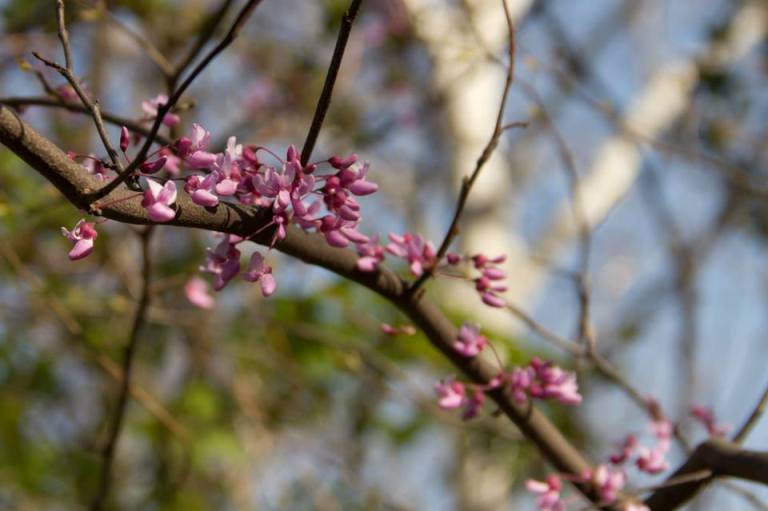
Redbud blossom photo by Heidi Unger.

Redbud blossom photo by Heidi Unger.

But I knew I didn’t want to live the rest of my life constantly driving myself beyond my capacity, as has been my habit lo these many years. I remembered the energetic principles I’ve been learning from energy healer friends like Merry Henn and Dawn Ryan. And I took a look at some core beliefs.

I’ve practiced self-testing my energy field (also known as muscle testing) for several years. At this point the skill is reliable enough to serve me in all kinds of capacities. For example, I can test my resonance with various beliefs.

The residual effect of my inherited work ethic manifests like this:

  • “It is impossible for me to be happy and rested and still meet my commitments.”
  • “I must work to the point of exhaustion in order to get my work done.”
  • “I must push my body to the point of illness to prove my worth.”

All of these statements “tested strong,” meaning my energy body resonated a big YES to each of these unhealthy beliefs. But these beliefs no longer serve me. I wanted to change them at an energetic level.

I used Emotional Freedom Technique (EFT) to quickly shift them, then rechecked: They tested weak. I worked with variations of the statements and did more rounds of EFT. Eventually I came upon:

  • “It is impossible to live in tune with my life purpose and feel happy and rested.”
  • “Aligning with my life purpose is a long, hard slog.”
  • “I must disregard my body’s need for rest if I intend to fulfill my life purpose.”

Well! I shifted these too, until I resonated something completely different. I now equate fulfilling my life purpose with deep joy and ease, a healthy body, connection, flow, and other such deliciousness.

Clowning with invasive garlic mustard. My job at the cleanup was to pull it.

Clowning with invasive garlic mustard. My job at the cleanup was to pull it.

What about you—what contracts and core beliefs are you holding or releasing?

(Interested in learning a simple way to self-test? Check out this video.)

Unfurling

Happy belated Earth Day. Today I’m in a bit of a spring swoon. I fall in love with the world this time of year. I find myself looking more closely than usual, feeling wonder and deep gratitude.

For lunch I had a salad of farmers market greens, augmented by a few trout lily leaves. Several large colonies appear every April across the street from our house for a short time before fading back into the earth.

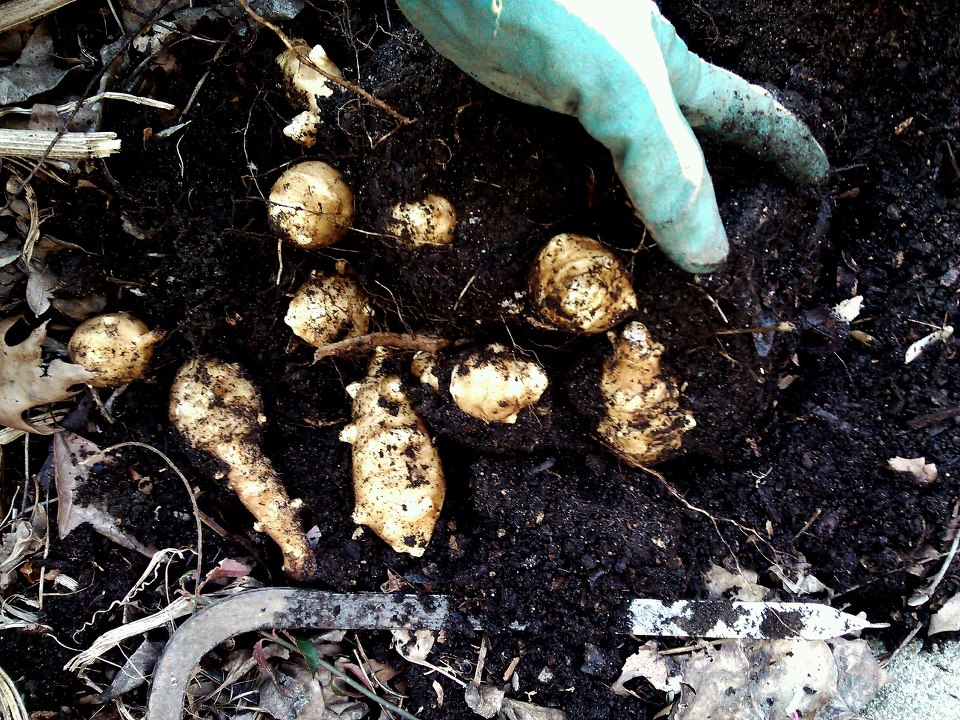
We’d dug our Jerusalem artichokes last week, so I cleaned one up and cut it into crispy little rounds for my salad. While I was scrubbing the dirt off, it occurred to me that something about Jerusalem artichokes is just flat amazing. All that sweetness growing deep underground.

Jerusalem artichokes, aka sunchokes, from our garden

Jerusalem artichokes, aka sunchokes, from our garden

The tops of the plants are dead; we left the ‘chokes in the ground all winter. Yet here they are on my plate, ready to complement the sharp tang of mustard and dandelion and arugula.

I feel especially tender toward trees this spring. Probably because winter was longer and harsher than usual. Snow and ice buried us for several months. Many branches cracked under the burden; some trees split in half.

So it seems more miraculous than ever to see trees pushing new leaves and buds and blooms. Every day on my walks, there’s beauty surrounding me.  The tulip trees are especially dear, with these new baby leaves, furry like does’ ears, unfurling.

New tulip tree leaves, via Wikimedia Commons

New tulip tree leaves, via Wikimedia Commons

It just hit me, watching this happen—slowly, slowly, but still the growth is there—how really astounding it is that a tree can make leaves and blooms and seeds. Think of it: the tree, a hard wood thing, somehow pushes out softness and color.

I suppose I could review the science behind it: phloem and xylem, was it? In any case it’s miraculous. There are channels within that rough brown case—it’s alive!

Did I ever tell the story of my cousin who was raised in the Caribbean? When she came to visit Indiana relatives in the winter, she was appalled to see all the “dead trees” standing around. “Why don’t you cut all those dead trees down?” she asked my dad, to his great amusement.

Sometimes what seems to be dead is only in a state of deep rest. Waiting for the right time to stretch up and out, touch the sunlight again.

What is unfurling in your spring?

Stop Collaborating

Photo by Mark Notarim, via Flickr Commons

Photo by Mark Notarim, via Flickr Commons

“People ought to support mitigation and adaptation within their own line of work…If you’re a butcher, baker, ballerina, banker, or a plumber, envision yourself as the post-fossil-fuel version of yourself, and get right after it.

So…stop co-operating with the status quo. Stop collaborating. Stop being afraid and stop feeling helpless. Just stop all that and start living by entirely other means.”

—Bruce Sterling, from WorldChanging

To Belong

Winter aconites blooming in March 2013

Winter aconites blooming in March 2013

“As the globalized, placeless world spreads,
and as progress is increasingly defined as the ability to look out of a hotel window in any city and see the same corporate logos lit up in familiar neon,
it could be that the most radical thing to do
is to belong.”

Paul Kingsnorth, Real England

Inhaling the Universe

Andromeda Galaxy, by Cestomano, via flickr Commons

Andromeda Galaxy, by Cestomano, via flickr Commons

“What thrilled me the most was the fact that millions of meteors burn up every day as they enter our atmosphere.

As a result, Earth receives 10 tons of dust from outer space.

Not only do we take in the world with each breath, we are inhaling the universe.”

—Terry Tempest Williams, in When Women Were Birds

A Loved World

I heard two interviews in the last few days with Elizabeth Kolbert, author of The Sixth Extinction: An Unnatural History. While listening to the Fresh Air interview I was making pizza. And I must have decided—or the part of my brain that can’t process too much scary information decided—that making pizza required all my faculties, because I kept zoning out.

But I did hear that 25 percent of all mammals on the earth are endangered, and 40 percent of amphibians.

Photo of critically endangered Panamanian Golden Frog By Tim Vickers [Public domain], via Wikimedia Commons

Photo of critically endangered Panamanian Golden Frog By Tim Vickers [Public domain], via Wikimedia Commons

I did hear that the Great Barrier Reef is on track for full-scale collapse, and that we can expect the oceans to eventually look like “the underwater equivalent of a vacant lot.”

No asteroid is to blame this time. The driver for this extinction wave is humankind.

That’s a heavy load to bear, even if I knew it already. With our tailpipe emissions and our moving from continent to continent and our wildly inventive minds, we are rapidly bringing about the demise of millions of species.

The author makes the point that our impact on other species isn’t (always) intentionally malevolent. It’s the very nature of our speedy brains and dextrous hands. It’s the fact that, as Kolbert says, we don’t have to wait for evolution to create change. We just make a tool. Which makes life difficult for creatures that change at the pace of evolution.

What does this mean? I don’t know. It feels bleak. I like to take the long view, the esoteric/spiritual/energetic view that focuses on evolution of souls, a realm beyond the physical. Still, here on the physical plane, it’s a devastating trajectory.

Self-preservation requires that this knowledge fade in and out of my consciousness. I go about my days, doing what I do, worrying about small things. Then it’s like the moment my dad was diagnosed with inoperable, terminal cancer. Suddenly all that trivia fades in importance. I’m pierced by pain. A loved one, a loved world, is in jeopardy.

© Cinc212 | Dreamstime Stock Photos

© Cinc212 | Dreamstime Stock Photos

I don’t know what to do or say in the face of such hideous information. Just the fact of the dwindling numbers of monarch butterflies alone makes me want to weep.

I find myself wanting to check email, check Facebook, call a friend, watch the Olympics. To do anything but stay with this knowledge.

I can say that all things happen for a reason and everything is unfolding exactly as it should and we are holding the light whether we know it or not and we were always meant to get to this point—but is all that just a bandaid for unendurable grief and fear?

___

I wrote the words above last night. Today, I feel different, grateful, open. I took time to sit in love and awareness this morning. It seems the metaphor of a terminal diagnosis fits better than I first realized.

In the face of horrifying news, sometimes there is an opening to the sacred. Suddenly you savor life more than ever. You don’t take anything for granted. You give what you can. You do what you must. Your love expands.

Viva Optimism

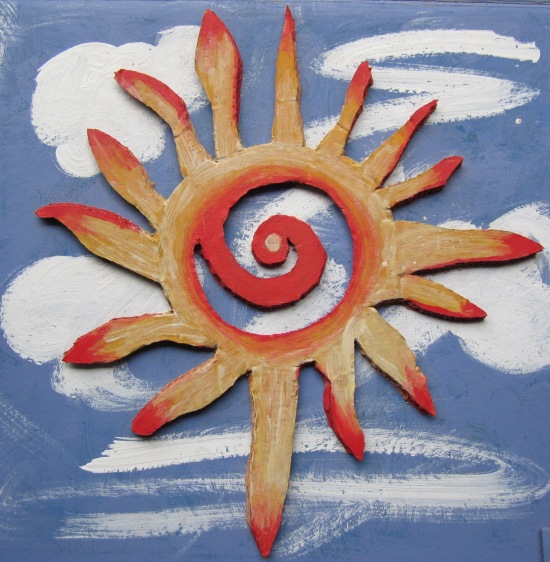
Art made by my spouse Judy for our first solar cooker

Art made by my spouse Judy for our first solar cooker

Optimism is a political act. Those who benefit from the status quo are perfectly happy for us to think nothing is going to get any better. In fact, these days, cynicism is obedience.

—Alex Steffen, The Bright Green City, The Sun Magazine

A Whole World Alive

I recently heard Michael Pollan speaking on NPR’s Science Friday show about research into plants’ intelligence. He revealed how mycelium (the vegetative part of fungus) figures into communications among the trees of a forest. (We learned about mycelium earlier in Peter McCoy’s guest post on radical mycology.)

Hyphae (branches of the mycelium) as seen under an overturned log. Photo by TheAlphaWolf (Own work), via Wikimedia Commons

Hyphae (branches of the mycelium) as seen under an overturned log. Photo by TheAlphaWolf (Own work), via Wikimedia Commons

Pollan said:

“The trees in a fir forest are networked, in a very complicated network, held together by the mycelium of mycorrhizal fungi, connect(ing) all the trees in a fir forest. A scientist in British Colombia named Suzanne Simard has studied this. She injects a fir tree with radioactive carbon isotopes, and then using a geiger counter and other devices follows the trail of that carbon.

And what she’s found is astounding! All the trees are connected. They use that network to send information, such as warnings of insect attack. They use that network to send nutrients to their offspring…They can even use that network to trade nutrients with other species…”

Isn’t that miraculous? And I suspect that—as the Wendell Berry quote in my previous post implied—everyone and everything, everywhere, might be invisibly interconnected in a similar way.

If this is true, what harms one, harms all. What uplifts one, uplifts all.

Is this possible? Perhaps. On an energetic level. What I’m talking about is rising above the zero sum game that’s so indoctrinated in us. Making space to see that without all of us being OK, none of us are OK.

We lack instruments fine enough to fully measure the energy field surrounding us (and surrounding every natural thing, every boulder and ant and trout and evergreen, every human and tulip and mountain). But I believe that through this field we have an impact on each other, on the whole of life, every moment we live, whether we know it or not.

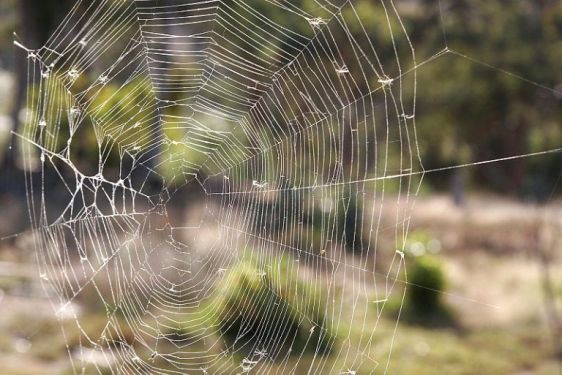
It isn’t possible to live apart from each other. Not truly. The web of life knits us one to another, even if we are unaware of its strands.

Photo by Fir0002/Flagstaffotos, via Wikimedia Commons.

Photo by Fir0002/Flagstaffotos, via Wikimedia Commons.

The ancient sages say that if you pull one thread in the web, the others vibrate.

Quantum physics … the mycelium … the Internet even—all are outer manifestations of this esoteric truth.

For a while now I’ve taken a few moments every morning to ground myself, feeling and seeing my “roots” going deep into the earth. Lately I find myself connecting not just vertically but horizontally, under the earth’s surface, with the mycelium.

There’s a whole world alive under our feet that we don’t usually see. So it is with our energetic world.