Peaceful Grounds

Monday morning a group of gardeners from the neighborhood had a private tour of Peaceful Grounds, Linda Proffitt’s endeavor at Marion County Fairgrounds, where the county fair is going on. (See my earlier post about her work here.) The vision and scope of this Global Peace Initiatives project astounded and inspired us.

The cattle barn at the Marion County fairgrounds is home to this volunteer-driven initiative.

The cattle barn at the Marion County fairgrounds is home to this volunteer-driven initiative.

George Marshall, Linda’s intern, showed us around the farm, where mounds of wood chips are not just regular old wood chips but worm habitat.
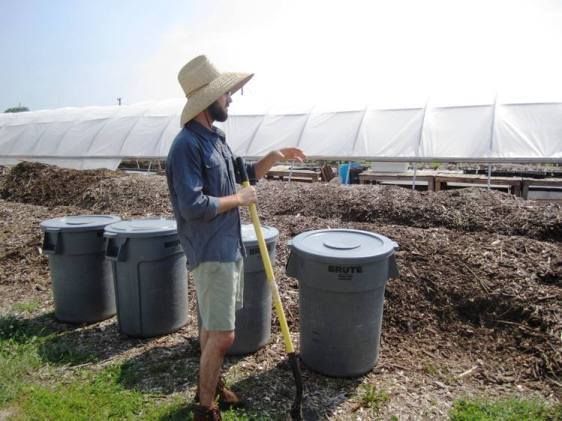
George

George next to a hoop house that stayed warm all winter from heat given off by decomposition.

Peaceful Grounds takes beer mash from local brewers like Irvington’s own Black Acre and buries it in mulch to feed the herd of worms.
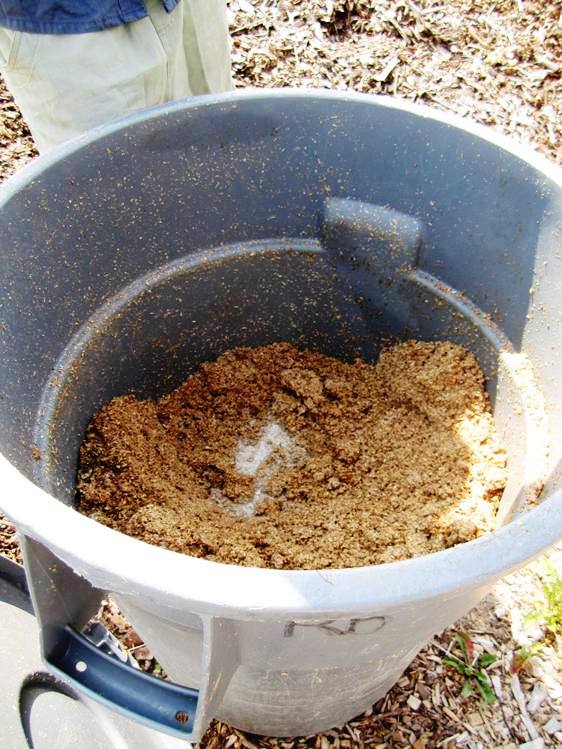
The spent grain is perfect worm food because barley fits easily into worms' tiny mouths.

The spent grain is perfect worm food because barley fits easily into worms’ tiny mouths.

Hand-painted signs that say “Worms at Work” and “Thank a Worm” testify to the importance of these little red wigglers.

IMG_3617

Digging up some of the underground workers to show us.

Volunteers mix 5 to 15 tons of mash with equal amounts of wood chips each week. Another mound incorporates dehydrated food waste from public hospital Eskenazi Health. Over time, these piles and rows are transformed into a viable medium for garden plants.

George showed us where vegetable and herb starts have been set right into these habitats.

broccoli

Broccoli planted in one of many windrows made by worms doing their work on wood chips and beer mash.

In a nifty closing of the loop, Linda has begun to raise hops to supply local brewers.

A few of Peaceful Grounds volunteer-planted crops.

A few more Peaceful Grounds volunteer-planted crops.

While we were walking down the raised beds (“windrows”) of basil and tomatoes, a fair official came up and asked for Linda. He wanted to introduce her to the people in charge of an elephant exhibit, so she could incorporate elephant dung in the farm operation. (“You never met a lady more excited about poop than Linda,” George joked.)

Inside the cattle barn is where kids and adults can come for hands-on fun with art and agriculture. It’s also where artists like Jamie Locke (another Irvington neighbor) demonstrate mandala making and other crafts—and where young volunteers from Handi-Capable Hands take charge of a gigantic tumbler that sifts the worm compost into two grades of product.

Heidi Unger took this photo of the tumbler, which is named Apollo and was donated by a local farmer who saw Linda on TV.

Heidi Unger took this photo of the tumbler, which is named Apollo and was donated by a local farmer who saw Linda on TV.

We went home with the finer grade, which is basically worm poo, to use as a powerful organic fertilizer. One tablespoon per plant will nourish it through a month, Linda says.

Worm castings make an excellent fertilizer. Now there's a local source!

Worm castings make an excellent fertilizer. Now we have a local source!

Before we left, we learned that Will Allen is going to visit the operation, which is a training outpost for his fabulous Growing Power organization. He will speak at 2pm Saturday and lead a workshop at 4pm, and will also preside over a ribbon cutting ceremony at noon on Sunday, when the Peaceful Grounds Farm and Arts Market kicks off.
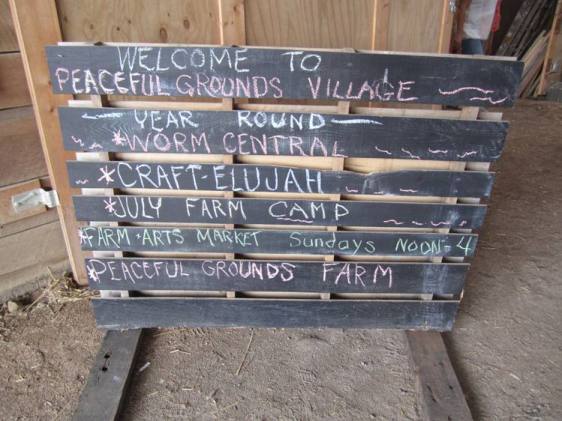
IMG_3598I’d love to see more interaction between local urban gardeners and this facility, which is just a stone’s throw from Irvington’s back door. Right now the county fair is in full swing, but the possibilities extend beyond its closing date. Linda is running a Farm Camp for kids starting July 7, and is happy to host volunteers at any time.

By the way, she offered to set me up with an interview with Will Allen. I’m thrilled to meet this man I admire so much. I’m crowdsourcing interview questions. What would you ask the grandfather of urban gardening, if you could?
On the Solstice, Contemplating Home

On the longest day of the year, one week after leaving Playa, I’ve been thinking about all that “home” means to me. I loved Oregon’s pristine natural beauty. But I couldn’t wait to come home and walk the tree-lined streets of my neighborhood. Taking my dog Marley for a walk was high on my list on my first morning back.

It’s not perfect here. There’s litter, unlike in Lake County, OR, and sadly many of the neighborhood ash trees are not treated for emerald ash borer, so they are dying—a distressing sight. Poison ivy is rampant in untended corners. Plus it’s really damned humid. But I still walk along with my heart singing “home,” loving the big sycamores and tulip poplars, enjoying all those daylilies and clematis vines, sampling a mulberry here and there.

And getting the latest scoop. Down the street, my big softie neighbor still has the pit bull who wandered into his yard—the one he swore he wouldn’t keep. Farther on, the retiree who always complimented me on my dog (Lord, how that poodle can prance) tells me he and his wife are moving to a condo after 47 years here, but a young family up the street will be moving in. I learn about another neighbor’s dog’s bout with pneumonia. And so on.

Walking is one of the ways I savor my neighborhood, but it’s not the only way. About the second thing I did that day was ride my bike with Judy to the kickoff of the Irvington Folk Festival, a weeklong extravaganza that opened with an outdoor bluegrass concert. I’m no bluegrass aficionado, though I love a good Rocky Top as much as the next person. What I went for, and got, was the people.

In the crowd were Rosemary, and also Laura, two women who helped me found the Irvington Green Initiative years ago. Also our neighbor Pat, who told us of a possible grant for a native plant/foraging project we’ve been scheming.

We sat with Heidi and Mike, longtime gardening buddies who happened to bike up at the same time as we did, midconcert. Behind us were Jerome and his family. That was fortuitous, because I could update him on our sweetgum tree. (Arborist Jerome has a business called Tree-Centric, which I’ve blogged about before. A few weeks ago he assessed our ailing sweetgum, taking soil samples and cutting away girdling roots. The cost of his professional expertise? A loaf of homebaked bread.)

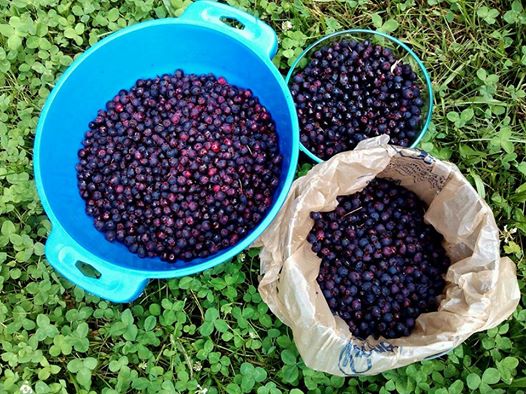
Jerome offered both his strawberry patch and serviceberry grove for picking. Though the strawberries were done, here's the lovely haul of serviceberries my friends and I made that morning.

Jerome offered both his strawberry patch and serviceberry grove for picking. Though the strawberries were done, here’s the lovely haul of serviceberries my friends and I made that morning.

Somehow, over the years, my roots have grown deep in this place. I grieve with friends who lost their 13-year-old German Shepherd, one of a gang of Marley met in the park as a pup. I pick mulberries and serviceberries (some from Jerome’s yard) while chatting with good friends. My yoga buddies welcome me back vociferously. I barter for Thai massage from a neighbor.

All that, plus (last night) hearing local musicians rock out, after eating at the new deli that sources everything it can locally.

How did I get so lucky? I don’t know, but I’ll contemplate the answer while biking to the park for the folk festival’s finale (and, bonus: alternative gift fair).

Inner Transition As Key to Collective Work

First in a series of three

In my last post I suggested that an internal shift is as critical as the external changes we so desperately need. I’d like to explore that idea further in this series.

While in California last fall I had a conversation with Julia Bystrova, who was developing a series of “inner transition” tools with Transition US.

The Transition movement is a worldwide push to bring communities into a relocalized post-oil economy. The idea is to reduce consumption and embrace local energy, while building food security and resilience.

Transition Linithgow. Photo by John Lord, via Flickr Commons.

Transition Linithgow. Photo by John Lord, via Flickr Commons.

Julia told me that this movement suffers from a particular conflict: Some people want to jump right in and work on projects, while others prioritize the internal transformation process. The first camp gets impatient with the second, which has often been marginalized. Working groups often struggle to collaborate effectively, caught up in conflicts and divisions.

The solution is to give “inner tools” their due, Julia says. Both external output and internal process are valid. And as Julia says, the external is a mirror of the internal. “There needs to be group process that accepts both in a way that is complementary, because we need both.”

Mapping the Transition. Photo by Chris Hill

Mapping the Transition. Photo by Chris Hill, via Flickr Commons.

I tend to agree, having been involved in some groups that struggle to find cohesiveness. Group dynamics are tricky. To my mind, conflict is likely to persist until we each are willing to be present to our own emotional states.

If we walk through life largely unconscious of what triggers our pain, we’ll always be in a reactive mode. People push our buttons, we react, and conflicts escalate, all because we can’t take look honestly at the storms raging within us.

And it’s crucial that we find a way to work together.

Julia Bystrova and author Mary Pipher both say that we are all doing important work now. Even if we think we’re removed from the front lines, we’re not. Because the central task of our time is just that: working toward a healthier ecosystem and a just economy.

Julia believes that societal transformation can happen fast. She envisions a cascade effect that will be breathtaking in its global reach.

She told me that a certain threshold of consciousness is already on its way. With each of us lighting the spark of countless others, Julia believes we will see the world transformed.

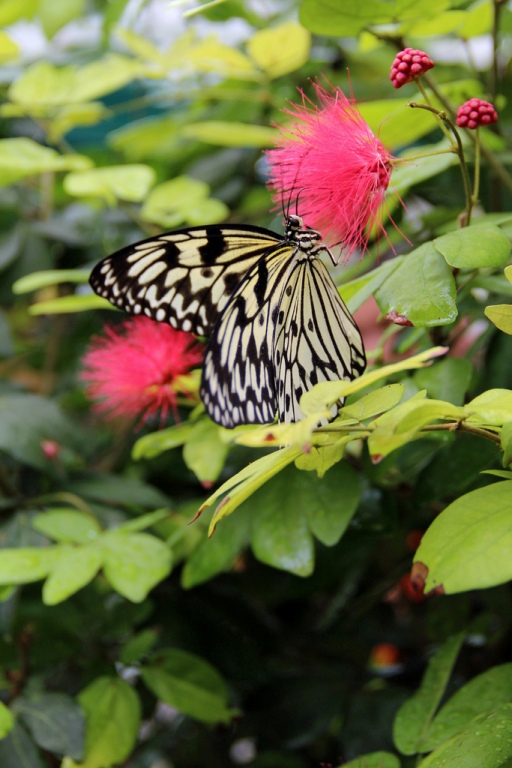
Swallowtail. Photo by Heidi Unger.

Swallowtail. Photo by Heidi Unger.

Mary Pipher also expects widespread transformation. As people open to their deepest feelings about the state of the world, she says a shift in consciousness is inevitable. All those awakening hearts will simply mandate deep change.

So much of the news we hear is bad. In some parts of the world, it’s possible for a woman to be stoned to death, or for schoolgirls to be abducted en masse, while here at home mass shootings no longer arouse outrage. Meanwhile an island nation is projected to be entirely underwater by 2020 as Antarctic shrinks. Monarch butterflies are reaching Mexico in drastically reduced numbers—part of “the sixth extinction.

Stories like these can swamp me in despair. But these women’s vision of transformation holds the antidote to hopelessness.

Next: Confronting the shadow.

Building Soil, Growing Food, Nurturing Relationships

I just listened to a podcast interview with Linda Proffitt, founder and executive director of Global Peace Initiatives here in Indianapolis. I’ve known Linda since the days I was responsible for Nuvo Newsweekly’s monthly social justice calendar. Back then I called her regularly to find out about GPI’s peace hikes and other activities, and I was always impressed with her programming.

Since that time GPI’s work has exploded onto the local resilience scene. They started by helping church groups grow food for the hungry, bringing countless volunteers together to experience the transformational power of service initiatives.

peasIn 2011, the organization began a new partnership with one of the most influential forces in the urban farming movement. Will Allen and his team at Growing Power designated GPI as a regional training center for Central Indiana. Spring of 2012 saw a well-attended “From the Ground Up” workshop at Peaceful Grounds, GPI’s newly formed center for agriculture and sustainability.

If you have a chance to listen to the podcast, you might be struck (like me) by the idea that produce is just one output of Peaceful Grounds. There’s also soil, which is foundational. And then there’s relationships.

People coming together to cooperatively grow food can form some powerful ties. And that’s what it’s all about at Peaceful Grounds.

Sharing worms with youthful visitors

Sharing worms with youthful visitors

Now at the Marion County Fairgrounds, Peaceful Grounds is about to start a weekly farm and arts market, Sundays from noon to 4 starting June 1.

GPI’s work is featured in a chapter of the new book Deep-Rooted Wisdom by Augustus Jenkins Farmer. The chapter is called “Stop Tilling the Soil”—and worm composting is a big part of the system at Peaceful Grounds. (I was thrilled learn that the worms eat brew mash from my local microbrewery, Black Acre, located right here in Irvington.)

Linda will be the guest speaker at next Tuesday’s Green Hour, a project of the Irvington Green Initiative. If you’re in town, come out and join us to hear all about this vital work.

Photos courtesy of Global Peace Initiatives.

Celebrating International Permaculture Day

Today is International Permaculture Day. Guest blogger Thomas Tlusty wrote the following piece exploring his connection to Permaculture, and its power.

Guest Post by Thomas Tlusty, founding partner of The Garden Tower Project

Two years ago, I saw sketches of a device that I felt certain had the potential to revolutionize urban agriculture. I had long been interested in the economics and environmental impact of our food system. So the design piqued my curiosity and unleashed my desire to have a positive impact in my own lifetime.

The Garden Tower is a water-saving, worm-friendly, uber-productive vertical gardening aid.

The Garden Tower is a water-saving, worm-friendly, uber-productive vertical gardening aid.

Since that fateful reveal, my life has been transformed. The Garden Tower Project reignited my passion, and I began rethinking current food production/distribution models. My eyes were opened to the plethora of pioneers, visionaries and everyday folks who are practicing, teaching, and studying Permaculture and sustainable farming/lifestyles.

I am inspired by those who inspire others. I’m thinking of luminaries like Bill Mollison, David Holmgren, and Will Allen. I’m also thinking of many less well-known but still pivotal figures, such as:

  • Community Slow Food Educators
  • Permaculture Design Educators
  • Elementary School Science Educators
  • Organic Gardening Instructors

I am a relative newcomer to this work. Yet I feel a kinship with those who aspire to build community and develop our inherent natural resources in a straightforward manner.

I’m troubled by the unbinding of our culture from its roots. Western civilization is “circling the drain” as we surpass our fragile planet’s carrying capacity (in our current mode of operation).

Permaculture (to me) represents an entirely sane alternative to the path on which we find ourselves today. Permaculture principles contain not only the seeds of hope but a catalyst for change. In practice, these concepts could improve the lives of untold millions and positively influence the course of our future on this planet.

I find hope in people working together in communities, sharing education and experience. And teaching our children well is our first and best hope.

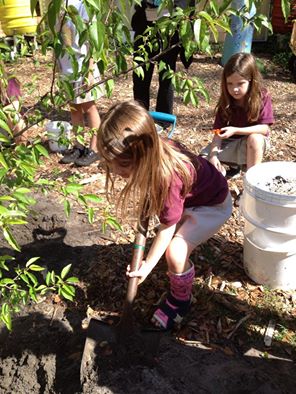
A child at  Learning Gate Community School prepares soil despite the cast on her leg. Thomas captions this photo “Our Hope For Mending a Broken Future.”

Our Hope For Mending a Broken Future: A child at Learning Gate Community School in Lutz, Florida, prepares soil despite the cast on her leg. Instructor: Cissy Brady Stanko

Permaculture engenders ideas and conversations around topics like environmental science, vermiculture, organic gardening, eco-art, and eco-psychology. And connections grounded in Permaculture positively transcend any political, socio-economic, racial, or gender barriers that have been erected in the past or could possibly be constructed in the future.

In my endeavors, I have developed friendships through online Permaculture forums and related Facebook pages. The connections range from the casual and conversational to the inspirational and uplifting. Together they raise me from the deep morass that had grown like a thick moss over my heart’s desire.

I’m now acting on a long-felt wish to accomplish something meaningful and utterly critical: addressing our outdated and increasingly toxic food production/distribution system. Without action and intent, habits will remain the same. Permaculture shows us the way to a very different future.

Thomas Tlusty was raised in Lombard, IL. Thomas was active in social justice and interested in food issues from a young age. In his late teens to early twenties, he worked at the Chicago Board of Trade (in Agricultural Commodities) for a leading grain exporter. The Ellettsville, IN resident has been a practicing Certified Natural Health Professional and is currently an Active Isolated Stretching Therapist in private practice. Thomas is a founding partner in the Garden Tower Project.

New “Project” in Irvington

We went to check it out a new art gallery in our neighborhood last night.

5547 Project

5547 Project

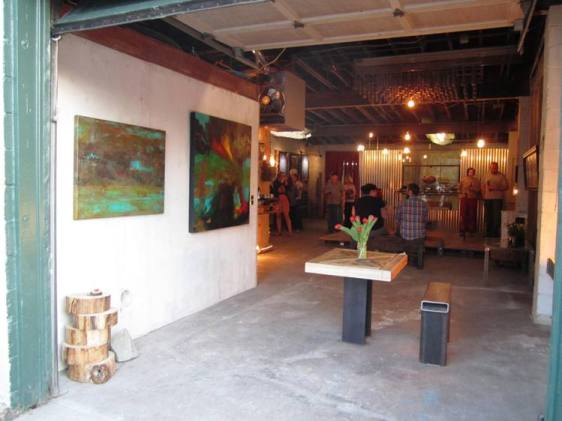
We found that 5547 Project is not just a gallery–it’s a study in the art of reclaiming. The space itself is a repurposed industrial shop. Within are local artists’ works, plus furnishings made from natural and upcycled items.

Table made from railroad ties, with groovy antiques

Table made from railroad ties, with groovy antiques

We met the man behind the project, David Jackson, a retired Marine who wants to make the neighborhood rock even more than it already does.

David Jackson, founder of 5547 Project, with coral fountain and cool wall art

David Jackson, founder of 5547 Project, with coral fountain and cool wall art

David brings a rotating cast of artists in each month, and every Friday serves local craft beer, wine, and refreshments. Last night’s opening featured Heidi Unger, a gardening buddy and stellar photographer. She’s the one responsible for the beautiful banner photo on this site, and several others you’ve seen around here, like this one:

Photo by Heidi Unger

Photo by Heidi Unger

My oil painter friend Rita Spalding also has her work up.

Some of Rita Spalding's work displayed on reclaimed wood wall

Some of Rita Spalding’s work displayed on reclaimed wood wall

Some of the artists also market handmade goods at the gallery. Cheryl Lorance (check her artwork out!) just moved to the neighborhood from New Mexico. Her line of skincare products is called Mount Sapos.

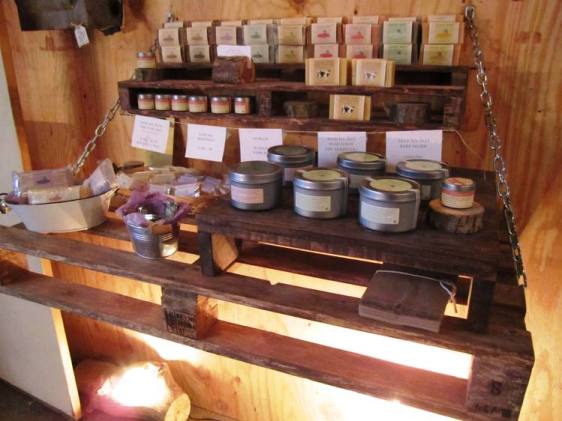
Sculptor Cheryl Lorance makes bathsalts, body butters, and soaps (local Traders Point Creamery milk is a key ingredient!) Displayed here on upcycled pallets.

Sculptor Cheryl Lorance makes bathsalts, body butters, and soaps (local Traders Point Creamery milk is a key ingredient!) Displayed here on upcycled pallets.

David mentioned the possibility of opening weekdays with simple coffeeshop fare. I so hope he decides to do that. I can imagine this becoming a real neighborhood gathering place.

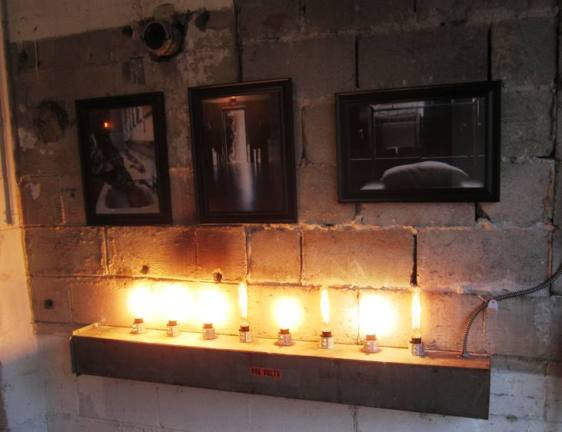
cool light fixtue

If you’re in the neighborhood, stop and check out 5547 Project!


Like to Eat? Thank a Bee.

Kate Franzman, beekeeper and urban farmer

Kate Franzman, beekeeper and urban farmer

Kate Franzman is one of many fabulous people who keep the “indie” in Indianapolis. Concerned about the die-off of honeybees, she started Bee Public with a goal of increasing the number of honeybees in our city. The organization has placed hives at several urban farms, including one right in my neighborhood.

She’s a writer too, and her first-person story is featured in the current issue of Indianapolis Monthly. I generally don’t shrink from bees myself, but her description of capturing a swarm as a novice beekeeper is truly impressive.

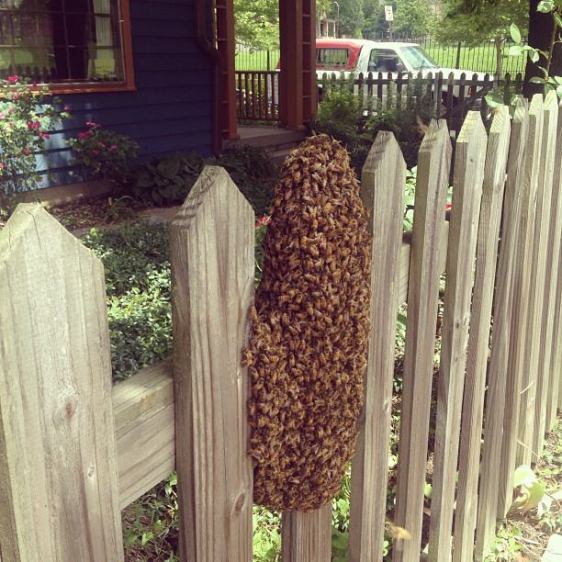
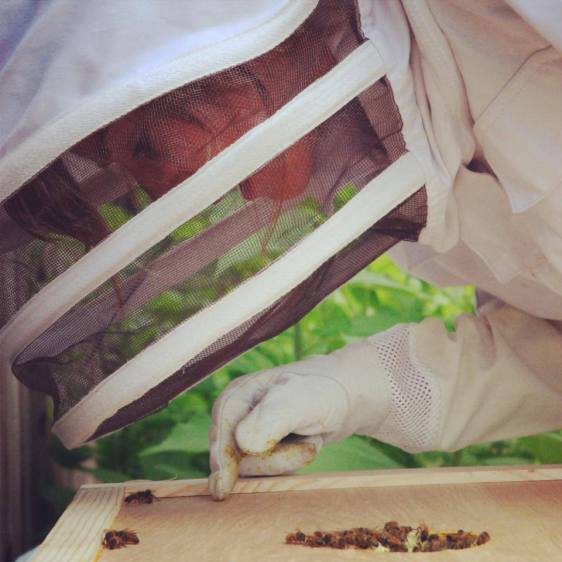
Swarm on a fence post in summer 2013. Kate scooped them by (gloved) hand into a box before transporting them to their new home at South Circle Farm.

Swarm on a fence post in summer 2013. Kate scooped them by (gloved) hand into a box before transporting them to their new home at South Circle Farm.

Her passion for these pollinators leads her to give talks and workshops emphasizing their importance. “Since 2006, we’ve lost more than one-third of our honeybee colonies nationwide, due in major part to Colony Collapse Disorder, an alarming phenomenon that occurs when the bees mysteriously desert their hive and die,” she writes.

“One out of every three bites of food we eat was made possible by a bee. So no bees, no food.”

Kate and a few of the creatures on whom our lives depend

Kate and a few of the creatures on whom our lives depend

The unusually harsh winter killed all the bees in Bee Public’s hives, so Kate initiated a crowdfunding campaign to raise money to replace the honeybees. The response has been one of “unprecedented generosity,” prompting her to pledge to purchase replacement bees for other urban farmers and expand the network of hives.

On May 10 at Pogue’s Run Grocer, Kate will present Bees 101, an overview of how to create a bee-friendly backyard. And if you want to take it further, Bee Public offers consulting and hive setup for local restaurants, community gardens, and urban farms. There’s even a sponsorship option for people not in a position to have a hive. Check out Bee Public’s site and Facebook page!

All photos courtesy of Bee Public.

The Face of Resilience

Guest post by Anna Welch

Anna Welch is a farmer in Rush County, Indiana. With her husband and business partner, she owns Fields of Agape, growing organic grain, beans, and seed. Now she’s working to establish a cooperative mill in Carthage that would allow many more organic and transitional farmers to bring their products to niche markets. After we had a conversation about some of the barriers she’s faced, she sent me this reflection.

I think of the many times I wanted to quit, that it felt impossible to go forward with the limited resources and lack of support around me. I’ve been through periods of deep depression, anger, hopelessness, and resentment. I’ve been humbled many times over since committing my life to stewardship of the land and its fruit.

Anna Welch with friends at the entrance of the Carthage Mill. The historic Tweedy Lumber Mill is now the site of a sustainable ag business incubator.

Anna Welch with friends at the entrance of the Carthage Mill. The historic Tweedy Lumber Mill is now the site of a sustainable ag business incubator.

I had two choices: quit and return to the workforce, or retreat to a place of rest, and pray, reflect, journal, and wait to see who or what changed around me. Someone spoke words of encouragement, or a visitor stopped by the Carthage Mill and said how this place is necessary and will come to pass.

One of my greatest encouragers here at Carthage was my friend Allen, who came daily with his dog Rusty. The first day he stopped by, I was cleaning golden flax seed. He heard the machine and the gate was open, so he stopped. I’m so glad he did.

Allen had Lou Gehrig’s disease, but every day he drove his wheelchair on a route around Carthage, observing bean and corn fields, enjoying wildlife, and stopping by the mill, his favorite place. He worked the Alaskan pipeline in his younger years and lived in a teepee in Montana. He loved the mill, and he encouraged me to keep doing what I was doing.

I realized that if Allen could be in the state he was in and encourage me, then I needed to think outside of myself and look at what I could do to make a difference. Allen died this past October, and I officially formed The Carthage Mill, LLC with help from Hoosier Organic Marketing Education. I know he is pleased.

Regardless of the negative circumstances that we may be facing, there is always hope, always a divine purpose awaiting each of us—if we can turn our focus away from self and focus on those around us, on what needs exist, then determine what gifts and resources we have to overcome the challenge, or to serve someone. Nothing can stop us from fulfilling our purpose if we are on the right path.

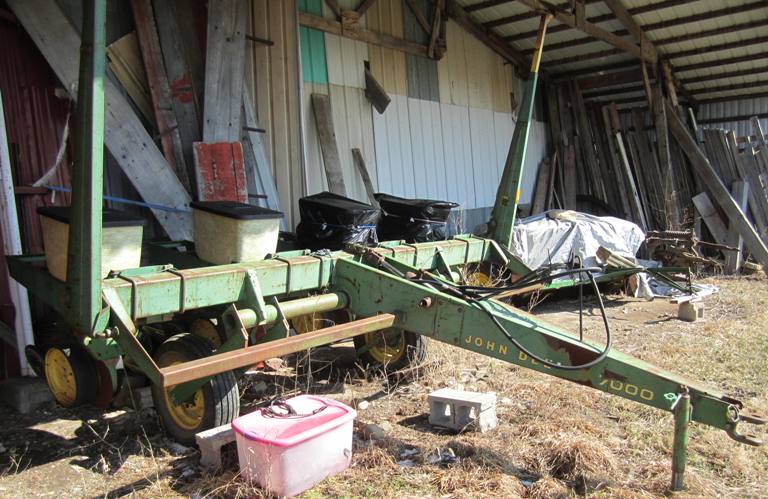
Equipment used to plant Fields of Agape grain and beans.

Equipment used to plant Fields of Agape grain and beans.

I have found that the success in life is how we learn to handle adversity and challenges. If we can grasp how to press on through adversity with humility and unconditional love for others (regardless of how they treat us), we will find our way.

When we find like-minded people whose passion is a good fit with our own, whose hearts are for others, then within that group each person can reach their potential quicker.

Encouragement, sharing of resources, being driven by the passion to serve rather than by personal gain—all of this brings about magnificent changes in communities large and small.

I’m never going to stop believing that it can happen.

A Lifesized Lego Set for Farmers and Makers

I was invited to visit the Indiana Small Farm Conference this past weekend, and was I ever glad I went. I got to reconnect with some farmer friends and make new connections. I learned about the challenges facing the people who grow our food on a small scale. And of course lunch was delicious, as well it should be with food supplied from local farms and prepared by the stellar whole-foods caterer known as The Juniper Spoon.

But the highlight was a session with a representative from Open Source Ecology. This is a group I’ve had my eye on for a while because of the radical way they are working to take back the building blocks of modern life. The goal is nothing less than a modular, low-cost, DIY “Global Village Construction Set” of 50 machines that would meet the major needs of civilization.

The best part? The plans are all open source, allowing anyone, anywhere, to try them out and make improvements.

The 50 machines, from tractor to 3D printer to wind turbine.

The 50 machines, from tractor to 3D printer to wind turbine.

OSE Construction Manager Chris Reinhart, it turns out, lives just an hour away from me. He calls himself a tinkerer and maker, and holds an architecture degree from Ball State. He is developing plans for a micro-house that could be built by a small group of people in a handful of days, using equipment from the GVCS.

He posts his plans on Facebook and logs his work online for all to see. As a writer I shudder at the prospect of having so many eyes on a work-in-progress, but transparency is the name of the game here. Reinhart says the idea is to “tap the hive mind” and constantly iterate improvements.

Another goal is to standardize workflows. Reinhart explained that a group of 16-20 people could break into smaller teams, each take a module (there’s one for plumbing, one for windows, etc.), and work separately until time to put the construction together. He likened the system to a life-sized Lego set that can be snapped together.

The above TED talk by OSE’s founder, Marcin Jakubowski, talks about how lowering the barriers to farming, building, and manufacturing can unleash human potential. An entrepreneur who wants to start a construction company can jump right in. A household can add a DIY wind turbine and sell energy back to the grid. Farmers can be less dependent on manufacturers.

Think of it: That irritating built-in limitation of purchased gadgets, planned obsolescence, would become a thing of the past as people discover how to build and fix their own machines.

“This is a different model, economically and socially,” Reinhart says. In contrast to a top-down command and control ethos, this bottom-up model empowers many people on the ground, all making and innovating and selling to each other. I love the collaborative “do-it-with-others” spirit of these guys. Go DIWO!

OSE is planning an intensive workshop series to teach people to build six of the 16 machines that have been prototyped so far. For more information, check out this Crash Course on OSE.

Correction: The original blog post indicated that six machines have been prototyped; in actual fact 16 are in prototype phase, and the workshops are being offered on the six most mature designs.

Nonviolent Communication

Sometimes you hear about a thing over and over, until it seems mandatory to follow up. So it was with Nonviolent Communication (NVC), a process created by Marshall Rosenberg in the 1960s. First I learned that a yoga center offered NVC training sessions. Then I heard of a book group studying Rosenberg’s Nonviolent Communication: A Language of Life. Then a nonprofit’s director told me everyone in her organization is committed to NVC principles.

And this weekend, Trade School Indy offered an NVC class. All I needed to trade was a bundle of dried sage, which we have aplenty. That plus two hours on a Sunday afternoon seemed a reasonable investment. Off I went to finally check it out.

I learned that NVC is more than a nonthreatening communication style. It’s also a way of taking responsibility for yourself. As I practiced the formula (Observe, Feel, Need, Request) while role-playing a conflict, I sensed I was standing on solid ground. I hate confrontation, but NVC makes me view conflict as an opportunity to deepen relationships.

Communication Art Prize, by Fellowship of the Rich, via Flickr Commons

Communication Art, by Fellowship of the Rich, via Flickr Commons

Rather than asserting control over others through demands, manipulation, or bargaining, NVC is all about building connection over time. The idea is that we all have universal basic needs. Our feelings indicate whether these needs are met or unmet.

NVC “has been used between warring tribes and in war-torn countries; in schools, prisons, and corporations, in healthcare, social change, and government institutions; and in intimate personal relationships.” (Is there hope for the Central African Republic, where Muslims are fleeing “ethno-religious cleansing?”)

Mosque and church, by Jonathan Gill, via Flickr Commons

Mosque and church, by Jonathan Gill, via Flickr Commons

I may not be able to do anything about religious wars and other horrors, but I can create more peace in my daily interactions. Here is a (totally hypothetical) confrontation following NVC’s formula:

Observe: I notice there’s a used QTip on the back of the sofa. (Note the passive voice, a writer’s anathema! But useful in this instance, to neutralize the tone.)

Feel: I feel annoyed and disgusted. (Claiming my own feelings instead of the judgmental,“This is a gross habit. You are so inconsiderate!”)

Need: I need a clean environment, and I need consideration. (I’m struggling with how to state this. So much more satisfying to say, “I need you to not leave your medical waste out for me to find!” Any NVC ninjas in the house? Please coach me.)

Request: Would you be willing to throw your QTip away when you’re done?

In NVC’s highest expression, we request connection instead of a behavior change. “Could you tell me how you feel about this?” or “Would you be willing to spend a few minutes talking this through?” But I’ve cut to the chase above, while still (hopefully) avoiding triggering defensiveness in the hypothetical second party.

One of the women in the class called the method “disarming,” at least in role play. I’m curious to try it in real life. It seems to take a lot of hard thinking, even in the simplest of conflicts.

What about you: What tools have you found beneficial in creating peace and building connection?