Walking As One

Walking is a time-honored way to meditate, ruminate, and otherwise seek clarity. Walking a labyrinth gives each footstep even more meaning. And walking in community brings added sweetness to the experience.

On World Labyrinth Day, May 7, people all over the world gathered to “walk as one at 1” in the afternoon. The idea behind this annual event, according to the Labyrinth Society, is to “create a wave of peaceful energy washing across the time zones.”

The Rivoli Park Labyrinth hosted a potluck and group walk, representing the local community on a day when some 200 public events took place across the globe. An intermittent drizzle didn’t keep us from sharing soup and salad while we made new connections and renewed old acquaintanceships. At 1 it was time to drift into the circle of the labyrinth as we each felt ready.

20160507_131234 (1024x576)

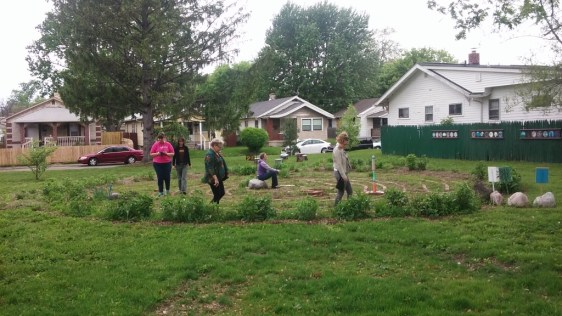
Walking the labyrinth as one

I had never participated in a communal labyrinth walk before, and I found it quite lovely to share the labyrinth with others. Each in our own space and yet connected, some chatting, some silent. Sometimes meeting on the path and clasping a hand as we passed each other with a smile. At one point I found myself walking next to an acquaintance who gave off motherly vibes, and I impulsively decided to take her hand until our paths diverged.

When I enter the sacred space of a labyrinth, I like to set an intention or ask a question. My intention for this particular labyrinth walk: To take nourishment from all quarters. I was feeling depleted after a busy week and several short nights. The meal we shared was one source of sustenance, and I wanted to see if I could also be nourished by the air, the rain, the soil, the plants, and the beings around me, both human and nonhuman—and the movement of walking itself.
20160507_132217 (1024x576)

The boulder in the center is a perfect resting spot.

Afterwards, I did feel restored.

What makes this labyrinth unique is the fact that it is a pocket park situated on a vacant lot in the heart of the city, a public space developed and managed by volunteers. Lisa Boyles, Rivoli Park’s founder, strives to bring people together through art, so the park has numerous community-made art pieces displayed. (Note the paintings on the fence in the photo above.)
20160507_125954 (1024x576)

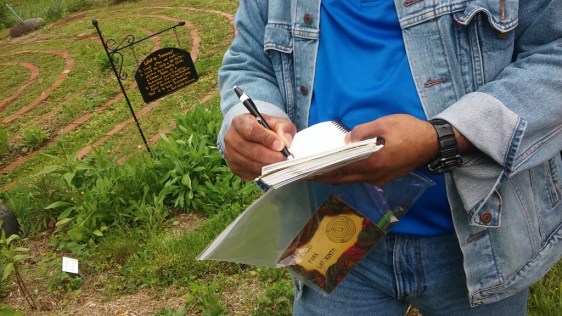
Walkers can record their thoughts in a log book at the start/end point of the labyrinth. Lisa sees the logbook as a way to encourage reflection and sharing, and to build community among solitary walkers as well.

In fact, creative expression is built into the design of the labyrinth itself.
20160507_123049 (1024x576)

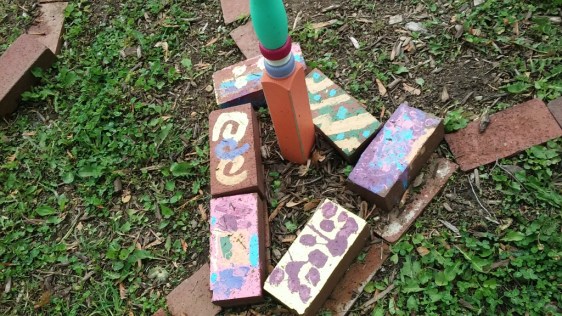
The “pole of possibility”

According to Lisa, the pole at the entrance to the labyrinth marks one of three “focus points” in the labyrinth. Volunteers from 2015’s Indy Do Day (citywide service day) decorated the bricks. “The poles at the three focus points,” she says, “were handmade expressly for the purpose they are serving now as delineators of the focus points. This tall one at the entrance of the labyrinth I like to call the ‘pole of possibility.’”

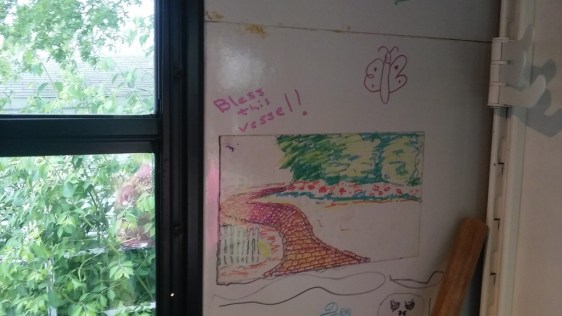
In keeping with the art theme, Lisa invited the “Seeds of Common Sound” music bus to take part. On board the bus, we could add to communal art pieces, play instruments, and get inspired.
20160507_140652 (1024x576)

Communal art on board the music bus

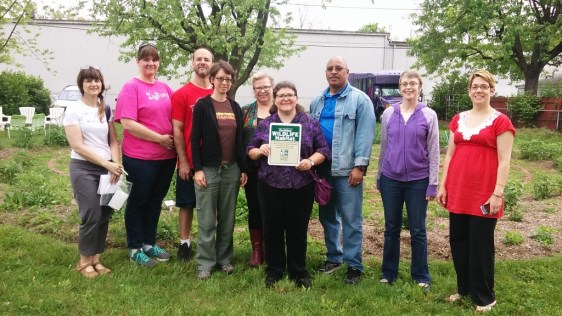
Care for creatures is another role of this labyrinth, as it was just designated a certified wildlife habitat. Here is our little group with the plaque.
20160507_125639 (1024x576)

I plan to visit Rivoli Park often over the growing season to watch the plant, animal, and insect life flourish there. And to seek nourishment for my soul in this place of quiet reflection.

Hiatus!

Time to make official what’s been in the works for a few weeks months now. I’m putting the blog on hiatus for at least the first quarter of 2016. It’s time to retool everything on my to-do list to align better with my current focus (or foci?).

In a nutshell: My work is moving more into the healing arts arena, while I continue to write nonfiction. In both of these areas, I’m part of an ever-growing “Team,” as author Martha Beck calls it—working to bring about a new Story of Connection.

Photo by Michael Lokner, via Flickr Creative Commons

Photo by Michael Lokner, via Flickr Creative Commons

I see energy work as a way to raise our collective vibration, which we need to do—at least if we’re going to birth a  new and resilient future. So I’m getting certified in ThetaHealing, one of the energy techniques I practice.

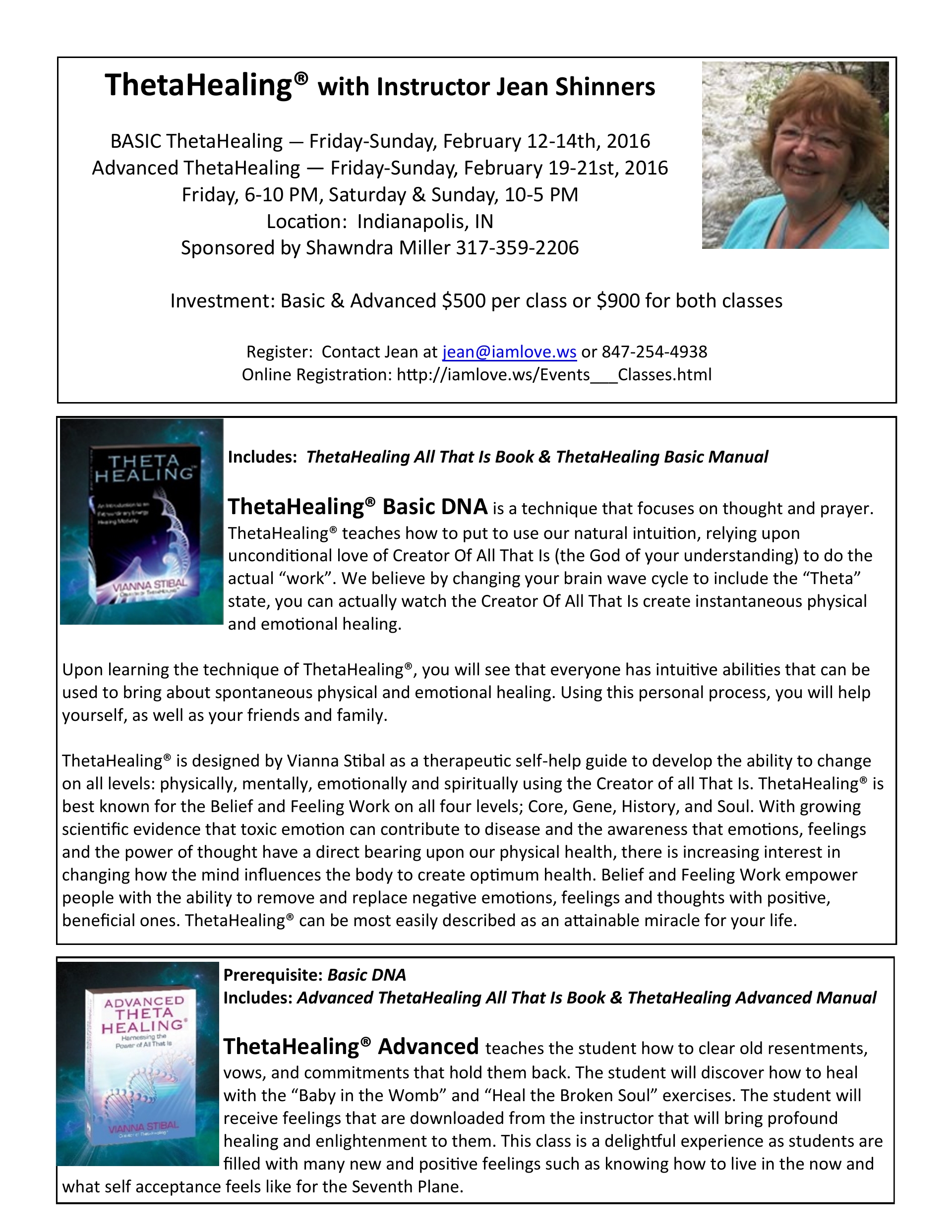
Here is a workshop series I’m bringing to Indy in February. If you’re interested in joining me, which would be lovely, you can sign up at instructor Jean Shinners’ website.ThetaHealing Flier

I have a series of smaller workshops planned for the coming months in Indianapolis. The first one, Empath 101, will cover how manage being “so dang empathic,” as one of my empath friends puts it.

If you’d like to have a heads-up on these opportunities, or to learn more about my work, please sign up for my (revamped) e-newsletter.

Guest Post on Kindness

Today’s guest post is by my friend Heather Horst, and fits right in with a campaign by Indy Holistic Hub to spread kindness in December. #GetYourKindnessOn is the hashtag we are using to shine a light on compassionate acts we encounter. (I’ve found it quite uplifting, during these fractious days, to tune my radar to kindness. If we watch for compassion, nourish it, and spread it, we can’t help but magnify light.)

Guest post by Heather Horst

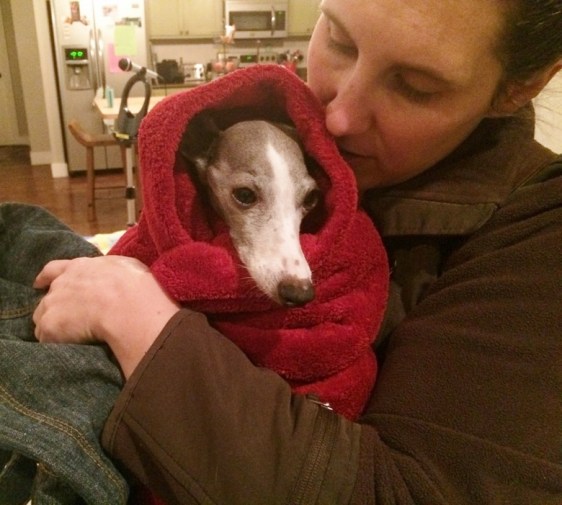
Lately I’ve been fostering a dog who is both gravely ill and incredibly sweet. Her name is Joy, and she’s pictured here.

Joy and Heather (780x701)

Joy and Heather

I’ve also been called out to do massage therapy during a friend’s labor and delivery. Between the two, there has been so much kindness. I’ve experienced so much support in caring for Joy. I’ve witnessed so much kindness and care for my brave friend as she worked hard to bring her baby into the world.

When I glance from my real life to national and world news, it’s culture shock. Because I’m not hearing about kindness. I’m hearing about brutality and a turning-away from the suffering of others, a turning-away from one’s own humanity.

I don’t accept that this is our true nature. It feels like a brokenness, a wound, an illness.

I trust that kindness is our true nature. That one day so many of us will be healed by (and healed to) kindness. So many of us will heal that when brutality or callousness appears among us, we will recognize it as an aberration.

We will surround it and heal it and not give it weapons or money or media attention.

…when brutality or callousness appears among us, we will recognize it as an aberration. We will surround it and heal it and not give it weapons or money or media attention.

I trust that kindness is our true nature. To those of you who have been carrying out these many kindnesses — THANK YOU! You heal my heart.

Heather is a nurse, a massage therapist, a spinstress of hula hoops and an amateur urban farmer. She lives, works, and plays in Goshen, Indiana.


To Pause and Give Thanks

Gratitude is not just a seasonal thing for me. I look to be aware of the blessings in my life all the time, the better to enjoy them. Lately I’ve been taking a few minutes before I eat a meal (when I remember to!) to celebrate all the contributors to my food.

I will look down at a humble bowl of oatmeal with raisins and almond butter and pause for a second. I will think (or say), Thank you! I love you I love you I love you! And then, if I feel like I have the wherewithal in this moment, I get focused and consider:

  • the farmers responsible for growing these oats, grapes, and almonds
  • the bees that pollinated them
  • the sun and rain
  • the worms and microscopic wee buggies that do so much unseen
  • the people involved in processing and transporting
  • the folks at my local food coop where I bought these foods.

Thank you, I love you!

What’s really fun is to look down at a meal and realize how many personal connections it embodies. I’ll think: Oh yum, I get to eat Amy’s spinach (from South Circle Farm) or Randy’s squash (from Stout’s Melody Acres). The celebration feels even more expansive when I know my farmer. And the food tastes better too.

Today’s lunchtime moment: thanking Earl (Blue River Natural Foods) and his pastured hens for the beautiful eggs, Laura (dear friend) for the tomatillos that went into my salsa verde, Matthew (Big City Farms) for the gorgeous carrots.

thanksgiving post 2015 (780x439).jpg

Local eggs cooked cooked “over hard” and topped with homemade salsa verde, with dilly carrots and spicy sauerkraut on the side.

Also Joshua and the folks at Fermenti Artisan for the spicy Latin American kraut known as curtido. And…myself for the small part I played in planting and harvesting dill from Seven Steeples Farm, where I sometimes help out Mike, the farm manager.

Thank you, I love you!

No matter where the food comes from though, this mindful, grateful state brings texture to a meal. A good thing, to pause and give thanks.

It Can Be Shifted

I heard a Robert Bly poem on The Writer’s Almanac a few months ago that seemed to speak to our times. Called “Keeping Quiet,” it speaks of childhood “whoppings in the woodshed” living into the present. Bly declares that “every war is some violence in childhood coming closer” and that “it doesn’t change.”

What happened to us that we can never speak about, the poem says, leads us to perpetrate the same cruelty on others.

Fair point, and even more interesting in light of research on epigenetics and genetic memory. From what I understand, traumas that our ancestors experienced can actually impact our own DNA. For example, those whose ancestors lived through famine may be genetically predisposed to store more fat.

In my own work on the energetic level, I have found that we can carry inherited and ancestral emotions, beliefs, and traumas.

But I don’t agree when Bly declares that this pattern won’t change because it has been going on for thousands of years. How to change it: by loving the entire past that accompanied us in our arrival on the earth.

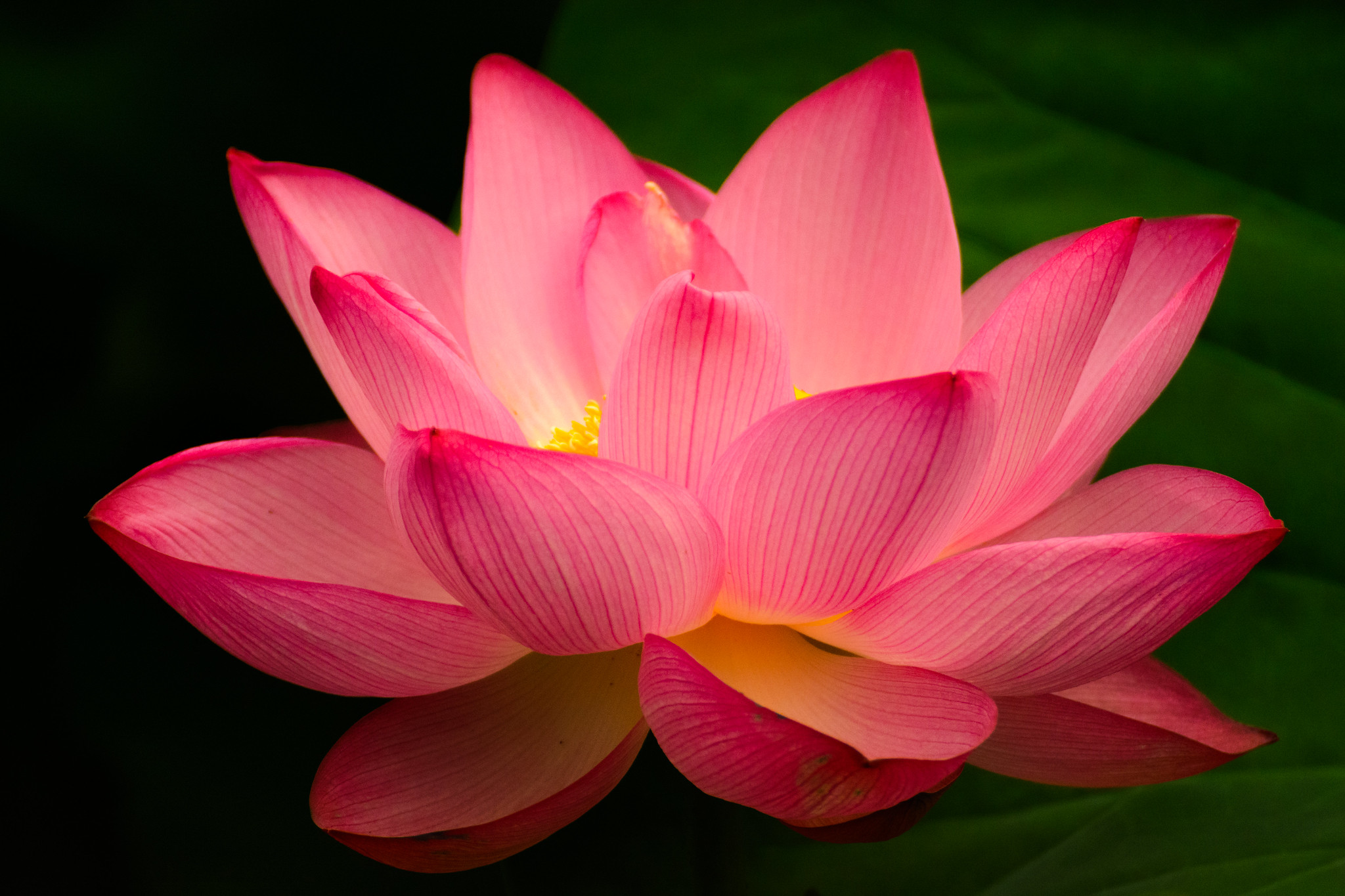
Lotus Flower

Photo by Yoshikazu Takada, via flickr Creative Commons

Those things we try to divorce and deny? They are exactly the things that return again and again, to snap at our heels, smack us down in the dirt, keep us unconsciously lashing out and “otherizing” those we see as different. Not a healthy pattern, but it can be shifted.

What if we strove to love those old hurts instead—and not just our own but all of our ancestors’ secret pain as well?

A tall order perhaps, but I believe that we are a tall people. Humanity at large. We have the ability to stretch and grow, to evolve.

I want to believe that we have a future here, that doesn’t give sole survivorship to the last person shouting (or shooting).

What’s Already Here

This week in yoga class we opened our arms wide and bowed in surrender.

6427108983_8c8777c9d0_z

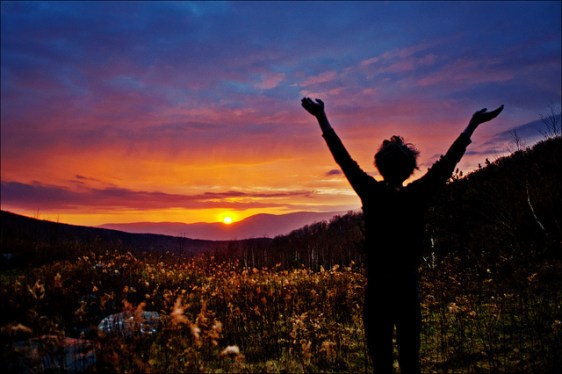
How I feel in yoga class at Irvington Wellness Center. Photo by Mitchell Joyce, via flickr Commons

Our teacher, Gaynell Collier-Magar, invited us to open in gratitude for the extraordinary privilege of experiencing what’s already here. We stood as trees with arms outstretched and my fingertips brushed the hand of Joyce at my left. Then later, lying back in a spinal twist, my fingers contacted Scott’s on my right. Each student deep in our space but connecting with the other.

The goodwill and warmth created in that space fed me, like it does every week.

And not just because they sang Happy Birthday to me before class. (“It’s not just a yoga class, it’s a community,” Gaynell said, and she’s right.)

She led us in half sun salutations, invoking joy as we raised our arms high, surrender as we opened our arms and bowed, equanimity as we rose halfway with hands on shins, surrender again as we folded to the floor, joy again as we rose to circle-sweep our arms high, and finally connection with the sacred as we rested our hands in prayer position at our hearts.

Yeah, it’s that kind of class. The kind where you know you’re just really lucky to be able to sit and breathe in awareness—even though the same breath walks in with you, and you could easily(?) contact it any old time.

In this studio I often tremble in release while holding postures, and even if I don’t understand it on a conscious level, I know that things are moving through me. Sometimes I cry. I cried this time while crimped into a half pigeon posture, leg folded under my torso, forehead on the floor, listening to Donna De Lory sing of being a sanctuary.

The tears came again in a forward bend while the song Mercy poured over us.

“One by one, could we turn it around,” etc. It slayed me. The longing, the heartfelt wish for healing of the world. For everyone to feel joy, surrender, equanimity, surrender, joy, connection.

What more is there than that?

A Wetland Ally

This is a season of transformation. Many of us are feeling it, experiencing rapid shedding of what we no longer need. It isn’t always a comfortable process, but sometimes we receive a little trans-kingdom support to ease the way. This week I had occasion to meet a new plant ally in a wetland across town.

The plant is called calamus, or sweet flag. I was with my merry mates in foraging, Greg Monzel‘s bicycle/forage group that I blogged about here. This time we parked our bikes to walk the paths of the EcoLab, a 55-acre native plant paradise tucked away on the city’s north side.
Nina Mason Pulliam EcoLab. Extra special to me because Dad volunteered here.

Nina Mason Pulliam EcoLab. Extra special to me because Dad volunteered here.

The plan, as usual, was to look for persimmons and other edible/medicinal forageables as the sun went down. But Greg also had a surprise for us–a meditation in the company of sweet flag.

He invited us to remove our shoes and make contact with the rhizome network of a colony of dormant sweet flag. To sit or lie among their spicy-sweet fragrance in silence and keep an open heart. What did we experience?

sweet flag

Sweet Flag photo by Maria Renner. Learn about her work at http://healingwombs.com/ .

Various images and impressions came to me, and because the experience was sacred, I don’t want to go into detail here–other than to say that I felt a gladness, and a reciprocity in the gladness. My body loosened and my thoughts slowed. At the end of our meditation I felt clarified.

Greg told us afterward that the plant was used traditionally to hold soil and filter water. Beloved by cultures all over the world and called by many names, sweet flag has been used to treat human ailments as well as environmental. It’s supportive to the nervous system, with antioxidant and antimicrobial properties (among other things). Greg gave us a beautiful image of how this rhizome grows with feet in the muck, rising up in beauty and fragrance.

Sweet flag would have been a solid friend to our ancestors in their wanderings–carried along to new places, or found along the way.

I went home and slept hard, and in the morning when I woke up early early, I still felt held and supported. My nervous system has been on overdrive processing all the changes, but for once I did not wake up in a state of alarm.

I find that when I stay open, unexpected friends appear at just the right time. I’m grateful to Greg for introducing me to sweet flag.

Greg with young persimmon tree.

Greg with young persimmon tree.

Have you ever had trans-species or trans-kingdom contact that bolstered you? I invite you to tell us about it in the comment section.

To Radiate

Sometimes it feels like so many words are written and said, so much bandwidth devoted to opinions and theories and arguments, that adding more verbiage to the hubbub is a worthless activity.

The word “radiate” came to me this morning. As a writer, I’m prone to writing, of course, but sometimes it seems more important to just…radiate.

Consider the migrant crisis. It hurts to look at it. I don’t know what to do. I feel guilty for the comparative triviality of my day-to-day concerns. In the wee hours, at my worst, I sometimes wonder if it’s shameful to feel happy and carefree when so many are suffering. I sometimes feel ashamed of the worries that plague me, because my life is as easy and free as anyone could imagine.

When this happens, as soon I remember to, at 3 or 4am, I take up a spiritual practice based on a Hawaiian system for healing. It involves holding suffering people in my heart while mentally repeating the phrases: “I take full responsibility. Please forgive me. I love you. Thank you.” I learned about this process first from my friend and mentor Dawn Ryan, then from a book called Zero Limits, by Joe Vitale

The idea is to take responsibility for everything in our lives, because everyone is connected. Some say “I’m sorry” instead of the first phrase, but I prefer “I take full responsibility,” and it’s how Dawn originally taught me.

This mantra gives me somewhere to channel my concern, at the very least. At the most, it clears the way for new insights and promptings to action. Or perhaps just for a few more hours’ sleep, which puts me in a clearer space to do my work in the world. (Which I so question in those dark hours, wondering about its value.)

Saying these words and sending light? It’s not nothing. Though it’s impossible to quantify, I suspect that the shift from guilt/shame to love/light has a real impact, and not just on me. IMG_20150717_110506238In any case, these last few days, riding my bike or walking my dog in the sunshine, I can’t hold back a sense of exhilaration, pure happiness. I don’t want to. A friend told me that my happiness lifts her when she’s hit a rough spot in her own life.

So here’s to radiating.

Living Proof

Yesterday at Rivoli Park Labyrinth, I met up with a riotous party of plants, insects, and birds.

The park, which formed on a vacant lot thanks to community organizer Lisa Boyles, has gotten overgrown this rainy summer—but it is also a haven for life.

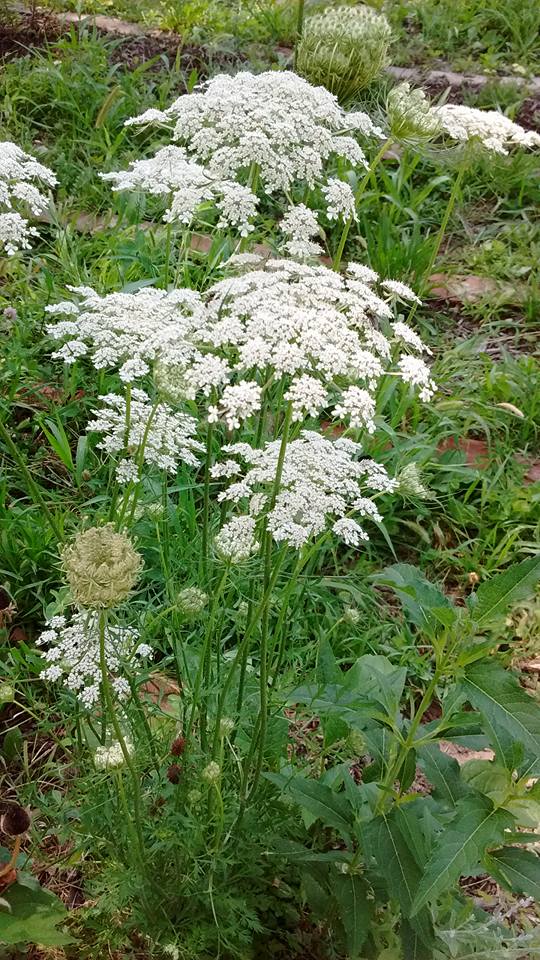
"Queen Anne’s Lace provides beneficial nectar to insects during this dry part of the summer when they don’t have many options. Caterpillars of the Eastern Black Swallowtail butterfly eat the leaves, bees and other insects drink the nectar, and predatory insects, such as the Green Lacewing, come to Queen Anne’s Lace to attack prey, such as aphids" according to Chiot's Run. (Click photo for more.)

“Queen Anne’s Lace provides beneficial nectar to insects… Caterpillars of the Eastern Black Swallowtail butterfly eat the leaves… and predatory insects come to Queen Anne’s Lace to attack prey,” according to Chiot’s Run. (Click photo for more.)

Some plants we call weeds and others we call ornamentals. Some we consider natives, wildflowers, edibles, or another elevated status. Some we designate as invasive, others as desirable.

What I realized yesterday: These divisions are more important to humans than the rest of nature, which seeks its own balance.

The plants called “weeds” are the ones we pull out. Still, the grasshoppers, bees, and spiders find food and shelter on plants of all stripes. They are the epitome of nonjudgment, our guides in an insectile anti-labeling initiative.

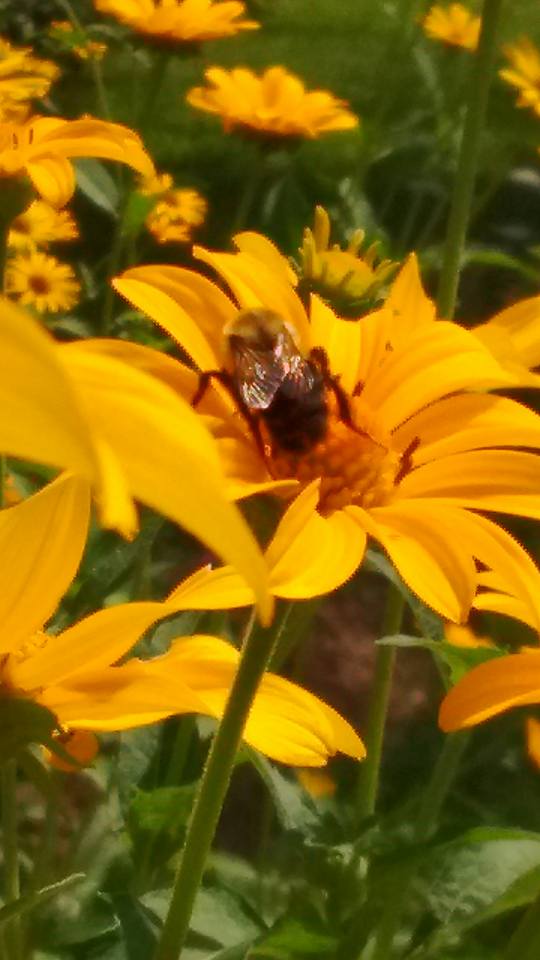
Friendly pollinator

Friendly pollinator

So often I am quick to judge something good or bad.

Just now I went to strike that sentence, gauging it too trite! As testament to my new commitment to allowing things to be messy and imperfect, I am leaving it there.

Lisa and I talked about this very thing: In my writing, I declared my intent to finish my book while letting go of the need for it to be “perfect, balanced, and comprehensive.” Lisa swept her arm toward the “weedy” labyrinth and said, “Here’s living proof that a project doesn’t have to be perfect—just look at it!”

What I saw: voluptuous plants abuzz with happy pollinators. Abundant living entities in ongoing conversation, all encircling the glorious hibiscus at the center. The idea of perfection doesn’t really apply when we’re partnering with life, does it? So it can be with writing.

I told Lisa that the labyrinth didn’t have to reach some ideal in order to be a marvelous contribution to the community. Uh, hello. Maybe I should write that down and stick it on my computer monitor.

Repeat after me: We don’t have to reach some ideal in order to be a marvelous contribution!

Transition and Transformation

Every writer should have a worm colony to eat her spent words. Especially if she’s grieving the loss of her beloved dog.

His name was Marley. We named him after the great Bob Marley. This was before "Marley and Me."

His name was Marley. We named him after the great Bob Marley. (This was before “Marley and Me.”)

I feed my drafts to the shredder when they’ve served their purpose. The shredder cross-cuts everything into bits the width of a highlighter’s stroke, the length of the tiniest paperclip. When the receptacle is full, I shower this ticker tape parade over one of four worm farms I’ve got going right now.

Worm pit after ticker tape parade

Worm pit after ticker tape parade, with rainwater.

Are they actually eating my words or are they just nesting there, my happy, scrappy red wigglers, snug in moist paper and a bit of soil and leaves? With rotting vegetable parings for their buffet.

I wrote once long ago, or stole the idea, of everything in a writer’s life becoming compost. “It’s all material,” an early writing teacher told me. Now even my stilted phrases and test drafts and failed pieces have become compost.

I’m feeding the worms that in turn offer their pooped-out product to nourish my soil—soil in which we grow the food that feeds the writer who makes the words that shelter the worms. A closed loop.

Also in the worm bins? Junk mail, that clutters my desk until I go on a shredding rampage. Cardboard toilet paper rolls chopped into bits. Tea leaves from my tea ball. Shed leaves from houseplants. Newspapers. Anything else I can think of: Q tips, napkins, toothpicks, and other rarely used ephemera.

Also: Mats cut from the cat’s britches, tangled there over weeks of neglect while I worried over her brother, the dog. Tissues loaded with my snot and tears, from meltdowns over that same dog’s decline.

Moistened with rainwater, it all melts together into the special kind of slop that worms (I’m told) adore—sweetened with handfuls of veggie scraps and stale crackers and the like.

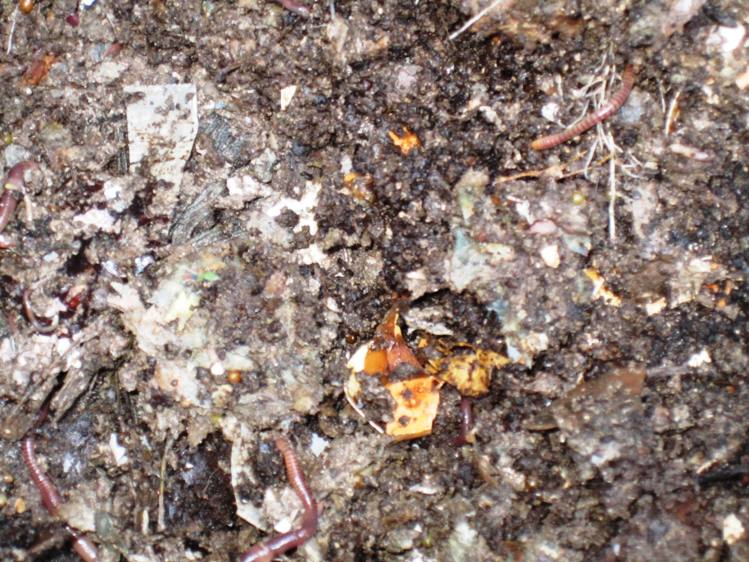
Worms at work

Worms at work

The dog died; the worms and time work together to turn something lost into something gained.

Sweet dreams, friend.

Sweet dreams, friend.