Calling All Lifelong Learners

Continuing an intermittent series on education
“Crazies only need apply,” jokes Blaire Huntley, speaking of Trade School of Indianapolis’s call for teachers. Previous “crazies” taught such varied topics as law, nail art, beekeeping, creative writing, bookbinding, public speaking, yoga, and even cuddling.

Making this curriculum even more unique: not one cent changes hands. Instead, teachers request items and services in trade for their tutelage.

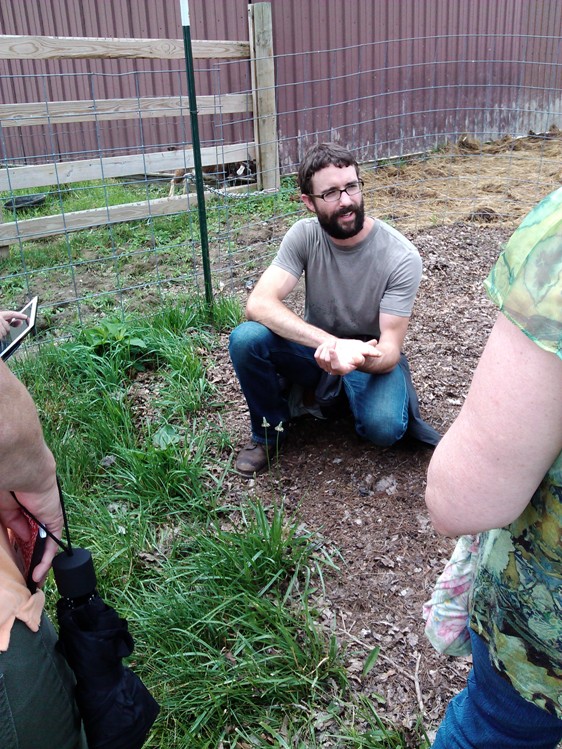
I took this class last fall: Primitive Natural Cordage with Creek Stewart of Willow Haven Outdoor.

I took this class last fall: Primitive Natural Cordage with Creek Stewart of Willow Haven Outdoor. All it cost me was the stalk of a yucca plant.

TSI is part of a barter-for-knowledge network anchored by Trade School New York, which Blaire encountered when she lived in New York City.

Though she worked eight jobs in NYC and was way too busy to take classes, when she moved to Indy, she brought along her love of learning—and the seed of an idea. Why not start a Trade School in her adopted city? Now, she says, she feels like “the smartest person in the world,” because she gets to learn from so many passionate, creative teachers.

The community embraced the model wholeheartedly. “As people are learning about us, once they know about it, they want to be involved,” says co-founder Brittany West. In the year since its launch, TSI has offered 80 classes. For the fall 2013 semester (October-November), already a record 40 classes have been proposed, and the window to apply is still open.

Compared to other Trade Schools worldwide (there are now 50), “we are always the one with the most classes going on,” says Blaire.

TSI is also one of the few such schools so far sustained without funding. Both women work for free, devoting their off-work hours to coordinating, publicizing, and attending sessions. Classroom space is donated in several venues, including Indy’s Kitchen, where cooking classes are extremely popular.

Art of Indian Cuisine at Indy's Kitchen

Art of Indian Cuisine at Indy’s Kitchen. New this semester: teachers can request items on behalf of an organization. For example, the fall Indian cooking class will be offered in exchange for donations for Gleaners Food Bank.

Brittany says the philosophy behind TSI, that “education should be accessible to everyone,” is a powerful notion. “I love that I can bring an apple or a bag of oranges in exchange for learning these great things.”

People engage with each other differently when payment is made in nonmonetary gifts instead of cash, the women say. It creates a shared experience and a deepened sense of connection.

Blaire and Brittany are looking to crowdfund classroom space for a permanent TSI home, potentially shared with other likeminded community organizations. They envision tripling the number of classes, and offering daytime sessions as well as their current evening classes.

Instructors of Backpacking 101

Instructors of Backpacking 101

Are you a lifelong learner, or someone with a skill to share? Have you experienced the fun of bypassing the money economy and found that you’ve made a deeper connection as a result? Then check out the following:

1.) Go to TSI’s Kickstarter grant appeal (great incentives!) and give what you can before Aug. 31.

2.) (For locals) Plan to attend TSI’s one-year anniversary party September 5, featuring a swap-and-trade area, teacher meet-and-greets, live music, and complimentary Sun King beer.

3.) Propose a class! “We believe everyone has something to offer, so no fancy degrees or certificates required.”

Photos courtesy of Trade School of Indianapolis

My Garden Tower, One Month Later

It’s been about a month since Judy and I planted our Garden Tower. I last posted about it the day we picked it up from the Good Earth. Time for a post showing the progression.

After some discussion we sited the barrel just outside our back door. We had to sacrifice a few cabbage and collard plants to clear out the space, but it’s the best spot for it. The light color of the siding will reflect light for the plants growing on the back side (though one friend insists we need to innovate some sort of lazy susan apparatus to be able to spin the whole barrel around!)

Filling the Barrel

Filling the Barrel

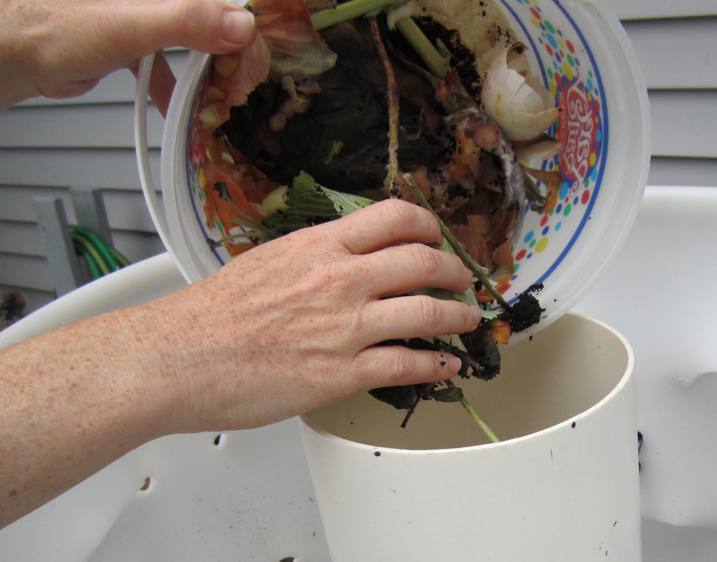
One of the things I love most about the Garden Tower is its built-in worm composting. I could hardly wait to put saved-up kitchen scraps in there. We also added some semi-decomposed stuff from the compost pile to jump start it.

Adding vegetable matter to the center tube

Adding vegetable matter to the center tube

I bought red wigglers at a feed-and-seed shop, and there were also worms in the soil mix since we used some of our own sifted compost.

Just a handful of worms is enough: they reproduce rapidly.

Just a handful of worms is enough: they reproduce rapidly.

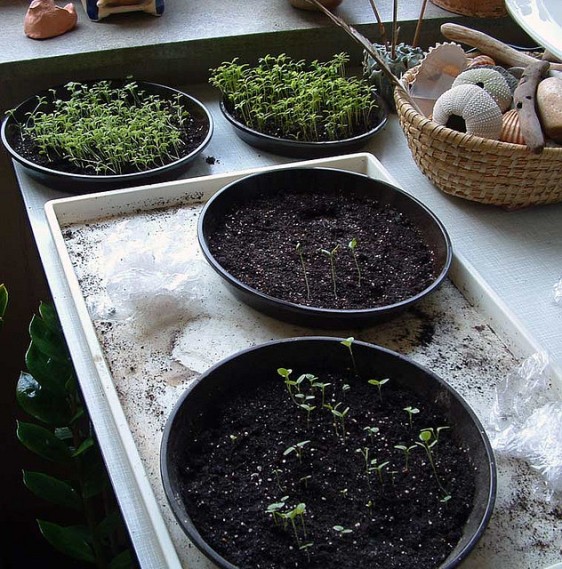
I had soaked seeds in water overnight to give them a head start. It was great fun poking them into the soil.

Planting Little Marvel peas on the more shaded side.

Planting Little Marvel peas on the more shaded side.

Plants scavenged from friends and a local nursery helped round it out.

I bought a couple of bell pepper plants that looked like they might survive, and this gorgeous Genovese basil. I also planted parsley starts around the back and a tomato sucker that a gardener friend rooted.

I bought a couple of bell pepper plants that looked like they might survive, and this gorgeous Genovese basil. I also planted parsley starts around the back and a tomato sucker that a gardener friend rooted.

Soon the seeds started to sprout.

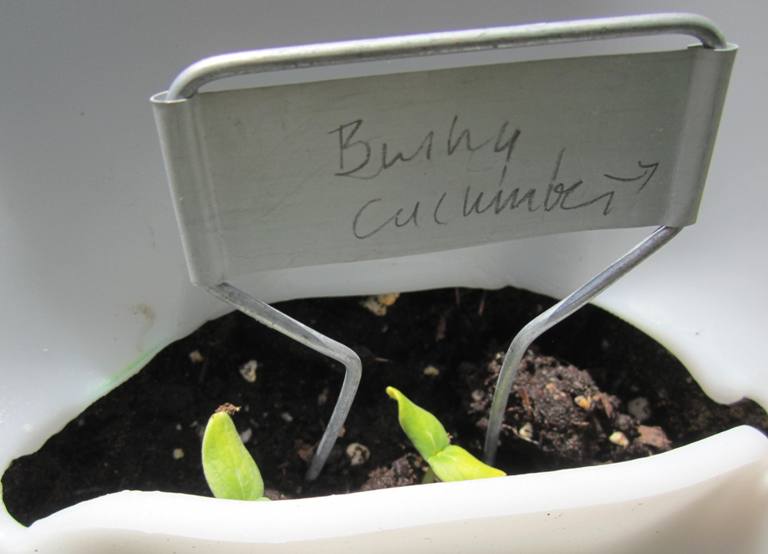
Cucumbers were first to sprout. I don't know if I'll get any cukes having planted them late in the season, but it's fun trying.

Cucumbers were first to sprout. I don’t know if I’ll get any cukes having planted them late in the season, but it’s fun trying.

It was like springtime in July.

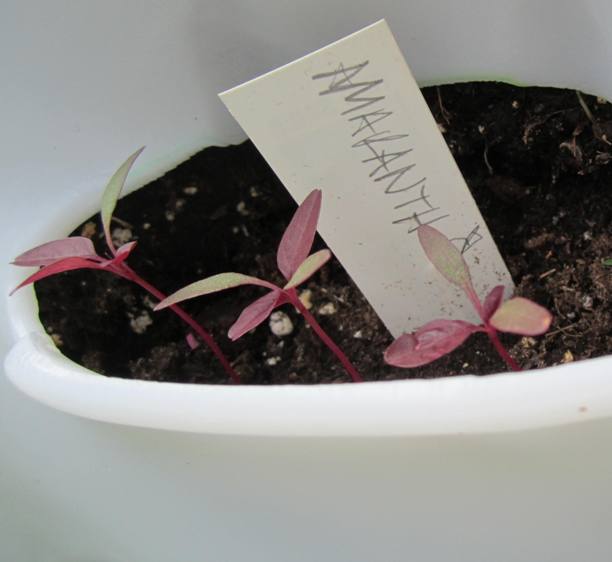
Really excited about the amaranth!

Really excited about the amaranth!

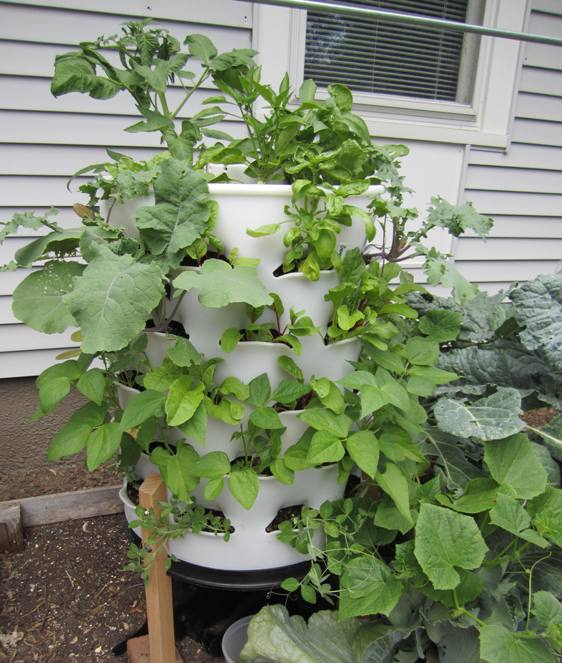
After a couple weeks it looked like this. (The cat loves hanging out in the cool shade underneath the tower.)

About 2 weeks after planting.

About 2 weeks after planting.

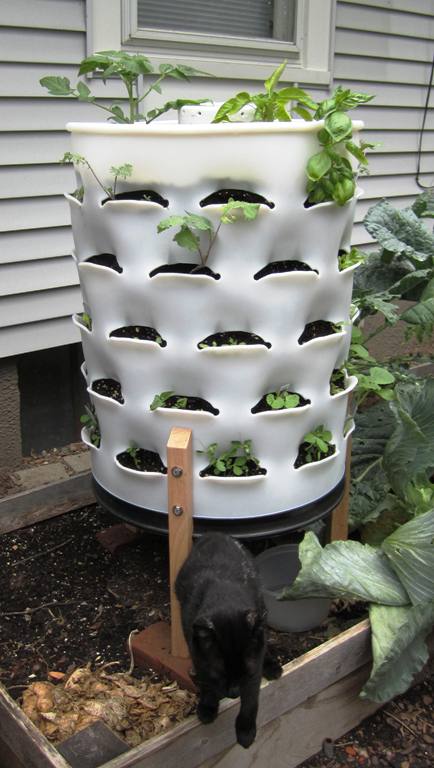
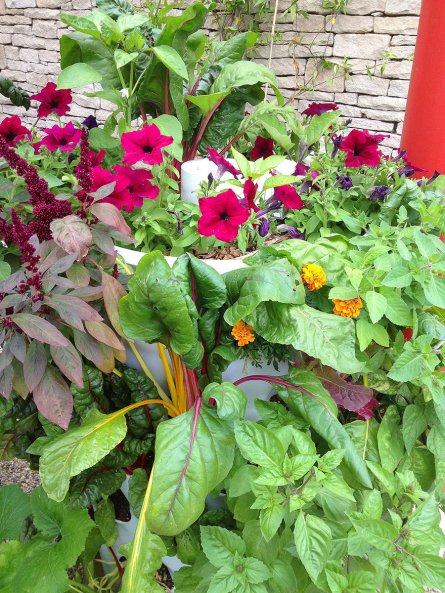
Today it looks like this!

Check out the cucumber vines, lower right. (And yes that is a cat under there.)

Check out the cucumber vines, lower right. (And yes that is a cat under there.)

The tomato “sucker” has suckers of its own now, and soon I’ll have to stake it. I’ve harvested basil, parsley, and a few thinnings of the greens. The worms have been chewing through their food, so in a few months I’ll have a different kind of harvest—worm castings.

We’re thinking of rigging up some sort of covering to extend the season. I hope we can keep snipping kale and chard into the winter.

I love my Garden Tower. Of course, it is not necessary to purchase this product to have a similar vertical garden. “You just need a blow torch and a two-by-four,” says one plucky friend. That seems a little more than I want to do, but this Garden Sack design looks to be a good DIY alternative.

Elders Building a Healthier Future

They meet in Chase Legacy Center’s art room every Thursday for herbal tea and the deeper refreshment of conversation. Known as WeAct (When Elders Act, Communities Thrive), the group began as a natural living discussion circle, and evolved into a discussion/action group.

The weekly gathering of elders is convened by the decidedly youthful Greg Monzel. Today he’s harvested Echinacea and mint from the herb garden tended by the group just outside. With curved shears, he snips the big healthy blooms and fragrant leaves into a blue teakettle as people stroll in.

An herbalist, Greg offers his prodigious knowledge of wildcrafting and permaculture, but participants have a wealth of information too. The discussion moves in spirals, touching on plant medicine, gardening, and other homespun topics.

We explore the identification and uses of lamb’s quarters, with one member noting that this “weed” is high in iron. From another participant, we get the inside scoop on Distelrath Farms’ new cooperative model, which allows the farmer more time to pursue his mission: educating children.

From another, we learn of Taj Mahal’s original plan to be a farmer, and why he changed his mind: “He couldn’t figure out how you could keep from being poisoned by putting poison on the ground.” We lament the way conventional agriculture wages war on the land.

Comfrey root bearing a smile

Greg produces a section of comfrey root dug from his garden. A terrifically tough—and useful—plant, comfrey’s roots extend some 40 feet underground. He cuts the root into tiny pieces to send home with everyone. Each garden can benefit from nutrients pulled up from the depths.

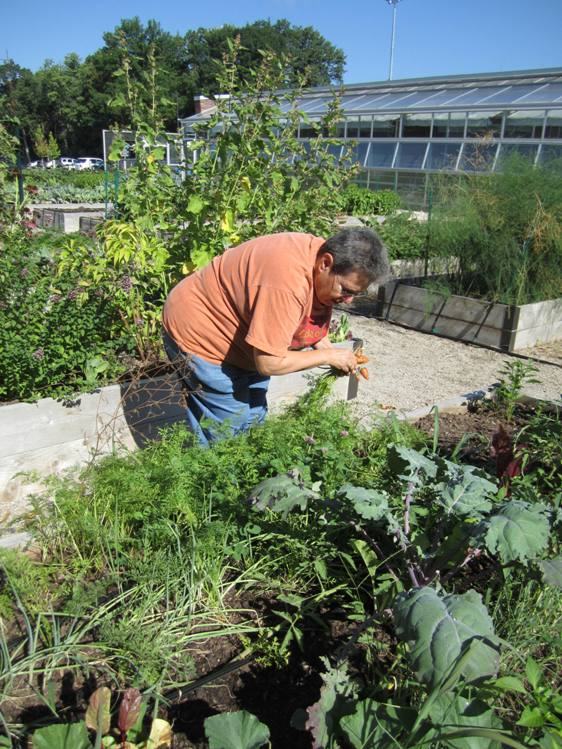
After a while we take cups of bright-tasting tea outdoors to the raised beds designated for WeAct use. There’s the excitement of lifting carrots from the earth. We discuss uses of borage and alfalfa, remedies for mildew, and where to buy a hori hori. Greg urges us to take dill seeds and coriander seeds to plant or eat.

The sky is deep cloudless blue for the first time in days. We stand in the sunshine enjoying the cool morning breeze. It’s the kind of moment that you wish could last all day, and in fact Greg says it is the high point of his week. Too soon, the group disperses.

Harvesting carrots from WeAct's group vegetable bed

Harvesting carrots from WeAct’s shared vegetable bed

Though we don’t visit it on this day, WeAct also maintains a vegetable plot on the adjoining vocational high school campus near the Colonel’s Cupboard, a student-run restaurant. The group supports the school’s horticulture and culinary programs in gardening and preparing homegrown produce.

From the mission statement: “WeAct is an activist organization of elders (and elders in training) who meet weekly for continuing education and community engagement…We consider anyone age 50 and over an elder, though the group is also open to elders in training who may be under 50.”

Among the goals:

  • to reaffirm the wisdom of community elders
  • to advocate for the right to home-grown nutrition
  • to create awareness of community resilience and natural balance

How are the elders (and elders-in-training) in your community manifesting a healthy vision for the future?

Sharing Summer’s Abundance and Summer’s Work

You never know what might result from posting a request on Facebook. The other day I asked our neighborhood Facebook gardeners’ group if anyone would take my zucchini in exchange for peppers. Because really, how many zukes does one household need? This led to the idea of a veggie swap ‘n share. So I invited any interested gardeners to bring their surplus over yesterday for some trading.

Only a couple folks showed up, but it was just right, and no doubt more will come in the future.

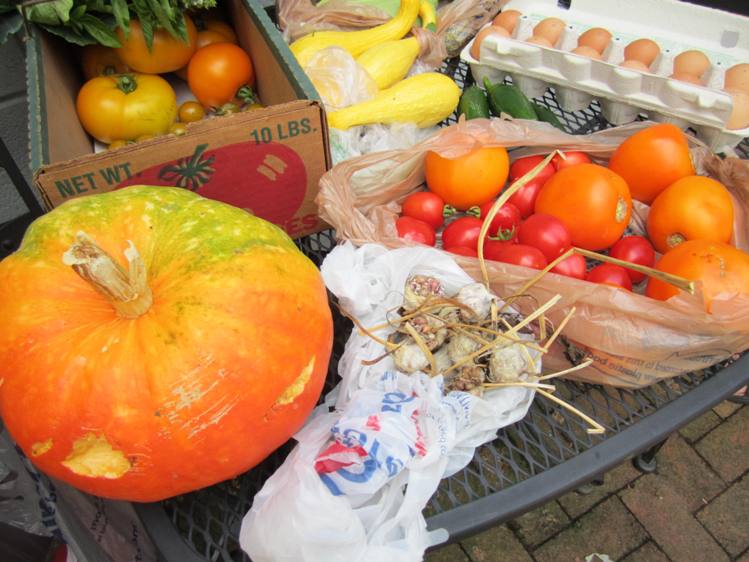
Summer's abundance shared at the veggie swap.

Summer’s abundance shared at the veggie swap. (The eggs are a side deal.)

Julie brought heirloom tomatoes, the only thing she grows. I was thrilled to take some off her hands, since mine are ripening ever so slowly after initially falling prey to blossom end rot. Her cherry tomato variety is called Doctor and rivals my beloved Sungold for sweetness.

As the most ambitious gardener among us, Laura brought a slightly squirrel-chewed pumpkin that needed to be harvested because of an issue with the vine. She had also just picked yellow squash, collards, basil, and more lovely heirloom tomatoes, including a variety called Principe Borghese, reputed to be great for drying. (I’m happy to say these are in my dehydrator as we speak.)

Collards and basil straight from the garden.

Collards and basil straight from the garden.

I offered the aforementioned Zucchini Explosion, specifically a variety called Cordello, as well as some jalapenos and various herbs. Laura went home with catnip for her kitties (sorry Kitley and Maggie!), sage, and rosemary.

Funny how these things all work out and people go away happy to try something new. I think swapping could be habit-forming.

Clowning with Cabbage

Clowning with cabbage at last year’s kraut party

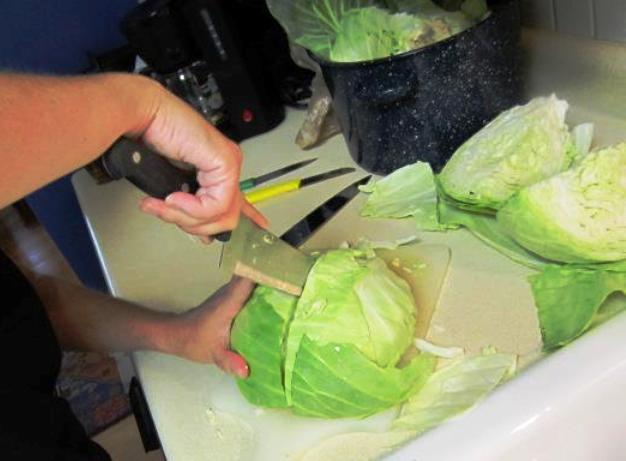
On a related note, last summer our kitchen was home base for group preserving efforts, loosely connected to our community garden. With polka music on Pandora, we shredded up several heads of cabbage and packed them in crocks at the Kraut Party.

Kraut Party Action

Kraut Party Action

Later in the season we switched the sound track to the Three Tenors and Andrea Bocelli at the Pesto Party.

And a couple of us got together to make a gazillion varieties of salsa as well, to share with the community at a Salsa Party.

When you try to cook and preserve seasonal produce, summer can be a crazy time, especially if some of the produce comes from your own garden. Most of us don’t live in the kind of multigenerational households that were the rule back in the day. So we don’t have the built-in helpers that our foremothers did. It can get lonesome, toiling away in your kitchen on your own.

So it’s been great fun to turn some of that work into social events.

There’s talk of another Pesto Party, and maybe even a group effort to “put up sweet corn,” as my people say. We can get a boatload of sweet corn from one of our many local growers and just go to town.

Hm. What musical genre would work for a Corn Party?

Advice for Writing and Living

I’m home from the Midwest Writers Workshop, where the keynote speaker, mystery writer Hank Phillippi Ryan, shared “What I wish someone would have told me.”

By Kartikay Sahay via Flickr Creative Commons

By Kartikay Sahay via Flickr Creative Commons

The advice was writing-related, from how to deal with solitude (“You write alone, but you are not alone”) to the inevitability of self-doubt (“Before you burn your manuscript, make a copy.”) Still, I was struck by how much of her guidance also applies to those of us invested in the critical work of remaking the world.

First up: mention was made of the classic Bird by Bird by Anne Lamott. In which Anne’s brother, in grade school, waits to begin a report till the night before it is due. The topic? Birds of North America.

Not surprisingly, he comes nearly unglued in panic. Their father, a writer, counsels him, “Just take it bird by bird, buddy. Bird by bird.”

Then there’s this:

“What would you attempt to do if you knew you could not fail? Do that. Be brave.”

And finally, the need to be happy, to love what you are doing, and to enjoy the place where you find yourself. “This race goes to the stubborn and bullheaded, but it’s also wise to have a good time.”

I was planning to discourse on how these nuggets inform the life of a hopeful thrivalist, but my brain is pretty much a mashed potato right now. So how about this instead:

Discuss.

Lessons from Sugar Man

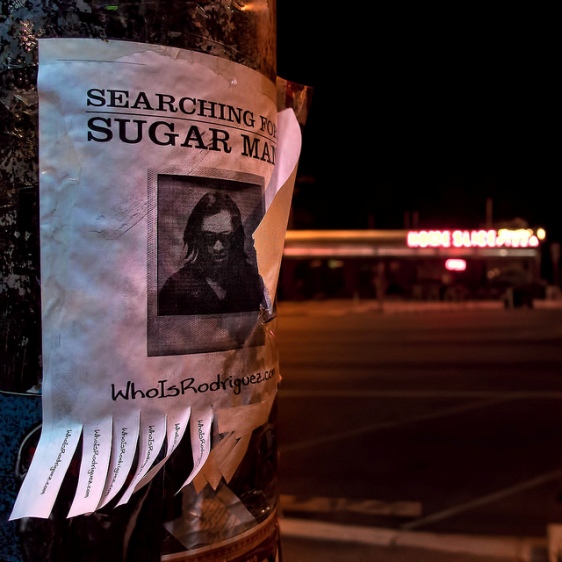
The documentary Searching for Sugar Man came up in conversation with friends last night. If you haven’t seen this Oscar-winning gem, go immediately to your preferred film source and get it. (Immediately after you finish reading this!)

Photo by David Ingram

Photo by David Ingram, via Flickr Creative Commons

I won’t give too much away, because the joy of this film is experiencing the discovery. In brief: Rodriguez, a Detroit musician whose lyrics and style rivaled Dylan’s, made two records in the early 70s. Both flopped. End of story—as far as anyone knew in the U.S.

But in sequestered South Africa, where apartheid had a stranglehold, his anti-establishment message galvanized a generation. There Rodriguez became a superstar—and a mystery. Rumors circulated about a dramatic onstage suicide, involving self-immolation or a gun. Because South Africa was cut off from the rest of the world, in those pre-Internet days, there was little to go on. Who was he, and how did he die?

The story unfolds from there.

In our case, the film sparked a discussion about the impossibility of ever knowing the impact of your deeds.

Clayton said he recently talked with his young son about what it means to be a good person, and how important it is to get off your duff and do something. “You can’t just sit around your house and say you’re a good person. You have to get out and make a positive effort.”

And it doesn’t matter if you fail, because the simple fact of your trying may inspire someone else, Clayton believes.

To my mind, “positive effort” could be as simple as a kind word or smile. We don’t know how these little things might bolster someone facing an inward darkness, or outward danger.

I seem to write about this often: that acts we think of as small actually have great power. Most of us, living our lives in defined spaces, consider our influence very small. Our lives seem circumscribed by smallness; we go to and fro, following our routines, taking care of the details that make up a life.

We may feel that we are too insignificant to make a difference in the fate of our planet and our race.

Yet everyone can do small things with great love, and who can know the ripple effect? Especially if we work in tandem with others.

Photo by Lisuebie, via Flickr Creative Commons

Photo by Lisuebie, via Flickr Creative Commons

The row we plant might be just the encouragement our elderly neighbor needs to start seeds on a windowsill. Which might nudge her granddaughter to visit a farmers market and buy a farmer’s tomatoes, and one of those funny-looking squashes while she’s at it. Maybe she’ll come back in ensuing weeks and bring her children and a friend, buying more locally grown food. Which shows the farmer that his produce is desired, and keeps him from throwing in the towel after a tough summer.

Think about it.

(And seriously, see the film. Then watch the “making of” extra. If you’ve ever been so discouraged that you nearly gave up a dream, you’ll connect to the story behind the film.)

Building Resilience One Vertical Garden at a Time

At FoodCon I met two of the people behind the innovative Bloomington-based Garden Tower Project. Check out their garden-in-a-barrel design with built-in worm composting. Up to 50 plants can be planted in this unique vertical garden.

Garden Tower on Planting Day

Garden Tower on Planting Day

The center tube is perforated down the entire length, allowing red wiggler worms to travel between the compost tube and the soil. Kitchen waste goes into the center tube and turns into compost and worm castings. Bonus: The protection of the soil in the barrel means the worms can survive through the winter.

How genius is that–worm composting right in your container garden?
Finished compost, with happy worms

Finished compost, with happy worms

From the website:

“In an era of rapidly rising food prices and industrial farming practices that strip our food of nutrients essential for good health, we believe the Garden Tower is one small step in empowering people towards their own food security.”
The company hopes to nurture a community of growers. They’ll soon launch GrowingCircles.org as a space for networking and collaboration among those with an interest in the Garden Tower Project’s mission. The goal is expanding food self-sufficiency, promoting homegrown vegetables and herbs that are:
  • organic
  • non-GMO
  • low-input
  • ecologically sustainable

Tom Tlusty tells me that the Garden Tower’s unique design capitalizes on “evaporative cooling and a large thermal mass”–making it possible to plant in hot temperatures normally prohibitive in a traditional garden plot.

So… it’s not too late to start gardening this season!

Top view of the Garden Tower.

Top view of the Garden Tower.

I’m so excited about this design that I ordered my own Garden Tower, and I’m picking it up from the Good Earth later today. I’m psyched to sow some crops I didn’t have room for, like beans and carrots. I’ll also scour local garden centers for leftover seedlings (probably quite sad and stressed by now, but maybe a little TLC would bring them along).

It’s nearly time to start fall crops, like kale, lettuce, peas, and spinach. That’s something I always intend to do and never seem to manage in the thick of late summer. But this is the year, with my sweet new protected microclimate as incentive.

Plus I’ll finally have livestock on my homestead, if only in the form of worms. I’m in heaven!

Time to harvest from the Garden Tower

Time to harvest from the Garden Tower

The only drawback I can see is the need for potting soil to ensure that the growing medium is not compacted in the barrel. I hate buying bagged soil for so many reasons. I’ve seen recipes for homemade potting soil. But being eager to jump in, I probably will break down and purchase. (If you’ve found a good peat-free variety available on the market, please leave it in the comments.)

The inventors believe their design will allow people of all abilities to garden in any clime. According to Garden Tower users in the arid Grand Canyon region, this model results in immense water savings. Tom says they used ten times less water with the Garden Tower than their traditional plot or raised bed.

Really can’t wait to dig in!

All photos courtesy of The Garden Tower Project.

Why Forage?

Trout lily was one of the first wild plants I learned to harvest from the greenspace across the street from my house. There’s a thriving colony that appears in a rough circle at the base of a redbud tree for a month or so before fading back into the earth as ephemerals do.

By Jason Hollinger (Dimpled Trout Lily  Uploaded by Amada44), via Wikimedia Commons

By Jason Hollinger (Dimpled Trout Lily Uploaded by Amada44), via Wikimedia Commons

Sometimes I feel quite fringy bending down in early spring to pick the tender leaves before moving on to check the basswood tree and other faves. Even in my groovy neighborhood, it’s somewhat marginal behavior to pick salad leaves off the ground in a public space.

Then I read something like this:

“Some people think that it’s silly to go for an invigorating walk on a May morning and come home with a lush heap of delicious gourmet vegetables when it would only take slightly longer to drive to the grocery store and spend hard-earned cash to get weeks-old inferior produce with half the nutritional value, doused with deadly chemicals.

I see their point, but I’m sticking with wild food just because it’s a lot more fun.”

–Samuel Thayer, in Nature’s Garden: A Guide to Identifying, Harvesting, and Preparing Edible Wild Plants

Reading on, I find that not only trout lily leaves but bulbs are edible–and are in fact tastier than the leaves.

Hello shovel, goodbye self-consciousness. (I would make sure not to decimate the colony of course. Thayer says responsible harvest practices allow trout lily colonies to thrive.)

What about you: What’s your favorite gourmet wild vegetable to forage, or have you tried any yet?

Postcard from FoodCon

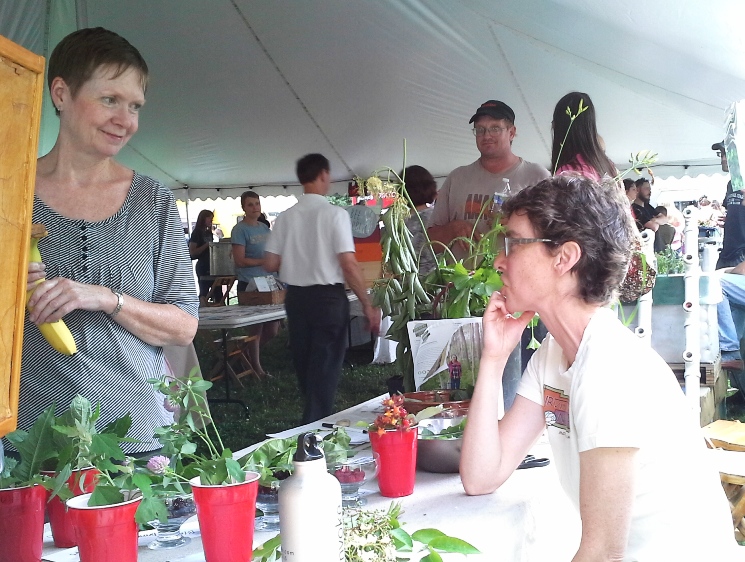
Friday’s FoodCon was a thrill. I haven’t heard the final tally of attendees, but there was a steady stream of bright-eyed folks. I met so many people with interesting stories about foraging (which, as I explained to one non-native English speaker, is like hunting, only for plants).

Swapping foraging stories with a foodcon attendee

Swapping foraging stories with a foodcon attendee

People spoke of making elderberry syrup for winter colds and congestion, of becoming more accustomed to the taste of bitter greens to the point of craving them, and of eating oxalis as kids.

One little girl said she likes to eat clover petals, which brought back my own flower-eating past: My friends and I used to pick the blooms off my dad’s tall phlox and suck the nectar, pretending it was a special elixir.

Most of my exhibit consisted of weeds picked that morning. All are available in the typical urban yard or garden. “If you can’t beat ‘em, eat ‘em,” was my line.

Trees are a source of unexpected nutrition too: Even seasoned foragers were surprised to learn that basswood tree leaves are great in salads.

Trees are a source of unexpected nutrition too: Even seasoned foragers were surprised to learn that basswood tree leaves are great in salads.

I told the uninitiated to start by topping a salad with the tangy, tender oxalis, which is prevalent in urban yards. Then see if, like me, they don’t get completely hooked on picking stuff from their yards to bring in to the dinner table.

Wet tablecloth

My tablecloth got all wet after an early gust of wind blew a few cups over. But it didn’t matter: check that wilty salad!

Japanese wineberries (at the right edge of the above photo) were the star of the show. Though one website calls this bramble fruit a “bio-bully” for being invasive, the berries are dazzling little gems that are sweeter than should be legal. (Last year I learned the identity of this mysterious bramble I’d found just as the buds were forming. I was anticipating some happy picking, then they perished in the drought. This year: bountiful harvest.)

Some were amazed that you can actually eat mulberries, asking incredulously, “What do you do with them?” while others were right there with me on the “nature’s candy” point.

A friend and I had biked around the neighborhood questing for these berries.

A friend and I had biked around the neighborhood questing for these berries.

Things I learned: There’s a “Poke Salad Annie” song, and you can eat milkweed flowers, and four hours of talking makes one hoarse.

The solar cooker got lots of interest too, though generally more as a novelty from what I could gather (my partner Judy fielded most of those questions, bless her).

As far as the other exhibitors, I was able to make a quick circuit late in the evening and talk to the folks from Wolf-Beach Farm, as well as friends at the “dumpster diving/dumpster dining” booth and the “making easy meals in 5 minutes” table. (These were all people I had referred to the organizer.)

I also found a couple standouts in the resilience arena. I’ll report on them in an upcoming post. Some great innovators there, helping people break their dependence on a shaky centralized food system that is wreaking havoc on both planetary and personal health.

Forage Ahead!

Today I joined my friend Greg Monzel of Monzel Herbs on one of his terrific plant walks. The rain held off as we tramped the lanes and fields of Distelrath Farms, an urban farm and the source of my weekly CSA allotment.

As an herbalist, Greg focuses these guided tours on both edible and medicinal plants. After you’ve hung around with him for a little while, you get a new appreciation for the things people normally dig out of their gardens. It seems that everywhere under our feet, there’s nourishment and healing.

Greg teaches us about plantain and its many uses

Greg teaches us about plantain and its many uses

Plaintain, for example, is good for eczema, wounds, and other skin issues, while its seeds are a “poor man’s psyllium.” I doubt I have the patience to collect its seeds, but I like the idea of whipping up a bunch of leaves in the blender with olive oil to make an infusion. I have some off-and-on rashy stuff on my hands, so I might try that.

Amaranth, drought-tolerant and tasty

Amaranth, drought-tolerant and tasty

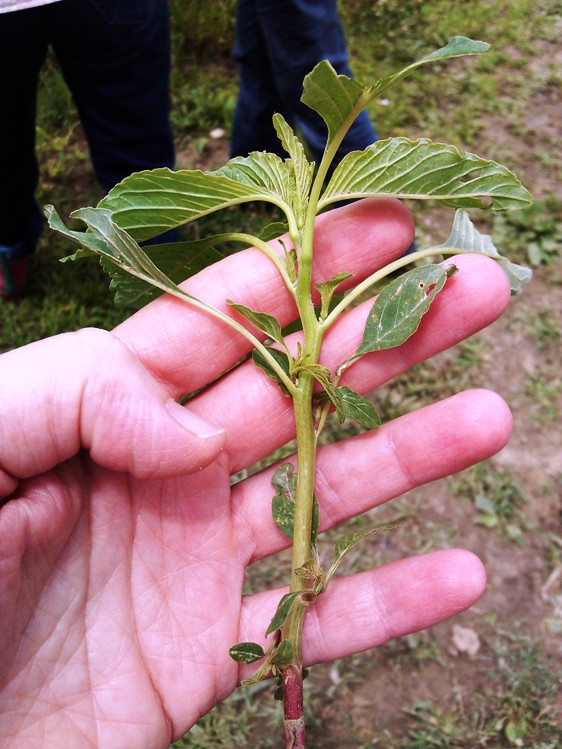
More tasty than the bitter plantain is amaranth. It is an amazingly hardy summer salad green as well as a source of protein-rich “grain” (actually the seeds).

I’ve never collected the seeds, but I adore amaranth as a green. My partner was introduced to it in Tanzania years ago. There it was called red root and sauteed in a dish called Sukuma Weeki.

When the drought hit us last year, amaranth didn’t even notice. So this year I bought amaranth seeds to plant for a steady and convenient supply. As soon as my lettuce is done–any day now–I’m sowing amaranth in preparation for a dryer, hotter July and August. I can almost taste that late summer salad of amaranth and purslane, a heat-loving succulent high in omega-3 fatty acids. Most people pull both as a weed.

Greg, by the way, says weeds are a state of mind. Many of the things we consider noxious weeds were actually brought here because of their usefulness. Now they populate areas where the soil has been disturbed, working as “succession plants” that naturally build soil fertility.

Knotweed, AKA smartweed

Knotweed, AKA smartweed

Here’s knotweed, for example, also known as smartweed. I remember seeing this pretty little bloom in my dad’s raspberry patch and wondering what it was. I learned today that it is in the buckwheat family. Its leaves and seeds are edible and loaded with resveratrol, a potent antioxidant.

And did you know that you can harvest the seeds of the ubiquitous clover and save them in a jar, for indoor sprouting at some later, leaner date? It’s mind-boggling to realize there is free food all around us, even in the city, that could potentially nourish us in good times and bad.

I’ve learned so much from Greg, starting when I interviewed him for an Edible Indy story on gathering wild foods. Though I’m not nearly as experienced as he is, next Friday, July 5, I’ll have a table on foraging at FoodCon IV, a fabulous event that attracts a thousand or more people every year. I’m beyond excited to be part of it.