Lighting a Candle

So much sadness, trauma, pain, anger, fear is showing up in the personal news of my friends and in the wider news of recent weeks. But  here is a prayer for all of us, a message from an intuitive who grew up in war-torn Lebanon:

“I am lighting a candle in my heart for everyone… everyone… everyone. My heart is ablaze. My tears of joy, tears of sadness, tears of humility, and tears of hope bring this burn to a sizzle…only to find out that these candles are magical…they never go out.

By Luca Casartelli (Own work) via Wikimedia Commons

By Luca Casartelli (Own work) via Wikimedia Commons

Remember those special birthday cake candles that could not be stopped? The ones you blow out and they light up again? Ah, I am relieved that the light of my heart is infinite and eternal… has no borders… and ripples, boundless.

Now that love is set to permanent, I can really do my magic.”

—Iva of Sophia Speaks

How I Spent my Summer Vacation

After traveling for nearly a month, this homebody is glad to be back to my little haven of domesticity. This time I visited Washington State with a side trip to British Columbia.

If you follow the blog, you know a little bit about my adventures, but here are some more highlights.

In Bellingham I learned about Sustainable Connections’ Think Local First campaign. This ingenious program rewards local businesses for earth-friendly business practices by raising their profile in the community.

We decided to experience this local biz thing for ourselves.

Checking out goat cheese options (that's our old friend Laurie in the foreground.)

Checking out goat cheese options at the Bellingham Farmers Market (that’s our old friend Laurie in the foreground.)

Craft beer, ice cream made from local berries, a killer bookstore, and a festive Saturday farmers market showed us a bit of the region’s specialties.

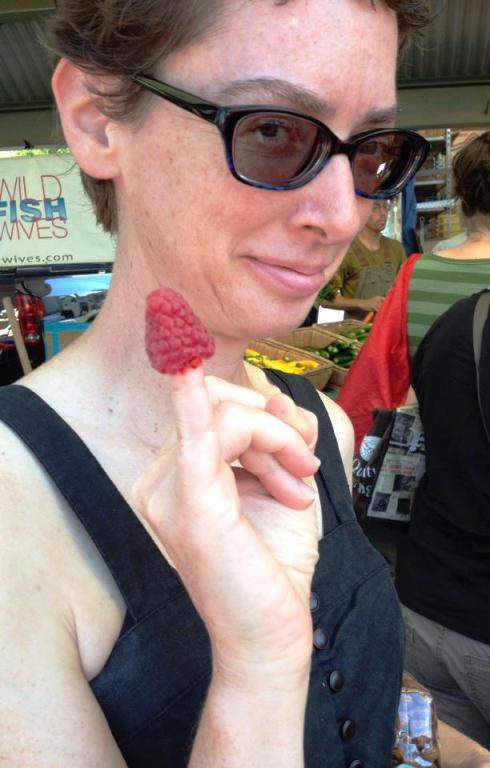
Biggest raspberry evah

Biggest raspberry evah

From Bellingham we ventured north to Denman Island in British Columbia for the Mudgirls workshop.

My new friend Millie, tamping slip straw at the Mudgirls workshop.

My new friend Millie, tamping slip straw at the Mudgirls workshop.

Then it was back to the U.S. for a two-week writing residency at Hypatia-in-the-Woods in Shelton, WA. This experience was a bit different from previous residencies which I shared with other artist types: I was the sole resident of a lovely cottage nested deep in the cedar forest.

The labyrinth on the grounds, a magical place

The labyrinth on the grounds, a magical place to commune with deer, birds, trees, and insects

The solitude gave me lots of focused time to write. I also learned how much I value having someone within hollering distance, as I had a few challenging moments in the intense isolation. I was thankful for the board, who kindly made sure I had some conviviality to balance out the quiet.

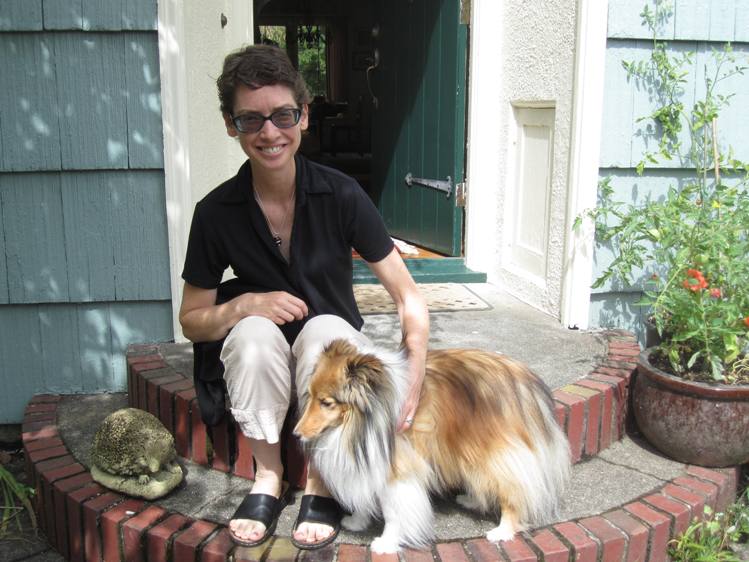
Other people's dogs, such as the director's Sheltie, Ceela, helped me deal with the lonesomeness of not having my dog with me.

Other people’s dogs, such as the director’s Sheltie, Ceela, helped me deal with the lonesomeness of not having my dog with me.

A high point: connecting with Olympia Mycelial Network, a group I’ve admired from afar. I helped them with an installation of bioluminescent mushroom mycelium, which was a thrill.

We gathered by the cob oven on the Commons at Fertile Ground. After a quick tutorial, we created a path from wood chips inoculated with panellis (bitter oyster) mycelium. The hope is that this path will glow in the dark as the mycelium gets established.

Peter McCoy, who blogged here about starting the Radical Mycology project, walked us newbies through the process for growing mycelium.

Peter showing me grain spawn and mycelium sugar that he propagated at home. Now I want to try it!

Peter showing me grain spawn and mycelium sugar that he propagated at home. Now I want to try it!

After that inspiring evening, I had to visit Olympia Food Coop, where the group earlier helped install mycelium that consumes petrochemicals.

I feel so lucky to have had the chance to learn from such innovative people and projects. I’m glad to be back to my laundry-hanging, solar-cooking, dog-walking routine though. I have several fun writing assignments coming up that I’ll tell you about later.

Note: Speaking of solar cooking: We’re offering a workshop this Sunday from 2-3pm at Pogue’s Run Grocer on that very topic. RSVP here if you can make it!

A Little Help from the Fungus Kingdom

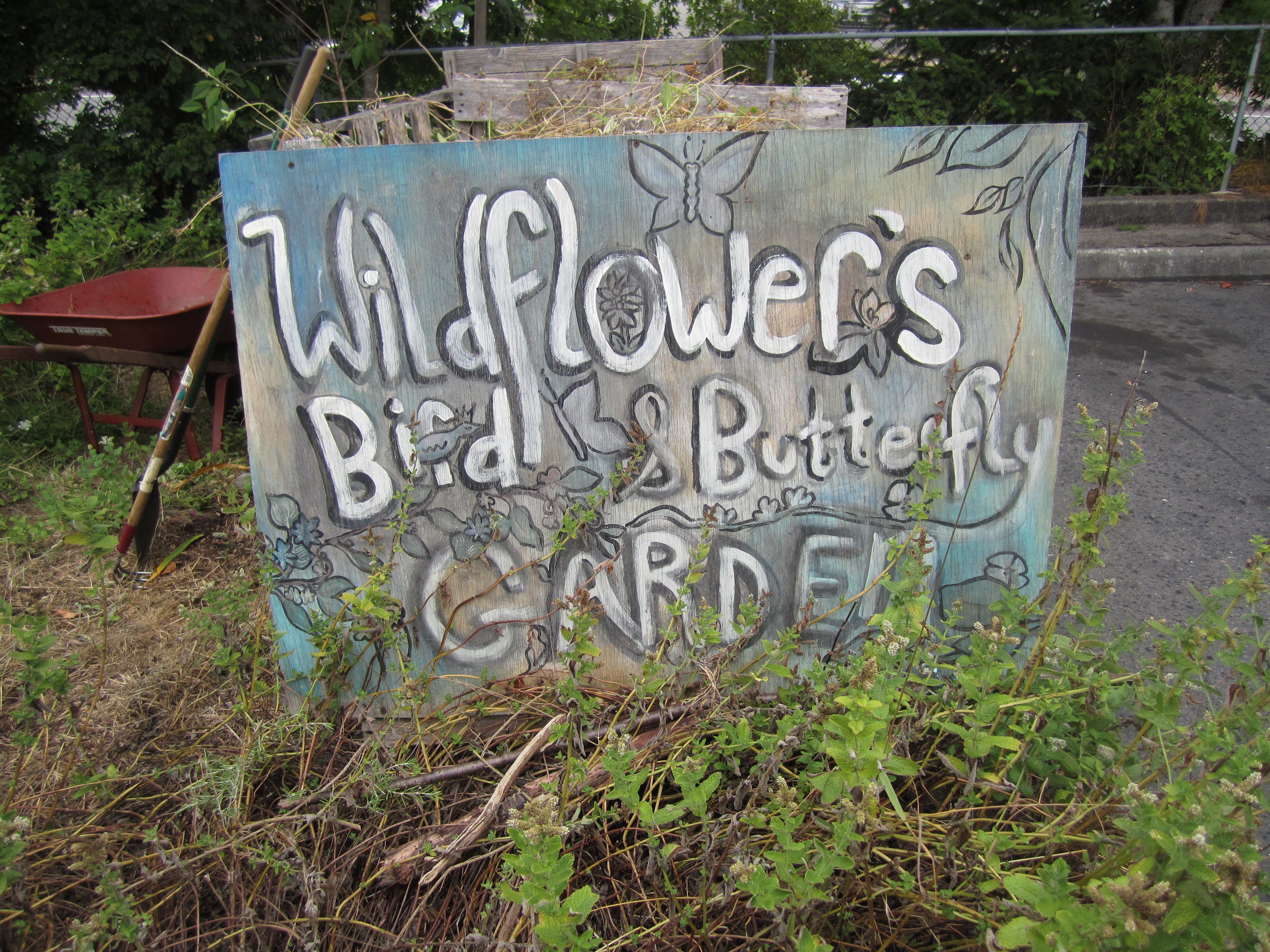
Yesterday I went on a quest for the fabled fungus that’s been mopping up petrochemicals from a food co-op’s parking lot. Olympia Food Co-op‘s eastside store was the place. I timed my visit just right, happening upon a crew of landscapers working the butterfly and bird garden.

The grounds of this food co-op include a sweet garden meant to attract pollinators.

Outside the food co-op is a sweet garden meant to attract pollinators (and people).

Sarika, the co-op’s landscape coordinator, jumped at the chance to tell me about the project. The mycoremediation began five years ago in partnership with Olympia Mycelial Network. Oyster mushrooms are able to digest petrochemicals into harmless compounds. So the drainage ditch of the parking lot contains several burlap bags full of oyster mushroom mycelium.

Bags filled with oyster mushroom mycelium.

Bags filled with oyster mushroom mycelium.

The idea is to filter the oil before it hits the drain down by the sidewalk.

Ever wonder where the runoff disappears to when it enters a drain like this?

Ever wonder where the runoff disappears to when it enters a drain like this?

I also met Brittany and Jordan, two young Louisiana-born “WWOOFers” volunteering with Sarika. They are traveling around the country with another friend, exploring farming innovations and learning how they can be of use to our beautiful planet. (Check out their adventures at Traveling Tripod.)

Jordan, Sarika, and Brittany

Jordan, Sarika, and Brittany

Brittany waxed eloquent about the role of mushrooms—this critical work is all about ensuring “clean water for everyone.”

Signage showing the overview of the mycoremediation

Signage showing an overview of the fungi’s work

Having been in the Pacific Northwest for almost a month, I’m beginning to grasp the extreme sensitivity of Puget Sound. This project represents just one small but significant effort to right the wrongs of our polluting ways.

Hood Canal, a basin of Puget Sound, as seen from Potlatch Beach on a moody day.

Hood Canal, a basin of Puget Sound, as seen from Potlatch Beach on a moody day.

The possibilities are staggering. Peter McCoy, who last year contributed a guest post about radical mycology, first told me about this project over a year ago. Finally seeing those humble mushroom bags doing their work brought tears to my eyes.

Sarika is looking into funding to pursue farther-reaching remediation. And the Radical Mycology Collective, of which Olympia Mycelial Network is a part, is launching its fall tour today. I can’t wait till the big Radical Mycology Convergence, taking place in Orangeville, IL this October!

Going Soil-Friendly

Do you ever think about the importance of the innumerable tiny creatures living underground, right under your feet? In just one tablespoon of soil, according to North Carolina State University’s Cooperative Extension Service, some 50 billion microbes are working away.

That’s if the soil is healthy.

By NoNomme (Own work) [CC0], via Wikimedia Commons

By NoNomme (Own work) [CC0], via Wikimedia Commons

I remember a conversation with an Ohio woman active in the environmental movement. She told me a story about a farmer who decided to switch his (conventionally farmed) cornfields to chemical-free produce. His seeds sprouted, but grew stunted and deformed.

The land had been blasted with petrochemicals year after year. Now there was nothing left to support a plant. No microbes. No nutrients.

But it doesn’t have to be that way.

My most recent Farm Indiana piece concerns a small agricultural fertilizer business called Sterling Formulations, led by a young man aptly named Vince Plowman.

Sterling Formulations’ team assesses farm fields and recommends soil-friendly additives depending on the particular needs of each field. They apply microbes and micronutrients to balance and nourish the soil that nourishes us.

Filling a container with earth-friendly fertilizer concentrate at Sterling Formulations' Shelbyville, IN plant.

Filling a container with earth-friendly fertilizer concentrate at Sterling Formulations’ Shelbyville, IN plant.

The team includes an Amish farmer who offers knowledge based on generations of experience. (My people!)

“The Amish have been farming organically for centuries, and quite successfully,” Vince told me. “They treat their soil right, and guess what, they’re getting yields comparable to conventional.”

He was surprised to learn that conventional farmers are as receptive to this message as organic growers. He said, “We found, in talking to a lot of conventional farmers, that so many of them are curious.”

Corn Field

Though he half-expected a derisive response from the conventional agribusiness side, so far that has not been the case. “What we found is they’re absolutely afraid…They don’t know how to do it (transition off chemicals), and they don’t have anyone to step them through the process of going to organics without absolutely killing themselves. They’re used to getting 200 bushels an acre, and they’re afraid they’re going to get 50 next year” if they stop using chemicals.

What comes next in that scenario isn’t pretty: they’d likely lose their farm. And many in that arena are supporting multiple families on the farm.

But Sterling Formulations is stepping into the gap. The goal is to help heal beleaguered soil through tailored applications of microbes and kelp-based fertilizers. Instead of petrochemicals that artificially prop up crops, these nutrients and tiny creatures create a living medium for plants.

This is one of the most exciting developments I’ve heard about in a long time. Farmers who want to stop using chemicals can get support in the switch—and stay profitable during the transition.

You can read more about Sterling Formulations in my Farm Indiana story.

Stories and Sustenance

I’ve been wanting to tell you about some of my creative cohorts at Playa, but first I think I need to speak about ART.

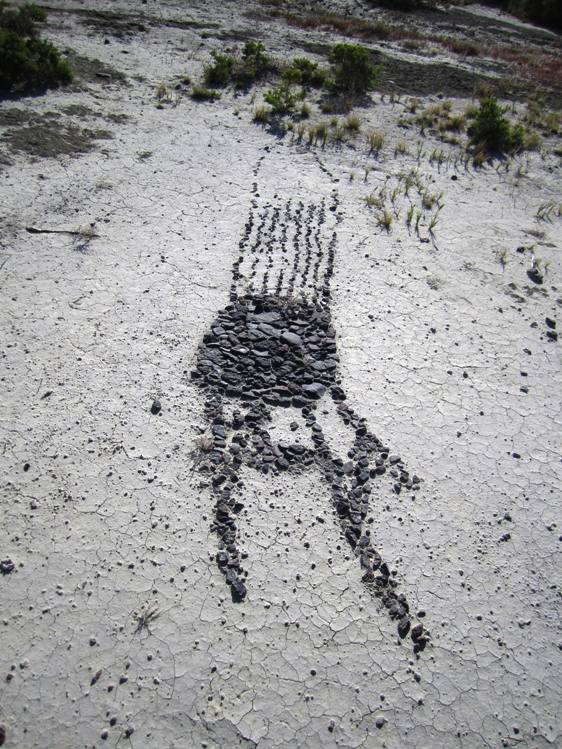
A chair made of pebbles, created by a prior resident on the dry lakebed.

A chair made of pebbles, created by an earlier Playa resident on the dry lakebed.

Art plays a critical role in the world’s remaking. I don’t mean just literary nonfiction depicting stories of people pulling together to build resilience (though that happens to be my particular project).

I mean novels that show us how to be authentic people, teach us to feel deeper into ourselves, open a side of humanity we don’t normally see, or introduce a culture we’ve never encountered.

I mean visual art that cracks the heart wide open for its beauty. I mean performance art that rearranges something inside us. I mean music that connects with something buried deep within.

Art moves us, and movement is much needed—now more than ever.

I once read a book about the state of the world that laid out the problems in great detail, and then listed the titanic changes needed. The author recommended eschewing novels and other “distractions” in favor of educational books addressing the many issues we face.

But I return again and again to the Barbara Kingsolver character who asked, “What is the use of saving a world that has no soul left in it?”
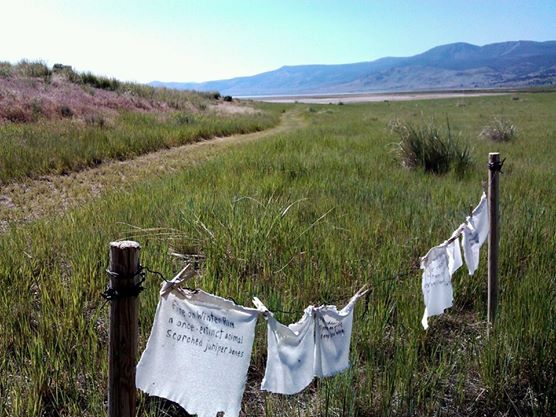
Clothesline poetry in the high desert.

Clothesline poetry in the high desert.

Art is the soul, and artists its keepers. Without this vital work, we are diminished.

As author Barry Lopez has written, “Sometimes we need a story more than food to stay alive.”

During my two weeks at Playa, visual artists, performance artists, poets, and writers of fiction and nonfiction all fed each other stories and sustenance. We gathered around the table to talk about topics great and small. We took in each others’ work, and drew inspiration from it. Just a few who inspired me:

Belle’s poetry brought the world into sharp focus—like her poem “Sacred Cows,” exploring questions of ethics and culture around beef consumption. Hailing from Hong Kong, Belle taught a few of us chi gong one night in the Commons.

Belle after leading us in chi gong.

Belle after leading us in chi gong.

Portland-based poet Jen created innovative sound recordings and poetry whose shape mirrored landscape. She works for an environmental nonprofit, and her writing possesses a keen eye and ear for the natural world.

That same reverence for life is captured in the visual artists’ work. Susan’s small drawings depict The Ten Thousand Things. In the Tao te Ching, The Ten Thousand Things refers to all of creation. She remembered me snapping a photo of this bird drawing, and kindly gave it to me before we parted. I treasure it.

Susan's exquisite drawing on rice paper. She makes one a day after walking and observing.

Susan’s exquisite drawing on rice paper. She makes one a day after walking and observing.

Emily’s watercolors evoke wild desert beauty in both postcard-sized landscapes and largescale topographical representations. She gave me one of her postcard pieces, the view of Playa from her balcony. I can look up from my desk and see that blue sky anytime I want.
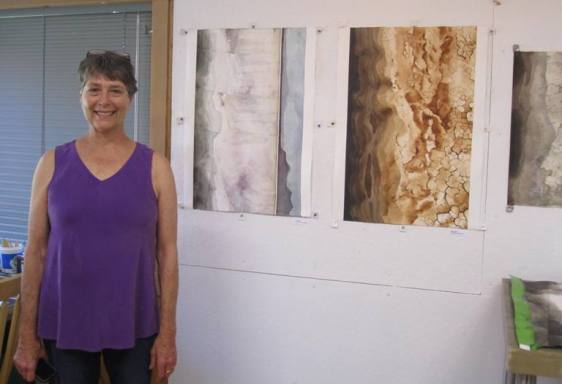
Emily and a few of her gorgeous topographical representations, based on Oregon's Summer Lake and environs.

Emily and a few of her gorgeous topographical representations, based on Oregon’s Summer Lake and environs.

All of these and more blessed my stay and affirmed for me yet again that art is not a luxury.
Will Allen Visits Peaceful Grounds

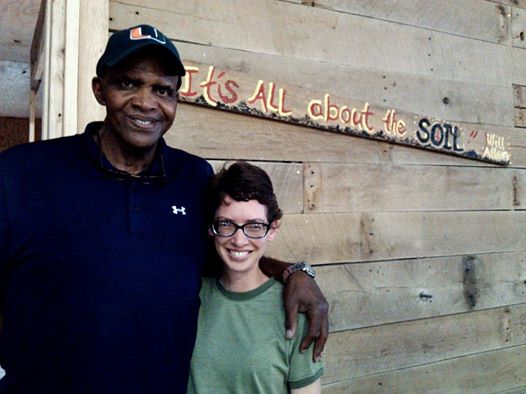
It was an honor to meet Growing Power founder Will Allen last weekend. The urban farming advocate was in town to support the work of his student Linda Proffitt at Peaceful Grounds. (Here’s my earlier post about this inspiring demonstration farm, which is a regional training center for Growing Power.)

This aphorism hangs on the wall at Peaceful Grounds.

This aphorism hangs on the wall at Peaceful Grounds.

The former pro basketball player told me that he learned how to broadcast seed as a child. He can pick up a handful of seed and not drop one of them. He has the muscle memory for broadcasting those seeds, whether arugula or chard or carrots—and all require different release rates. His sharecropper father taught him as a child, and all these years later, he retains the skill.

Now he sows great swaths of salad greens in his Milwaukee farm operations. Calling himself a “crusty old farmer,” he is the embodiment of Growing Power’s stated vision: “to inspire communities to build sustainable food systems that are equitable and ecologically sound, creating a just world, one food-secure community at a time.”

In 25 urban farm sites, on places like brownfields, school property, and land leased from corporations, the organization models how to get this done. The food is distributed through multiple channels, from Community Supported Agriculture accounts to a major distributor, Sysco. “Just another customer” is how he describes the corporation that ships GPI wares all over southeast Wisconsin.

Though the local food movement continues to make strides, there’s still a long way to go. Despite all the options—the CSAs, the farm stands, the farmers markets, the small mom and pop stores stocking local fare—Allen says up to 99 percent of the food eaten in major cities comes from 1500 miles away. “The vast majority of people will shop square,” he says, referring to big box stores.

Only $13 million of the U.S. food sector is generated by eco-agriculture—about the equivalent of three McDonalds. Growing Power represents 20 percent of that share. To fully transform the food system would require 50 million people to start growing food in their own yards, he says.

Turning the ship around has been the iconic Allen’s life work for the past 21 years.

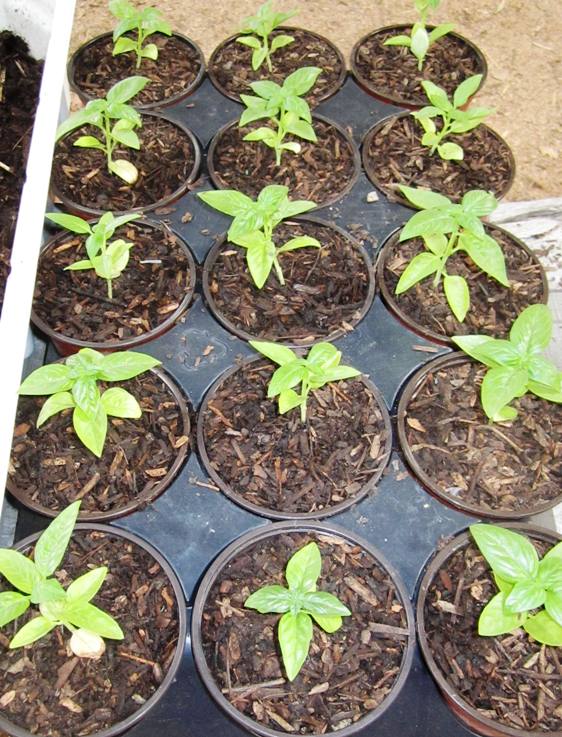
Basil sprouts at Peaceful Grounds, a regional training center for Will Allen's organization, Growing Power.

Basil sprouts at Peaceful Grounds, a regional training center for Will Allen’s organization, Growing Power.

He envisions for-profit businesses taking up the charge of urban food security, with nonprofits assuming a training and organizing role.

In his own organization, the people responsible for growing the food are extremely efficient, and training happens as a separate program. That’s a critical point, because farming isn’t easy. Efficiency is the name of the game.

“My crew comes from the community, and they live in the community, but they are professionals. Everybody thinks you can take interns and integrate them with professionals, but you can’t. You’ll lose money hand over fist.”

He's very tall.

That’s me on the right.

More of my conversation with Will Allen can be found in today’s Nuvo article.

Also check out Robb Smith’s terrific podcast interview over at DIY Food Supply.

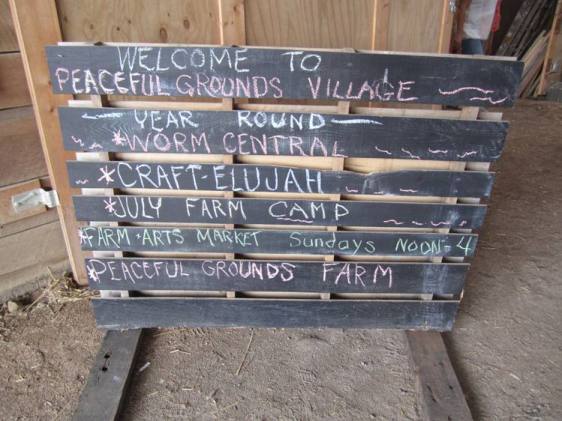
Peaceful Grounds

Monday morning a group of gardeners from the neighborhood had a private tour of Peaceful Grounds, Linda Proffitt’s endeavor at Marion County Fairgrounds, where the county fair is going on. (See my earlier post about her work here.) The vision and scope of this Global Peace Initiatives project astounded and inspired us.

The cattle barn at the Marion County fairgrounds is home to this volunteer-driven initiative.

The cattle barn at the Marion County fairgrounds is home to this volunteer-driven initiative.

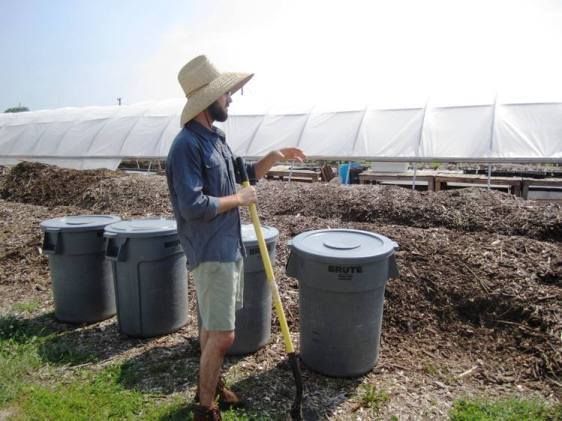
George Marshall, Linda’s intern, showed us around the farm, where mounds of wood chips are not just regular old wood chips but worm habitat.

George

George next to a hoop house that stayed warm all winter from heat given off by decomposition.

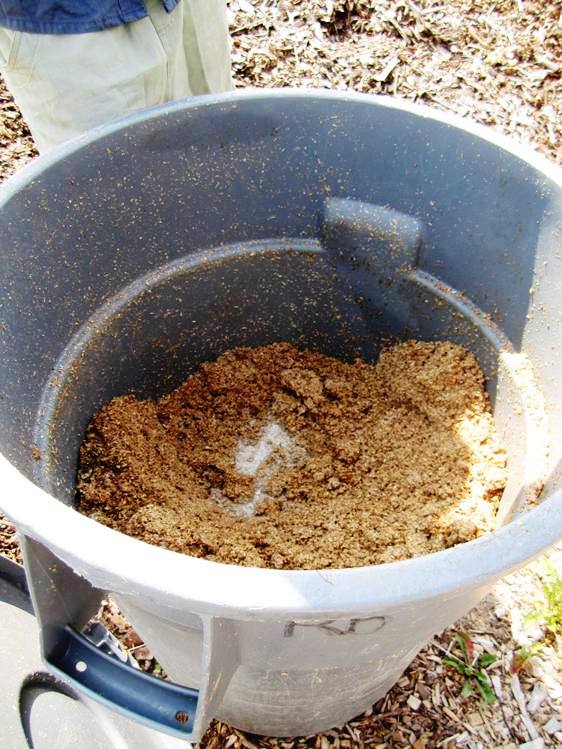
Peaceful Grounds takes beer mash from local brewers like Irvington’s own Black Acre and buries it in mulch to feed the herd of worms.

The spent grain is perfect worm food because barley fits easily into worms' tiny mouths.

The spent grain is perfect worm food because barley fits easily into worms’ tiny mouths.

Hand-painted signs that say “Worms at Work” and “Thank a Worm” testify to the importance of these little red wigglers.

IMG_3617

Digging up some of the underground workers to show us.

Volunteers mix 5 to 15 tons of mash with equal amounts of wood chips each week. Another mound incorporates dehydrated food waste from public hospital Eskenazi Health. Over time, these piles and rows are transformed into a viable medium for garden plants.

George showed us where vegetable and herb starts have been set right into these habitats.

broccoli

Broccoli planted in one of many windrows made by worms doing their work on wood chips and beer mash.

In a nifty closing of the loop, Linda has begun to raise hops to supply local brewers.

A few of Peaceful Grounds volunteer-planted crops.

A few more Peaceful Grounds volunteer-planted crops.

While we were walking down the raised beds (“windrows”) of basil and tomatoes, a fair official came up and asked for Linda. He wanted to introduce her to the people in charge of an elephant exhibit, so she could incorporate elephant dung in the farm operation. (“You never met a lady more excited about poop than Linda,” George joked.)

Inside the cattle barn is where kids and adults can come for hands-on fun with art and agriculture. It’s also where artists like Jamie Locke (another Irvington neighbor) demonstrate mandala making and other crafts—and where young volunteers from Handi-Capable Hands take charge of a gigantic tumbler that sifts the worm compost into two grades of product.

Heidi Unger took this photo of the tumbler, which is named Apollo and was donated by a local farmer who saw Linda on TV.

Heidi Unger took this photo of the tumbler, which is named Apollo and was donated by a local farmer who saw Linda on TV.

We went home with the finer grade, which is basically worm poo, to use as a powerful organic fertilizer. One tablespoon per plant will nourish it through a month, Linda says.

Worm castings make an excellent fertilizer. Now there's a local source!

Worm castings make an excellent fertilizer. Now we have a local source!

Before we left, we learned that Will Allen is going to visit the operation, which is a training outpost for his fabulous Growing Power organization. He will speak at 2pm Saturday and lead a workshop at 4pm, and will also preside over a ribbon cutting ceremony at noon on Sunday, when the Peaceful Grounds Farm and Arts Market kicks off.

IMG_3598I’d love to see more interaction between local urban gardeners and this facility, which is just a stone’s throw from Irvington’s back door. Right now the county fair is in full swing, but the possibilities extend beyond its closing date. Linda is running a Farm Camp for kids starting July 7, and is happy to host volunteers at any time.

By the way, she offered to set me up with an interview with Will Allen. I’m thrilled to meet this man I admire so much. I’m crowdsourcing interview questions. What would you ask the grandfather of urban gardening, if you could?

The Biggest Sky

I’m back from living under the biggest sky ever. Playa,* a retreat for artists, writers, and other creatives, granted me precious time in silence in the midst of a stunning landscape. I have to say, Oregon is my new favorite state (next to Indiana, of course).

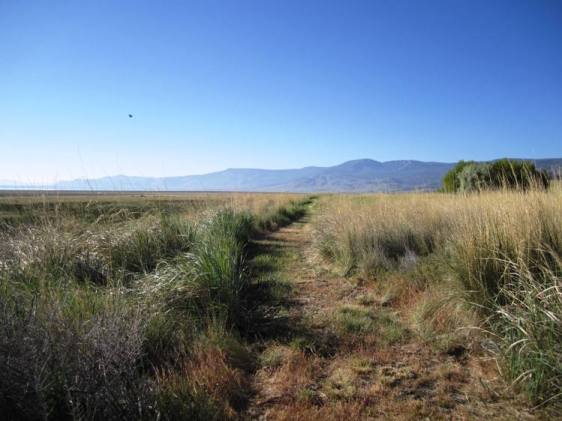
My first morning at Playa, I walked this mown path through the grass.

Morning walk in the high desert.

Morning walk in the high desert.

To my left was Summer Lake, the “playa” (defined as “a temporary lake, or its dry often salty bed, in a desert basin“). To my right, beyond the road, was a smallish mountain range known as Winter Ridge. The vistas pretty much gobsmacked this Midwestern girl.

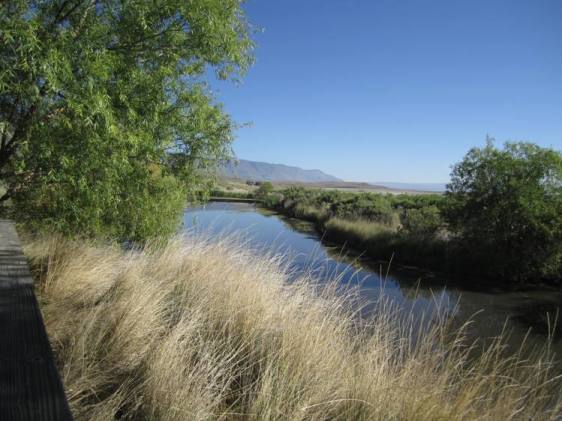
This was the view from my deck. I ate, read, wrote, and practiced yoga outside, shaded by two friendly trees.

My deck looked out over a pond. Who needs TV when you've got birds, dragonflies, jumping fish, and the occasional muskrat to watch?

Who needs TV or Internet when you’ve got birds, dragonflies, jumping fish, and the occasional muskrat to watch?

Pond life provided constant diversion, fodder, and entertainment. The jingles of my avian companions kept me humming all day. (I decided the redwing blackbird says, in French, Bon, vas-y! and in English, Look at meee, yeah!)

Every day I explored my interior and exterior worlds.

Walking on the mud flats.

Walking on the mud flats.

I was (and still am) overwhelmed with gratitude for such a gift.

An unexpected bonus  was connecting with so many incredible people, all in love with the natural world, all devoted to seeking, listening, experimenting, creating. In an upcoming post I will share a little bit about my co-residents, who inspired me almost as much as the wide-open space.

*Are you a writer, artist, naturalist, or researcher who would benefit from time away from routine demands? I would encourage you to apply for a residency at Playa. The program offers a combination of seclusion and conviviality in an absolutely gorgeous desert landscape. You won’t regret it, if you have the chance to go.

Evidence of the Shift

Final in a series

I’ve often written here about feeling overwhelmed, feeling helpless, feeling despairing. At times it seemed the news was all bad.

The Maldives, one of the island nations imperiled by rising seas. Photo by Nevit Dilman, via Wikimedia Commons.

The Maldives, one of the island nations imperiled by rising seas. Photo by Nevit Dilman, via Wikimedia Commons.

At times I feel besieged by evidence that we as a species are beyond hope. Sometimes all I hear is the lowest common denominator outshouting all reason. Sometimes all I see is fear feeding on fear, a downward spiral with no bottom.

Then along comes a hopeful story of human connection, small but significant.

Bethann was at the zoo with her daughter when she heard a man say, “You heard the one about the two Mexicans?” As it happens, Bethann has adopted two children who are not Caucasian. The man had his own young son with him. Bethann stepped up, with nervous heart, determined to make a difference.

Here’s the story in her own words:

“While at the zoo with Bo this morning, a guy with a toddler (loudly) told a joke that started with ‘How many Mexicans does it take…’ I found a moment when he was separated from his group and pointed to Bo and said ‘See that kid? She’s mine and she’s incredible. I can see you love your kid a lot. But, every time you tell one of those jokes, you teach your kid that it’s OK to treat my kid like crap. And, I am sure you don’t mean to teach your child to hurt others, but that is exactly what you just did there.’ He actually quietly said ‘I understand.’ God willing, there will be one more person on this earth who thinks before he teaches his kid to hate.”

Photo by Debbie L., via Flickr Commons

Photo by Debbie L., via Flickr Commons

How stunning that this man, instead of lashing out or being defensive, very quietly said, “I understand.”

To me this is evidence of the shift that Julia Bystrova of Transition US described, the widespread awakening that is already happening. I see it in the way Bethann stood in her center and spoke quietly but strongly to hold this man accountable. I see it in the way she allowed him room to hear her. I see it in his respectful and surprising response.

What evidence have you encountered of this kind of transformation? I’d love to hear your stories.

Confronting the Shadow

Second in a series

Consciousness shift is one thing, but what do we do about systemic ills?

I asked Julia Bystrova of Transition US about the governmental corruption holding us back from systemic policy-level changes—the big changes we are going to need, if we have a prayer of surviving the linked crises facing us. She had an interesting answer.

She pointed out that a healthy consciousness shift is already manifesting on the local level—witness sensible policy changes in cities all over the country. In LA, for example, a group called Tree People convinced their city that urban forestry is key to watershed management.

Photo by Lida, via Flickr Commons.

Photo by Lida, via Flickr Commons.

More than 1000 mayors have endorsed the US Conference of Mayors Climate Protection Agreement, vowing to reduce carbon emissions in their cities below 1990 levels, in line with the Kyoto Protocol.

And my own city, right smack in the middle of the stolid Midwest, shows some movement. This year we are gaining both a bike share and an electric car share program.

But beyond the local level where we can see real change happening, the picture looks bleak. As Julia put it, much of our larger governmental machine was “hijacked by corporate pirates.” These titans are not interested in seeing communities flourish on a local scale—not when there are profits to be had.

Greed and control are their modus operandi. Their greed is so extreme that they are willingly sacrificing people’s lives. And they’re deliberately sacrificing the life of the planet.

“That’s what we’re up against,” Julia told me. “We’re up against this darkness. It’s very classic, very mythological…It’s like this classic tale (that) I believe we are living out.”

But spiritually awake people can shine a light on the collective shadow. That’s what these madmen, as Julia calls them, represent: our collective shadow. It’s up to us to gain the maturity to stand our ground, in love and compassion, in the presence of this darkness.

In psychological work, the shadow is the unacknowledged, hated part of ourselves that rules our behavior—unless we turn toward it with love.

It’s time to look at such perpetrators in the face, with full awareness, unafraid.

Rebirth, by Jason Samfield, via Flickr Commons.

Rebirth, by Jason Samfield, via Flickr Commons.

Julia believes that more and more of us are reaching this level of awakening. If we confront them from a high level of integrity, institutions entrenched in corrupt power will crumble.

Again, a powerful vision to hold.

Next: Evidence of the shift.