A Little Help from the Fungus Kingdom

Yesterday I went on a quest for the fabled fungus that’s been mopping up petrochemicals from a food co-op’s parking lot. Olympia Food Co-op‘s eastside store was the place. I timed my visit just right, happening upon a crew of landscapers working the butterfly and bird garden.
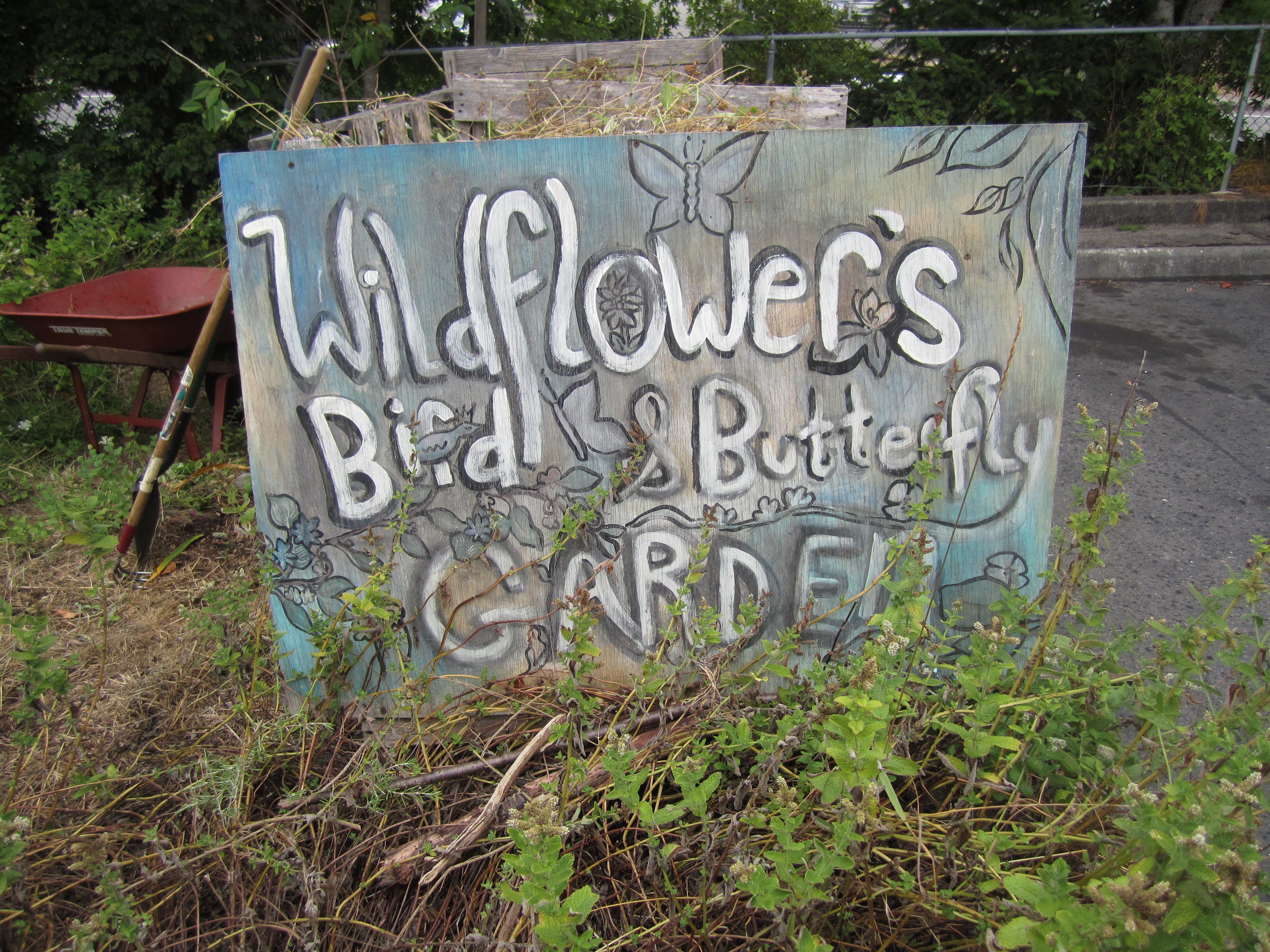
The grounds of this food co-op include a sweet garden meant to attract pollinators.

Outside the food co-op is a sweet garden meant to attract pollinators (and people).

Sarika, the co-op’s landscape coordinator, jumped at the chance to tell me about the project. The mycoremediation began five years ago in partnership with Olympia Mycelial Network. Oyster mushrooms are able to digest petrochemicals into harmless compounds. So the drainage ditch of the parking lot contains several burlap bags full of oyster mushroom mycelium.

Bags filled with oyster mushroom mycelium.

Bags filled with oyster mushroom mycelium.

The idea is to filter the oil before it hits the drain down by the sidewalk.

Ever wonder where the runoff disappears to when it enters a drain like this?

Ever wonder where the runoff disappears to when it enters a drain like this?

I also met Brittany and Jordan, two young Louisiana-born “WWOOFers” volunteering with Sarika. They are traveling around the country with another friend, exploring farming innovations and learning how they can be of use to our beautiful planet. (Check out their adventures at Traveling Tripod.)

Jordan, Sarika, and Brittany

Jordan, Sarika, and Brittany

Brittany waxed eloquent about the role of mushrooms—this critical work is all about ensuring “clean water for everyone.”

Signage showing the overview of the mycoremediation

Signage showing an overview of the fungi’s work

Having been in the Pacific Northwest for almost a month, I’m beginning to grasp the extreme sensitivity of Puget Sound. This project represents just one small but significant effort to right the wrongs of our polluting ways.

Hood Canal, a basin of Puget Sound, as seen from Potlatch Beach on a moody day.

Hood Canal, a basin of Puget Sound, as seen from Potlatch Beach on a moody day.

The possibilities are staggering. Peter McCoy, who last year contributed a guest post about radical mycology, first told me about this project over a year ago. Finally seeing those humble mushroom bags doing their work brought tears to my eyes.

Sarika is looking into funding to pursue farther-reaching remediation. And the Radical Mycology Collective, of which Olympia Mycelial Network is a part, is launching its fall tour today. I can’t wait till the big Radical Mycology Convergence, taking place in Orangeville, IL this October!

Good to Grow

Guest post by Luke Taylor, who started a business called Good to Grow with his wife, Emily

Luke and Emily Taylor

Luke and Emily Taylor

Based out of Irvington, on the east side of Indianapolis, Good to Grow aims to harness the power of community to revolutionize the way we interact with overlooked natural resources.

What does it look like to “harness the power of community?” And what are these overlooked natural resources?

The power of community is a shared vision, and many hands. Our vision is one that makes it easy for neighbors to make choices that not only benefit their community, but also themselves. Choices like saving their food waste to create compost—and collecting rainwater to reduce water bills and strain on municipal utilities.

Good to Grow's custom-built water barrel towers enable urban gardeners to save large amounts of rainwater.

Good to Grow’s custom-built water barrel towers enable urban gardeners to save large amounts of rainwater.

Some might call this “being green,” or recycling. I am happy thinking of it as purely selfish.

If you have altruistic notions of saving the world one recycled cardboard box at a time, great! Continue seeking out ways to heal your part of the world through changes large and small. Your community needs more people like you.

Many in your community, however, need a layup. (Editor’s note: a layup, for the basketball-uninitiated, is the easiest of shots, more difficult to miss than make.) These folks will only choose to recycle if they are standing next to a bin or a forest ranger is looking in their direction.

Or if they receive something free as a reward. In short, they need incentive.

Developing an incentive framework to support behavior change is our goal at Irvington’s Good to Grow.

A bucket ready to receive a neighbor's vegetable scraps.

A bucket ready to receive a neighbor’s vegetable scraps.

One such framework is Irvington’s composting program. Already being championed by 16 households, this initiative’s ultimate goal is to collect compostable food waste and distribute finished compost (a valuable organic fertilizer) at the very same time. The idea is to connect beneficial behavior as seamlessly as possible with valuable incentive and convenience.

It is my hope that this idea encourages communities to create incentive frameworks of their own!

Luke Taylor moved to Irvington, Indianapolis with his wife Emily in early 2013. They chose this neighborhood mostly because of its strong sense of community. The Taylors wanted to be a part of it, and to encourage its growth. With Good to Grow as the vessel for delivery, they have a vision for Irvington that will amplify and enrich our local resources, bringing together an already blossoming Indianapolis community. One day, they dream to be able to enrich other Indianapolis communities in the same way by sharing the Good to Grow framework.

Going Soil-Friendly

Do you ever think about the importance of the innumerable tiny creatures living underground, right under your feet? In just one tablespoon of soil, according to North Carolina State University’s Cooperative Extension Service, some 50 billion microbes are working away.

That’s if the soil is healthy.

By NoNomme (Own work) [CC0], via Wikimedia Commons

By NoNomme (Own work) [CC0], via Wikimedia Commons

I remember a conversation with an Ohio woman active in the environmental movement. She told me a story about a farmer who decided to switch his (conventionally farmed) cornfields to chemical-free produce. His seeds sprouted, but grew stunted and deformed.

The land had been blasted with petrochemicals year after year. Now there was nothing left to support a plant. No microbes. No nutrients.

But it doesn’t have to be that way.

My most recent Farm Indiana piece concerns a small agricultural fertilizer business called Sterling Formulations, led by a young man aptly named Vince Plowman.

Sterling Formulations’ team assesses farm fields and recommends soil-friendly additives depending on the particular needs of each field. They apply microbes and micronutrients to balance and nourish the soil that nourishes us.

Filling a container with earth-friendly fertilizer concentrate at Sterling Formulations' Shelbyville, IN plant.

Filling a container with earth-friendly fertilizer concentrate at Sterling Formulations’ Shelbyville, IN plant.

The team includes an Amish farmer who offers knowledge based on generations of experience. (My people!)

“The Amish have been farming organically for centuries, and quite successfully,” Vince told me. “They treat their soil right, and guess what, they’re getting yields comparable to conventional.”

He was surprised to learn that conventional farmers are as receptive to this message as organic growers. He said, “We found, in talking to a lot of conventional farmers, that so many of them are curious.”

Corn Field

Though he half-expected a derisive response from the conventional agribusiness side, so far that has not been the case. “What we found is they’re absolutely afraid…They don’t know how to do it (transition off chemicals), and they don’t have anyone to step them through the process of going to organics without absolutely killing themselves. They’re used to getting 200 bushels an acre, and they’re afraid they’re going to get 50 next year” if they stop using chemicals.

What comes next in that scenario isn’t pretty: they’d likely lose their farm. And many in that arena are supporting multiple families on the farm.

But Sterling Formulations is stepping into the gap. The goal is to help heal beleaguered soil through tailored applications of microbes and kelp-based fertilizers. Instead of petrochemicals that artificially prop up crops, these nutrients and tiny creatures create a living medium for plants.

This is one of the most exciting developments I’ve heard about in a long time. Farmers who want to stop using chemicals can get support in the switch—and stay profitable during the transition.

You can read more about Sterling Formulations in my Farm Indiana story.

Peaceful Grounds

Monday morning a group of gardeners from the neighborhood had a private tour of Peaceful Grounds, Linda Proffitt’s endeavor at Marion County Fairgrounds, where the county fair is going on. (See my earlier post about her work here.) The vision and scope of this Global Peace Initiatives project astounded and inspired us.

The cattle barn at the Marion County fairgrounds is home to this volunteer-driven initiative.

The cattle barn at the Marion County fairgrounds is home to this volunteer-driven initiative.

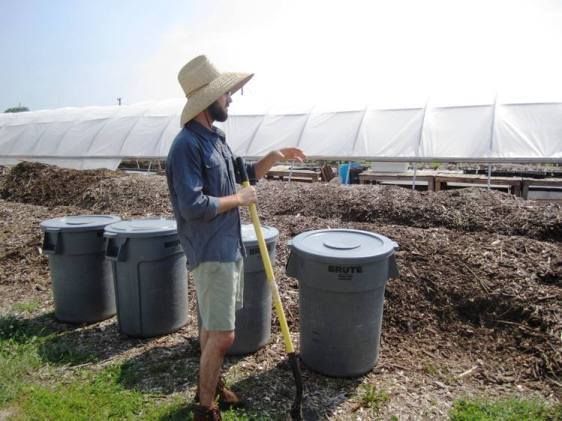
George Marshall, Linda’s intern, showed us around the farm, where mounds of wood chips are not just regular old wood chips but worm habitat.

George

George next to a hoop house that stayed warm all winter from heat given off by decomposition.

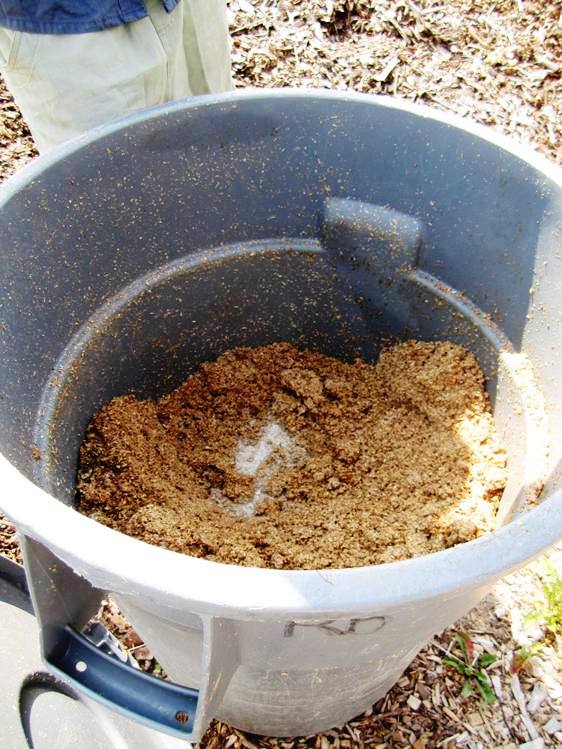
Peaceful Grounds takes beer mash from local brewers like Irvington’s own Black Acre and buries it in mulch to feed the herd of worms.

The spent grain is perfect worm food because barley fits easily into worms' tiny mouths.

The spent grain is perfect worm food because barley fits easily into worms’ tiny mouths.

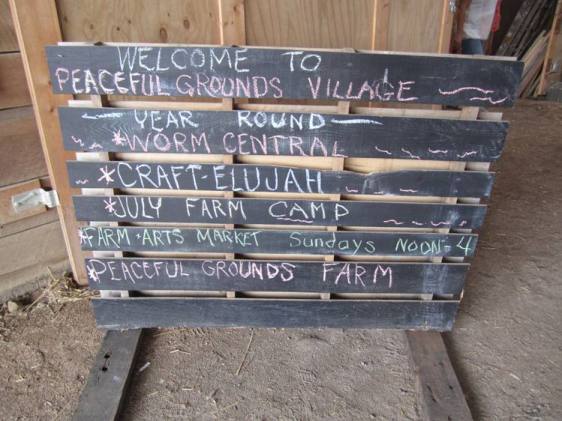
Hand-painted signs that say “Worms at Work” and “Thank a Worm” testify to the importance of these little red wigglers.

IMG_3617

Digging up some of the underground workers to show us.

Volunteers mix 5 to 15 tons of mash with equal amounts of wood chips each week. Another mound incorporates dehydrated food waste from public hospital Eskenazi Health. Over time, these piles and rows are transformed into a viable medium for garden plants.

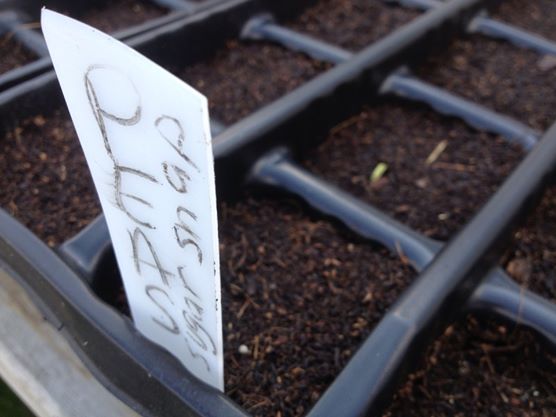
George showed us where vegetable and herb starts have been set right into these habitats.

broccoli

Broccoli planted in one of many windrows made by worms doing their work on wood chips and beer mash.

In a nifty closing of the loop, Linda has begun to raise hops to supply local brewers.

A few of Peaceful Grounds volunteer-planted crops.

A few more Peaceful Grounds volunteer-planted crops.

While we were walking down the raised beds (“windrows”) of basil and tomatoes, a fair official came up and asked for Linda. He wanted to introduce her to the people in charge of an elephant exhibit, so she could incorporate elephant dung in the farm operation. (“You never met a lady more excited about poop than Linda,” George joked.)

Inside the cattle barn is where kids and adults can come for hands-on fun with art and agriculture. It’s also where artists like Jamie Locke (another Irvington neighbor) demonstrate mandala making and other crafts—and where young volunteers from Handi-Capable Hands take charge of a gigantic tumbler that sifts the worm compost into two grades of product.

Heidi Unger took this photo of the tumbler, which is named Apollo and was donated by a local farmer who saw Linda on TV.

Heidi Unger took this photo of the tumbler, which is named Apollo and was donated by a local farmer who saw Linda on TV.

We went home with the finer grade, which is basically worm poo, to use as a powerful organic fertilizer. One tablespoon per plant will nourish it through a month, Linda says.

Worm castings make an excellent fertilizer. Now there's a local source!

Worm castings make an excellent fertilizer. Now we have a local source!

Before we left, we learned that Will Allen is going to visit the operation, which is a training outpost for his fabulous Growing Power organization. He will speak at 2pm Saturday and lead a workshop at 4pm, and will also preside over a ribbon cutting ceremony at noon on Sunday, when the Peaceful Grounds Farm and Arts Market kicks off.

IMG_3598I’d love to see more interaction between local urban gardeners and this facility, which is just a stone’s throw from Irvington’s back door. Right now the county fair is in full swing, but the possibilities extend beyond its closing date. Linda is running a Farm Camp for kids starting July 7, and is happy to host volunteers at any time.

By the way, she offered to set me up with an interview with Will Allen. I’m thrilled to meet this man I admire so much. I’m crowdsourcing interview questions. What would you ask the grandfather of urban gardening, if you could?

All I Cannot Save

Monarch sipping on liatris, by Gene Wilburn, via Flickr Commons.

Monarch sipping on liatris, by Gene Wilburn, via Flickr Commons.

My heart is moved by all I cannot save

So much has been destroyed

I have to cast my lot with those who, age after age,

Perversely, with no extraordinary

Power, reconstitute the world.

—Feminist poet Adrienne Rich

Building Soil, Growing Food, Nurturing Relationships

I just listened to a podcast interview with Linda Proffitt, founder and executive director of Global Peace Initiatives here in Indianapolis. I’ve known Linda since the days I was responsible for Nuvo Newsweekly’s monthly social justice calendar. Back then I called her regularly to find out about GPI’s peace hikes and other activities, and I was always impressed with her programming.

Since that time GPI’s work has exploded onto the local resilience scene. They started by helping church groups grow food for the hungry, bringing countless volunteers together to experience the transformational power of service initiatives.

peasIn 2011, the organization began a new partnership with one of the most influential forces in the urban farming movement. Will Allen and his team at Growing Power designated GPI as a regional training center for Central Indiana. Spring of 2012 saw a well-attended “From the Ground Up” workshop at Peaceful Grounds, GPI’s newly formed center for agriculture and sustainability.

If you have a chance to listen to the podcast, you might be struck (like me) by the idea that produce is just one output of Peaceful Grounds. There’s also soil, which is foundational. And then there’s relationships.

People coming together to cooperatively grow food can form some powerful ties. And that’s what it’s all about at Peaceful Grounds.

Sharing worms with youthful visitors

Sharing worms with youthful visitors

Now at the Marion County Fairgrounds, Peaceful Grounds is about to start a weekly farm and arts market, Sundays from noon to 4 starting June 1.

GPI’s work is featured in a chapter of the new book Deep-Rooted Wisdom by Augustus Jenkins Farmer. The chapter is called “Stop Tilling the Soil”—and worm composting is a big part of the system at Peaceful Grounds. (I was thrilled learn that the worms eat brew mash from my local microbrewery, Black Acre, located right here in Irvington.)

Linda will be the guest speaker at next Tuesday’s Green Hour, a project of the Irvington Green Initiative. If you’re in town, come out and join us to hear all about this vital work.

Photos courtesy of Global Peace Initiatives.

I Heart My Garden Tower

Faithful readers of this blog will remember last year’s midseason efforts with a new gardening technology. Due to some missteps and a late start, I had pretty low yields. But this spring the Garden Tower Project, offering a vertical garden design with worm composting right in the tower, is my best friend.

I’m following the instructions this time and fertilizing with organic fish emulsion till my worms get going, and I can already tell a big difference.

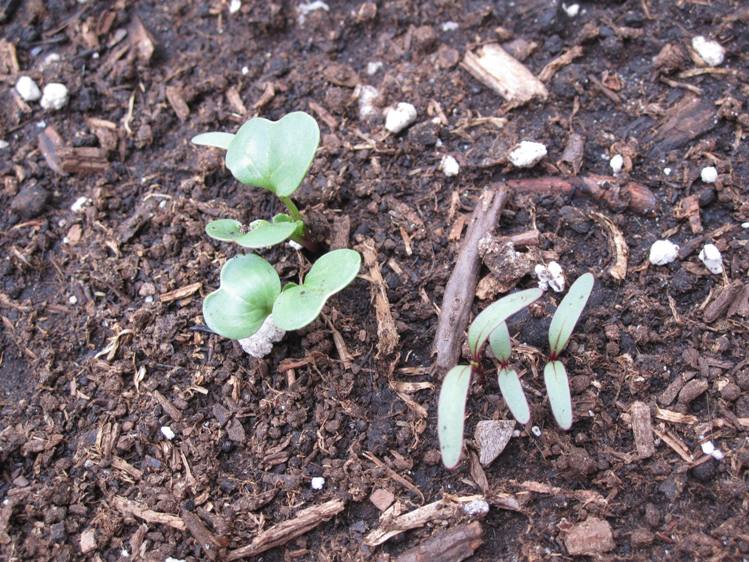
I sowed radish and beet seeds in the top of the Tower over a month ago, and it was so exciting when they sprouted.

I sowed radish and beet seeds in the top of the Tower over a month ago, and it was so exciting when they sprouted.

In late March I bought starts from two of my favorite farmers at the winter farmers market, Stout’s Melody Acres and KG Acres.

Sweet little chard seedling in one of the pockets.

Sweet little chard seedling in one of the pockets.

This year I’m not asking each pocket to hold more than one plant (last year I was loath to thin my babies, resulting in spindly, sad specimens).

Beautiful lettuce (before I thinned).

Beautiful lettuce (actually two plants, before I thinned).

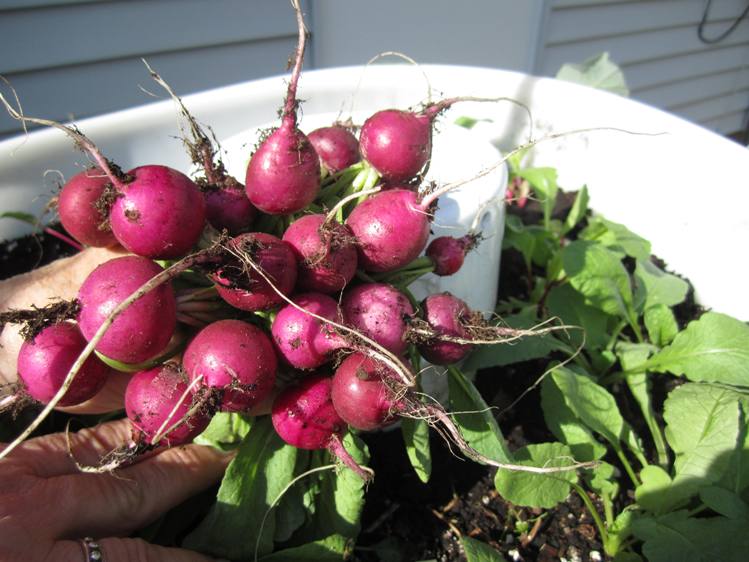
Soon I was able to eat my thinnings. Just last week, I harvested a bumper crop of radishes.

And the radishes are still coming!

And the radishes are still coming!

This week I’ve made my salads solely from my own garden (with a few foraged weeds for good measure), and I’ve begun snipping kale leaves to use in green smoothies.

top

More radishes on the way. And here come the beets! I will probably slip a tomato or pepper plant in here before too long.

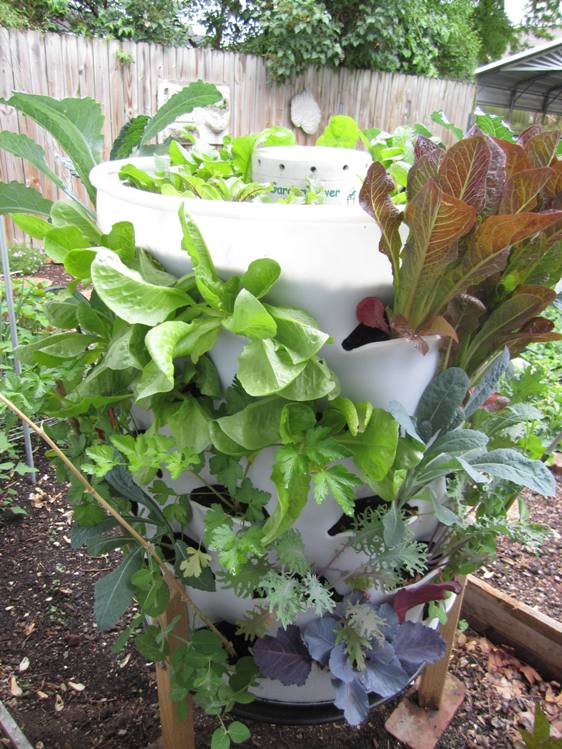
Here’s what my Garden Tower looked like before I started majorly harvesting a few days ago.

Still room for a cucumber or zucchini seeding on the bottom row. (Yes I do love my greens!)

Still room for a cucumber or zucchini seeding on the bottom row, where that one pea sprout is lagging behind.

And another view.

Yes I do love my greens-- of all kinds!

Yes I do love my greens– of all kinds!

I learned more about the Garden Tower Project when I wrote a piece on it for the May issue of Farm Indiana. I was impressed with the vision of the project’s three partners. For example, at some point in the future they hope to switch from a petroleum-based plastic to plant-based.

According to partner Joel Grant, the type of polyethylene used in the Tower is simple to produce from plant-based sources. “You can produce polyethylene nearly as easily as biodiesel,” the environmental scientist says. “It takes more processing but…in some countries people solely manufacture it out of plant products.”

For more on the Garden Tower Project, visit their webpage or see my story in Farm Indiana (navigate to page 24).

Now I’m off to saute up some chard and radish greens for dinner!

Farming Females

Last month I enjoyed interviewing several women for a special section in Farm Indiana on women in agriculture. While some didn’t consider themselves farmers, all had valuable perspectives about what it means to bring a female sensibility to agriculture.

Many spoke of women’s connection to the earth as something deep and primal. Several compared the nurturing of plants and animals to caring for children.

And Kay Niedenthal, an urban farmer in Indianapolis, might have been talking about our procreative power when she said, “It’s like magic to make something from nothing. To start with dirt and a seed and then have a meal.”

Anna Welch of Fields of Agape in a field being prepared for hull-less oats.

Anna Welch of Fields of Agape in a field being prepared for hull-less oats. (The periodical has a much better photo of Anna by the terrific photographer Josh Marshall.)

I was intrigued by the fact that Anita Spencer of Homestead Growers didn’t start out growing organically. She and her husband were Miracle-Gro fans at the start. When a friend asked if they’d ever considered going organic, she said, “We laughed at her!”

But that question planted a seed all its own. They took a look at the contents of the famed formulation and realized they didn’t want all those chemicals in their bodies and those of their children. Nor did they want to sell produce grown that way.

Now Anita is proud to offer high-quality, chemical-free food to her customers through both Homestead Growers and its spinoff line of tomato sauces, Local Folks Foods.

(As a side note, this anecdote showed me how questions can spur behavior change, even the questions don’t seem well-received. I resolve to ask more questions!)

For the full story, including seven mini-profiles of women in agriculture and Josh Marshall’s beautiful photos, see the current issue of Farm Indiana (page A8).

Celebrating International Permaculture Day

Today is International Permaculture Day. Guest blogger Thomas Tlusty wrote the following piece exploring his connection to Permaculture, and its power.

Guest Post by Thomas Tlusty, founding partner of The Garden Tower Project

Two years ago, I saw sketches of a device that I felt certain had the potential to revolutionize urban agriculture. I had long been interested in the economics and environmental impact of our food system. So the design piqued my curiosity and unleashed my desire to have a positive impact in my own lifetime.

The Garden Tower is a water-saving, worm-friendly, uber-productive vertical gardening aid.

The Garden Tower is a water-saving, worm-friendly, uber-productive vertical gardening aid.

Since that fateful reveal, my life has been transformed. The Garden Tower Project reignited my passion, and I began rethinking current food production/distribution models. My eyes were opened to the plethora of pioneers, visionaries and everyday folks who are practicing, teaching, and studying Permaculture and sustainable farming/lifestyles.

I am inspired by those who inspire others. I’m thinking of luminaries like Bill Mollison, David Holmgren, and Will Allen. I’m also thinking of many less well-known but still pivotal figures, such as:

  • Community Slow Food Educators
  • Permaculture Design Educators
  • Elementary School Science Educators
  • Organic Gardening Instructors

I am a relative newcomer to this work. Yet I feel a kinship with those who aspire to build community and develop our inherent natural resources in a straightforward manner.

I’m troubled by the unbinding of our culture from its roots. Western civilization is “circling the drain” as we surpass our fragile planet’s carrying capacity (in our current mode of operation).

Permaculture (to me) represents an entirely sane alternative to the path on which we find ourselves today. Permaculture principles contain not only the seeds of hope but a catalyst for change. In practice, these concepts could improve the lives of untold millions and positively influence the course of our future on this planet.

I find hope in people working together in communities, sharing education and experience. And teaching our children well is our first and best hope.

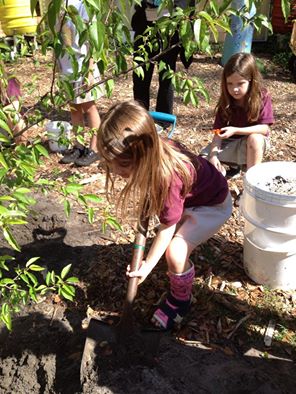
A child at  Learning Gate Community School prepares soil despite the cast on her leg. Thomas captions this photo “Our Hope For Mending a Broken Future.”

Our Hope For Mending a Broken Future: A child at Learning Gate Community School in Lutz, Florida, prepares soil despite the cast on her leg. Instructor: Cissy Brady Stanko

Permaculture engenders ideas and conversations around topics like environmental science, vermiculture, organic gardening, eco-art, and eco-psychology. And connections grounded in Permaculture positively transcend any political, socio-economic, racial, or gender barriers that have been erected in the past or could possibly be constructed in the future.

In my endeavors, I have developed friendships through online Permaculture forums and related Facebook pages. The connections range from the casual and conversational to the inspirational and uplifting. Together they raise me from the deep morass that had grown like a thick moss over my heart’s desire.

I’m now acting on a long-felt wish to accomplish something meaningful and utterly critical: addressing our outdated and increasingly toxic food production/distribution system. Without action and intent, habits will remain the same. Permaculture shows us the way to a very different future.

Thomas Tlusty was raised in Lombard, IL. Thomas was active in social justice and interested in food issues from a young age. In his late teens to early twenties, he worked at the Chicago Board of Trade (in Agricultural Commodities) for a leading grain exporter. The Ellettsville, IN resident has been a practicing Certified Natural Health Professional and is currently an Active Isolated Stretching Therapist in private practice. Thomas is a founding partner in the Garden Tower Project.

Tearing Up an Ancestral Contract

I woke up thinking about that beloved quote we see so many different places: “Your playing small doesn’t serve the world.” Attributed falsely to Nelson Mandela, the words are part of a beautiful passage by Marianne Williamson.

I realize now that I took that quote to heart, but not really into my being. I thought I understood it. I aspired to it. But recently I’ve been reviewing my ancestral contracts and commitments. I see more clearly now the ways I’ve limited myself.

I was raised Mennonite. Few would think it to look at me (and no one would guess it from my Sunday morning routine). But Mennonite-ness is a key part of my identity.

In many ways I don’t feel very far removed from that heritage—nor from my Amish forebears. Recently my spouse and I watched a PBS show about the Amish. We kept nudging each other: Yep. That’s us! (She descends from the same “plain people.”)

By Gadjoboy, via Wikimedia Commons

By Gadjoboy, via Wikimedia Commons

But what about these contracts I’m reviewing? Well, we Anabaptists are a humble people; that’s one of our main things. (Sometimes I think we’re pretty darn proud of our humility!)

And there is something to be said for taking a self-effacing approach to life. The world is full of braggadocio. Who needs it? Why not modestly go about our work? Actions speak louder than words, and all that.

I embrace many agreements stemming from my heritage. I value simplicity, stewardship, and nonconformity: carving a path that’s different from the mainstream.

But in our purported humility’s case, it seems that something unhelpful hitched a ride on that value. It’s a habit of self-effacement so extreme that it abnegates many of our gifts.

What do we have to offer, who are we to say, why would anyone care what we think?

Quick story: On more than one occasion, I heard my dad refer to himself as a “dumb Amishman.” (He said this jokingly—he was never really Amish, though his father had been.)

Related story: Sometimes I assist my spouse in whapping something together—perhaps reusing some wire and twine to make a garden trellis or the like. And one of us will quip, while surveying our finished product: “Not bad for a couple of Amish girls.”

Raised beds Judy and Dad made from reclaimed materials.

Raised beds Judy and Dad made from reclaimed materials.

It’s funny, and it speaks to the beautiful ingenuity that our forebears cultivated. But it also smacks of a self-doubt passed down for generations.

Our gifts have been buried under an avalanche of inherited beliefs about who we are and who we can never be. We run from the limelight. We say yes to too many tasks, making it impossible to complete our real assignment on earth. We keep our dreams under wraps.

At some point this unspoken agreement with our ancestors simply no longer serves.

I’m sure most people face ancestral contracts rooted in our ethnicity, religion, or nationality. Perhaps it’s time to bring these agreements to light. We can decide for ourselves whether to sign on the dotted line—or whether to tear the contracts up.