On the Solstice, Contemplating Home

On the longest day of the year, one week after leaving Playa, I’ve been thinking about all that “home” means to me. I loved Oregon’s pristine natural beauty. But I couldn’t wait to come home and walk the tree-lined streets of my neighborhood. Taking my dog Marley for a walk was high on my list on my first morning back.

It’s not perfect here. There’s litter, unlike in Lake County, OR, and sadly many of the neighborhood ash trees are not treated for emerald ash borer, so they are dying—a distressing sight. Poison ivy is rampant in untended corners. Plus it’s really damned humid. But I still walk along with my heart singing “home,” loving the big sycamores and tulip poplars, enjoying all those daylilies and clematis vines, sampling a mulberry here and there.

And getting the latest scoop. Down the street, my big softie neighbor still has the pit bull who wandered into his yard—the one he swore he wouldn’t keep. Farther on, the retiree who always complimented me on my dog (Lord, how that poodle can prance) tells me he and his wife are moving to a condo after 47 years here, but a young family up the street will be moving in. I learn about another neighbor’s dog’s bout with pneumonia. And so on.

Walking is one of the ways I savor my neighborhood, but it’s not the only way. About the second thing I did that day was ride my bike with Judy to the kickoff of the Irvington Folk Festival, a weeklong extravaganza that opened with an outdoor bluegrass concert. I’m no bluegrass aficionado, though I love a good Rocky Top as much as the next person. What I went for, and got, was the people.

In the crowd were Rosemary, and also Laura, two women who helped me found the Irvington Green Initiative years ago. Also our neighbor Pat, who told us of a possible grant for a native plant/foraging project we’ve been scheming.

We sat with Heidi and Mike, longtime gardening buddies who happened to bike up at the same time as we did, midconcert. Behind us were Jerome and his family. That was fortuitous, because I could update him on our sweetgum tree. (Arborist Jerome has a business called Tree-Centric, which I’ve blogged about before. A few weeks ago he assessed our ailing sweetgum, taking soil samples and cutting away girdling roots. The cost of his professional expertise? A loaf of homebaked bread.)
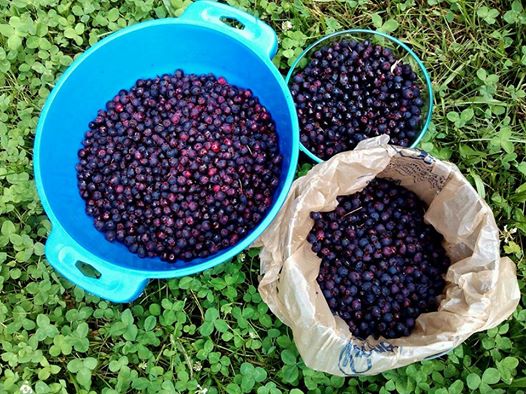
Jerome offered both his strawberry patch and serviceberry grove for picking. Though the strawberries were done, here's the lovely haul of serviceberries my friends and I made that morning.

Jerome offered both his strawberry patch and serviceberry grove for picking. Though the strawberries were done, here’s the lovely haul of serviceberries my friends and I made that morning.

Somehow, over the years, my roots have grown deep in this place. I grieve with friends who lost their 13-year-old German Shepherd, one of a gang of Marley met in the park as a pup. I pick mulberries and serviceberries (some from Jerome’s yard) while chatting with good friends. My yoga buddies welcome me back vociferously. I barter for Thai massage from a neighbor.

All that, plus (last night) hearing local musicians rock out, after eating at the new deli that sources everything it can locally.

How did I get so lucky? I don’t know, but I’ll contemplate the answer while biking to the park for the folk festival’s finale (and, bonus: alternative gift fair).
Building Soil, Growing Food, Nurturing Relationships

I just listened to a podcast interview with Linda Proffitt, founder and executive director of Global Peace Initiatives here in Indianapolis. I’ve known Linda since the days I was responsible for Nuvo Newsweekly’s monthly social justice calendar. Back then I called her regularly to find out about GPI’s peace hikes and other activities, and I was always impressed with her programming.

Since that time GPI’s work has exploded onto the local resilience scene. They started by helping church groups grow food for the hungry, bringing countless volunteers together to experience the transformational power of service initiatives.

peasIn 2011, the organization began a new partnership with one of the most influential forces in the urban farming movement. Will Allen and his team at Growing Power designated GPI as a regional training center for Central Indiana. Spring of 2012 saw a well-attended “From the Ground Up” workshop at Peaceful Grounds, GPI’s newly formed center for agriculture and sustainability.

If you have a chance to listen to the podcast, you might be struck (like me) by the idea that produce is just one output of Peaceful Grounds. There’s also soil, which is foundational. And then there’s relationships.

People coming together to cooperatively grow food can form some powerful ties. And that’s what it’s all about at Peaceful Grounds.

Sharing worms with youthful visitors

Sharing worms with youthful visitors

Now at the Marion County Fairgrounds, Peaceful Grounds is about to start a weekly farm and arts market, Sundays from noon to 4 starting June 1.

GPI’s work is featured in a chapter of the new book Deep-Rooted Wisdom by Augustus Jenkins Farmer. The chapter is called “Stop Tilling the Soil”—and worm composting is a big part of the system at Peaceful Grounds. (I was thrilled learn that the worms eat brew mash from my local microbrewery, Black Acre, located right here in Irvington.)

Linda will be the guest speaker at next Tuesday’s Green Hour, a project of the Irvington Green Initiative. If you’re in town, come out and join us to hear all about this vital work.

Photos courtesy of Global Peace Initiatives.

I Heart My Garden Tower

Faithful readers of this blog will remember last year’s midseason efforts with a new gardening technology. Due to some missteps and a late start, I had pretty low yields. But this spring the Garden Tower Project, offering a vertical garden design with worm composting right in the tower, is my best friend.

I’m following the instructions this time and fertilizing with organic fish emulsion till my worms get going, and I can already tell a big difference.

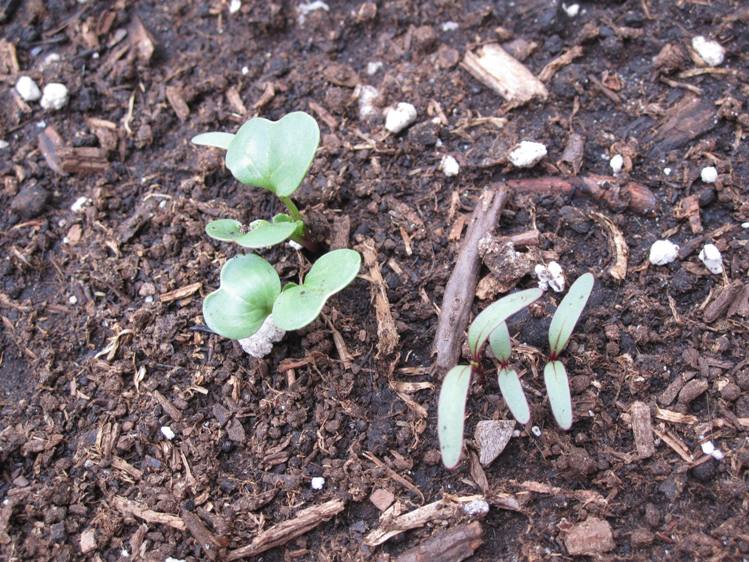
I sowed radish and beet seeds in the top of the Tower over a month ago, and it was so exciting when they sprouted.

I sowed radish and beet seeds in the top of the Tower over a month ago, and it was so exciting when they sprouted.

In late March I bought starts from two of my favorite farmers at the winter farmers market, Stout’s Melody Acres and KG Acres.

Sweet little chard seedling in one of the pockets.

Sweet little chard seedling in one of the pockets.

This year I’m not asking each pocket to hold more than one plant (last year I was loath to thin my babies, resulting in spindly, sad specimens).

Beautiful lettuce (before I thinned).

Beautiful lettuce (actually two plants, before I thinned).

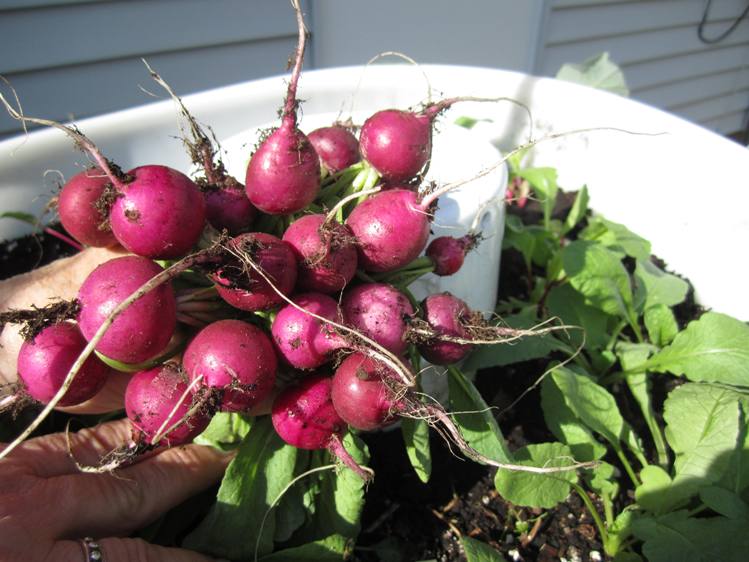
Soon I was able to eat my thinnings. Just last week, I harvested a bumper crop of radishes.

And the radishes are still coming!

And the radishes are still coming!

This week I’ve made my salads solely from my own garden (with a few foraged weeds for good measure), and I’ve begun snipping kale leaves to use in green smoothies.

top

More radishes on the way. And here come the beets! I will probably slip a tomato or pepper plant in here before too long.

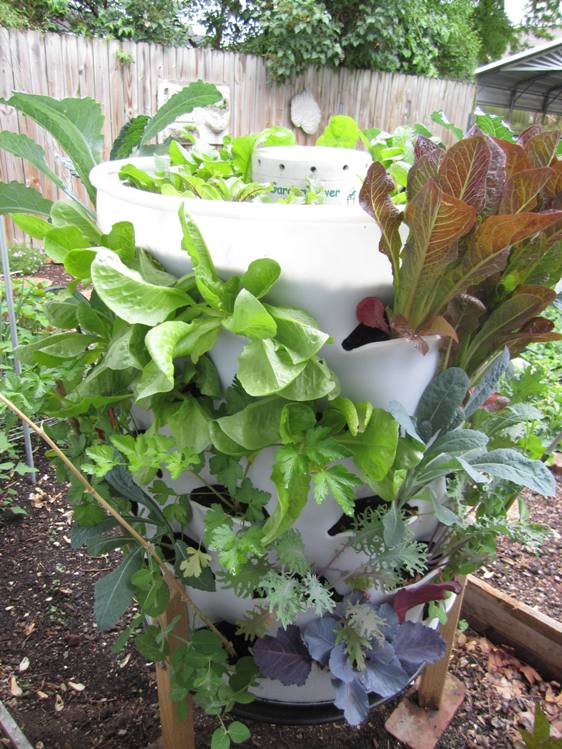
Here’s what my Garden Tower looked like before I started majorly harvesting a few days ago.

Still room for a cucumber or zucchini seeding on the bottom row. (Yes I do love my greens!)

Still room for a cucumber or zucchini seeding on the bottom row, where that one pea sprout is lagging behind.

And another view.

Yes I do love my greens-- of all kinds!

Yes I do love my greens– of all kinds!

I learned more about the Garden Tower Project when I wrote a piece on it for the May issue of Farm Indiana. I was impressed with the vision of the project’s three partners. For example, at some point in the future they hope to switch from a petroleum-based plastic to plant-based.

According to partner Joel Grant, the type of polyethylene used in the Tower is simple to produce from plant-based sources. “You can produce polyethylene nearly as easily as biodiesel,” the environmental scientist says. “It takes more processing but…in some countries people solely manufacture it out of plant products.”

For more on the Garden Tower Project, visit their webpage or see my story in Farm Indiana (navigate to page 24).

Now I’m off to saute up some chard and radish greens for dinner!

Farming Females

Last month I enjoyed interviewing several women for a special section in Farm Indiana on women in agriculture. While some didn’t consider themselves farmers, all had valuable perspectives about what it means to bring a female sensibility to agriculture.

Many spoke of women’s connection to the earth as something deep and primal. Several compared the nurturing of plants and animals to caring for children.

And Kay Niedenthal, an urban farmer in Indianapolis, might have been talking about our procreative power when she said, “It’s like magic to make something from nothing. To start with dirt and a seed and then have a meal.”

Anna Welch of Fields of Agape in a field being prepared for hull-less oats.

Anna Welch of Fields of Agape in a field being prepared for hull-less oats. (The periodical has a much better photo of Anna by the terrific photographer Josh Marshall.)

I was intrigued by the fact that Anita Spencer of Homestead Growers didn’t start out growing organically. She and her husband were Miracle-Gro fans at the start. When a friend asked if they’d ever considered going organic, she said, “We laughed at her!”

But that question planted a seed all its own. They took a look at the contents of the famed formulation and realized they didn’t want all those chemicals in their bodies and those of their children. Nor did they want to sell produce grown that way.

Now Anita is proud to offer high-quality, chemical-free food to her customers through both Homestead Growers and its spinoff line of tomato sauces, Local Folks Foods.

(As a side note, this anecdote showed me how questions can spur behavior change, even the questions don’t seem well-received. I resolve to ask more questions!)

For the full story, including seven mini-profiles of women in agriculture and Josh Marshall’s beautiful photos, see the current issue of Farm Indiana (page A8).

Celebrating International Permaculture Day

Today is International Permaculture Day. Guest blogger Thomas Tlusty wrote the following piece exploring his connection to Permaculture, and its power.

Guest Post by Thomas Tlusty, founding partner of The Garden Tower Project

Two years ago, I saw sketches of a device that I felt certain had the potential to revolutionize urban agriculture. I had long been interested in the economics and environmental impact of our food system. So the design piqued my curiosity and unleashed my desire to have a positive impact in my own lifetime.

The Garden Tower is a water-saving, worm-friendly, uber-productive vertical gardening aid.

The Garden Tower is a water-saving, worm-friendly, uber-productive vertical gardening aid.

Since that fateful reveal, my life has been transformed. The Garden Tower Project reignited my passion, and I began rethinking current food production/distribution models. My eyes were opened to the plethora of pioneers, visionaries and everyday folks who are practicing, teaching, and studying Permaculture and sustainable farming/lifestyles.

I am inspired by those who inspire others. I’m thinking of luminaries like Bill Mollison, David Holmgren, and Will Allen. I’m also thinking of many less well-known but still pivotal figures, such as:

  • Community Slow Food Educators
  • Permaculture Design Educators
  • Elementary School Science Educators
  • Organic Gardening Instructors

I am a relative newcomer to this work. Yet I feel a kinship with those who aspire to build community and develop our inherent natural resources in a straightforward manner.

I’m troubled by the unbinding of our culture from its roots. Western civilization is “circling the drain” as we surpass our fragile planet’s carrying capacity (in our current mode of operation).

Permaculture (to me) represents an entirely sane alternative to the path on which we find ourselves today. Permaculture principles contain not only the seeds of hope but a catalyst for change. In practice, these concepts could improve the lives of untold millions and positively influence the course of our future on this planet.

I find hope in people working together in communities, sharing education and experience. And teaching our children well is our first and best hope.

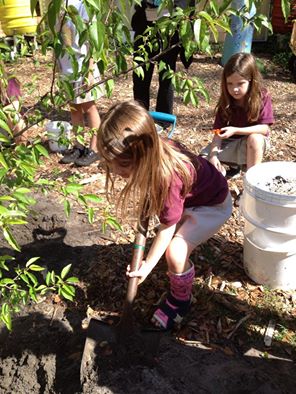
A child at  Learning Gate Community School prepares soil despite the cast on her leg. Thomas captions this photo “Our Hope For Mending a Broken Future.”

Our Hope For Mending a Broken Future: A child at Learning Gate Community School in Lutz, Florida, prepares soil despite the cast on her leg. Instructor: Cissy Brady Stanko

Permaculture engenders ideas and conversations around topics like environmental science, vermiculture, organic gardening, eco-art, and eco-psychology. And connections grounded in Permaculture positively transcend any political, socio-economic, racial, or gender barriers that have been erected in the past or could possibly be constructed in the future.

In my endeavors, I have developed friendships through online Permaculture forums and related Facebook pages. The connections range from the casual and conversational to the inspirational and uplifting. Together they raise me from the deep morass that had grown like a thick moss over my heart’s desire.

I’m now acting on a long-felt wish to accomplish something meaningful and utterly critical: addressing our outdated and increasingly toxic food production/distribution system. Without action and intent, habits will remain the same. Permaculture shows us the way to a very different future.

Thomas Tlusty was raised in Lombard, IL. Thomas was active in social justice and interested in food issues from a young age. In his late teens to early twenties, he worked at the Chicago Board of Trade (in Agricultural Commodities) for a leading grain exporter. The Ellettsville, IN resident has been a practicing Certified Natural Health Professional and is currently an Active Isolated Stretching Therapist in private practice. Thomas is a founding partner in the Garden Tower Project.

Unfurling

Happy belated Earth Day. Today I’m in a bit of a spring swoon. I fall in love with the world this time of year. I find myself looking more closely than usual, feeling wonder and deep gratitude.

For lunch I had a salad of farmers market greens, augmented by a few trout lily leaves. Several large colonies appear every April across the street from our house for a short time before fading back into the earth.

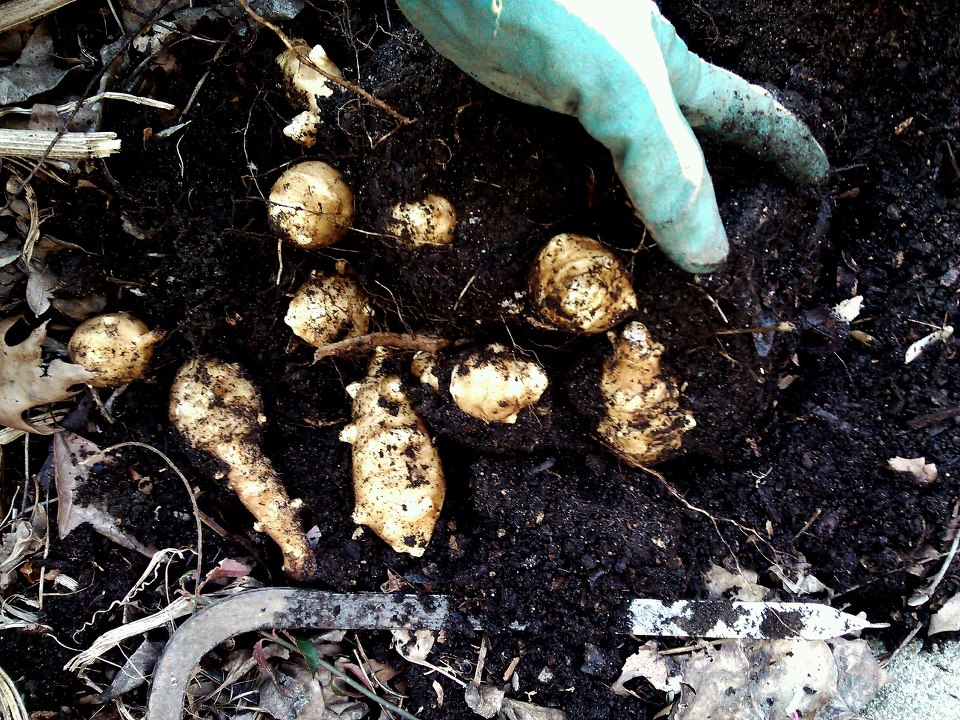
We’d dug our Jerusalem artichokes last week, so I cleaned one up and cut it into crispy little rounds for my salad. While I was scrubbing the dirt off, it occurred to me that something about Jerusalem artichokes is just flat amazing. All that sweetness growing deep underground.

Jerusalem artichokes, aka sunchokes, from our garden

Jerusalem artichokes, aka sunchokes, from our garden

The tops of the plants are dead; we left the ‘chokes in the ground all winter. Yet here they are on my plate, ready to complement the sharp tang of mustard and dandelion and arugula.

I feel especially tender toward trees this spring. Probably because winter was longer and harsher than usual. Snow and ice buried us for several months. Many branches cracked under the burden; some trees split in half.

So it seems more miraculous than ever to see trees pushing new leaves and buds and blooms. Every day on my walks, there’s beauty surrounding me.  The tulip trees are especially dear, with these new baby leaves, furry like does’ ears, unfurling.

New tulip tree leaves, via Wikimedia Commons

New tulip tree leaves, via Wikimedia Commons

It just hit me, watching this happen—slowly, slowly, but still the growth is there—how really astounding it is that a tree can make leaves and blooms and seeds. Think of it: the tree, a hard wood thing, somehow pushes out softness and color.

I suppose I could review the science behind it: phloem and xylem, was it? In any case it’s miraculous. There are channels within that rough brown case—it’s alive!

Did I ever tell the story of my cousin who was raised in the Caribbean? When she came to visit Indiana relatives in the winter, she was appalled to see all the “dead trees” standing around. “Why don’t you cut all those dead trees down?” she asked my dad, to his great amusement.

Sometimes what seems to be dead is only in a state of deep rest. Waiting for the right time to stretch up and out, touch the sunlight again.

What is unfurling in your spring?

Like to Eat? Thank a Bee.

Kate Franzman, beekeeper and urban farmer

Kate Franzman, beekeeper and urban farmer

Kate Franzman is one of many fabulous people who keep the “indie” in Indianapolis. Concerned about the die-off of honeybees, she started Bee Public with a goal of increasing the number of honeybees in our city. The organization has placed hives at several urban farms, including one right in my neighborhood.

She’s a writer too, and her first-person story is featured in the current issue of Indianapolis Monthly. I generally don’t shrink from bees myself, but her description of capturing a swarm as a novice beekeeper is truly impressive.

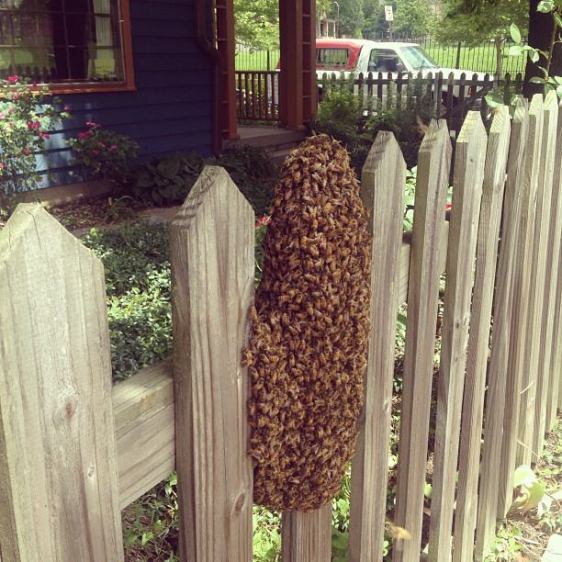
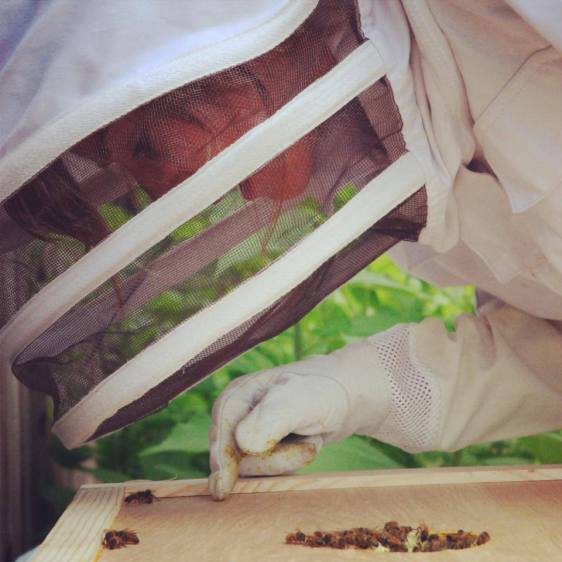
Swarm on a fence post in summer 2013. Kate scooped them by (gloved) hand into a box before transporting them to their new home at South Circle Farm.

Swarm on a fence post in summer 2013. Kate scooped them by (gloved) hand into a box before transporting them to their new home at South Circle Farm.

Her passion for these pollinators leads her to give talks and workshops emphasizing their importance. “Since 2006, we’ve lost more than one-third of our honeybee colonies nationwide, due in major part to Colony Collapse Disorder, an alarming phenomenon that occurs when the bees mysteriously desert their hive and die,” she writes.

“One out of every three bites of food we eat was made possible by a bee. So no bees, no food.”

Kate and a few of the creatures on whom our lives depend

Kate and a few of the creatures on whom our lives depend

The unusually harsh winter killed all the bees in Bee Public’s hives, so Kate initiated a crowdfunding campaign to raise money to replace the honeybees. The response has been one of “unprecedented generosity,” prompting her to pledge to purchase replacement bees for other urban farmers and expand the network of hives.

On May 10 at Pogue’s Run Grocer, Kate will present Bees 101, an overview of how to create a bee-friendly backyard. And if you want to take it further, Bee Public offers consulting and hive setup for local restaurants, community gardens, and urban farms. There’s even a sponsorship option for people not in a position to have a hive. Check out Bee Public’s site and Facebook page!

All photos courtesy of Bee Public.

Pay It Local

In Ball State University’s Down to Earth documentary about sustainable food systems, renegade farmer Joel Salatin makes a key point about the importance of spending food dollars locally. A small amount of cash spent at the farmers market or local food store might make a huge difference to the vendors there. You never know what kind of difficulties they face, and where they stand on the thin line between a manageable load and giving up.

It’s kind of like paying it forward, only you’re “paying it local.”

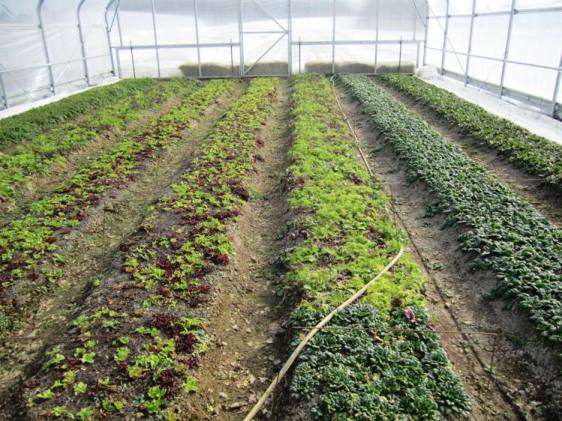
Freedom Valley Farm's high tunnel beds.

Freedom Valley Farm’s high tunnel beds.

It reminded me of something I blogged some months back:

The row we plant might be just the encouragement our elderly neighbor needs to start seeds on a windowsill. Which might nudge her granddaughter to visit a farmers market and buy a farmer’s tomatoes, and one of those funny-looking squashes while she’s at it. Maybe she’ll come back in ensuing weeks and bring her children and a friend, buying more locally grown food. Which shows the farmer that his produce is desired, and keeps him from throwing in the towel after a tough summer.

Since I wrote that I’ve talked to many small farmers as part of my freelancing job, and I’ve learned that farming is more difficult than any nonfarmer could ever imagine. What they do requires a lot of faith. And people to buy what they’re selling.

When I interviewed Hoosier Organic Marketing Education (HOME) founder Cissy Bowman for a Farm Indiana story, she emphasized the critical role of the nonfarmer ally. “Never feel disempowered,” she told me. “As a consumer your opinion is the most important, because you’re the one who buys it.”

Our consumer choice is not even just about food. It’s also about keeping land out of developers’ hands. If farmers can earn a living wage, fewer properties will be snatched up and turned into subdivisions and shopping malls. That means more acreage for wildlife, native plants, and pollinators.

From the front page of Farm Indiana

From the front page of Farm Indiana

The current issue of Farm Indiana contains two stories I wrote. One is about Cissy and HOME, a terrific nonprofit organization that helps farmers like Anna Welch with rural development projects and educates everyone about the importance of organics. The other is about Freedom Valley Farm, an Owen County operation that I thoroughly enjoyed visiting.

Jim Baughman showed me around his farm on a February day.

Jim Baughman showed me around his farm on a February day.

I can testify that Jim’s winter produce is among the best I’ve tasted. We’re talking melt-in-your-mouth spinach and juicy-crisp carrots. This guy is good at what he does, and he does it all without chemicals.

To read the stories, click here.

The Face of Resilience

Guest post by Anna Welch

Anna Welch is a farmer in Rush County, Indiana. With her husband and business partner, she owns Fields of Agape, growing organic grain, beans, and seed. Now she’s working to establish a cooperative mill in Carthage that would allow many more organic and transitional farmers to bring their products to niche markets. After we had a conversation about some of the barriers she’s faced, she sent me this reflection.

I think of the many times I wanted to quit, that it felt impossible to go forward with the limited resources and lack of support around me. I’ve been through periods of deep depression, anger, hopelessness, and resentment. I’ve been humbled many times over since committing my life to stewardship of the land and its fruit.

Anna Welch with friends at the entrance of the Carthage Mill. The historic Tweedy Lumber Mill is now the site of a sustainable ag business incubator.

Anna Welch with friends at the entrance of the Carthage Mill. The historic Tweedy Lumber Mill is now the site of a sustainable ag business incubator.

I had two choices: quit and return to the workforce, or retreat to a place of rest, and pray, reflect, journal, and wait to see who or what changed around me. Someone spoke words of encouragement, or a visitor stopped by the Carthage Mill and said how this place is necessary and will come to pass.

One of my greatest encouragers here at Carthage was my friend Allen, who came daily with his dog Rusty. The first day he stopped by, I was cleaning golden flax seed. He heard the machine and the gate was open, so he stopped. I’m so glad he did.

Allen had Lou Gehrig’s disease, but every day he drove his wheelchair on a route around Carthage, observing bean and corn fields, enjoying wildlife, and stopping by the mill, his favorite place. He worked the Alaskan pipeline in his younger years and lived in a teepee in Montana. He loved the mill, and he encouraged me to keep doing what I was doing.

I realized that if Allen could be in the state he was in and encourage me, then I needed to think outside of myself and look at what I could do to make a difference. Allen died this past October, and I officially formed The Carthage Mill, LLC with help from Hoosier Organic Marketing Education. I know he is pleased.

Regardless of the negative circumstances that we may be facing, there is always hope, always a divine purpose awaiting each of us—if we can turn our focus away from self and focus on those around us, on what needs exist, then determine what gifts and resources we have to overcome the challenge, or to serve someone. Nothing can stop us from fulfilling our purpose if we are on the right path.

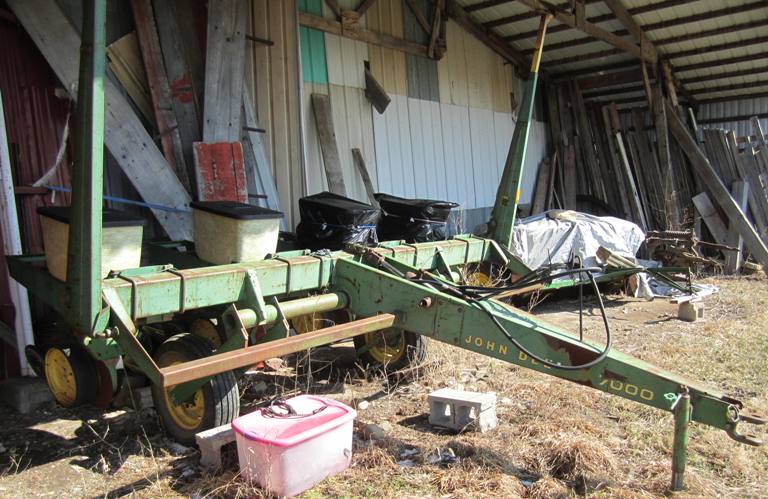
Equipment used to plant Fields of Agape grain and beans.

Equipment used to plant Fields of Agape grain and beans.

I have found that the success in life is how we learn to handle adversity and challenges. If we can grasp how to press on through adversity with humility and unconditional love for others (regardless of how they treat us), we will find our way.

When we find like-minded people whose passion is a good fit with our own, whose hearts are for others, then within that group each person can reach their potential quicker.

Encouragement, sharing of resources, being driven by the passion to serve rather than by personal gain—all of this brings about magnificent changes in communities large and small.

I’m never going to stop believing that it can happen.

Relocalizing the Food System

I love writing stories about food and farming. The people I meet are so passionate about their work. Almost everyone I interview is invested in reforming the broken food system. Bonus: They give me tasty things to eat.

Here’s a rundown of the treats I’ve sampled just in the past few weeks.

  • Cissy, a woman who’s long been the vanguard of Indiana’s organic movement, gave me some intensely flavorful pickles she made from cucumbers raised in her kitchen garden. I washed it down a glass of homemade kombucha that couldn’t be beat.
  • Jim, a farmer in Owen County, sent me home with a bunch of carrots he pulled from the wet earth like a late winter miracle.
  • Anna, a farmer in Rush County, gave me a huge jar of rolled wheat that her cooperative had grown and milled. (I used some in banana bread I baked for my weekly writing date—my writer buddies pronounced it wonderful.)
Checking out a display of LocalFolks Foods at Moore Corner Store while on assignment

Checking out a display of LocalFolks Foods at Moore Corner Store while on assignment

And a couple weeks ago, at Moore Corner Store, proprietor Jasen Moore offered me a taste of ketchup made by Indiana’s own LocalFolks Foods.

I’m no ketchup connoisseur, and in fact we never purchase it. But if I were a fan of this most American of condiments, I would never buy a national brand again. LocalFolks’ is sweetened with sugar, not the genetically modified scariness that comprises high-fructose corn syrup.

I happened to be in the natural food store when Hoosier Microgreens’ Alex Sulanke came along to introduce his product. So I got to munch uber-fresh sprouts of radish, cabbage, kale, arugula, and mustard from “the smallest farm in Indiana” (120 square feet).

Moore Corner Store is in the business of connecting small farmers and food entrepreneurs to the consumer. Though its hours are limited at present, this shop and others like it fill a critical role in relocalizing our food system.

For Jasen and his wife Sara, Moore Corner Store is more than just a business. It’s a mission. Jasen told me the enterprise arose out of concern for the state of our economy. Big box stores have fragmented communities and hurt the little guy.

Moore2“But a store like this…supports the local economy, minimizes carbon footprint, puts actual nutritious food on your plate, and it’s close to home.” The Moores live just up the street from the shop, though both must spend time elsewhere to make ends meet.

I just saw a documentary called Down to Earth in which the iconoclastic farmer Joel Salatin (made famous in Michael Pollan’s Omnivore’s Dilemma) made an important point: Your purchase of a farmer’s product might be the thing that keeps that farm afloat another week.

Is it worth changing our habits to spend a little more of our money at a farmers’ market or a shop like the Moores’? I would say yes. What about you? Have you connected with a small farmer, producer, or locally owned shop lately?

Check out my piece on Moore Corner Store here.