Pay It Local

In Ball State University’s Down to Earth documentary about sustainable food systems, renegade farmer Joel Salatin makes a key point about the importance of spending food dollars locally. A small amount of cash spent at the farmers market or local food store might make a huge difference to the vendors there. You never know what kind of difficulties they face, and where they stand on the thin line between a manageable load and giving up.

It’s kind of like paying it forward, only you’re “paying it local.”
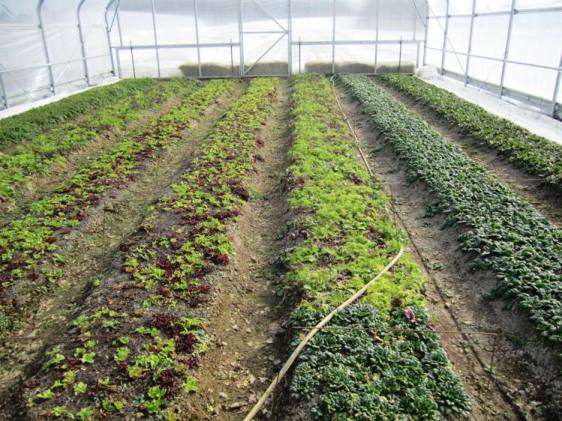
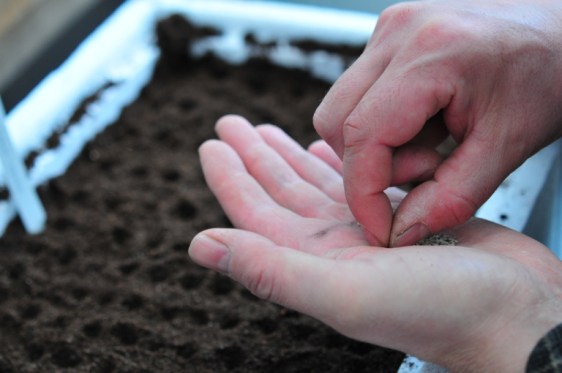
Freedom Valley Farm's high tunnel beds.

Freedom Valley Farm’s high tunnel beds.

It reminded me of something I blogged some months back:

The row we plant might be just the encouragement our elderly neighbor needs to start seeds on a windowsill. Which might nudge her granddaughter to visit a farmers market and buy a farmer’s tomatoes, and one of those funny-looking squashes while she’s at it. Maybe she’ll come back in ensuing weeks and bring her children and a friend, buying more locally grown food. Which shows the farmer that his produce is desired, and keeps him from throwing in the towel after a tough summer.

Since I wrote that I’ve talked to many small farmers as part of my freelancing job, and I’ve learned that farming is more difficult than any nonfarmer could ever imagine. What they do requires a lot of faith. And people to buy what they’re selling.

When I interviewed Hoosier Organic Marketing Education (HOME) founder Cissy Bowman for a Farm Indiana story, she emphasized the critical role of the nonfarmer ally. “Never feel disempowered,” she told me. “As a consumer your opinion is the most important, because you’re the one who buys it.”

Our consumer choice is not even just about food. It’s also about keeping land out of developers’ hands. If farmers can earn a living wage, fewer properties will be snatched up and turned into subdivisions and shopping malls. That means more acreage for wildlife, native plants, and pollinators.

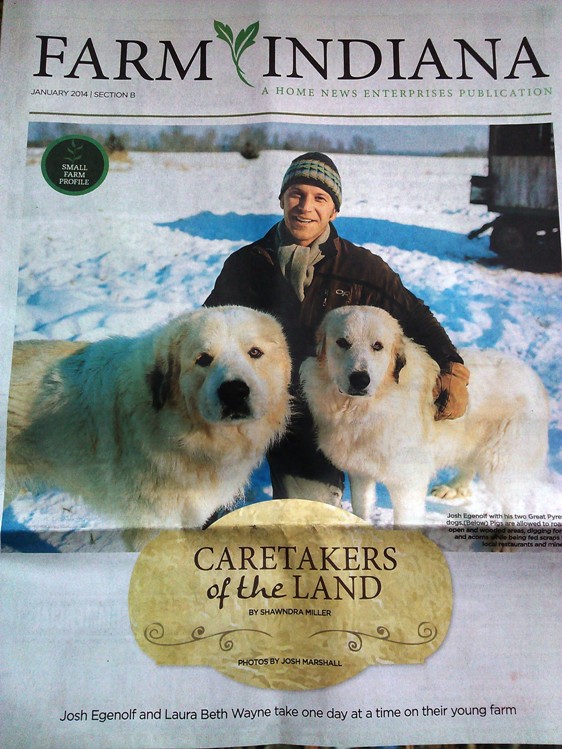
From the front page of Farm Indiana

From the front page of Farm Indiana

The current issue of Farm Indiana contains two stories I wrote. One is about Cissy and HOME, a terrific nonprofit organization that helps farmers like Anna Welch with rural development projects and educates everyone about the importance of organics. The other is about Freedom Valley Farm, an Owen County operation that I thoroughly enjoyed visiting.

Jim Baughman showed me around his farm on a February day.

Jim Baughman showed me around his farm on a February day.

I can testify that Jim’s winter produce is among the best I’ve tasted. We’re talking melt-in-your-mouth spinach and juicy-crisp carrots. This guy is good at what he does, and he does it all without chemicals.

To read the stories, click here.

When Crisis Threatens

Thanks to a review in Permaculture Activist magazine, I found a little book called Small Stories, Big Changes: Agents of Change on the Frontlines of Sustainability. It’s a collection of inspiring voices from the community resilience movement. Each chapter is written by someone actively engaged in the world’s remaking.

Here’s a passage from the very first chapter that gives you a taste.

Goat milking, by V Becker, via flickr Commons

Goat milking, by V Becker, via flickr Commons

“(A) community of busy farmers, gardeners, goat-milkers, trail-builders, engineers, scientists, windmill climbers and solar installers…have led our society’s journey toward sustainability…

They are leaders because their excitement is stronger than their fear.

Logically, when crisis threatens we need to subdue our fear in order to take constructive action. But taking action also somehow diminishes our fear…Once we get busy we’re not as scared any more.

Perhaps we don’t control the forces changing our climate when we grow a few vegetables, but we do influence those forces, and I think the activity profoundly changes our perspective. The situation immediately seems more manageable when we begin to manage.”

—Bryan Welch, publisher of Mother Earth News

Photo by julochka, via flickr Commons

Photo by julochka, via flickr Commons

Have you found this to be true? I have, especially when I’ve gotten “the help of a few believers, supporters, and friends who light the way through the dark nights,” as David Orr describes elsewhere in the book. When I am at my lowest is usually when I’ve fallen away from hands-in-dirt activities for whatever reason, or when I’m feeling isolated. It’s easy to fall into this trap in winter especially.

But when I’m pulling together with neighbors to scheme a project or clean up my block or make a big batch of sauerkraut, I feel ready to face anything.

What about you? I’d love to hear about action you’ve taken—and how it impacts your anxiety level about the state of the world.

Restoring the Land

IMG_20140110_101420

Cover page of my Farm Indiana profile of WE Farm

Dr. Lisa Harris remembers well the first conversation with the young man who would come to farm her land—they talked for hours, almost an entire day. “I was so impressed with how deliberate and thoughtful he was,” she told me.

Dr. Harris is Eskenazi Health’s medical director, a vegetarian with a lifelong interest in eating healthy food. As I learned when I wrote about WE Farm for Farm Indiana, she leases her Owen County property to Josh Egenolf and Laura Beth Wayne’s pastured beef cattle, poultry, and pork operation.

“Most people in the United States do eat meat,” she said. “So if I can be part of something that gives people access to meat from animals that have lived well, it seems like a perfect opportunity.”

Like many of us, Dr. Harris tries to live as lightly as possible, and Josh’s plans to make her land productive really spoke to that goal. “What Josh is doing,” she said, “is in every sense helping to improve the land.” WE Farm’s integrated, rotational grazing plan means the animals work in concert with nature to restore pastureland—all the while sequestering carbon and nitrogen in the soil.

The day I visited the farm last November in preparation for my Farm Indiana story, four happy dogs ran in front of the pickup truck as we drove up the lane to tend the livestock. Owen County is picturesque, with wooded hills and deep valleys. Josh showed me the steep woodlot where the hogs are periodically turned loose to forage for acorns and pawpaws. They also help him clear out understory invasives, just by doing what pigs do.

Breeder pigs enjoying their mineral rations on a frosty November morning.

Breeder pigs enjoying their mineral rations on a frosty November morning.

Josh was raised on a farm just a few miles up the road, and he treasures the richness of his a rural childhood. Giving that experience to his own child (and another on the way) is a big reason why he moved back to the area after pursuing his doctorate in ecology at the University of Georgia.

Also, he wanted to be put what he’d learned there into practice. Agriculture, he told me, has enormous potential for creating meaningful environmental change.

He said, “In 2007 I read The Omnivore’s Dilemma. Before that it never occurred to me that there might be anything troublesome about the way meat was produced, other than animal welfare stuff. That’s very clear to me…you shouldn’t treat your animals poorly. They need to be respected. But it didn’t occur to me that there was a single thing wrong with them eating grain and (even) industrial byproducts.”

He knows that many people still don’t realize the environmental and health issues that accompany feeding grain to meat animals, but a growing customer base tells him how many people value pastured meat. “It’s like an awakening that needs to happen.”

Josh and Laura Beth strive to keep the business as local as possible, keeping close to home in all their dealings. For more on their endeavors, check out my Farm Indiana story and the WE Farm website.

Three Luminaries: Hopkins, Hemenway, Heinberg

While in northern California I had the chance to meet three powerful voices in the movement for positive change. Call them the Three H’s, or Tres Hermanos.

Hermano One, Richard Heinberg of the Post-Carbon Institute, schooled me about the inevitability of a global economic crash. This eventuality is currently held at bay in part by the dubious practice of quantitative easing. (No, I don’t really know how that works, but apparently governments and banks are creating money out of thin air to prop up our ailing economic system.)

When asked how he stayed grounded, immersed as he is in researching the unraveling of life as we know it, he spoke of living with gratitude. He spends time in precious company and places. He plays the violin a couple hours a day, and tends his garden and chickens.

Richard Heinberg in his garden, photographed by Nicolas Boullosa, via Flickr Commons

Richard Heinberg in his garden, photographed by Nicolas Boullosa, via Flickr Commons

Heinberg has been the bearer of bad news for years now, absorbing and presenting material that would leave me immobilized if I were in his shoes. He takes a balanced perspective, noting, “We need to talk about the potential benefits of reorganizing our material economy and doing more with less, and having more cooperation, and sharing and voluntarism—all of those things are good and make life better, more interesting, more fun.”

“And yet, at the end of the day it’s going to be a materially less opulent way of life, bottom line.”

In light of that trajectory, Hermano Two, Toby Hemenway, reined me in from fear mode by sharing the robustness of permaculture-based solutions. He echoed Heinberg on the most basic, square one action, no matter what happens next: Get to know your neighbors.

That means now, not in some perfect future living situation. He told me, “People say, “Someday I’m going to move to a community where I’m going to do that’ (live sustainably). And you’re already in a community right here, with your neighbors.”

Permaculture instructor Toby Hemenway, with Buddha, in his garden.

Permaculture instructor Toby Hemenway, with Buddha, in his garden.

Far better than a theoretical “someday” eco-topia is identifying and building that community right here, where we are. It can start as simply as: “Who will walk my dog when I’m gone? Who will help me water my garden when I’m sick?”

Taking the concept of community even further was Hermano Three, Rob Hopkins.  He spoke of hearing Heinberg speak about the end of growth a few years ago and feeling galvanized to take action. He wanted his fellow permaculturists to join him, but instead “found that lots of permaculture people are very happy living up little misty lanes making chairs out of sticks.”

He wanted more. He wanted to get moving, spread the word. Out of this urgency was born the Transition Town movement.

Rob Hopkins. Photo by Tulane Publications, via Flickr Commons.

Rob Hopkins. Photo by Tulane Publications, via Flickr Commons.

These are groups that aren’t waiting for permission, but instead starting where they are to build a new, localized economy (the REconomy). There’s tremendous energy in this movement. It may not always be called Transition. It may not get much press. But it’s rolling like a wave across the globe.

For more info, check out Hopkins’ book The Power of Just Doing Stuff,  Hemenway’s Gaia’s Garden, and Heinberg’s eye-opening End of Growth.

Vacant Lot Becomes Community Space

Guest post by Lisa Boyles

My vision is to give purpose to a vacant lot. Where once stood abandoned houses, there will be a reflection space with a labyrinth and a community art installation.

In June 2013, we brought light to this space on the longest day of the year with a circle gathering and a modified sun salutation series. The children at this gathering helped decorate a stepping stone for the labyrinth entrance.

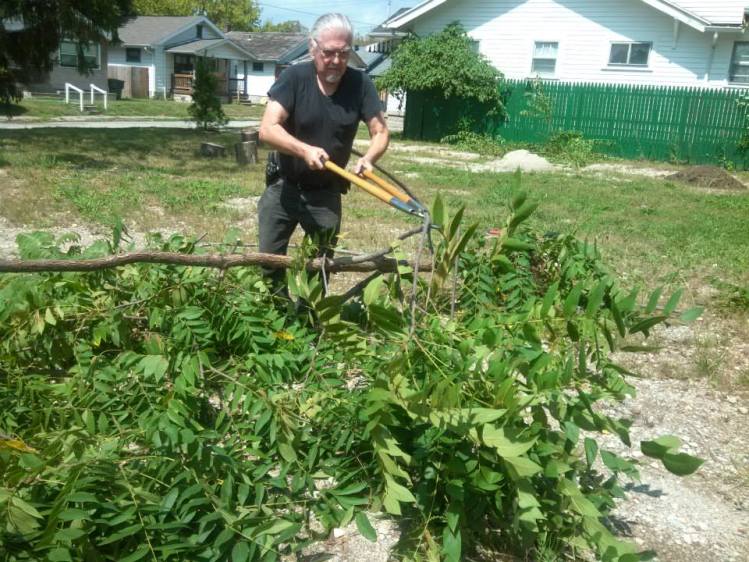
Since the summer, various people have joined me at this lot on the Near Eastside of Indianapolis. We have prepared the ground, moved bricks, unloaded wood, and removed trees. It is enlivening to get in touch with the dirt and have ruddy cheeks from working so hard outside.

Gordon removing an invasive tree.

The transformation from empty lot to Rivoli Park Labyrinth is primarily funded through a community action grant from Peace Learning Center‘s Focus2020 initiative.

The vision of Focus2020 is to create an engaged and inclusive city. I was one of several grant awardees at the beginning of September. The collective effect of these grants will be seen throughout the city over the course of the next year. The Peace Learning Center offers workshops so that more people can become Focus 2020 graduates.

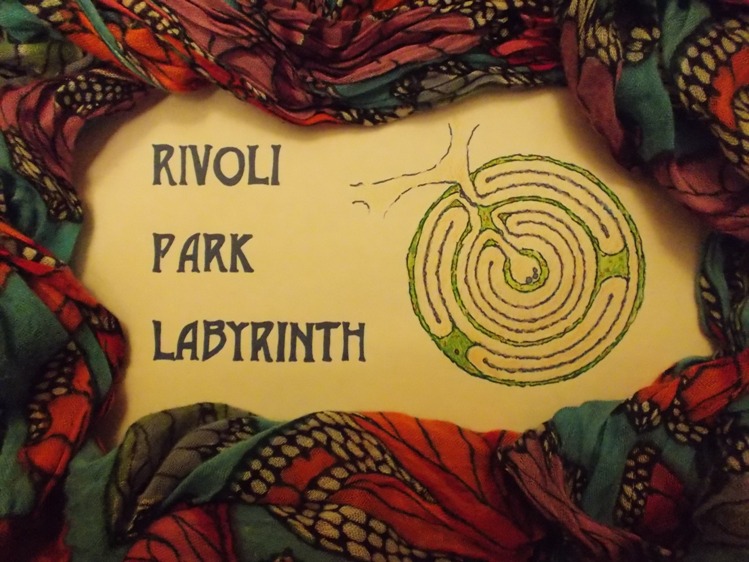
John Ridder of Paxworks: the Labyrinth Shop created the triune focus design of the Rivoli Park Labyrinth.  Logo by Susan Williams Boyles.

John Ridder of Paxworks: the Labyrinth Shop created the triune focus design of the Rivoli Park Labyrinth. Logo by Susan Williams Boyles.

The Rivoli Park Labyrinth project brings the international labyrinth movement to an urban neighborhood setting. Our space will be listed in the worldwide labyrinth locator, putting the eastside of Indianapolis on the labyrinth map.

To offset the often solitary nature of walking a labyrinth, this project also includes a healthy dose of community celebrations. For example, on May 3, 2014, we will celebrate World Labyrinth Day. And workdays at the site include a potluck to celebrate our growing community.

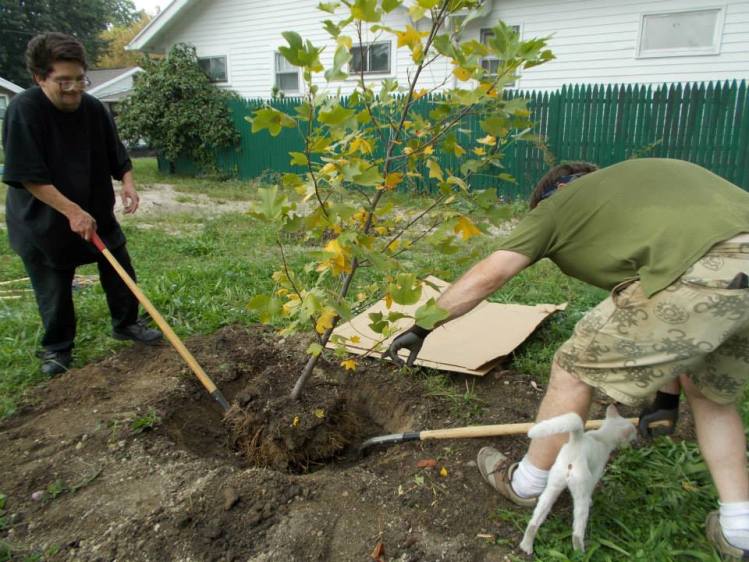
Aaron, James and the neighborhood cat moving a young tree to a new place to make room for the labyrinth.

Aaron, James and the neighborhood cat moving a young tree to make room for the winding path of the labyrinth.

Many partnerships are arising from this effort to give purpose to a vacant lot. One example of that synergy involves the documentation of the upcoming Oct. 10 workday (part of Indy Do Day). A KI EcoCenter videography intern is mentoring another young man that he met through this project. We can’t wait to see their collaborative videography of the workday, when volunteers will place bricks outlining the labyrinth path.

Meanwhile, the soil needs repairing and we plan to use hugelkultur to do it. We’ll mound soil and compost over woody debris and put our plantings on top of that mass. Permaculture designer Katherine Boyles Ogawa says, “Hugelkultur is an ideal method for urban lots where the soils are usually very compacted and often contaminated with heavy metals.”

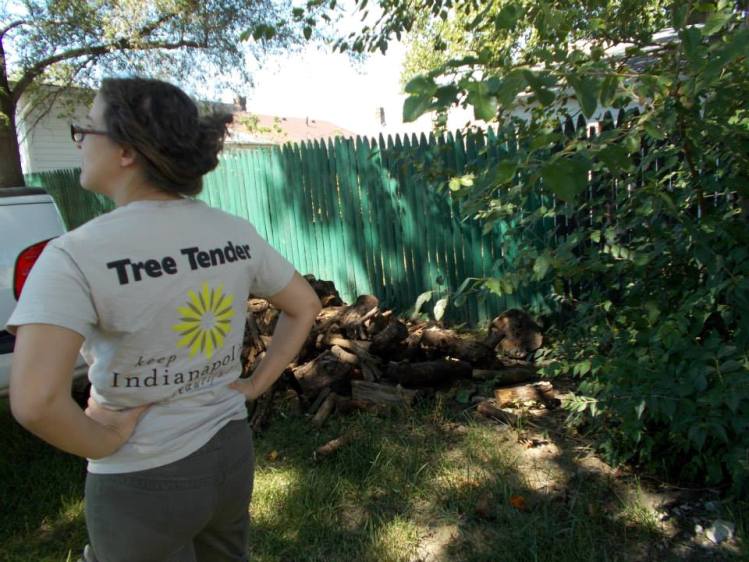
Permaculture designer Katherine supervises unloading of logs for hugelkultur.

Permaculture designer Katherine supervises unloading of logs for hugelkultur.

We hope to eventually make the space into a certified wildlife habitat through the National Wildlife Federation.

Another goal is to display artwork and illustrated quotes along the fence. Panels would be created by special education students at the nearby public school and the art group at Midtown Community Mental Health Center.

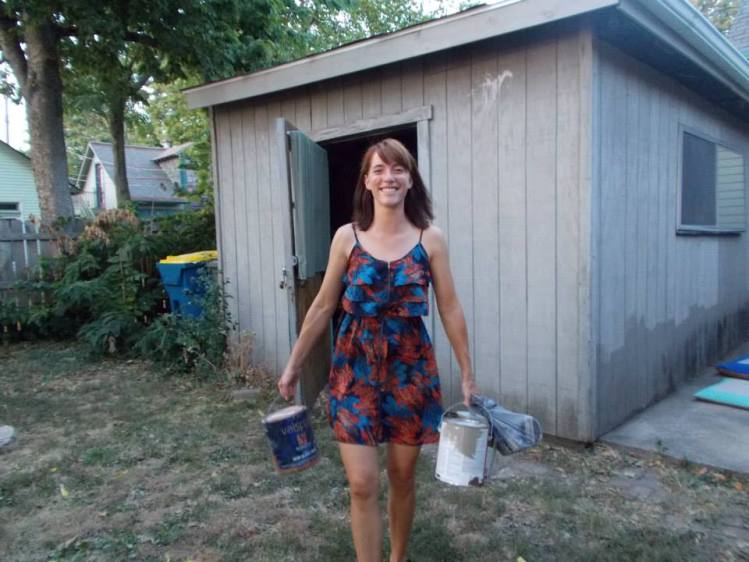
Sarah donating paint for the community art wall

Sarah, a fellow Focus 2020 workshop participant, donating paint for the community art wall.

The community art aspect of the project is being funded through this crowdsourcing site.

We would love to have you join us in celebrating a year of this project coming into being on the summer solstice, June 21, 2014.

Like the Rivoli Park Labyrinth Indianapolis Facebook page to see project news. Join the Rivoli Park Labyrinth community group to collaborate with others and be invited to the annual celebration. We will post monthly featurettes and more detailed updates on our blog.

Elders Building a Healthier Future

They meet in Chase Legacy Center’s art room every Thursday for herbal tea and the deeper refreshment of conversation. Known as WeAct (When Elders Act, Communities Thrive), the group began as a natural living discussion circle, and evolved into a discussion/action group.

The weekly gathering of elders is convened by the decidedly youthful Greg Monzel. Today he’s harvested Echinacea and mint from the herb garden tended by the group just outside. With curved shears, he snips the big healthy blooms and fragrant leaves into a blue teakettle as people stroll in.

An herbalist, Greg offers his prodigious knowledge of wildcrafting and permaculture, but participants have a wealth of information too. The discussion moves in spirals, touching on plant medicine, gardening, and other homespun topics.

We explore the identification and uses of lamb’s quarters, with one member noting that this “weed” is high in iron. From another participant, we get the inside scoop on Distelrath Farms’ new cooperative model, which allows the farmer more time to pursue his mission: educating children.

From another, we learn of Taj Mahal’s original plan to be a farmer, and why he changed his mind: “He couldn’t figure out how you could keep from being poisoned by putting poison on the ground.” We lament the way conventional agriculture wages war on the land.

Comfrey root bearing a smile

Greg produces a section of comfrey root dug from his garden. A terrifically tough—and useful—plant, comfrey’s roots extend some 40 feet underground. He cuts the root into tiny pieces to send home with everyone. Each garden can benefit from nutrients pulled up from the depths.

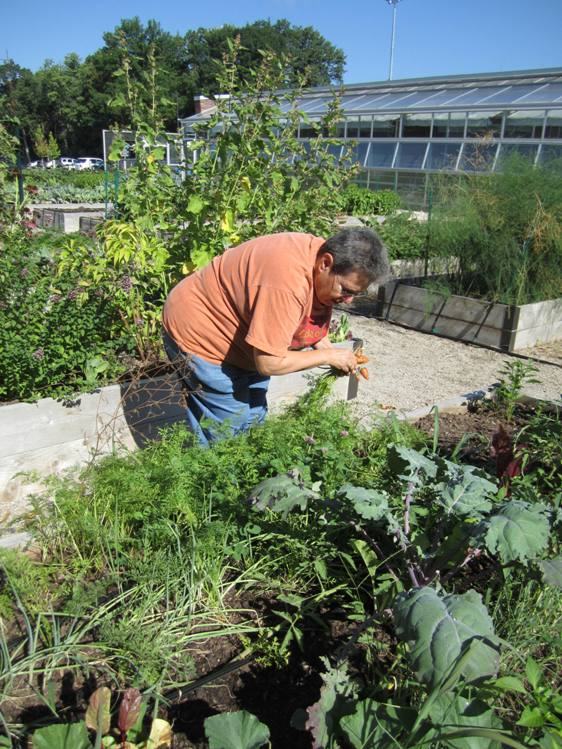
After a while we take cups of bright-tasting tea outdoors to the raised beds designated for WeAct use. There’s the excitement of lifting carrots from the earth. We discuss uses of borage and alfalfa, remedies for mildew, and where to buy a hori hori. Greg urges us to take dill seeds and coriander seeds to plant or eat.

The sky is deep cloudless blue for the first time in days. We stand in the sunshine enjoying the cool morning breeze. It’s the kind of moment that you wish could last all day, and in fact Greg says it is the high point of his week. Too soon, the group disperses.

Harvesting carrots from WeAct's group vegetable bed

Harvesting carrots from WeAct’s shared vegetable bed

Though we don’t visit it on this day, WeAct also maintains a vegetable plot on the adjoining vocational high school campus near the Colonel’s Cupboard, a student-run restaurant. The group supports the school’s horticulture and culinary programs in gardening and preparing homegrown produce.

From the mission statement: “WeAct is an activist organization of elders (and elders in training) who meet weekly for continuing education and community engagement…We consider anyone age 50 and over an elder, though the group is also open to elders in training who may be under 50.”

Among the goals:

  • to reaffirm the wisdom of community elders
  • to advocate for the right to home-grown nutrition
  • to create awareness of community resilience and natural balance

How are the elders (and elders-in-training) in your community manifesting a healthy vision for the future?

On Being Rooted

A summer memory: The question my dad asked me when he got home from work, if it had rained earlier in the day. “Did it rain hard enough to get wet under the trees?”

Always, the answer was a shrug. I didn’t have much patience for Dad’s concerns. Watering wilty plants, pulling weeds, noticing—those were his purview, not mine.

Now I find myself checking, whenever it rains, whether the earth is wet under the trees.

ChivesAnd when I come home from a week away, my eye is immediately drawn to what’s changed in the landscape. “Oh, the daylilies are blooming,” I might be heard to say, slowing to see orange blossoms in a neighbor’s flower bed. It’s the kind of comment that would have made roll my eyes in my youth.

It is different as an adult, living in one place for a long time. You come to feel an ownership not just of your yard but your entire street, the tree canopy above the neighborhood, the pavement, the dirt itself. Even if you don’t know all your neighbors, you smile at the faces you know, and regard warily those you don’t. You want the best for your little corner, so you pick up litter and throw it in the nearest receptacle, you pick up after your dog, you try to keep the storm drains free of debris.

At least that’s how it is with me and my neighborhood.

And my partner and I love where we live. We don’t plan to leave; we’ve settled in more and more each year. It’s true our yard has its limitations: We can’t keep ducks. We have only so much sunlight for our garden beds. We have no room to try hugelkultur.

But over the years, the source of our sustenance has expanded to include the broader community.

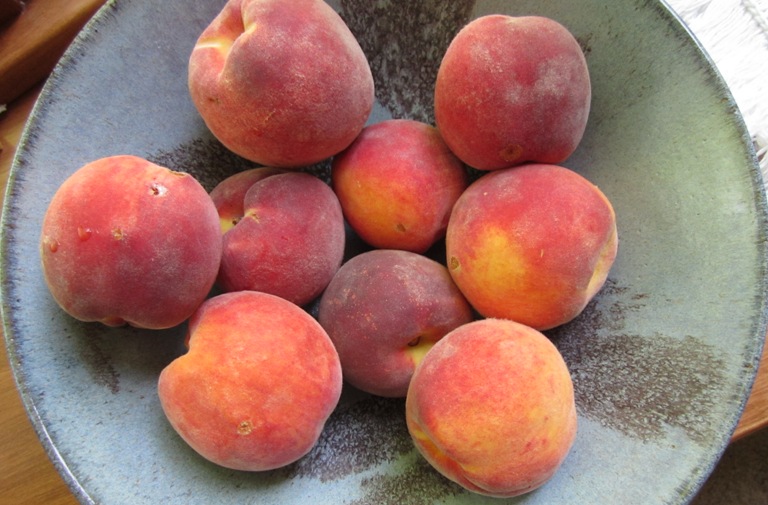
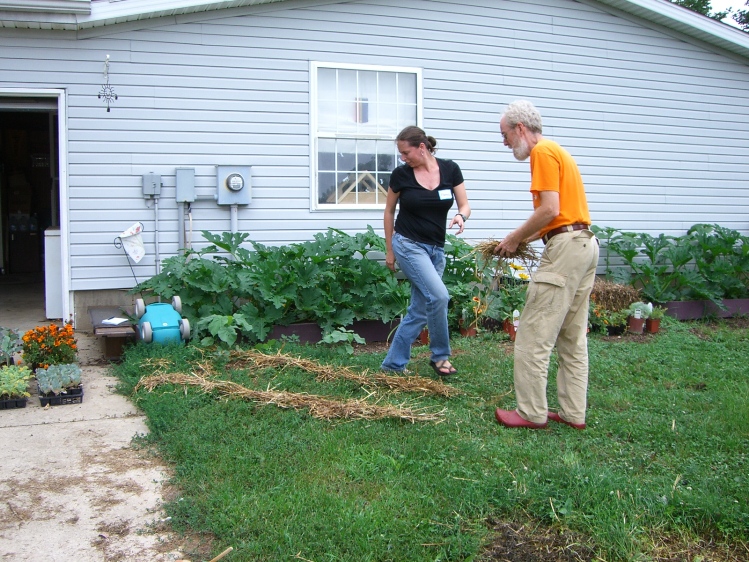
PeachesI buy eggs each week from a chicken-keeping neighbor, who also shares fruit from her orchard. Last year we tended a community garden, and this year we’re experimenting with straw bale gardening on a friend’s property. And one of my favorite activities is to forage for food along my street. I bring home salad greens and berries by the bucketful. (“Nature’s candy,” I hear my Dad’s voice saying, and sometimes say myself, gobbling mulberries.)

There’s a lovely rootedness to this life. I guess it’s possible to live for years in one place and never meet the neighbors, never put a hand into the soil, never sit outside. People drive into an attached garage and disappear into a house that serves as…what? a haven for the inner circle? a locus of entertainment? a fortress against the world?

That seems so sad to me, a kind of disembodiment—though I too appreciate a haven, crave entertainment, and need security. But to live only inside the house sounds like a terribly constrained existence, no matter what kind of diverting electronics are humming within its walls.

Dad used to spend every long summer evening outdoors puttering. It was a mystery what he did out there. As an adult I understand. He was tending, noticing, relating. Getting rooted.

Their Courage Becomes our Courage

As I mentioned in a previous post, I recently devoured Frances Moore Lappe’s brilliant new book EcoMind. I now have a clearer sense of the risk people are taking when they first begin to step off Status Quo Railways and change the way they live.

It’s deeply ingrained in each of us as humans to to look and act like everyone else in our tribe. This has been a matter of survival since Day One of our species: Stay with the pack, or perish!

No wonder so many are hesitant to follow a different drumbeat than the dominant culture’s. Lappe cites experiments showing that subjects went along with the wider group’s opinion–even when it went against what they could see with their own eyes.

It can be quite powerful to join a movement, but what if the movement looks fringy and wrong to the people closest to us? It’s a big risk.

That’s where the power of relationship comes in.

Because those same experiments showed that “all it took was one truth-teller to enable people to be true to themselves.”

“Knowing this,” Lappe writes, “we can choose to seek out those who share our passion, those who encourage us to risk for what we believe in.”

In fact, there are neurological changes that take place when we observe others’ actions. “Mirror neurons” in our brains start firing–as if we ourselves were taking those same actions!

In this way the courage of others becomes our courage.

I have had several such exemplars in my life, people who showed me what it means to live a life of passion and integrity, with the lightest of footprints. Here is a photo of one of them, Keith Johnson of Renaissance Farm.

Keith Johnson, sharing the beauty and abundance of Renaissance Farm

Keith Johnson, sharing the beauty and abundance of Renaissance Farm

Keith and his partner Peter Bane (who gave me my introduction to Permaculture) model a generous, resourceful, earth-sustaining way of life. It’s a way of life that will be ever more essential as we face the uncertainties of the future.

The photo above was taken in May when a friend and I drove down to Bloomington for Renaissance Farm’s plant sale. Though it was raining, Keith delighted in showing us the glories of spring on the suburban farmstead. The unveiling of a fig tree was particularly thrilling. As I recall, Keith insisted we take some of his surplus bok choy harvest, and when I swooned over the taste of chocolate mint, he pulled a clump right out of the ground and gave it to me to plant at home.

People like Peter and Keith give us all more faith in our own ability to heal the earth, to live in such abundance that we just have to share.

They offer me (and others like me) the assurance that Deepak Chopra talks about in this quote:

The famous adage is wrong: The journey of a thousand miles doesn’t begin with the first step. It begins with the assurance that you can take the first step. 

An Appeal Denied

Update: Community Access Television has posted a video of the April 3 Board of Zoning Appeals meeting. Minutes have not been posted on the BZA site yet.

Last night I met up with friends to drive to Bloomington, IN for a Board of Zoning Appeals meeting. We were among 80 others there championing permaculture designers/teachers Peter Bane and Keith Johnson, who were pursuing variances for their small suburban lot. Since last summer, they’ve been mired in a conflict with Monroe County, primarily about placement and square footage of structures at Renaissance Farm.

The main issue was that they didn’t follow proper procedures, but they were under the impression that agricultural buildings are exempt from the process. I won’t go into detail about the legalities as that’s not the purpose of my blog—but you can refer to the meeting materials.

Peter Bane with co-teacher Rhonda Baird laying out a garden path during 2007 permaculture class

Peter Bane with co-teacher Rhonda Baird laying out a garden path, 2007 permaculture class

It was moving to hear the 30-plus testimonies of Peter and Keith’s impact. (I first met Peter in 2007 at a one-day permaculture overview class, and his passion infected me with the need to come right home and plant my entire lot in food.)

The intergenerational crowd was made up of neighbors, IU profs and grads, pastors, farmers, small business owners, a newspaper editor, a City Councilman, and young Bloomington natives who moved away and then returned, largely because they wanted to learn from these luminaries.

Neighbor after neighbor told of the duo’s generosity in sharing both knowledge and produce. Many have started gardening themselves. One said she travels all over the country; when she tells people she lives on the same street as these renowned Permaculture designers, “they are in awe.”

A sampling of comments:

“Everything they are doing is a practical and immediate way of changing the world for the better.”

“They are showing that young people can have a viable future in spite of the climatic, economic, environmental, and other issues facing us.”

“It’s beyond sustainable, it’s regenerative.”

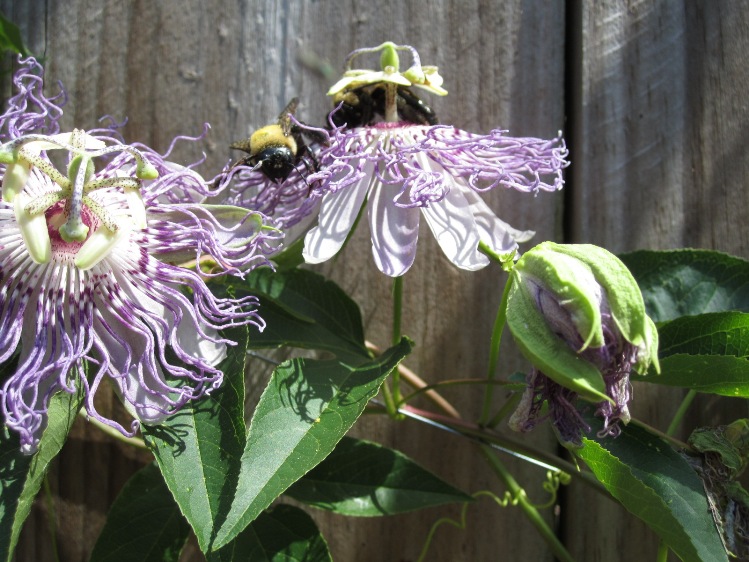
A maypop planted along our fence, one of many plantings inspired by permaculture

A maypop planted along our fence, one of many plantings inspired by Keith and Peter’s work

There seemed to be an understanding in the room, even among officials, that we are at a crossroads. One supporter told them, “I am sympathetic to you who must uphold laws that support suburban sprawl and ignore what the future requires of us.” Another said, “We are living in a world where the rules are changing.” Another warned that big timber, big ag, and mining will dominate rural areas if we don’t change our ways.

But apparently these are not the concerns of a body pledged to oversee existing laws, faulty as they are.

After four hours the board approved all but one variance—a critical one. The barn must be moved about 10 feet from its current position to be in compliance.

It was a shock. Especially after board member Jerry Pittsford, who expressed dismay that Peter and Keith had circumvented the process, had said, “I like rules, but I’m finding very little that tells me the rules need to be followed here.”

There were a number of reasons to approve the variance and only one to deny it—the fact that they did not consult with the county and submit the proper paperwork. Even as the board expressed admiration for Peter and Keith’s work, they could not get past that lapse.

It’s unclear what the next step is for Renaissance Farm, but whatever comes, I hope these two visionaries were bolstered by the outpouring of love and appreciation from neighbors, former students, and admirers.