We’re Walking Ecosystems: Notes on Collaboration

Lately I’ve been thinking about collaboration. I envision a world where nations, geographic regions, cities, neighborhoods, and affinity groups find an ease and flow in working together.

11285902014_240074a727_z

Photo credit Michael Mayer, via Flickr Creative Commons

Maybe it seems pie-in-the-sky, but we have a model for that kind of collaboration. It’s right here, as close as our own skin. Modern science now confirms that the human body is a collaboration in itself.

Some 90 percent of our cells are—get this—not human. They’re bacterial, or fungal, or even viral. Don’t be afraid! They mean us no harm. We’re their habitat. A walking community. A microbiome.

If we keep balance within the community of our cells—I’m talking happy bacteria and fungi here—we generally enjoy good health, and recover from illness more quickly.

This Brainscape article explains it all so well—the ecosystems within us, each with their own unique microorganisms. These wee “microbiota” do all kinds of things for us in exchange for giving them a suitable environment to thrive. They help with digestion, brain activity, and immune function, just for starters.

Most curiously, our mitochondria—an organelle within cells that is responsible for converting digested food into energy—contains DNA that is…not human. “These organelles came from outside of us, down a separate evolutionary path.”

17104540588_afc2a615dc_z

Mitochondria (red) are organelles found in most cells. They generate a cell’s chemical energy. Credit: NICHD/U. Manor, via Flickr Creative Commons

At the microscopic level, human life depends on a symbiotic relationship.

From the article:

“When Charles Darwin wrote On the Origin of Species, the dominant theory soon came to be survival of the fittest: a rat race for domination and survival. But both of these examples — mitochondria and our internal biota — point toward another means by which life thrives and evolves: symbiosis.”

I find that fascinating, and also telling.

Of course, zoom in tighter on the cells of our body—and what are they? Whirling clouds of particles. There’s nothing solid to us.

We’re made of space, basically. Our lives reliant on organisms we have always vilified or at the very least, ignored.

Knowing that, is it possible to see the human community in a different way?

Hiatus!

Time to make official what’s been in the works for a few weeks months now. I’m putting the blog on hiatus for at least the first quarter of 2016. It’s time to retool everything on my to-do list to align better with my current focus (or foci?).

In a nutshell: My work is moving more into the healing arts arena, while I continue to write nonfiction. In both of these areas, I’m part of an ever-growing “Team,” as author Martha Beck calls it—working to bring about a new Story of Connection.

Photo by Michael Lokner, via Flickr Creative Commons

Photo by Michael Lokner, via Flickr Creative Commons

I see energy work as a way to raise our collective vibration, which we need to do—at least if we’re going to birth a  new and resilient future. So I’m getting certified in ThetaHealing, one of the energy techniques I practice.

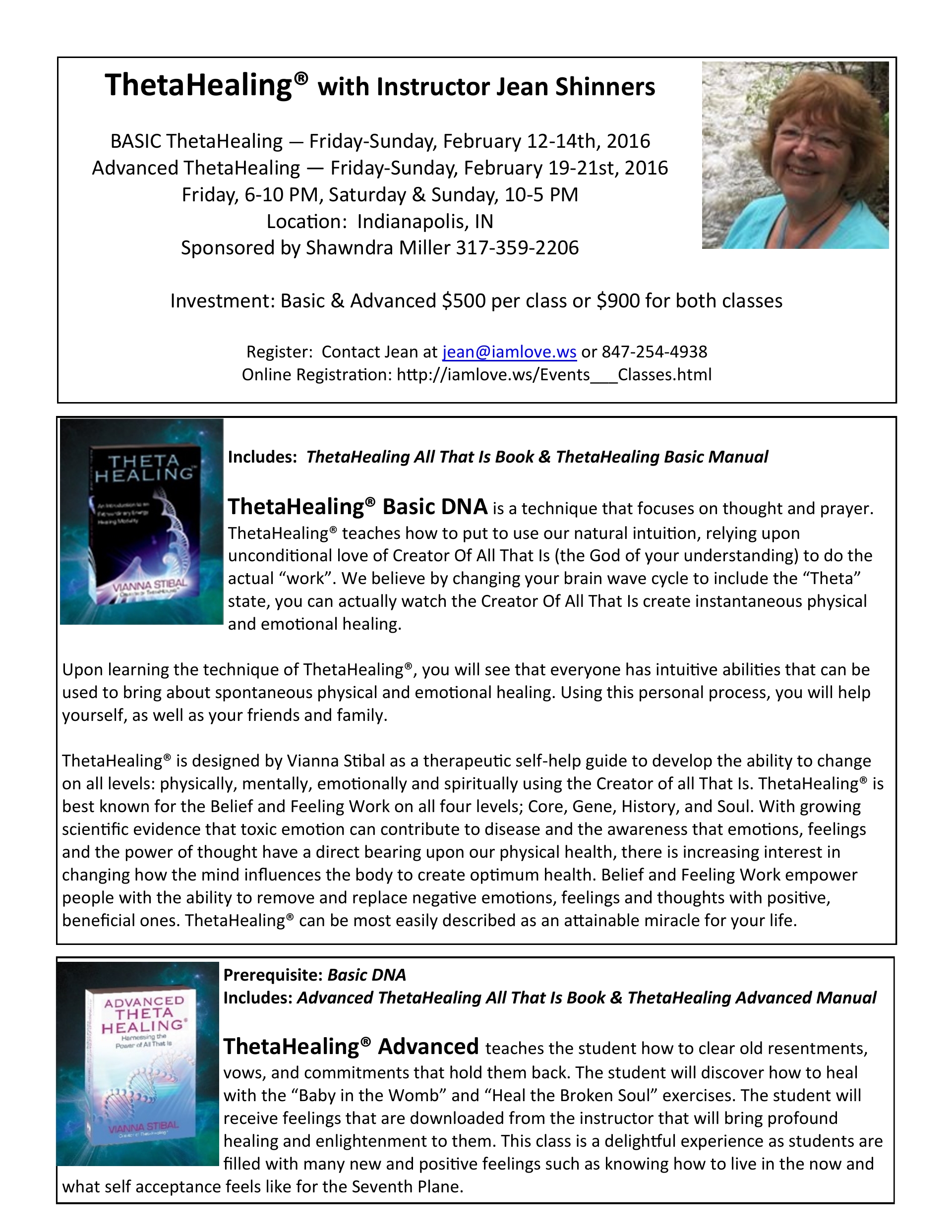
Here is a workshop series I’m bringing to Indy in February. If you’re interested in joining me, which would be lovely, you can sign up at instructor Jean Shinners’ website.ThetaHealing Flier

I have a series of smaller workshops planned for the coming months in Indianapolis. The first one, Empath 101, will cover how manage being “so dang empathic,” as one of my empath friends puts it.

If you’d like to have a heads-up on these opportunities, or to learn more about my work, please sign up for my (revamped) e-newsletter.

Guest Post on Kindness

Today’s guest post is by my friend Heather Horst, and fits right in with a campaign by Indy Holistic Hub to spread kindness in December. #GetYourKindnessOn is the hashtag we are using to shine a light on compassionate acts we encounter. (I’ve found it quite uplifting, during these fractious days, to tune my radar to kindness. If we watch for compassion, nourish it, and spread it, we can’t help but magnify light.)

Guest post by Heather Horst

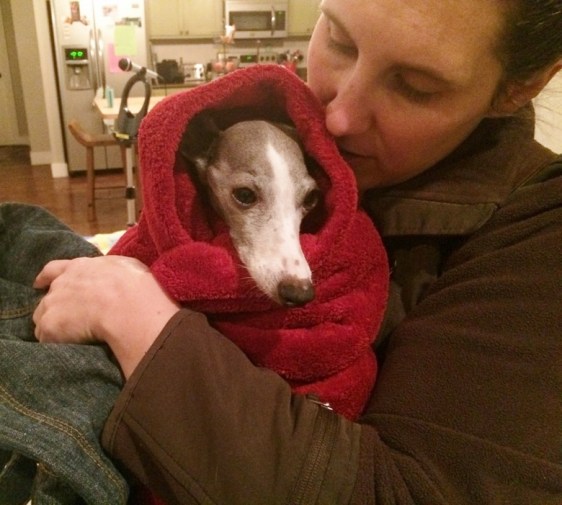
Lately I’ve been fostering a dog who is both gravely ill and incredibly sweet. Her name is Joy, and she’s pictured here.

Joy and Heather (780x701)

Joy and Heather

I’ve also been called out to do massage therapy during a friend’s labor and delivery. Between the two, there has been so much kindness. I’ve experienced so much support in caring for Joy. I’ve witnessed so much kindness and care for my brave friend as she worked hard to bring her baby into the world.

When I glance from my real life to national and world news, it’s culture shock. Because I’m not hearing about kindness. I’m hearing about brutality and a turning-away from the suffering of others, a turning-away from one’s own humanity.

I don’t accept that this is our true nature. It feels like a brokenness, a wound, an illness.

I trust that kindness is our true nature. That one day so many of us will be healed by (and healed to) kindness. So many of us will heal that when brutality or callousness appears among us, we will recognize it as an aberration.

We will surround it and heal it and not give it weapons or money or media attention.

…when brutality or callousness appears among us, we will recognize it as an aberration. We will surround it and heal it and not give it weapons or money or media attention.

I trust that kindness is our true nature. To those of you who have been carrying out these many kindnesses — THANK YOU! You heal my heart.

Heather is a nurse, a massage therapist, a spinstress of hula hoops and an amateur urban farmer. She lives, works, and plays in Goshen, Indiana.


To Pause and Give Thanks

Gratitude is not just a seasonal thing for me. I look to be aware of the blessings in my life all the time, the better to enjoy them. Lately I’ve been taking a few minutes before I eat a meal (when I remember to!) to celebrate all the contributors to my food.

I will look down at a humble bowl of oatmeal with raisins and almond butter and pause for a second. I will think (or say), Thank you! I love you I love you I love you! And then, if I feel like I have the wherewithal in this moment, I get focused and consider:

  • the farmers responsible for growing these oats, grapes, and almonds
  • the bees that pollinated them
  • the sun and rain
  • the worms and microscopic wee buggies that do so much unseen
  • the people involved in processing and transporting
  • the folks at my local food coop where I bought these foods.

Thank you, I love you!

What’s really fun is to look down at a meal and realize how many personal connections it embodies. I’ll think: Oh yum, I get to eat Amy’s spinach (from South Circle Farm) or Randy’s squash (from Stout’s Melody Acres). The celebration feels even more expansive when I know my farmer. And the food tastes better too.

Today’s lunchtime moment: thanking Earl (Blue River Natural Foods) and his pastured hens for the beautiful eggs, Laura (dear friend) for the tomatillos that went into my salsa verde, Matthew (Big City Farms) for the gorgeous carrots.

thanksgiving post 2015 (780x439).jpg

Local eggs cooked cooked “over hard” and topped with homemade salsa verde, with dilly carrots and spicy sauerkraut on the side.

Also Joshua and the folks at Fermenti Artisan for the spicy Latin American kraut known as curtido. And…myself for the small part I played in planting and harvesting dill from Seven Steeples Farm, where I sometimes help out Mike, the farm manager.

Thank you, I love you!

No matter where the food comes from though, this mindful, grateful state brings texture to a meal. A good thing, to pause and give thanks.

It Can Be Shifted

I heard a Robert Bly poem on The Writer’s Almanac a few months ago that seemed to speak to our times. Called “Keeping Quiet,” it speaks of childhood “whoppings in the woodshed” living into the present. Bly declares that “every war is some violence in childhood coming closer” and that “it doesn’t change.”

What happened to us that we can never speak about, the poem says, leads us to perpetrate the same cruelty on others.

Fair point, and even more interesting in light of research on epigenetics and genetic memory. From what I understand, traumas that our ancestors experienced can actually impact our own DNA. For example, those whose ancestors lived through famine may be genetically predisposed to store more fat.

In my own work on the energetic level, I have found that we can carry inherited and ancestral emotions, beliefs, and traumas.

But I don’t agree when Bly declares that this pattern won’t change because it has been going on for thousands of years. How to change it: by loving the entire past that accompanied us in our arrival on the earth.

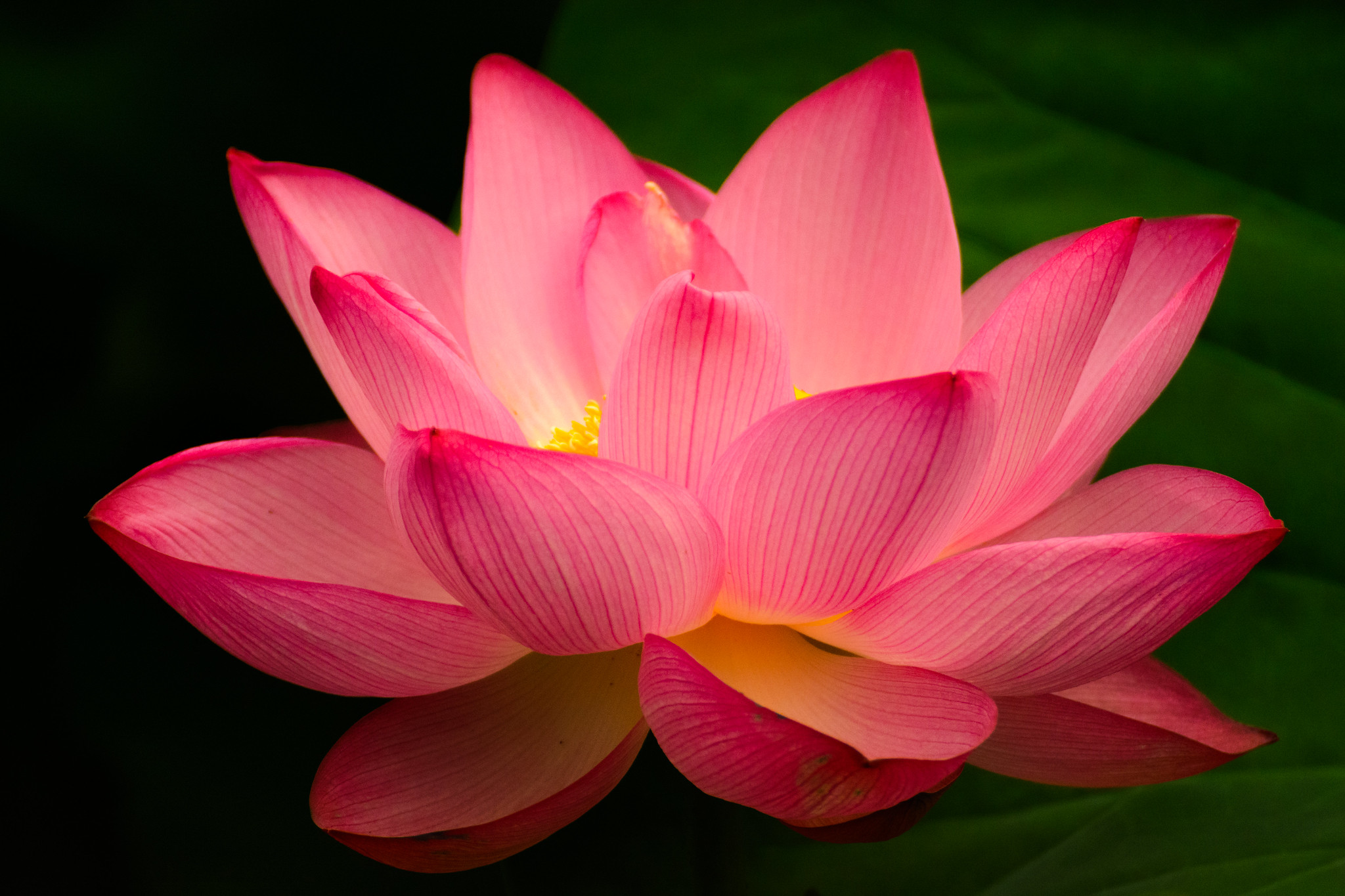
Lotus Flower

Photo by Yoshikazu Takada, via flickr Creative Commons

Those things we try to divorce and deny? They are exactly the things that return again and again, to snap at our heels, smack us down in the dirt, keep us unconsciously lashing out and “otherizing” those we see as different. Not a healthy pattern, but it can be shifted.

What if we strove to love those old hurts instead—and not just our own but all of our ancestors’ secret pain as well?

A tall order perhaps, but I believe that we are a tall people. Humanity at large. We have the ability to stretch and grow, to evolve.

I want to believe that we have a future here, that doesn’t give sole survivorship to the last person shouting (or shooting).

Foraging on Two Wheels

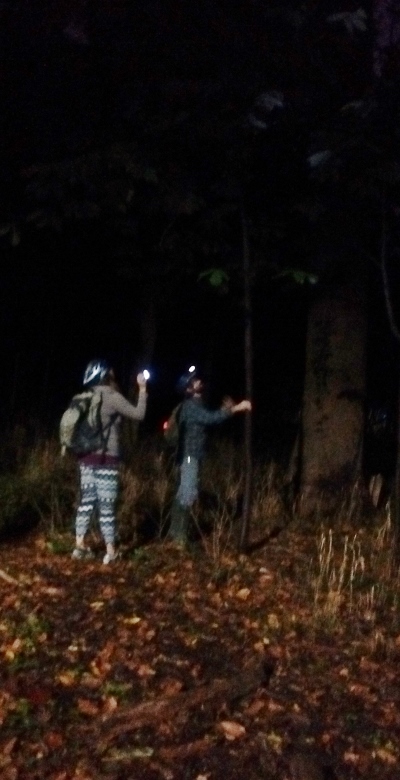
Yesterday evening I joined Greg Monzel and friends in an activity combining two of my fave things to do: riding my bike and foraging for wild edibles.

It had been rainy all day and I wasn’t sure I was going to make it. Especially since—even though I love cycling—I had never mounted my bike on a car carrier to drive it somewhere. (The foray started at White Pine Wilderness Academy, which is not in my neighborhood.) I also had to go to my local bike shop and get lights mounted (another first: cycling after dark!)

It all turned out to be worth the effort: I got to hang with some excellent folks, experience the woods after dark, and taste some interesting things. I was not brave enough to munch on a pillbug, however. Save that for another day.

Below are some photos from the evening. Sadly I didn’t get any of us on two wheels. You’ll just have to take the dorky bike helmets as evidence that we really did cycle to our destination, before dismounting and exploring.

Greg showing ??

Greg showing us polymnia canadensis, or white flower leafcup, which has some medicinal uses

Greg is an herbalist with a passion for learning, which makes him incredibly knowledgeable about plant lore, uses, history, and science. Also, the muck boots were a really good idea. I may have to practice cycling while wearing mine.

Maria inspecting winged euonymus

Maria inspecting winged euonymus

The berries are not edible, but I believe there are some medicinal qualities to certain parts of this plant.

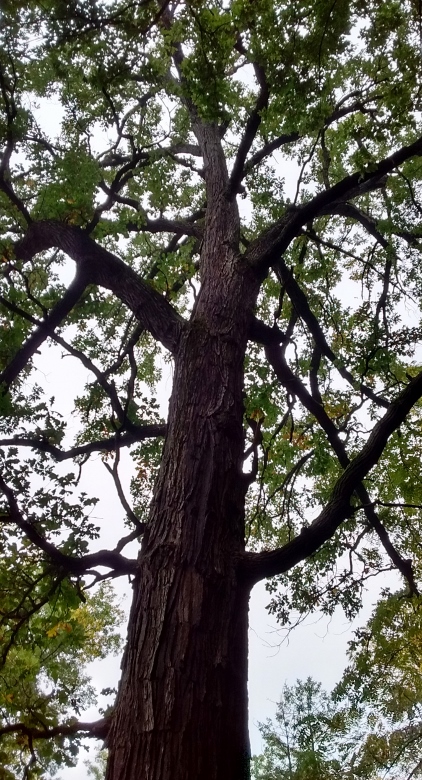
Mighty burr oak

Mighty burr oak

This was the first of several oaks we assessed for acorn availability and tastiness. I ate part of an acorn before realizing that it’s best to leach the tannins out first. Oops! Nice texture, though!

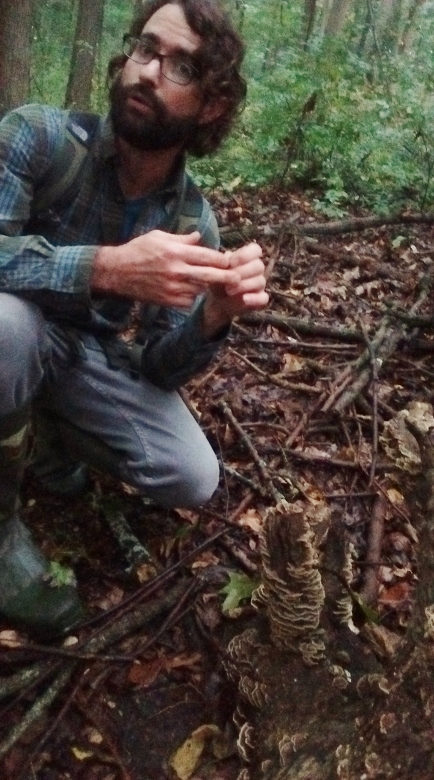
Greg with promising fungal find

Greg with promising fungal find: Could it be the medicinal turkey tail?

While we were standing here, Maria found a step-by-step turkey tail identifier on her smartphone. How’s that for appropriate use of technology? Unfortunately we still could not definitively ID this fungus.

A closer look: might be turkey tail, a mushroom known for its immunomodulating effect

A closer look: possibly turkey tail, a mushroom known for its immunomodulating effect

No one was brave enough to take a bunch home to make into a decoction. But I did learn that ALL mushrooms have beta-glucans in their cell walls, and this is one of the things that gives them immune-boosting properties. (Tip: Cook shrooms for a long time over low heat, with water—that’s the key to accessing the beta-glucans.)

Shaking the pawpaw tree

Shaking the pawpaw tree

We struck out on pawpaws, but I’m told the week before, there was quite a haul.

Wood nettle. Watch out: It bites!

Wood nettle. Watch out: It bites!

We may be gathering seeds of this plant in a week or two. Yum!

Did I mention that “Fall Foraging Forays—Bicycle Edition” is a whole series, and you can drop in on the rest of the sessions? Check out Greg’s website for details.

Transition and Transformation

Every writer should have a worm colony to eat her spent words. Especially if she’s grieving the loss of her beloved dog.

His name was Marley. We named him after the great Bob Marley. This was before "Marley and Me."

His name was Marley. We named him after the great Bob Marley. (This was before “Marley and Me.”)

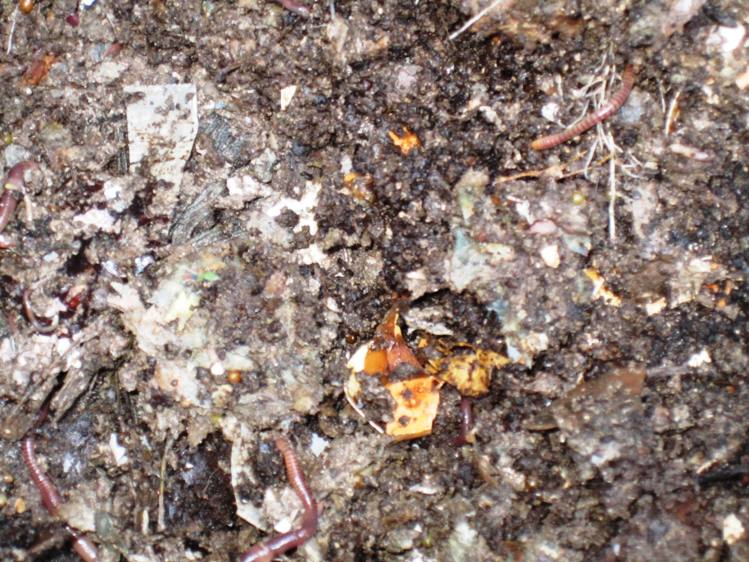
I feed my drafts to the shredder when they’ve served their purpose. The shredder cross-cuts everything into bits the width of a highlighter’s stroke, the length of the tiniest paperclip. When the receptacle is full, I shower this ticker tape parade over one of four worm farms I’ve got going right now.

Worm pit after ticker tape parade

Worm pit after ticker tape parade, with rainwater.

Are they actually eating my words or are they just nesting there, my happy, scrappy red wigglers, snug in moist paper and a bit of soil and leaves? With rotting vegetable parings for their buffet.

I wrote once long ago, or stole the idea, of everything in a writer’s life becoming compost. “It’s all material,” an early writing teacher told me. Now even my stilted phrases and test drafts and failed pieces have become compost.

I’m feeding the worms that in turn offer their pooped-out product to nourish my soil—soil in which we grow the food that feeds the writer who makes the words that shelter the worms. A closed loop.

Also in the worm bins? Junk mail, that clutters my desk until I go on a shredding rampage. Cardboard toilet paper rolls chopped into bits. Tea leaves from my tea ball. Shed leaves from houseplants. Newspapers. Anything else I can think of: Q tips, napkins, toothpicks, and other rarely used ephemera.

Also: Mats cut from the cat’s britches, tangled there over weeks of neglect while I worried over her brother, the dog. Tissues loaded with my snot and tears, from meltdowns over that same dog’s decline.

Moistened with rainwater, it all melts together into the special kind of slop that worms (I’m told) adore—sweetened with handfuls of veggie scraps and stale crackers and the like.

Worms at work

Worms at work

The dog died; the worms and time work together to turn something lost into something gained.

Sweet dreams, friend.

Sweet dreams, friend.

An Unexpected Gift

Yesterday, Father’s Day, brought me an unexpected gift. A neighbor messaged me late in the evening offering just-picked raspberries. Would we like some? Of course! “Check on your porch by the mailbox,” she messaged a few minutes later.

My dessert: raspberries, kefir, vanilla, toasted sunflower seeds.

How was she to know that red raspberries would bring me a direct connection with my Dad, who grew them up until the year he died? His overabundance was always my gain. Even the container they came in, a repurposed plastic food tub, evoked his (and Mom’s) habit of reusing everything.

They're half gone already, because I had some for breakfast too!

They’re half gone already, because I had some for breakfast too.

A friend tells me this morning, Surely that was a gift straight from your father.

I miss him. On Friday I received a quilt specially made from a few of the T shirts he used to wear. Yesterday morning I put my cheek against that “Seize the Carp” square and imagined his heart beating under the fabric.

Many thanks to Helen Ryan-King for making this for me.

Many thanks to Helen Ryan-King for making this for me.

No one else will ever love me the way he loved me, a friend wrote, on losing her own dad.

A statement true and sad.

So many of us walk around with broken hearts. I think of the Buddhist story of the woman mad with grief after the death of her only child. The Buddha offers to bring the child back, but only if she can find a mustard seed from a house untouched by death.

She searches house to house. Here someone has lost a parent, there a child, there a beloved brother, there a cherished friend. She comes back and tells the Buddha, I couldn’t find anyone untouched by loss.

She lets the child go.

Knowing we all share this human experience, I want to open to the love that is available all around me, in so many forms.

A couple I know slightly from down the street, seeing me standing on my bike in the bike lane, slow their car to check on me: “You OK?” (Just waiting for a break in traffic to make a dicey turn—but it touches me to hear their concern.)

A cat named Morty, leery of everyone but his deceased owner, finds me on my front step. Rubs against my knee, beaks my nose with his. Hello, new friend.

A concert of singing bowls, vibrating with tabla, flute, and didgeridoo, offers me a place to rest in All That Is.

What I want to say is this: May my broken heart be of service. May I remember that this brokenness is something we all share. May our connection help to heal a broken world.

Deep Learning Continues at Avon OLC

Guest blogger Jennifer Davies updates us on her work at Central Indiana’s Avon Outdoor Learning Center. We first posted about this phenomenal program last February, in Portal to the Wider World.

Guest post by Jennifer Davies

For those of you who have been following me and my stubborn refusal to walk away from my job teaching at and coordinating the Avon Outdoor Learning Center since our funding was cut in 2011, I have some good news! I first should point out that Carol Ford and I basically made up this position when I stumbled across the place, back when I moved to Indiana in 2006…and they let us, just to see what we had in mind.

We had just planted the garden (built with grants & volunteers), and hosted more than 7,000 students for the year, when a town referendum failed and the district had to shave $9 million from its budget. Since then I’ve relied on grants, fundraising and donations for my salary. Last year we served 9,100 children with programs designed to supplement classroom instruction with active, outdoor activities.

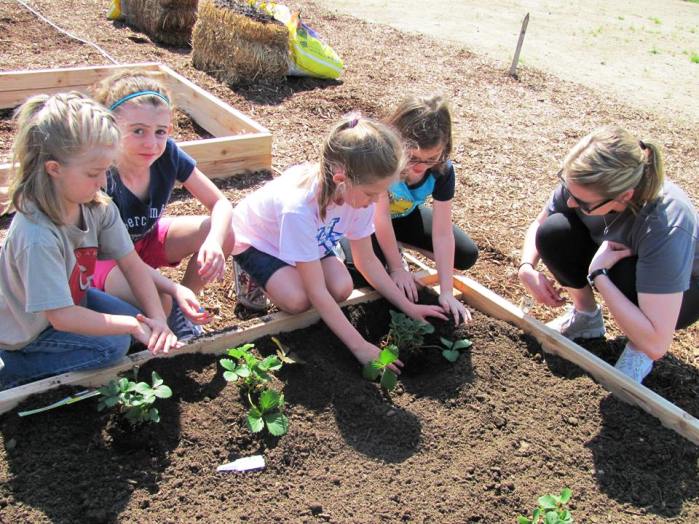
Planting garden at Avon Outdoor Learning Center

Planting garden at Avon Outdoor Learning Center

We’ve had fantastic community support, with students literally giving me their piggy banks and tooth fairy money. A new Superintendent is behind us. We have a rock solid belief that this patch of earth shows how public education can inspire lifelong learning—and a deep connection to one’s community. (And by “community” I mean local and global, human and otherwise!)

With the current administration turning over every rock, squeezing every penny, and encouraging this community to urge changes in recent school funding legislation, positive change is afoot: The district will be able to hire 20+ teachers to ease classroom sizes, and they are going to fund two-thirds of my position. I’ll still need to raise the remaining one-third, again looking to this community for their help in doing so.

A career path I’d recommend? Probably not. Job satisfaction? HIGH. I had a kiddo tell me two days ago that he tried three new foods (radish, green onion and spearmint) during his visit and he liked them all. Can you test that? Nope. But I’d be willing to bet the experience will be with him for a lifetime and might even help shape the way he looks at the world around him and his place in it.

Harvest time at Avon Outdoor Learning Center

Harvest time at Avon Outdoor Learning Center

For those of you who have mixed your blood, sweat and tears with mine over the past few years—couldn’t have done any of it without you. For my family, for putting up with me and my loopy path—BIG Love. And for those cheering from a distance—Thanks! Can’t wait to see what next year brings!

If you need me, or have an idea for fundraising, I’ll be in the garden…

Note: To contribute volunteer time, fundraising ideas or donations to Avon OLC, email olc@avon-schools.org

Photos courtesy of Avon Outdoor Learning Center.

And Now for Something Completely Different

I don’t very often blog about my personal writing project(s), but the terrific nature writer Katherine Hauswirth nominated me for a “blog hop” (writers sharing about their work). So, bear with me as I answer a few questions…

What is the working title of your book (or story)?
Thrivalists: Reimagining the World in an Age of Crisis is the working title of the nonfiction book I’m currently “shopping.” It’s in research/pitching phase, and in the meantime I’ve started work on another project, as yet untitled. Also, some of my articles and essays are linked here.

Where did the idea come from for these books?
Thrivalists came about when I realized how little media attention goes to the people who are pulling together to make a major shift on our planet. I’m so inspired by the community resilience movement and all its permutations. My goal with the book is to shine a light on folks working toward greater ecological/economic/social balance. (Secondary goal and total bonus: to get to rub elbows with fun people and learn all kinds of mad skillz.)

A sister volunteer/learner at an Olympia Mycelial Network project in Washington State

A sister volunteer/learner at an Olympia Mycelial Network project in Washington State

The second project is a work of creative nonfiction exploring my 15-year recovery from fibromyalgia, culminating in emergence of my own healing abilities. Part of my inspiration came from Seven Steeples Farm, where I’m helping to grow produce right where an 1880s-era women’s mental institution once stood.

What genre do your books fall under?
Creative nonfiction, tending toward memoir on the new project. Thrivalists is closer to immersion journalism, still with an element of memoir, and the book would be shelved under Green Living/Activism.

Which actors would you choose to play your characters in a movie rendition?
I’m thinking Julianne Moore could play this Mudgirl, but that’s as far as I’ve gotten on that question!

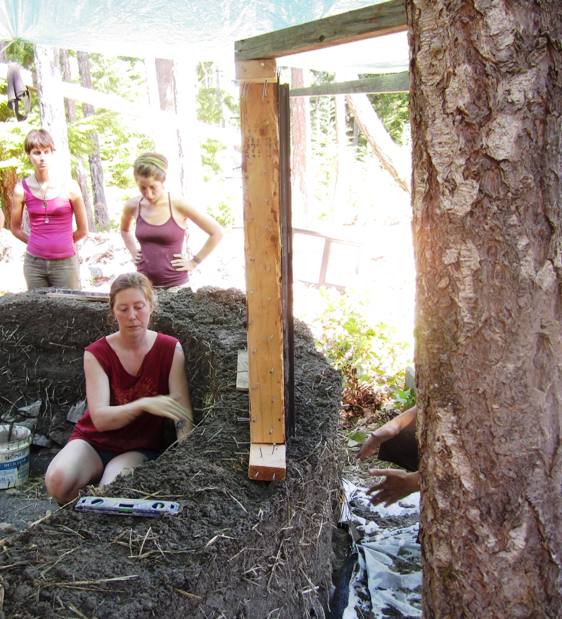
Rose (inside wall) facilitates a Mudgirls workshop.

Rose (inside wall) facilitates a Mudgirls workshop.

What is the one-sentence synopsis of your book?
Oof. Can I buy a sentence?

During a season of tending crops at Seven Steeples Farm, where the tomatoes and peas grow from ground that once held a 19th century mental institution for women, Shawndra Miller explores the turn in her own life from a 15-year bout with a debilitating mind/body ailment. While working the land she reflects on a wider societal transformation embodied by Seven Steeples, where something new is growing on the shell of the old.

Will your book(s) be self-published or represented by an agency?
I’m open at this point. My book proposal for Thrivalists has been making the rounds of agents and small presses. Meanwhile, I’m enjoying the process of discovery on the new project, while continuing to explore and highlight the community resilience movement.

How long did it take you to write the first draft of your manuscript?
The original Thrivalists book proposal, with a couple sample chapters, took about six months, but I keep adding to it as I travel and research, so it’s a moving target. The new one is still very young.

What other books would you compare this story to within your genre?
Thrivalists is a bit like Omnivore’s Dilemma in the way that the author’s process of research and discovery pulls the reader along. In subject matter, it’s close to Walk Out Walk On: A Learning Journey into Communities Daring to Live the Future Now by Margaret Wheatley and Deborah Frieze.

It’s hard to say on the new project since it needs more time to bake, but it might be compared to When Women Were Birds by Terry Tempest Williams.

Who or what inspired you to write this book?
I’m inspired by Charles Eisenstein’s work, in particular The More Beautiful World Our Hearts Know Is Possible. Without a massive consciousness shift, no amount of environmental activism or social change work will alter the bottom line of a culture built on dominance, control, and fear. That’s part of what I want to explore in the new project.

Thanks to Katherine Hauswirth for tagging me with this assignment! I nominate Julie Stewart, writer-and-farmer-in-residence at Urban Plot, to do the next blog hop.