Garden Tower Update: Mistakes Were Made

Time for an update on our vertical gardening project. When last I posted about the Garden Tower, everything was growing robustly and looking smart.

I hate to say it, but that was kind of the high point of the season. The plants have not grown as vigorously as I’d hoped since that photo session.

Our Garden Tower in mid-September: Not bad but not great. And this is its good side.

Our Garden Tower in mid-September: Not bad but not great. And this is its good side.

Today there are five tomatoes just about ready to pick, but the plant looks pitiful. I cut off most of the grim stuff a few weeks ago.
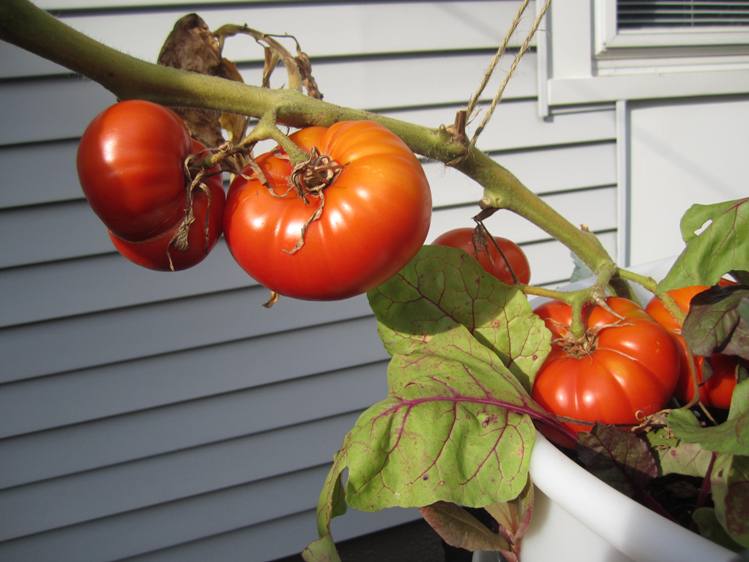
Not sure what kind of maters these are; the plant was a sucker from a friend's tomato patch, and she didn't label it.

Not sure what kind of maters these are; the plant was a sucker from a friend’s tomato patch, and she didn’t label it.

On the bright side, we’ve had several cucumbers, as well as snippings of basil, parsley, and kale. I’ve also harvested a few small beets from the top (with lovely greens)—and more are still growing.

The peppers have produced some sad little specimens, but then again we didn’t expect much, having planted them so late in the summer. I was excited to see peas and green beans, till I realized that the yield was going to be quite lean, barely a handful each. I guess one would need to plant almost a whole tower of legumes to get a “crop.”

Sadly the plants have just not grown very robustly. But the Tower setup isn’t to blame. My mistakes:

  • I planted immediately after filling the barrel with the soil mixture. When I watered everything in, the soil sank a couple inches. This caused the plantings in the side holes to become quite leggy as they reached for sunlight. In retrospect, I probably should have watered well first, allowed everything to settle, and then planted. That might have given them a better start.
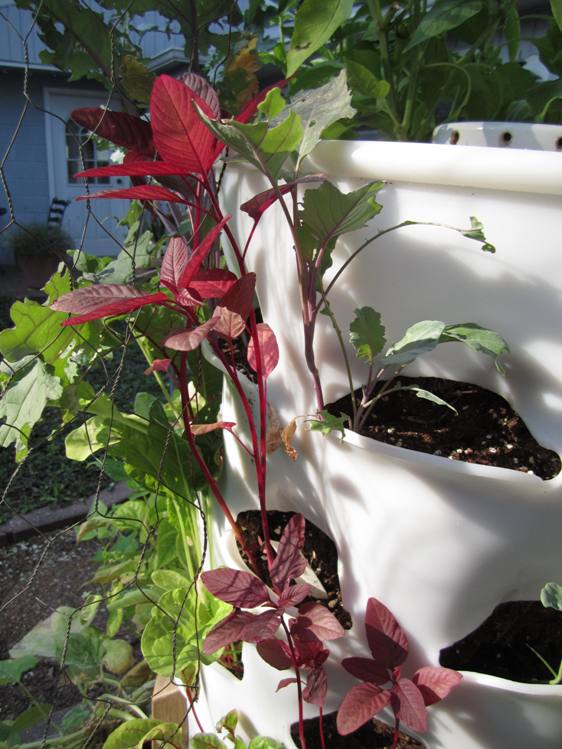
    Leggy amaranth and kohlrabi

    Leggy amaranth and kohlrabi

  • I neglected to apply the weekly liquid fertilizer suggested by the literature that came with the barrel. Said literature was buried on my desk until recently. Oops. (After the first month this is supposed to be unnecessary as the worms do their work. But I imagine that fertilizing during those first crucial weeks would have given the plants a needed boost.)
  • I overcrowded the side pockets, planting more than one seed. I told myself I would remove all but the strongest seedling later, and I did some thinning, but not nearly enough. I just didn’t have the heart to do it. I bet they would have grown bigger with less competition.

    Overcrowded chard

    Overcrowded chard

  • I overfilled the center tube with veggie scraps at the very beginning: In my excitement over this new worm farming adventure, I filled it to the top instead of to the suggested one-third level. I don’t know if this was a factor or not. (We’ll see how it goes when we harvest worm castings!)
One point of pride: my daily hand picking of cabbage worms at the height of their infestation seems to have saved my kale plants. However, it was too late for the kohlrabi and cabbages, which have not progressed beyond seedling size. I’m told that an application of Bt and some ladybugs would eliminate these little munchers, so we’ll keep that in mind for next year.

It may have been another misstep to mix our compost into the potting soil, given how much trouble we’ve had with diseases in our tomato plants. I hated to see the tomato transplant succumb to the same yellowing and crispy leaves we’ve had the last several years in our regular beds. But: no blossom end rot; the tomatoes themselves are so far looking luscious.

We can’t do anything about the soil, short of dumping it out and starting over, and I’m not willing to do that. But the other issues are all learning points for the next growing season. With gardeners, it’s all about next year!

My Day at School

Yesterday I drove down to Bloomington to spend part of the day with my homeschooling coop friends. These two families use homesteading activities as the basis for their children’s learning, along with traditional math workbooks, writing assignments and the like.

The task of the morning was to prepare cedar limbs to build a spit for cookpots over a campfire. The previous week, the kids had cut branches off the cedar tree, with a goal of being able to climb it. They’d christened it Fort Cicada.

Climbing ropes and nubs of branches make it easier to scale Fort Cicada.

Climbing ropes and nubs of branches make it easier to scale Fort Cicada.

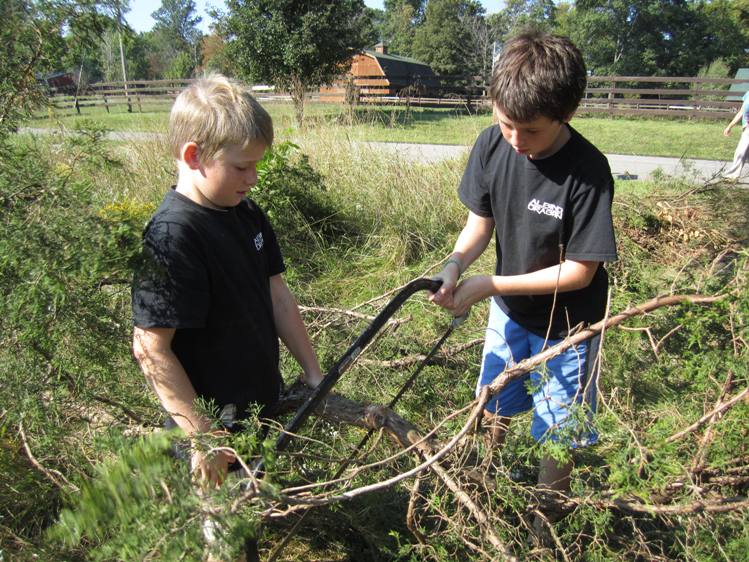
The brushy limbs now needed to be trimmed and the bark removed with a draw knife. The kids coached me on sawing. I can’t remember the last time I sawed something. It’s satisfying to cut right through a branch and have it fall.

Prepping the cedar limbs for use as fence posts and building material

Prepping the cedar limbs for use as fence posts and building material

The draw knife was a revelation. I have never experienced the pleasure of skinning a tree branch with a sharp instrument. I wasn’t sure I was qualified for the work, but the kids taught me well.

Using the draw knife

Using the draw knife

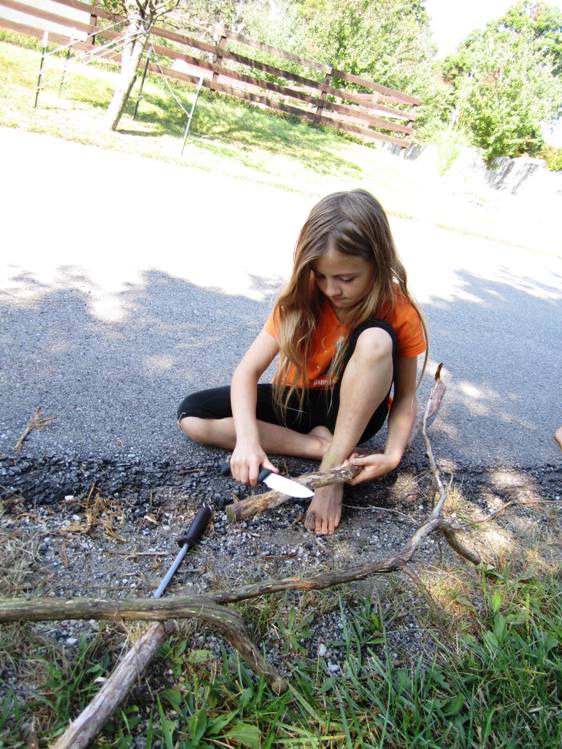
They assured me that they would use a regular knife to shave around the knots where the draw knife caught. Here’s the youngest, working with her knife.

Knife skills

Knife skills

I love how fearless these kids are. I find that my own hands are better suited to a keyboard than a hand tool. Yet, I pulled off a passable job on bark-peeling task.

Proud of my handiwork

Not bad for a beginner

After a while it was time for lunch (fresh-baked bread!) and conversation. I asked the four kids what life would be like if they went to a school where they sat at desks all day. They agreed that they wouldn’t have nearly as much fun and flexibility in their lives, and probably not be as fit. Nor would they spend as much time with their families. On the flip side, they have to schedule activities to connect with larger groups, whereas students in school interact with lots of different kids daily.

Asked how their education is preparing them for adulthood, they pointed to skills like gardening, cooking, and researching solutions to problems.

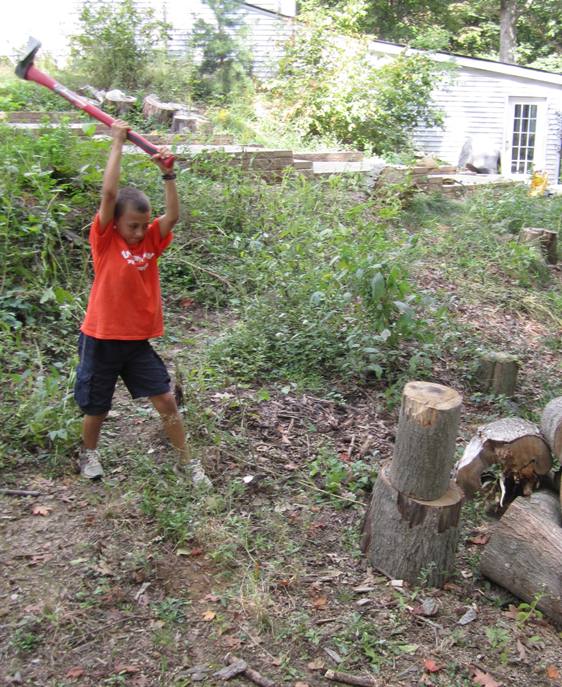
After lunch, it was time to split maple logs and stack wood for the winter’s fuel. This was more fun than I expected. I consider myself something of a pipsqueak—but seeing the kids demonstrate, I thought, why not try?

Demonstrating wood splitting

Demonstrating wood splitting

After numerous tries and tons of pointers from the peanut gallery, I managed to stick the splitting maul in the top of the log. I whapped at it with a mallet till the firewood split with a satisfying crack.

Alas, no one captured the moment on film, but I have the sore muscles to prove it.

All in all it was a great time with lovely people, and felt wonderful to be outside doing real work on a pristine fall day.

Drawing the Line

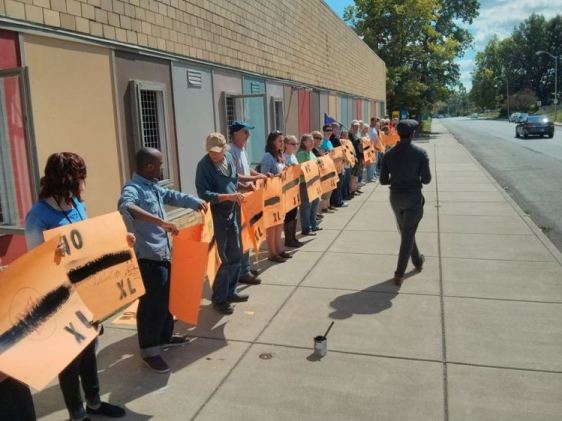
Saturday I took part in a local expression of a nationwide day of action, 350.org’s Draw the Line. About 40 of us came out to demonstrate resistance to the proposed Keystone XL pipeline.

KI EcoCenter hosted the Indy event in partnership with Earth Charter Indiana. These two stellar groups both work at the intersection of environmental, social, and economic concerns.

Photo by KI EcoCenter

Photo by KI EcoCenter

Alvin, one of the organizers, started us off with a wholistic assessment of what we were about: creating a new world, beyond the issue of the pipeline or tar sands or even fossil fuels.

“Keystone XL is a symbol of the past…We’re saying no, we want something different for our world,” Alvin said.

In the ensuing discussion, there was talk of reining in corporate greed, making companies pay the true cost of production, reforming the way election campaigns are financed, and other policy changes.

But many people brought up the need for internal as well as external shifts. How are we making the old reality obsolete by creating a new reality, as Buckminster Fuller advised?

Photo by KI EcoCenter

Photo by KI EcoCenter

Some of the insights:

We need to build a united movement that encompasses social justice, because climate change disproportionately affects the poorest of the poor. —Rosemary

We have to shift away from the value we put on money. Companies value money and profits more than our own lives. We have to focus on the intangible side of life, such as happiness that comes from having a healthy place to live. —Keenan

Photo by KI EcoCenter

Photo by KI EcoCenter

The problem stems from the idea of separation—that we’re separate from each other, separate from the earth, separate from the animals. But we are one. —Marion

We need to change the definition of the good life. —Tom

We need to take responsibility for what we carry within so we don’t pollute the world with negativity. Anything inside us that fears and hates is that which is in common with what is feared. It’s important to notice—because when you notice things, they lose power. —Phoebe

Photo by KI EcoCenter

Photo by KI EcoCenter

At the end of the discussion, we lined up outside the center with signs we had made, and a KI EcoCenter intern drew a black line across to represent our line in the (tar) sands.

Though I much prefer creating the new world to protesting what needs to fall away, I do believe it’s important to stand up and be counted. I’m glad Indy was represented in the movement, however small our number. And we didn’t stand alone. These photos of the line’s reach (into hundreds of cities, drawn by thousands of activists) at 350.org’s flickr stream are inspiring.

Working with Nature to Sustain Life

There’s a fatal flaw in the traditional definition of sustainability—meeting today’s needs without jeopardizing future generations’ ability to meet their own needs.

The problem? This notion leaves out every species besides homo sapiens.

The truth is, “Human beings don’t sustain shit,” sustainability consultant Brandon Pitcher declares. “Nature sustains us. We fool ourselves into thinking we sustain the planet, but it’s the other way around.”

But Fritjof Capra’s view of sustainability is more integrated:

“A sustainable human community is designed in such a manner that its ways of life, technologies, and social institutions honor, support, and cooperate with nature’s inherent ability to sustain life.”

By Alaricmalabry (Own work), via Wikimedia Commons

By Alaricmalabry (Own work), via Wikimedia Commons

Pitcher, a certified practitioner of ZERI (Zero Emissions Research & Initiatives, a global network seeking solutions to world challenges), spoke at the Irvington Green Hour Tuesday night. He gave two scenarios of solutions patterned after nature’s wisdom.

The Power of Shrooms
The first involves using mushrooms to address multiple issues, such as in the case of an invasive species troubling poverty-stricken parts of Zimbabwe. There water hyacinths choke waterways, to the point that people can’t take their boats down the river, jeopardizing their livelihoods in an area already strained by high rates of HIV.

However, once harvested, dried, and sun-sterilized, this invasive species is ideal food for mushrooms. Villagers take the work on, and native mushrooms thrive on this biomass. Reintroducing mushrooms as a food source demonstrates how tasty and nutritious these powerhouses are—and they can provide enough protein to sustain a community in two to three weeks, Pitcher says.

Mushrooms also figure in food security efforts in Colombia, where the coffee plant forms a substrate for edible fungi. Typically 99.8 percent of coffee is thrown away or burned on its way to our morning cuppa. But “waste” is opportunity.

Coffee Plant, by Jo N, via flickr Commons

Coffee Plant, by Jo N, via flickr Commons

The Wisdom of Water
Pitcher’s second example is a natural way to treat wastewater.

In Indiana, 92 cities, including my hometown, have antiquated combined sewer overflows (CSOs).

Combined sewer overflow effects, by Christopher Zurcher, via flickr Commons

Combined sewer overflow effects, by Christopher Zurcher, via flickr Commons

Never heard of a CSO? You’re lucky. Here whenever it rains a fraction of an inch, raw sewage combines with stormwater runoff and runs straight into waterways. So pathogens and toxic chemicals are dumped into my neighborhood’s Pleasant Run and other sweet little streams.

The remediation plan involves drilling enormous pipes deep underground to hold the excess sewage. To Pitcher, this represents a wasted opportunity—and a sad ignorance about the way water naturally purifies.

“Water does not move in a straight line in nature,” he points out. Its natural flow creates vortexes that clean it. “It’s very ignorant of us to think we can move water through pipes in straight lines and think that water’s going to be healthy.”

An integrated system of rain gardens and wetlands harnesses the power of algae to treat wastewater. In Indy, such a system could have resulted in a decentralized network, providing jobs and clean water in perpetuity, Pitcher believes.

For more information, see the ZERI site, or The Blue Economy—or attend Pitcher’s upcoming  sessions at Trade School Indy.

From Dismemberment to Oneness

Rebecca Solnit, on how leprosy numbs the extremities so that sufferers don’t realize when they are damaging their own tissues:

“The disease strangles nerves, kills off feeling, and what you cannot feel you cannot take care of.”

She speaks of a kind of dismemberment, of patients who feel no pain, so they injure themselves, even blind themselves.

She quotes a missionary doctor: “One of the boys said to me, “My hands and feet don’t feel part of me. They are like tools I can use. But they aren’t really me. I can see them, but in my mind they are dead.'”

Reading, it struck me that this statement could also sum up the dominant cultural attitude toward our own earth home. Though we belong to her and she to us, for so long we’ve disowned her, exploiting her riches as just so many dead “resources.”

We’ve been operating under the delusion that we are separate from the biosphere and the myriad life forms that share it—and separate from each other too. The results are catastrophic. If we lack feeling for each other, the soil under our feet, the waters that flow, and the skies above, we won’t consider these worthwhile of care.

"Holding Hands," by Paige Shoemaker, via Flickr Creative Commons

“Holding Hands,” by Paige Shoemaker, via Flickr Creative Commons

But perhaps that’s changing now, bit by bit.

More and more of us are waking up to our empathetic selves. We’re feeling a kinship not just with other humans but with the earth herself. We’re re-membering our entire human family and our deep connection to the planet that holds us.

I think of the empathy displayed by Antoinette Tuff as she disarmed a young mentally ill man bent on violence in her school. In the midst of her fear, this bookkeeper found a way to connect with the young would-be shooter, seeing him as a hurting soul. Her ability to reach him on a human level may have averted a major tragedy.

Meanwhile, this summer a group has been tracing the route of the Keystone XL Pipeline in the Great Plains. The pipeline, as I posted in May, would allow the release of enormous levels of carbon—enough to create irreversible climate change.

Trans Canada Keystone Oil Pipeline, by shannonpatrick17, via Flickr Creative Commons

Trans Canada Keystone Oil Pipeline, by shannonpatrick17, via Flickr Creative Commons

Taking both a physical and a spiritual journey through the heart of North America, Compassionate Earth Walk aims to nourish the earth, while inviting all humans to return to oneness in the community of life.

From the story on Resilience.org:

“We walk in response to climate change and in gratitude for the earth which has given freely to us for so long. We walk as an act of healing both symbolic and literal, including healing of the walkers, the land, the communities impacted by the pipeline, and the whole human consciousness of separation.”

No more numbness. No more dismemberment. The pain of our suffering planet and fellow earthlings might be difficult to face, but feeling it means we’re awake. It means we can care.

My Garden Tower, One Month Later

It’s been about a month since Judy and I planted our Garden Tower. I last posted about it the day we picked it up from the Good Earth. Time for a post showing the progression.

After some discussion we sited the barrel just outside our back door. We had to sacrifice a few cabbage and collard plants to clear out the space, but it’s the best spot for it. The light color of the siding will reflect light for the plants growing on the back side (though one friend insists we need to innovate some sort of lazy susan apparatus to be able to spin the whole barrel around!)

Filling the Barrel

Filling the Barrel

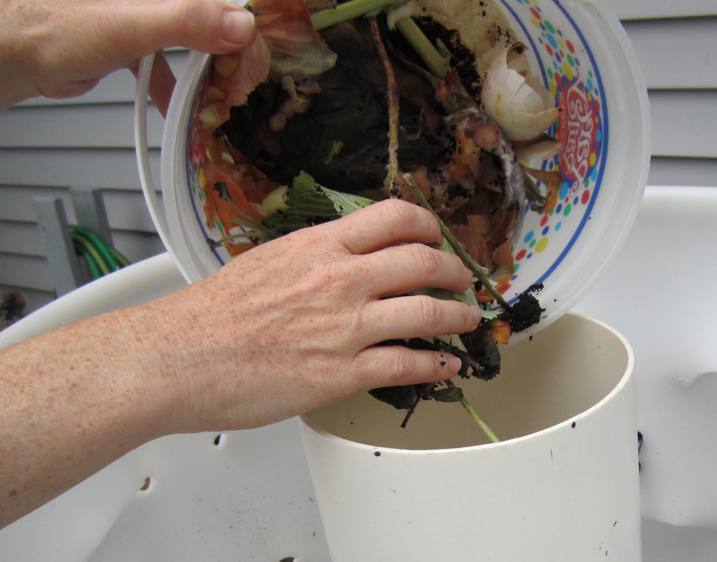
One of the things I love most about the Garden Tower is its built-in worm composting. I could hardly wait to put saved-up kitchen scraps in there. We also added some semi-decomposed stuff from the compost pile to jump start it.

Adding vegetable matter to the center tube

Adding vegetable matter to the center tube

I bought red wigglers at a feed-and-seed shop, and there were also worms in the soil mix since we used some of our own sifted compost.

Just a handful of worms is enough: they reproduce rapidly.

Just a handful of worms is enough: they reproduce rapidly.

I had soaked seeds in water overnight to give them a head start. It was great fun poking them into the soil.

Planting Little Marvel peas on the more shaded side.

Planting Little Marvel peas on the more shaded side.

Plants scavenged from friends and a local nursery helped round it out.

I bought a couple of bell pepper plants that looked like they might survive, and this gorgeous Genovese basil. I also planted parsley starts around the back and a tomato sucker that a gardener friend rooted.

I bought a couple of bell pepper plants that looked like they might survive, and this gorgeous Genovese basil. I also planted parsley starts around the back and a tomato sucker that a gardener friend rooted.

Soon the seeds started to sprout.

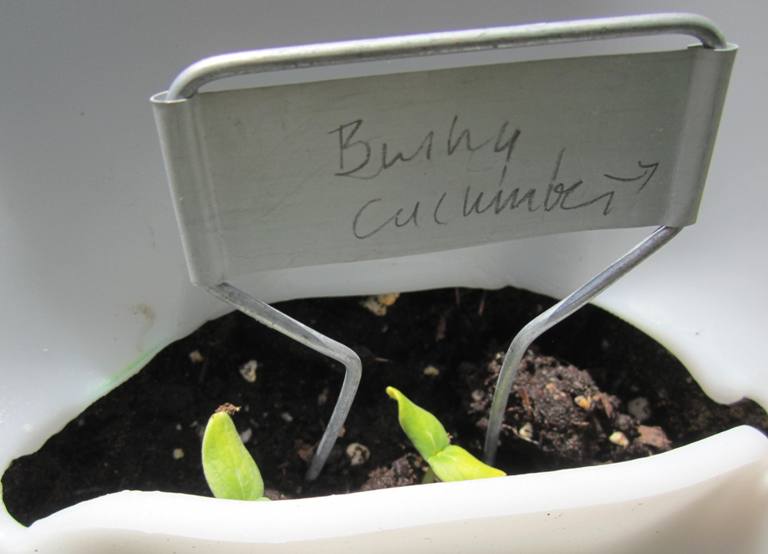
Cucumbers were first to sprout. I don't know if I'll get any cukes having planted them late in the season, but it's fun trying.

Cucumbers were first to sprout. I don’t know if I’ll get any cukes having planted them late in the season, but it’s fun trying.

It was like springtime in July.

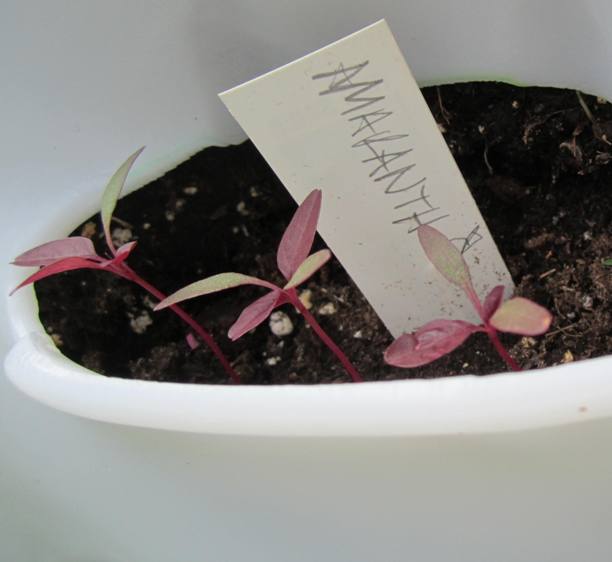
Really excited about the amaranth!

Really excited about the amaranth!

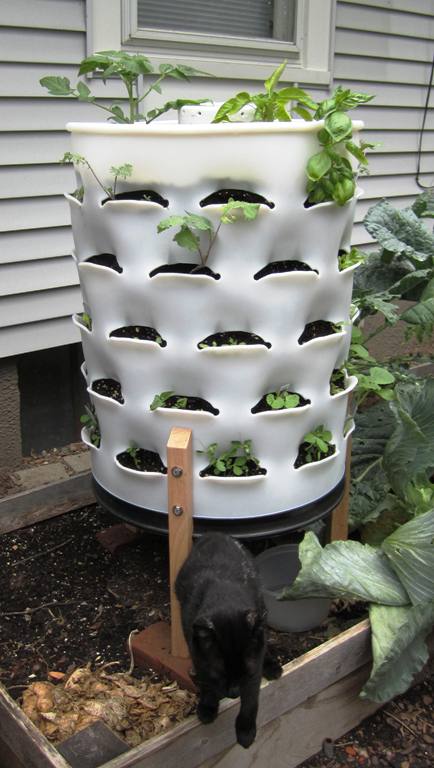
After a couple weeks it looked like this. (The cat loves hanging out in the cool shade underneath the tower.)

About 2 weeks after planting.

About 2 weeks after planting.

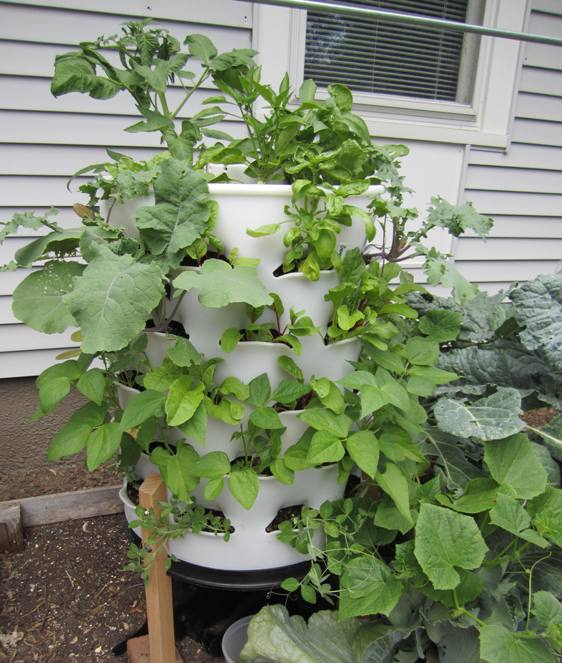
Today it looks like this!

Check out the cucumber vines, lower right. (And yes that is a cat under there.)

Check out the cucumber vines, lower right. (And yes that is a cat under there.)

The tomato “sucker” has suckers of its own now, and soon I’ll have to stake it. I’ve harvested basil, parsley, and a few thinnings of the greens. The worms have been chewing through their food, so in a few months I’ll have a different kind of harvest—worm castings.

We’re thinking of rigging up some sort of covering to extend the season. I hope we can keep snipping kale and chard into the winter.

I love my Garden Tower. Of course, it is not necessary to purchase this product to have a similar vertical garden. “You just need a blow torch and a two-by-four,” says one plucky friend. That seems a little more than I want to do, but this Garden Sack design looks to be a good DIY alternative.

Book Offers a Vision of the Possible

I’ve had this book out from the library the past few weeks, but after test-driving it, I just emailed Kathleen at Bookmamas to ask her to order it for me. It’s a keeper. Here’s my review:

Wendy Tremayne’s The Good Life Lab: Radical Experiments in Hands-on Living gives a powerful example of a reimagined world in the shape of one couple’s desert homesteading adventures.

Prickly pear, an example of the desert bounty gathered by Tremayne. Photo by Jon Sullivan [Public domain], via Wikimedia Commons

Prickly pear, an example of the desert bounty gathered by Tremayne. Photo by Jon Sullivan [Public domain], via Wikimedia Commons

Many of us work toward self-sufficiency (or better, community-wide resilience, broadening the circle from homestead to neighborhood). But we’re hampered by the need to make money to prop up our lifestyles, cutting into the time we have to learn and practice new skills. Wendy and partner Mikey demonstrate what is possible by leaping into a completely new way of life. They cash out their retirement accounts (a prescient move, before the crash) and transplant themselves into Truth or Consequences, NM to build a new life.

And build they do: using waste materials and nature’s bounty, they craft a beautiful, abundant, interconnected home base that allows them to live their deepest values.

In contrast to some “green lifestyle” books that focus on giving up luxuries for the earth’s sake, this book offers an exuberant romp through the reclamation of life’s biggest gifts: time, beauty, creativity, connection, purpose. More than just a memoir, it is an invitation to adopt the “maker” mindset. Tremayne’s lyrical descriptions of the spiritual aspects of this journey, coupled with the gorgeous, whimsical artwork and photographs, make this an inspirational book.

The author (who founded Swap-O-Rama-Rama, a community-based textile repurposing/skill sharing extravaganza) observes, “When all of life is for sale, it is a revolutionary act to become a maker of things.” She describes “life in the waste stream” as the ultimate freedom.

“By relying on waste, on what nature provides, and on ourselves, we gave the world a chance to demonstrate abundance. By becoming makers of things, we let our creativity become a transformative link between the free materials available to us and the finished goods that made our lives better.”

She notes that mistakes are part of this process, and describes combatting the inevitable “I can’t do that” by simply taking the next step. For those of us who consider ourselves less than handy (ahem), the book offers both challenge and a roadmap. The last section, in fact, provides concrete steps toward reclaiming the building blocks of life, covering food, power generation, fuel, and shelter.

The physical book itself embodies the new world by its very design, in which art and joy and utility are married into a brilliant manifesto.

In short: Stop what you are doing and order one now from your local independent bookstore, people!

(Can’t wait till your book arrives? Hungry for more after reading it? Check out Wendy and Mikey’s blog at Holy Scrap.)

Elders Building a Healthier Future

They meet in Chase Legacy Center’s art room every Thursday for herbal tea and the deeper refreshment of conversation. Known as WeAct (When Elders Act, Communities Thrive), the group began as a natural living discussion circle, and evolved into a discussion/action group.

The weekly gathering of elders is convened by the decidedly youthful Greg Monzel. Today he’s harvested Echinacea and mint from the herb garden tended by the group just outside. With curved shears, he snips the big healthy blooms and fragrant leaves into a blue teakettle as people stroll in.

An herbalist, Greg offers his prodigious knowledge of wildcrafting and permaculture, but participants have a wealth of information too. The discussion moves in spirals, touching on plant medicine, gardening, and other homespun topics.

We explore the identification and uses of lamb’s quarters, with one member noting that this “weed” is high in iron. From another participant, we get the inside scoop on Distelrath Farms’ new cooperative model, which allows the farmer more time to pursue his mission: educating children.

From another, we learn of Taj Mahal’s original plan to be a farmer, and why he changed his mind: “He couldn’t figure out how you could keep from being poisoned by putting poison on the ground.” We lament the way conventional agriculture wages war on the land.

Comfrey root bearing a smile

Greg produces a section of comfrey root dug from his garden. A terrifically tough—and useful—plant, comfrey’s roots extend some 40 feet underground. He cuts the root into tiny pieces to send home with everyone. Each garden can benefit from nutrients pulled up from the depths.

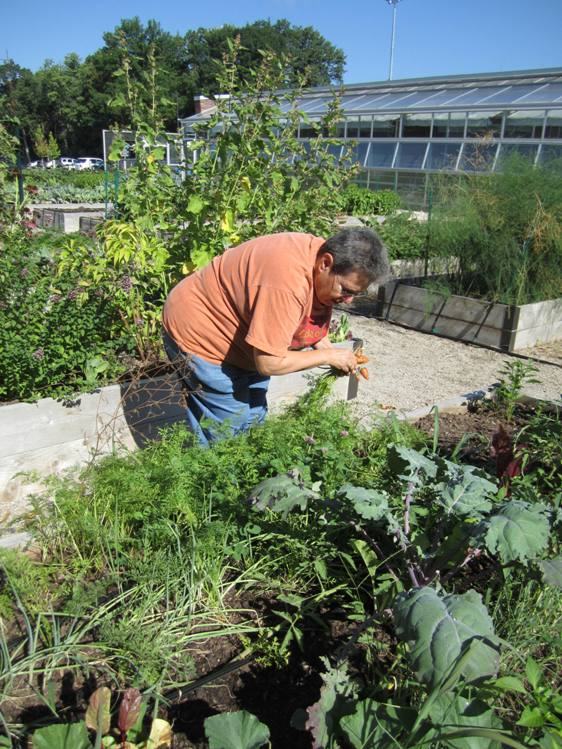
After a while we take cups of bright-tasting tea outdoors to the raised beds designated for WeAct use. There’s the excitement of lifting carrots from the earth. We discuss uses of borage and alfalfa, remedies for mildew, and where to buy a hori hori. Greg urges us to take dill seeds and coriander seeds to plant or eat.

The sky is deep cloudless blue for the first time in days. We stand in the sunshine enjoying the cool morning breeze. It’s the kind of moment that you wish could last all day, and in fact Greg says it is the high point of his week. Too soon, the group disperses.

Harvesting carrots from WeAct's group vegetable bed

Harvesting carrots from WeAct’s shared vegetable bed

Though we don’t visit it on this day, WeAct also maintains a vegetable plot on the adjoining vocational high school campus near the Colonel’s Cupboard, a student-run restaurant. The group supports the school’s horticulture and culinary programs in gardening and preparing homegrown produce.

From the mission statement: “WeAct is an activist organization of elders (and elders in training) who meet weekly for continuing education and community engagement…We consider anyone age 50 and over an elder, though the group is also open to elders in training who may be under 50.”

Among the goals:

  • to reaffirm the wisdom of community elders
  • to advocate for the right to home-grown nutrition
  • to create awareness of community resilience and natural balance

How are the elders (and elders-in-training) in your community manifesting a healthy vision for the future?

Sharing Summer’s Abundance and Summer’s Work

You never know what might result from posting a request on Facebook. The other day I asked our neighborhood Facebook gardeners’ group if anyone would take my zucchini in exchange for peppers. Because really, how many zukes does one household need? This led to the idea of a veggie swap ‘n share. So I invited any interested gardeners to bring their surplus over yesterday for some trading.

Only a couple folks showed up, but it was just right, and no doubt more will come in the future.

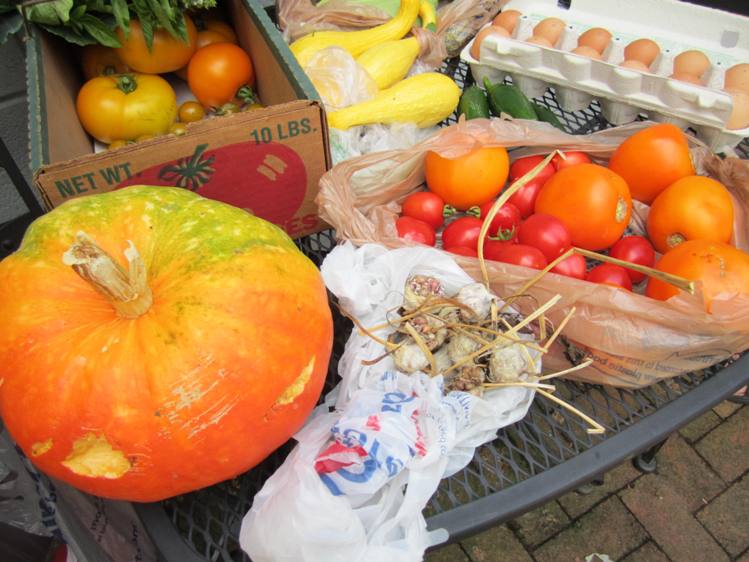
Summer's abundance shared at the veggie swap.

Summer’s abundance shared at the veggie swap. (The eggs are a side deal.)

Julie brought heirloom tomatoes, the only thing she grows. I was thrilled to take some off her hands, since mine are ripening ever so slowly after initially falling prey to blossom end rot. Her cherry tomato variety is called Doctor and rivals my beloved Sungold for sweetness.

As the most ambitious gardener among us, Laura brought a slightly squirrel-chewed pumpkin that needed to be harvested because of an issue with the vine. She had also just picked yellow squash, collards, basil, and more lovely heirloom tomatoes, including a variety called Principe Borghese, reputed to be great for drying. (I’m happy to say these are in my dehydrator as we speak.)

Collards and basil straight from the garden.

Collards and basil straight from the garden.

I offered the aforementioned Zucchini Explosion, specifically a variety called Cordello, as well as some jalapenos and various herbs. Laura went home with catnip for her kitties (sorry Kitley and Maggie!), sage, and rosemary.

Funny how these things all work out and people go away happy to try something new. I think swapping could be habit-forming.

Clowning with Cabbage

Clowning with cabbage at last year’s kraut party

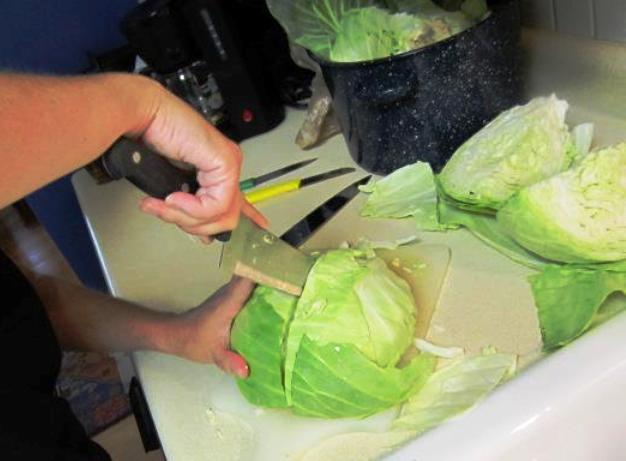
On a related note, last summer our kitchen was home base for group preserving efforts, loosely connected to our community garden. With polka music on Pandora, we shredded up several heads of cabbage and packed them in crocks at the Kraut Party.

Kraut Party Action

Kraut Party Action

Later in the season we switched the sound track to the Three Tenors and Andrea Bocelli at the Pesto Party.

And a couple of us got together to make a gazillion varieties of salsa as well, to share with the community at a Salsa Party.

When you try to cook and preserve seasonal produce, summer can be a crazy time, especially if some of the produce comes from your own garden. Most of us don’t live in the kind of multigenerational households that were the rule back in the day. So we don’t have the built-in helpers that our foremothers did. It can get lonesome, toiling away in your kitchen on your own.

So it’s been great fun to turn some of that work into social events.

There’s talk of another Pesto Party, and maybe even a group effort to “put up sweet corn,” as my people say. We can get a boatload of sweet corn from one of our many local growers and just go to town.

Hm. What musical genre would work for a Corn Party?

From the Low Food Chain Chronicles

Weeks ago, months really, I pledged to try sardines in an effort to eat lower on the food chain. I went out and bought a tin of skinless, boneless sardines. I asked for your serving suggestions. I browsed recipes. I learned that you can fry them (“the bones get crispy!” said food blogger friend Melissa, which gave me pause), or put them in a potato salad, or mix them into pasta. Or just eat them on a cracker.

I got inspired.

Then I put the tin in the pantry. And there it sat. And whenever I reached in for baking powder or pasta or whatnot, I would think, Oh yeah, sardines, I promised I would eat those. For the blog. And then I would close the door again posthaste.

I am proud to tell you that yesterday I actually pried that sucker open. And I didn’t stop there. I actually ate sardines.

Yesterday's lunch.

Yesterday’s lunch.

I’m here to report that these little fishies, which feed the farm-raised fish so many of us prefer…really aren’t that bad! The smell is a bit oceanic, but taste is mainly salty, at least when mashed in small (microscopic) amounts on a lovely sesame rye cracker.

I was worried the mouthfeel would be slimy, because just look at the sheen on those puppies. But they were actually quite palatable.

I had lactofermented veggies on the side, figuring two strong flavors would cancel each other out. You can never have too many cultured veggies, and these collards and cabbages were homegrown and -cultured.

Unfortunately I had to move indoors to eat because my cat was so interested in the meal.

"I'd be happy to finish those sardines off for you." --Kitley

“I’d be happy to finish those sardines off for you.” –Kitley

I told myself that if lunch turned out to be a train wreck, I’d put a good taste back in my mouth with dessert: zucchini cornbread baked in the solar cooker. Not just any cornbread but blue cornbread. Over homemade yogurt with organic Indiana blueberries.

Sorry I don’t have a photo for you. I was too excited about eating it to pause and snap.

Meanwhile the salad balanced the sardine experiment nicely. I’ve said it before: I know this isn’t a food blog, but still I must share the ingredients of this super-duper salad:

  • Grated zucchini, because it’s summer and everything we eat must include zucchini from the garden in some form.
  • Oxalis, purslane, sorrel leaves, chives, catnip, young dandelion leaves, and possibly other things I can’t remember, gathered from the yard (and the neighbor’s yard, but who’s looking?)
  • Sungold cherry tomatoes, first of the season and sweet as can be. I’ve waited all year!
  • Pumpkin seeds toasted in the solar cooker.
  • Nettle seeds. Herbalist Greg Monzel says these are “one of the only herbs that can restore compromised kidney function,” not that I really need that. And they’re too small to give much more than the teeniest little crunch. But I like using every part of the nettle patch, so I can tell Judy, “I’m still harvesting from it!” when she threatens to whack it down.

What culinary adventures are you having this summer?