How I Spent my Summer Vacation

After traveling for nearly a month, this homebody is glad to be back to my little haven of domesticity. This time I visited Washington State with a side trip to British Columbia.

If you follow the blog, you know a little bit about my adventures, but here are some more highlights.

In Bellingham I learned about Sustainable Connections’ Think Local First campaign. This ingenious program rewards local businesses for earth-friendly business practices by raising their profile in the community.

We decided to experience this local biz thing for ourselves.

Checking out goat cheese options (that's our old friend Laurie in the foreground.)

Checking out goat cheese options at the Bellingham Farmers Market (that’s our old friend Laurie in the foreground.)

Craft beer, ice cream made from local berries, a killer bookstore, and a festive Saturday farmers market showed us a bit of the region’s specialties.
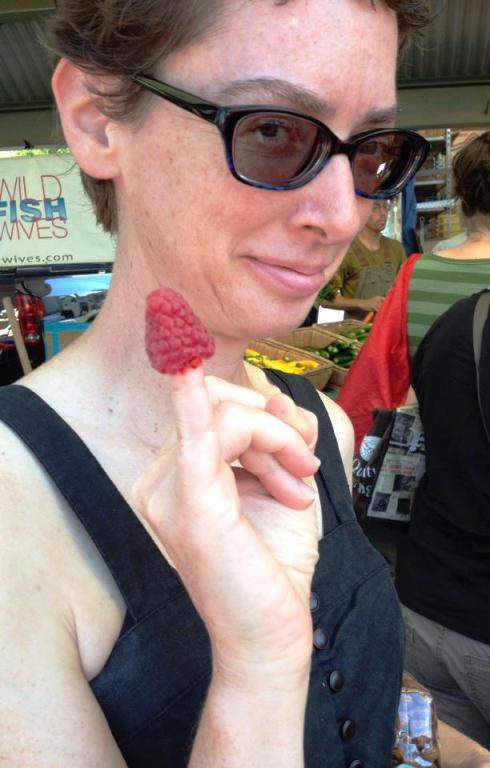
Biggest raspberry evah

Biggest raspberry evah

From Bellingham we ventured north to Denman Island in British Columbia for the Mudgirls workshop.

My new friend Millie, tamping slip straw at the Mudgirls workshop.

My new friend Millie, tamping slip straw at the Mudgirls workshop.

Then it was back to the U.S. for a two-week writing residency at Hypatia-in-the-Woods in Shelton, WA. This experience was a bit different from previous residencies which I shared with other artist types: I was the sole resident of a lovely cottage nested deep in the cedar forest.

The labyrinth on the grounds, a magical place

The labyrinth on the grounds, a magical place to commune with deer, birds, trees, and insects

The solitude gave me lots of focused time to write. I also learned how much I value having someone within hollering distance, as I had a few challenging moments in the intense isolation. I was thankful for the board, who kindly made sure I had some conviviality to balance out the quiet.
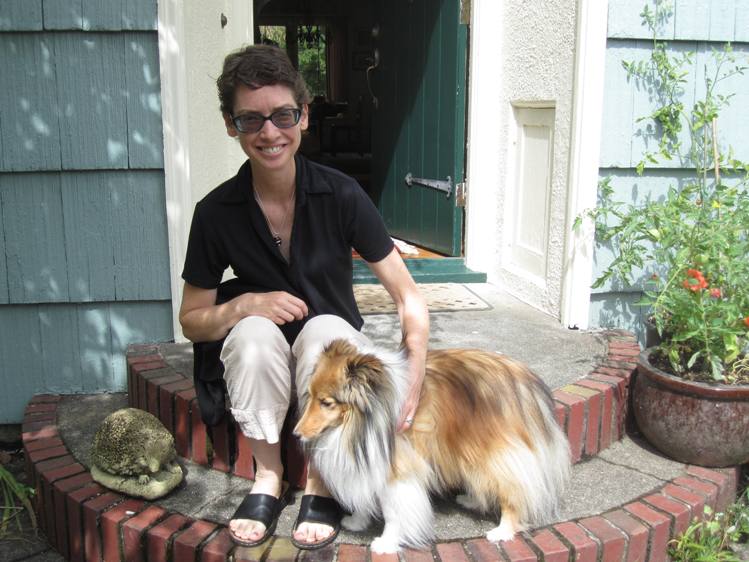
Other people's dogs, such as the director's Sheltie, Ceela, helped me deal with the lonesomeness of not having my dog with me.

Other people’s dogs, such as the director’s Sheltie, Ceela, helped me deal with the lonesomeness of not having my dog with me.

A high point: connecting with Olympia Mycelial Network, a group I’ve admired from afar. I helped them with an installation of bioluminescent mushroom mycelium, which was a thrill.

We gathered by the cob oven on the Commons at Fertile Ground. After a quick tutorial, we created a path from wood chips inoculated with panellis (bitter oyster) mycelium. The hope is that this path will glow in the dark as the mycelium gets established.

Peter McCoy, who blogged here about starting the Radical Mycology project, walked us newbies through the process for growing mycelium.

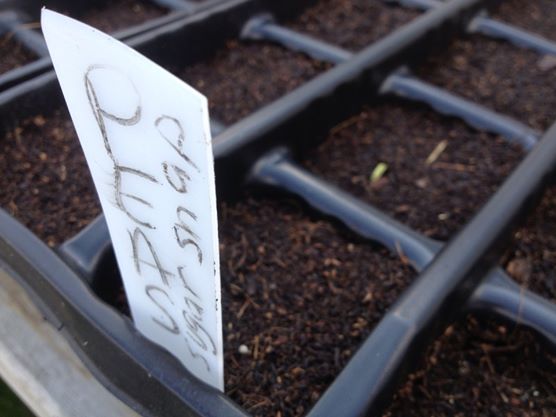
Peter showing me grain spawn and mycelium sugar that he propagated at home. Now I want to try it!

Peter showing me grain spawn and mycelium sugar that he propagated at home. Now I want to try it!

After that inspiring evening, I had to visit Olympia Food Coop, where the group earlier helped install mycelium that consumes petrochemicals.

I feel so lucky to have had the chance to learn from such innovative people and projects. I’m glad to be back to my laundry-hanging, solar-cooking, dog-walking routine though. I have several fun writing assignments coming up that I’ll tell you about later.

Note: Speaking of solar cooking: We’re offering a workshop this Sunday from 2-3pm at Pogue’s Run Grocer on that very topic. RSVP here if you can make it!

Good to Grow

Guest post by Luke Taylor, who started a business called Good to Grow with his wife, Emily

Luke and Emily Taylor

Luke and Emily Taylor

Based out of Irvington, on the east side of Indianapolis, Good to Grow aims to harness the power of community to revolutionize the way we interact with overlooked natural resources.

What does it look like to “harness the power of community?” And what are these overlooked natural resources?

The power of community is a shared vision, and many hands. Our vision is one that makes it easy for neighbors to make choices that not only benefit their community, but also themselves. Choices like saving their food waste to create compost—and collecting rainwater to reduce water bills and strain on municipal utilities.

Good to Grow's custom-built water barrel towers enable urban gardeners to save large amounts of rainwater.

Good to Grow’s custom-built water barrel towers enable urban gardeners to save large amounts of rainwater.

Some might call this “being green,” or recycling. I am happy thinking of it as purely selfish.

If you have altruistic notions of saving the world one recycled cardboard box at a time, great! Continue seeking out ways to heal your part of the world through changes large and small. Your community needs more people like you.

Many in your community, however, need a layup. (Editor’s note: a layup, for the basketball-uninitiated, is the easiest of shots, more difficult to miss than make.) These folks will only choose to recycle if they are standing next to a bin or a forest ranger is looking in their direction.

Or if they receive something free as a reward. In short, they need incentive.

Developing an incentive framework to support behavior change is our goal at Irvington’s Good to Grow.

A bucket ready to receive a neighbor's vegetable scraps.

A bucket ready to receive a neighbor’s vegetable scraps.

One such framework is Irvington’s composting program. Already being championed by 16 households, this initiative’s ultimate goal is to collect compostable food waste and distribute finished compost (a valuable organic fertilizer) at the very same time. The idea is to connect beneficial behavior as seamlessly as possible with valuable incentive and convenience.

It is my hope that this idea encourages communities to create incentive frameworks of their own!

Luke Taylor moved to Irvington, Indianapolis with his wife Emily in early 2013. They chose this neighborhood mostly because of its strong sense of community. The Taylors wanted to be a part of it, and to encourage its growth. With Good to Grow as the vessel for delivery, they have a vision for Irvington that will amplify and enrich our local resources, bringing together an already blossoming Indianapolis community. One day, they dream to be able to enrich other Indianapolis communities in the same way by sharing the Good to Grow framework.

Building with the Mudgirls

I spent part of last week at a workshop offered by the Mudgirls, a natural building collective in British Columbia.

The Mudgirls strive to live lightly on the earth while sharing skills among themselves and the wider community. And when it comes to resilience, building shelter from earthen materials is about as serious as you can get. This is a group that embodies the reimagined world, and a powerful DIWO (do-it-with-others) spirit.

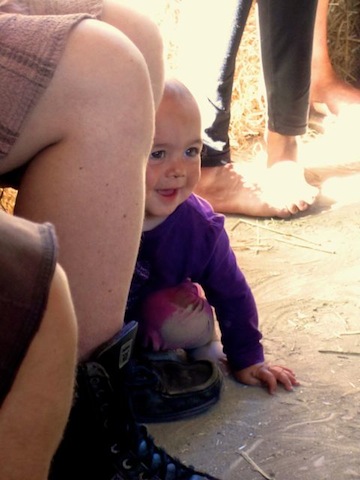
The Mudgirls do their work in child- and mother-friendly style.

The Mudgirls do their work in child- and mother-friendly style.

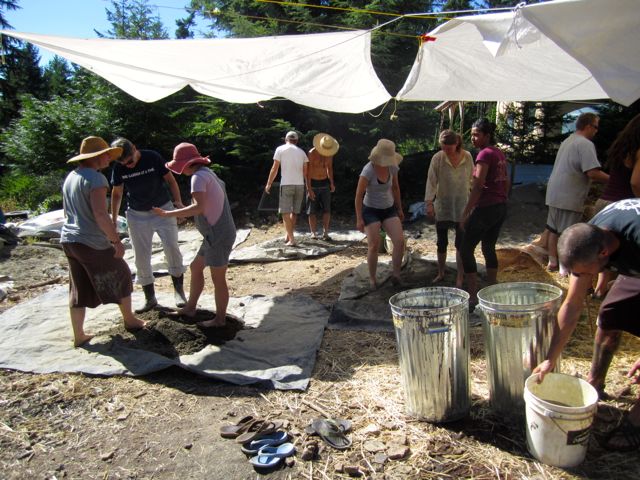
Collective member Rose hosted our workshop on cooperatively owned land on Denman Island. We camped in the forest by night and bartered our labor for instruction by day. About 15 others took part, bringing enthusiasm and good humor to the work.

Some of our group making cob, a mix of clay, sand, straw, and water.

Some of our group making cob, a mix of clay, sand, straw, and water.

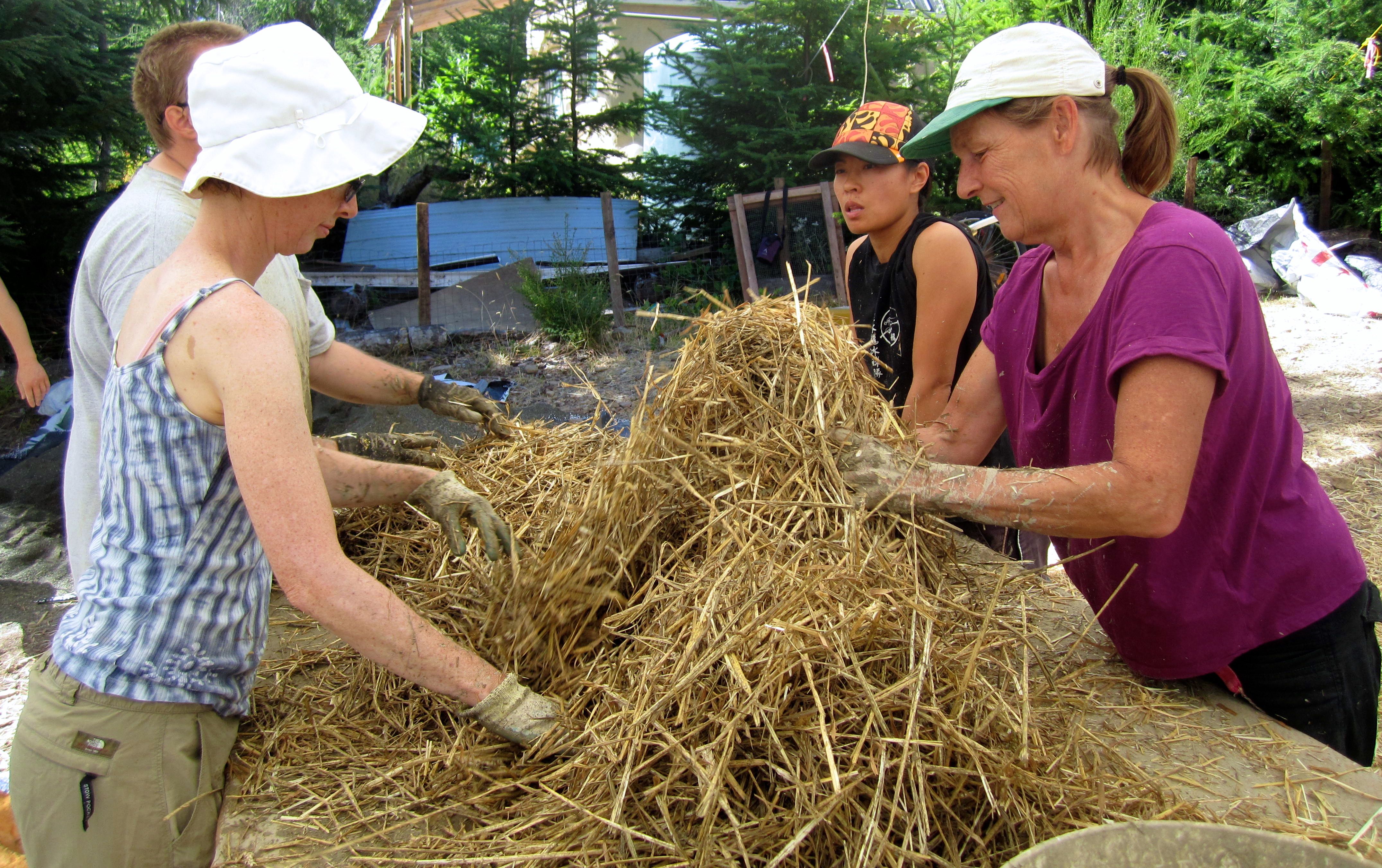
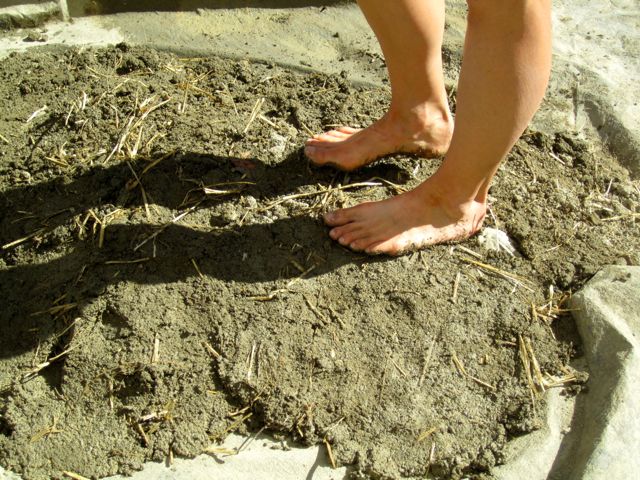
Rose is converting an existing structure on the land into a home for herself and her family. Using temporary plywood forms, we packed the walls with insulating material called slip straw. We made this insulation from straw and a clay-and-water slurry.

Making "slip straw" to insulate the walls. (Spot the pasty writer?)

Making “slip straw” to insulate the walls. (Spot the pasty writer?)

In a few weeks the walls will be dry enough to plaster.

house

House with slip straw insulation in the walls. The plywood is temporary, just to create a form to pack the slip straw in.

A hand-laid stone foundation forms the base for a cob-walled addition. (The team that worked on setting the stone found it a lesson in patience.)

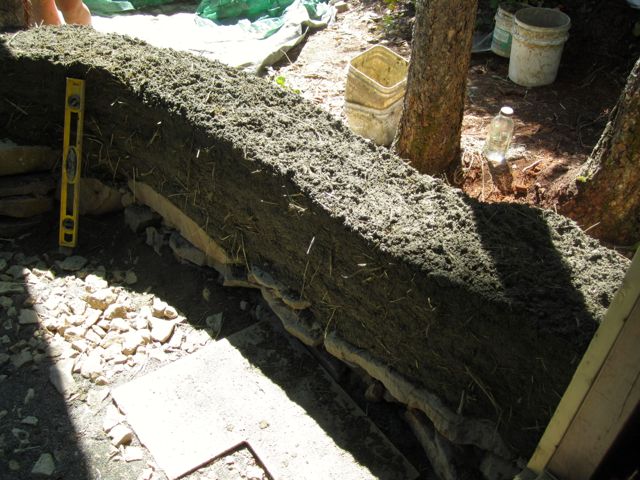
Wall taking shape on top of the stone foundation

Wall taking shape on top of the stone foundation

We all helped mix the cob, which is a blend of clay, sand, and water, with a sprinkling of straw. While clay has compressive strength, it lacks tensile strength–the role of the straw. We learned that the straw has a similar job as rebar in concrete, adding internal structure to the dense material.

Mixing a batch of cob.

Mixing a batch of cob.

Building the wall was perhaps the most exciting task.

Building the wall

Building the wall

Some people made it look easy. But I’m still not sure the section I worked on could be called plumb!

Room addition taking form, with window.

Room addition taking form, with window.

I asked Molly, one of the Mudgirls who helped with instruction, how the Mudgirls mission fits into the broader picture of ecological and societal upheaval. Beyond  her passion for natural building, she told me, what excites her is the community that’s being nurtured.

Molly mixing clay slip with a giant eggbeater-type tool.

Molly mixing clay slip with a giant eggbeater-type tool.

The women of the collective have known each other for years and have a solid commitment to each other. They make decisions by consensus, taking the time to talk things out (though in recent years the talks are shorter as the big issues have been resolved). Members all know that they have each others’ best interest at heart, and each agrees to take responsibility for her own needs and desires.

Molly said that people who come to workshops often reconnect at later events, forming lasting friendships. So community extends beyond the core collective. She sees participants as pollinators, taking our inspiration beyond the islands of British Columbia.

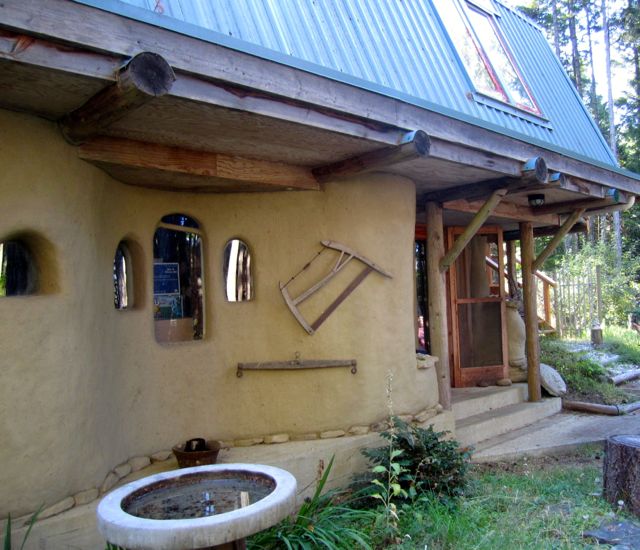
Example of a finished cob house (actually this one's a hybrid).

Example of a finished cob exterior.

For me the experience was all about the freedom to try something new. I had to grant myself compassion for the learning curve, and work on forgiving my body its frailties. The Mudgirls’ supportive environment made that possible.

And it was thrilling to help build an actual home. These hands that spend so much time on a keyboard are part of Rose’s homestead now.

Celebrating the Promise

The highlight of my Fourth of July? It was not the fireworks nor the pretty paper lanterns floating up and glowing orange against the deepening dusk. No, the high point came during the drive home.

photo by Ian Kluft, via Wikimedia Commons

photo by Ian Kluft, via Wikimedia Commons

Our downtown viewing spot was a friend’s porch. Through the trees we could see the beautiful fireworks like flowers in the sky. But we left before the show was over, not being a fan of traffic. So we had fireworks in the rearview window while driving down the main east-west artery towards home. Here’s what struck me: the folks who came out all along the street to catch a glimpse of the fireworks.

It moved me to see the good people of eastside Indy taking over parking lots and green lawns, perching on guard rails and idling on off ramps, clustered in doorways and on sidewalks. All along the street, all the way to my neighborhood, they looked the same way. People of all ages and races and walks of life sat on their lawn chairs, blankets, and tailgates with their faces to the downtown skyline on a mild summer evening.

Maternal on the Fourth

I found it so tender to envision this scene replicated in small towns and municipalities and big cities all over the nation. My countrymen and -women seeing beauty in the sky, children gasping in delight (and dogs ducking in terror), all on the same night. That peaceful slump of bodies—lovers holding each other, parents pushing strollers, children racing around—just as they had on so many Fourth of July nights during my childhood.

I felt a rush of love for everyone celebrating the promise of our young country, and that may be as patriotic as I get.

On the Solstice, Contemplating Home

On the longest day of the year, one week after leaving Playa, I’ve been thinking about all that “home” means to me. I loved Oregon’s pristine natural beauty. But I couldn’t wait to come home and walk the tree-lined streets of my neighborhood. Taking my dog Marley for a walk was high on my list on my first morning back.

It’s not perfect here. There’s litter, unlike in Lake County, OR, and sadly many of the neighborhood ash trees are not treated for emerald ash borer, so they are dying—a distressing sight. Poison ivy is rampant in untended corners. Plus it’s really damned humid. But I still walk along with my heart singing “home,” loving the big sycamores and tulip poplars, enjoying all those daylilies and clematis vines, sampling a mulberry here and there.

And getting the latest scoop. Down the street, my big softie neighbor still has the pit bull who wandered into his yard—the one he swore he wouldn’t keep. Farther on, the retiree who always complimented me on my dog (Lord, how that poodle can prance) tells me he and his wife are moving to a condo after 47 years here, but a young family up the street will be moving in. I learn about another neighbor’s dog’s bout with pneumonia. And so on.

Walking is one of the ways I savor my neighborhood, but it’s not the only way. About the second thing I did that day was ride my bike with Judy to the kickoff of the Irvington Folk Festival, a weeklong extravaganza that opened with an outdoor bluegrass concert. I’m no bluegrass aficionado, though I love a good Rocky Top as much as the next person. What I went for, and got, was the people.

In the crowd were Rosemary, and also Laura, two women who helped me found the Irvington Green Initiative years ago. Also our neighbor Pat, who told us of a possible grant for a native plant/foraging project we’ve been scheming.

We sat with Heidi and Mike, longtime gardening buddies who happened to bike up at the same time as we did, midconcert. Behind us were Jerome and his family. That was fortuitous, because I could update him on our sweetgum tree. (Arborist Jerome has a business called Tree-Centric, which I’ve blogged about before. A few weeks ago he assessed our ailing sweetgum, taking soil samples and cutting away girdling roots. The cost of his professional expertise? A loaf of homebaked bread.)

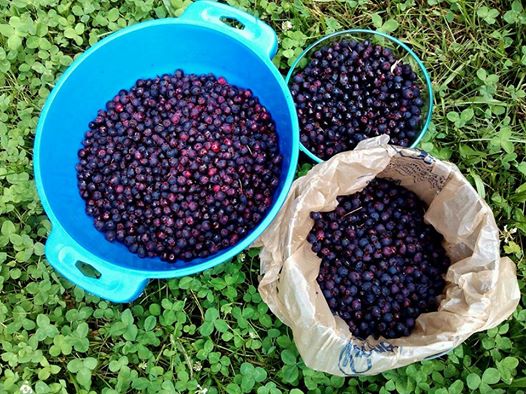
Jerome offered both his strawberry patch and serviceberry grove for picking. Though the strawberries were done, here's the lovely haul of serviceberries my friends and I made that morning.

Jerome offered both his strawberry patch and serviceberry grove for picking. Though the strawberries were done, here’s the lovely haul of serviceberries my friends and I made that morning.

Somehow, over the years, my roots have grown deep in this place. I grieve with friends who lost their 13-year-old German Shepherd, one of a gang of Marley met in the park as a pup. I pick mulberries and serviceberries (some from Jerome’s yard) while chatting with good friends. My yoga buddies welcome me back vociferously. I barter for Thai massage from a neighbor.

All that, plus (last night) hearing local musicians rock out, after eating at the new deli that sources everything it can locally.

How did I get so lucky? I don’t know, but I’ll contemplate the answer while biking to the park for the folk festival’s finale (and, bonus: alternative gift fair).

Resilient Communities and People: How Yoga Can Help

Guest post by Gaynell Collier-Magar

Hi everyone! I am so honored to be a guest blogger on Shawndra’s amazing website. Shawndra is one of my Irvington Wellness Center yoga students. She has a beautiful, thoughtful practice, both on and off of the mat. She personifies how yoga can help with resiliency in life.

Yoga is a 5000-year-old tradition of practices (the Eight Limbs) to reduce suffering and still the mind. It is not a religion. However, the practices have been incorporated by many religions: Buddhism, Hinduism, and contemplative Christianity to name a few.

The physical practice or “asana” (“seat”) is meant to create resiliency in the body and mind to enable sitting in meditation for long periods of time. Unfortunately, in the West, the physical practice is often perceived as the path to buns of steel, pretzel poses, and very thin 20-something bodies.

The first lines of the Yoga Sutras state: “Now, the teachings of yoga. Yoga is to still the patternings of consciousness”. The Sutras explain how our habitual ways of thinking create suffering and how we can remedy this.

When we are reimagining a future for our communities, yoga could be a useful tool.

Photo by Jenny Spadafora

Photo by Jenny Spadafora, via Flickr Commons

So how does this happen? In the physical practice, it begins with being in the present moment—in the body and the breath. To get a feel for what I mean, try this:

Notice how you are sitting now. Are you slumping? Good…notice how you feel heavy in your body. Now, sit up straight, feel your bottom sitting in your chair, feel your feet on the floor, and lift your chest. Do you feel any lighter in your body? Slump again and notice. Sit up again and notice. Now close your eyes, put your hands on the tops of your thighs and take three deep, slow breaths. Focus on the exhale.

What was your mind doing? Chances are it wasn’t making a to-do list, obsessing about the person at work who drives you crazy, or yearning after a piece of chocolate. You begin to get a glimpse of the mind becoming more still—an experience that increases in depth and length with further practice.

The practice is to notice what is happening in the present moment, practice non-reaction, and return to the present moment. Neuroscience is showing that these practices literally re-wire the brain.

Two of the liabilities of community work are burnout and lack of fresh ideas. Our ego-driven “monkey mind” robs us of tremendous energy and creativity. As we engage in practices that still the mind, we create a mindspace in which to think outside the box—and the energy to act accordingly.

Photo by TZA, via Flickr Commons

Photo by TZA, via Flickr Commons

We also create a mind that is equanimous and unattached, yet deeply caring. We create a mind that is focused and in the present moment. We create a mind that is resilient.

It is not a leap of consciousness nor faith to realize how resilient minds can create resilient communities. The Buddha said, “All that we are is a result of what we have thought. The mind is everything. What we think we become.”

Gaynell has been a yoga practitioner for over 14 years. She was certified as a Vinyasa yoga instructor in 2009 by Rolf Gates and is a registered yoga teacher with Yoga Alliance. She is certified to teach adaptive yoga to people with physical disabilities, having studied with Matthew Sanford of Mind Body Solutions. She has taught Vinyasa, adaptive, and 12-step recovery yoga classes in Indianapolis and Cozumel, Mexico in Spanish and English. She holds a Bachelor’s Degree in Social Work and owns her own landscaping business, Growing Connection.

Join Gaynell and other terrific instructors at Shine Out Yoga Celebration, July 11-12 in Indianapolis, benefiting Mighty Lotus.

Evidence of the Shift

Final in a series

I’ve often written here about feeling overwhelmed, feeling helpless, feeling despairing. At times it seemed the news was all bad.

The Maldives, one of the island nations imperiled by rising seas. Photo by Nevit Dilman, via Wikimedia Commons.

The Maldives, one of the island nations imperiled by rising seas. Photo by Nevit Dilman, via Wikimedia Commons.

At times I feel besieged by evidence that we as a species are beyond hope. Sometimes all I hear is the lowest common denominator outshouting all reason. Sometimes all I see is fear feeding on fear, a downward spiral with no bottom.

Then along comes a hopeful story of human connection, small but significant.

Bethann was at the zoo with her daughter when she heard a man say, “You heard the one about the two Mexicans?” As it happens, Bethann has adopted two children who are not Caucasian. The man had his own young son with him. Bethann stepped up, with nervous heart, determined to make a difference.

Here’s the story in her own words:

“While at the zoo with Bo this morning, a guy with a toddler (loudly) told a joke that started with ‘How many Mexicans does it take…’ I found a moment when he was separated from his group and pointed to Bo and said ‘See that kid? She’s mine and she’s incredible. I can see you love your kid a lot. But, every time you tell one of those jokes, you teach your kid that it’s OK to treat my kid like crap. And, I am sure you don’t mean to teach your child to hurt others, but that is exactly what you just did there.’ He actually quietly said ‘I understand.’ God willing, there will be one more person on this earth who thinks before he teaches his kid to hate.”

Photo by Debbie L., via Flickr Commons

Photo by Debbie L., via Flickr Commons

How stunning that this man, instead of lashing out or being defensive, very quietly said, “I understand.”

To me this is evidence of the shift that Julia Bystrova of Transition US described, the widespread awakening that is already happening. I see it in the way Bethann stood in her center and spoke quietly but strongly to hold this man accountable. I see it in the way she allowed him room to hear her. I see it in his respectful and surprising response.

What evidence have you encountered of this kind of transformation? I’d love to hear your stories.

Inner Transition As Key to Collective Work

First in a series of three

In my last post I suggested that an internal shift is as critical as the external changes we so desperately need. I’d like to explore that idea further in this series.

While in California last fall I had a conversation with Julia Bystrova, who was developing a series of “inner transition” tools with Transition US.

The Transition movement is a worldwide push to bring communities into a relocalized post-oil economy. The idea is to reduce consumption and embrace local energy, while building food security and resilience.

Transition Linithgow. Photo by John Lord, via Flickr Commons.

Transition Linithgow. Photo by John Lord, via Flickr Commons.

Julia told me that this movement suffers from a particular conflict: Some people want to jump right in and work on projects, while others prioritize the internal transformation process. The first camp gets impatient with the second, which has often been marginalized. Working groups often struggle to collaborate effectively, caught up in conflicts and divisions.

The solution is to give “inner tools” their due, Julia says. Both external output and internal process are valid. And as Julia says, the external is a mirror of the internal. “There needs to be group process that accepts both in a way that is complementary, because we need both.”

Mapping the Transition. Photo by Chris Hill

Mapping the Transition. Photo by Chris Hill, via Flickr Commons.

I tend to agree, having been involved in some groups that struggle to find cohesiveness. Group dynamics are tricky. To my mind, conflict is likely to persist until we each are willing to be present to our own emotional states.

If we walk through life largely unconscious of what triggers our pain, we’ll always be in a reactive mode. People push our buttons, we react, and conflicts escalate, all because we can’t take look honestly at the storms raging within us.

And it’s crucial that we find a way to work together.

Julia Bystrova and author Mary Pipher both say that we are all doing important work now. Even if we think we’re removed from the front lines, we’re not. Because the central task of our time is just that: working toward a healthier ecosystem and a just economy.

Julia believes that societal transformation can happen fast. She envisions a cascade effect that will be breathtaking in its global reach.

She told me that a certain threshold of consciousness is already on its way. With each of us lighting the spark of countless others, Julia believes we will see the world transformed.

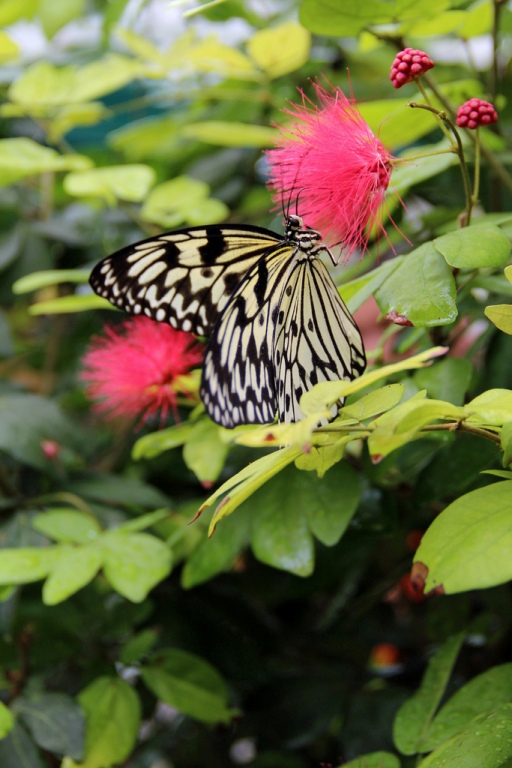
Swallowtail. Photo by Heidi Unger.

Swallowtail. Photo by Heidi Unger.

Mary Pipher also expects widespread transformation. As people open to their deepest feelings about the state of the world, she says a shift in consciousness is inevitable. All those awakening hearts will simply mandate deep change.

So much of the news we hear is bad. In some parts of the world, it’s possible for a woman to be stoned to death, or for schoolgirls to be abducted en masse, while here at home mass shootings no longer arouse outrage. Meanwhile an island nation is projected to be entirely underwater by 2020 as Antarctic shrinks. Monarch butterflies are reaching Mexico in drastically reduced numbers—part of “the sixth extinction.

Stories like these can swamp me in despair. But these women’s vision of transformation holds the antidote to hopelessness.

Next: Confronting the shadow.

Yoga: Leading with the Heart

I’ve practiced yoga for many years, starting in my 20s. My practice fell off in my 30s, around the time my health went wonky. For a long stretch, whenever I attended a class or practiced at home, the result was exhaustion and pain.

But in the last several years I’ve come back to yoga as I’ve rebuilt my health. Now I see my weekly Irvington Wellness Center class with Gaynell Collier-Magar as one of the pillars of my spiritual and physical self-care regimen.

Photo by Lyn Talley, via flickr Commons

Not a picture from our class. Photo by Lyn Talley, via flickr Commons

In Gaynell’s classes, you won’t find that punctilious solemnity that infects some yoga classes. She teaches with a lightness and authenticity that nourishes all comers. And she brings her whole self to teaching. I love that she doesn’t take herself too seriously. Nor does she shy away from the spiritual underpinnings of yogic practice.

Week after week, she nudges us to experience the support of unseen energies around us, to feel into our physical bodies and the air around them.

As we move into a standing posture, Gaynell might say something like, “Lead with your heart; allow your heart to move toward the wall…and now [a smile in her voice], loosening the grip with which you normally hold your life, raise your arms overhead.” Which makes us laugh in self-recognition while carefully forming our bodies into the shape she models.

Photo by Ariane, via flickr Commons

Not a picture of our class or anyone I know. Photo by Ariane, via flickr Commons.

Sometimes it takes stillness to open us to the love that’s all around us. It happened in last week’s class when I found myself holding a posture called the Half Pigeon. This pose has us fold the torso over a bent knee while stretched out face-down on the mat.

Gaynell queues up her play lists with care, and for this extended hold of Half Pigeon, she played a song celebrating the Divine Mother. The vocalist sang her tribute with piercing simplicity. With my forehead pressed to the mat, I felt tears well up from deep inside.

In previous years I might have cried in yoga classes out of grief, out of frustration, out of anger at my body (or at the instructor). Sometimes I cried from plain old weariness and physical pain.

But my heart is full now, and my body and spirit feel replete. My tears are not expressions of hurt. I weep because I feel steeped in love and gratitude.

Photo by Nicolas L., via flickr Commons

Photo by Nicolas L., via flickr Commons

Have you felt that—that opening in your heart center like a flower’s petals unfurling? I hope you have. I wish it for everyone.

I used to believe (or part of me shouted loudly enough to make me think I should believe) that an open heart was less essential than, say, large dramatic projects. It was the outer stuff that would change the world, not the inner.

Now I tend to think that this infusion of love is foundational to any external work, and that any worldchanging shift must manifest on both an internal and an external level.

Gaynell’s own writing will take a turn on this blog in coming weeks. Stay tuned to learn her perspective on how yoga supports resilient communities.

Building Soil, Growing Food, Nurturing Relationships

I just listened to a podcast interview with Linda Proffitt, founder and executive director of Global Peace Initiatives here in Indianapolis. I’ve known Linda since the days I was responsible for Nuvo Newsweekly’s monthly social justice calendar. Back then I called her regularly to find out about GPI’s peace hikes and other activities, and I was always impressed with her programming.

Since that time GPI’s work has exploded onto the local resilience scene. They started by helping church groups grow food for the hungry, bringing countless volunteers together to experience the transformational power of service initiatives.

peasIn 2011, the organization began a new partnership with one of the most influential forces in the urban farming movement. Will Allen and his team at Growing Power designated GPI as a regional training center for Central Indiana. Spring of 2012 saw a well-attended “From the Ground Up” workshop at Peaceful Grounds, GPI’s newly formed center for agriculture and sustainability.

If you have a chance to listen to the podcast, you might be struck (like me) by the idea that produce is just one output of Peaceful Grounds. There’s also soil, which is foundational. And then there’s relationships.

People coming together to cooperatively grow food can form some powerful ties. And that’s what it’s all about at Peaceful Grounds.

Sharing worms with youthful visitors

Sharing worms with youthful visitors

Now at the Marion County Fairgrounds, Peaceful Grounds is about to start a weekly farm and arts market, Sundays from noon to 4 starting June 1.

GPI’s work is featured in a chapter of the new book Deep-Rooted Wisdom by Augustus Jenkins Farmer. The chapter is called “Stop Tilling the Soil”—and worm composting is a big part of the system at Peaceful Grounds. (I was thrilled learn that the worms eat brew mash from my local microbrewery, Black Acre, located right here in Irvington.)

Linda will be the guest speaker at next Tuesday’s Green Hour, a project of the Irvington Green Initiative. If you’re in town, come out and join us to hear all about this vital work.

Photos courtesy of Global Peace Initiatives.